Tibet Museum
 |
 Tibet Museum Pictures Tibet Museum Pictures |
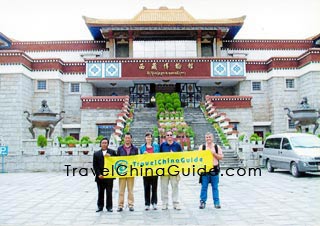
The construction project of the Tibet Museum was listed as one of the sixty-two "Aid-Tibet Projects" in July 1994. It was opened in October 1999 to coincide with the 50th anniversary of the Founding of the People's Republic of China and the 40th anniversary of Tibet's Democratic Reform. The former Chinese chairman Jiang Zemin inscribed its name.
The museum building is a pioneering institution in the history of the region. Designed by a Han Chinese architect from Sichuan province, the complex is a wonderful combination of Chinese and Tibetan architectural styles. Upon entering the Prelude Hall, visitors' attention will immediately be caught by the colourfully ornamented beams, pillars, lintels, banners and wall hangings. Going forward, visitors will see that the Tibet Museum is actually sub-catalogued: the first catalogue includes two exhibition halls on the first floor, showing the splendid history of the land and its abundant natural resources; the other catalogue is on the second floor and is comprised of five small exhibition halls that display folk custom, treasures, and arts and crafts of that region. The Tibet Museum houses a rich collection of prehistoric cultural relics including Buddha statues in different postures, imperial jade seals, gold albums, gifts granted by emperors, colourful tangkas, and various printed Sanskrit and local scriptures. Visitors can also see variety of folk art such as unique local handicrafts, costumes, jewellery, and adornments made of gold, silver, and jade, as well as fine Chinese pottery.
|
|
|
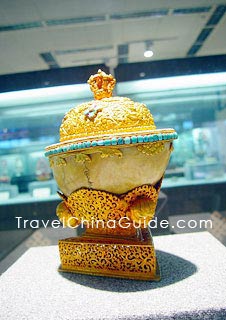
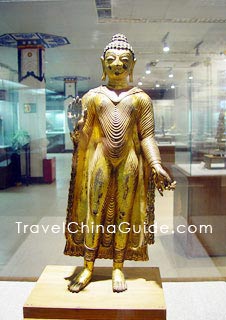
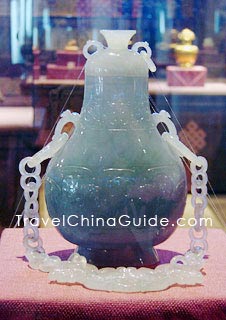
Tibet Museum is not only a source of information and inspiration for the locals themselves, but also a wonderland attracting an increasing number of people from overseas and educating them on the unique Tibetan culture.
How to get to Tibet Museum
2. Take taxi from downtown Lhasa to the museum; about CNY 10 for the taxi fare.
| Entrance Fee | Free |
|---|---|
| Opening Hours | May - Oct.: 9:30 - 17:30 Nov. - Apr.: 10:30 - 17:00 Closed on Mondays (except on holidays) Visitors aren't allowed to enter 30 minutes before the closing time. |
| Audio Guide | CNY 20 |
 You may like: Top 10 Things to Do in Lhasa
- Last updated on Apr. 08, 2021 -
Questions & Answers on Tibet Museum
Asked by Kyle W. Porter from UNITED STATES | Sep. 16, 2018 23:12 Reply
Reply
ReplyIs the Tibet Museum currently open? Can a foreigner visit the museum without a tour guide?
Answers (1)
Answered by Ryan from USA | Sep. 18, 2018 01:17 0
0 0Reply
00ReplyThe museum has been in construction since December 1, 2016 and it is reported that it will be reopened in 3 -5 years.
At present, foreigners must join the travel agency tour, or they are not allowed into Tibet.
At present, foreigners must join the travel agency tour, or they are not allowed into Tibet.
Asked by yolande from NETHERLANDS | May. 02, 2013 03:24Reply
ReplyI would like to know the contact email of the Tibet Museum?
Dear Sir/Madam,
Im the owner of a large dagger/sword. When i got the sword they told me it is an antique Original tibetan Silver Ritual Dagger/Sword. The sword has stones inlay like jade, turquoise, red Coral, agate and white kwarts.
I'm trying to figure out is somebody can tell me something more about this dagger?
Is it really antique? From what year? And is it really silver? or made of iron?
I have pictures of the sword that i can send to the museum?
i'm looking forward to hear from you.
Kind regards,
Yolande Berkhoff
Im the owner of a large dagger/sword. When i got the sword they told me it is an antique Original tibetan Silver Ritual Dagger/Sword. The sword has stones inlay like jade, turquoise, red Coral, agate and white kwarts.
I'm trying to figure out is somebody can tell me something more about this dagger?
Is it really antique? From what year? And is it really silver? or made of iron?
I have pictures of the sword that i can send to the museum?
i'm looking forward to hear from you.
Kind regards,
Yolande Berkhoff
Answers (1)
Answered by Kina from CHINA | May. 03, 2013 22:4110Reply
10ReplyI just got to know the number of the museum: 0891-6835244