Grand Canal
The Grand Canal, about 1,764 kilometers (1,200 miles) long, is the longest and greatest man-made waterway in ancient China, far surpassing the next two of the world: the Suez and Panama Canals. With 27 sections and 58 historical sites, it was placed on the UNESCO's World Heritage List in 2014. Running from Hangzhou, Zhejiang Province in the south to Beijing in the north and connecting different river systems, Grand Canal contributed greatly to ensuring that the Chinese primary economy thrived in past dynasties. Now more than 2,000 years old, some parts of the canal are still in use, mainly functioning as a water-diversion conduit.
The Grand Canal we see today was built section by section in different areas and dynasties before it was linked together by the Sui Dynasty (581-618). In 604 AD, Emperor Yangdi of the Sui Dynasty toured Luoyang (now the city in Henan Province). The following year, he moved the capital to Luoyang and ordered a large-scale expansion of the canal. Due to the primitive building techniques, it took over six years to complete the project. Approximately half the peasant builders (about 3,000,000) died of hard labor and hunger before it was finished. This project was thought to have been a waste of manpower and money, which resulted in the downfall of the Sui Dynasty.
As a major transportation hub, the Grand Canal connected the Yangtze, Yellow, Huaihe, Haihe, and Qiantang Rivers and flowed through Beijing, Tianjin, Hebei, Shandong, Jiangsu and Zhejiang, with Hangzhou as its southernmost end. The Grand Canal, which joined the river systems from different directions, provided a good way to transport foods and goods from south to north. Just as importantly, it greatly improved the administration and defense of China as a whole and strengthened economic and cultural connections between north and south.
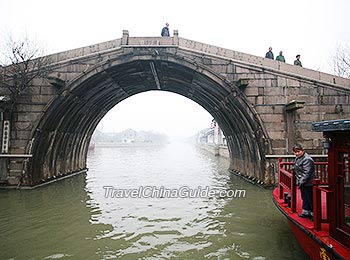
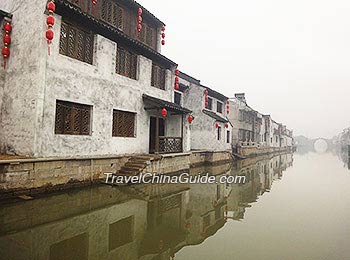
Boating on the old Canal is one of the best ways to get a panoramic view of the landscape of typical river towns in southern China, which include ancient dwellings, stone bridges of traditional designs and historical relics. Experiencing some of the local customs offers much delight to travelers. Tourists also have an opportunity to enjoy good food while appreciating the surrounding scenery.
Like the Great Wall, the Grand Canal is noted as one of the most magnificent and wondrous constructions in ancient China, which can really offer one a profound look into China's fascinating, historical past.
By Bus
Take bus 2, 24, 76, 156, 281, 7311 and get off at Wulinmen Guangchang Bei (Wulin Square North) Station.
You can also take the water bus line 1 to explore the Grand Canal. The bus runs from Pujia Dock to Waterway Transportation Center via Gongchen Bridge and Wulinmen at a cost of only CNY3.
By Metro
1. Take Line 5 and get off at Grand Canal Station and then walk east around 700 meters to arrive at the destination.
2. Take Line 1 to get off at Wulin Square (Wulin Guang Chang) Station and get out from Exit B.
 Wulinmen Wharf is very close to the above-mentioned bus/subway stations. Visitors can walk a few minutes to the wharf and experience a short canal cruise.
 |
The Grand Canal we see today was built section by section in different areas and dynasties before it was linked together by the Sui Dynasty (581-618). In 604 AD, Emperor Yangdi of the Sui Dynasty toured Luoyang (now the city in Henan Province). The following year, he moved the capital to Luoyang and ordered a large-scale expansion of the canal. Due to the primitive building techniques, it took over six years to complete the project. Approximately half the peasant builders (about 3,000,000) died of hard labor and hunger before it was finished. This project was thought to have been a waste of manpower and money, which resulted in the downfall of the Sui Dynasty.
|
|

As a major transportation hub, the Grand Canal connected the Yangtze, Yellow, Huaihe, Haihe, and Qiantang Rivers and flowed through Beijing, Tianjin, Hebei, Shandong, Jiangsu and Zhejiang, with Hangzhou as its southernmost end. The Grand Canal, which joined the river systems from different directions, provided a good way to transport foods and goods from south to north. Just as importantly, it greatly improved the administration and defense of China as a whole and strengthened economic and cultural connections between north and south.
Boating on the old Canal is one of the best ways to get a panoramic view of the landscape of typical river towns in southern China, which include ancient dwellings, stone bridges of traditional designs and historical relics. Experiencing some of the local customs offers much delight to travelers. Tourists also have an opportunity to enjoy good food while appreciating the surrounding scenery.
Like the Great Wall, the Grand Canal is noted as one of the most magnificent and wondrous constructions in ancient China, which can really offer one a profound look into China's fascinating, historical past.
|
|


How to get to Grand Canal
Take bus 2, 24, 76, 156, 281, 7311 and get off at Wulinmen Guangchang Bei (Wulin Square North) Station.
You can also take the water bus line 1 to explore the Grand Canal. The bus runs from Pujia Dock to Waterway Transportation Center via Gongchen Bridge and Wulinmen at a cost of only CNY3.
By Metro
1. Take Line 5 and get off at Grand Canal Station and then walk east around 700 meters to arrive at the destination.
2. Take Line 1 to get off at Wulin Square (Wulin Guang Chang) Station and get out from Exit B.
Wulinmen Wharf is very close to the above-mentioned bus/subway stations. Visitors can walk a few minutes to the wharf and experience a short canal cruise. Further Reading
 Grand Canal CruiseVideo of Grand Canal Culture and Art Museum (Yangzhou)Video of Grand Canal in WuxiVideo of Grand Canal Night Cruise in YangzhouTop 10 Things to Do in HangzhouSuzhou Grand Canal
- Last updated on Jul. 24, 2026 by Sherry Xia -