How many days do I need for Beijing? Where should I go for the first time?
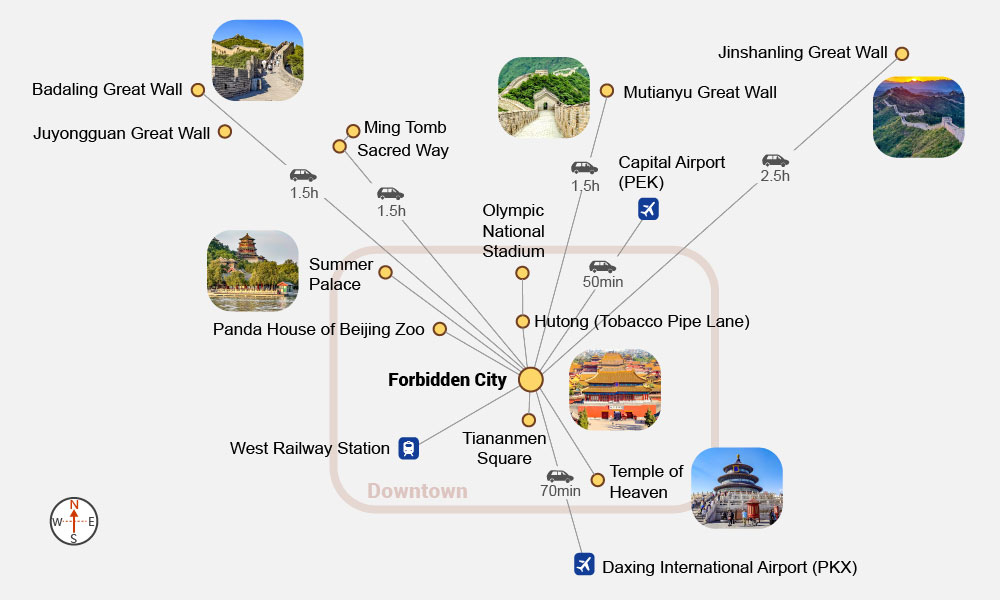
2 or 3 full days are necessary for first-time travelers. Spend one day on downtown highlights, including the symbolic Tiananmen Square, the imperial palace Forbidden City, and the sacrificial Temple of Heaven. On your second day, enjoy a section of the ancient Great Wall that once kept away the Huns’ cavalry and discover old Beijingers’ life memories in the old Hutong alleys. For a third day, admire the scenic Summer Palace and see the national treasure pandas in the Beijing Zoo.
If you have more than 4 days, take your time for an in-depth Beijing tour, which includes additional visits to the National Museum, Confucius Temple and Imperial Academy, Prince Gong’s Mansion, and the Ming Tombs. Alternatively, take a high-speed train to see the Terracotta Warriors in Xi’an, extend to other ancient cities like Luoyang, Pingyao, or Datong, or even venture further to Shanghai, Zhangjiajie, or Guilin. Just share your ideas with our English-speaking travel consultants to customize your best Beijing tour packages for 2026 and 2027.
Which is the best month to visit Beijing?
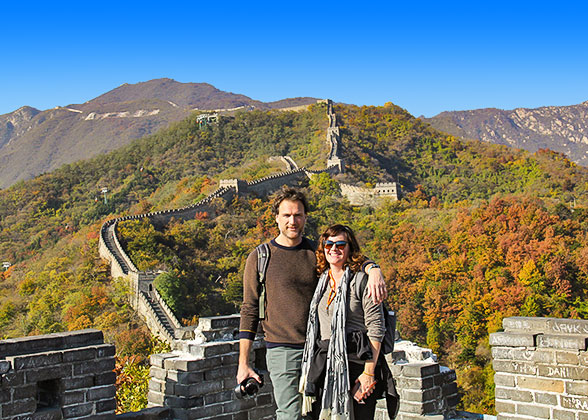
March to May and September to October are the best times for Beijing tours, with mild temperatures, lower rainfall, and the most beautiful scenery. At this time, just wear long-sleeved T-shirts, a windproof jacket, long pants, and comfortable sports shoes. This is also the best time to visit the Great Wall: from March to April, the surrounding mountains are dotted with apricot and peach blossoms, while from September to November, the wall winds through a sea of red leaves, bringing you an ultimate aesthetic pleasure. From December to February, it’s cold, windy, and sometimes snowy, especially in the coldest January, making the Great Wall slippery and posing challenges for the visit. However, for those who don't mind the chill, the serene snowscape offers a breathtaking and quiet reward.
● When to Avoid:
May Day, National Day holiday from October 1st to 7th, and the Chinese New Year holiday in January or February should be avoided when planning your Beijing vacation as the main attractions like the Forbidden City and the Great Wall will be overcrowded, which may result in a poor travel experience. July and August, not only the rainiest and hottest months in Beijing, but also the Chinese summer vacation with excessive student visitors, are not recommended either.
Which section of the Great Wall in Beijing is recommended?
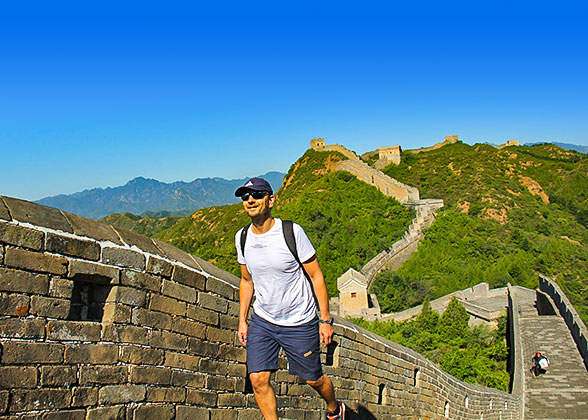
If you are first-timers, it is recommended to consider the most famous Mutianyu or Badaling. The most beautiful Mutianyu has relatively fewer tourists and is more favored by foreign visitors. It is also more suitable for children and those with average physical strength, as it is equipped with cable cars, chairlifts, and toboggans. Badaling is the best-preserved and most representative section, with convenient public transportation, but it is always crowded, especially during holidays. Other niche sections can be references for Great Wall aficionados who want to explore in depth: Jinshanling attracts photographers with its original appearance, the dangerous Jiankou is a favorite for outdoor adventurers, Huanghuacheng featuring water activities in the surrounding lakes can be considered for family trips, Juyongguan and Gubeikou are recommended for history buffs, and Simatai along with the adjacent Gubei Water Town work better for night visitors.
What is the best way to get around Beijing? Is there Grab or Uber?
The subway is the most convenient, fastest, and most economical way to travel. For Online car-hailing services, Grab and Uber are not available here, but you can use the similar native app Didi, which offers a dedicated English interface, flexible registration, and various payment options, making it easy to navigate. Taxis can also be hailed on Didi. The cost is much lower than that in the US, Europe, or Japan, approximately CNY 14 (USD 2) for the first 3 km, and CNY 2.3 (USD 0.3) for each additional kilometer. For example, a taxi from downtown Beijing to Mutianyu Great Wall, which is over 70 km (44 mi) away, usually costs CNY 240-400 (USD 35-58).
What are the best day trips from Beijing?
The most classic day tour from Beijing is a morning visit to the Mutianyu Great Wall, followed by an afternoon exploring downtown landmarks like the Summer Palace, the Temple of Heaven, or a rickshaw ride through the Hutong alleys. Other popular one-day pairings include the Badaling Great Wall and the nearby Ming Tombs, or the Simatai Great Wall combined with Gubei Water Town. For those looking to venture further, high-speed trains make nearby cities like Tianjin and Chengde easy day trips, while a day trip to Xi’an is also possible by high-speed train or overnight sleeper.
Is Beijing safe for tourists?
In general, Beijing is safe for tourists, even when visiting at night. Although you won’t encounter heinous crimes like robbery, still be wary of the possibility of petty thefts of your wallets, phones, and other valuables in crowded places.
Special attention should be paid to traffic safety. Intersections without traffic signals can be incredibly complex, with a large number of cars, motorcycles, e-bikes, bicycles, and pedestrians merging simultaneously. At zebra crossings, vehicles are very likely not to yield to pedestrians, which might be because the deep-seated vestige in ancient China that ordinary people had to give way to dignitaries and nobles in carriages has not been completely eliminated. Motorcycles and e-bikes often disregard crosswalks and won’t give way to you. It’s also common to see pedestrians run red lights. With a population of 22 million and over 8 million registered vehicles, Beijing implements a traffic restriction based on the last two digits of license plate numbers every weekday; however, the pressure on traffic remains significant. Therefore, keep your eyes on all directions when crossing the road. Stay alert even in the outskirts with fewer vehicles, as they often run at high speeds, and traffic rule violations may be more frequent, increasing the risk.
Is Beijing English friendly?
As the capital city, Beijing has a relatively large number of English speakers among all Chinese cities. However, you should always keep in mind that traveling without speaking Mandarin can still be challenging. While staff at some 4- or 5-star international hotels or upscale restaurants generally speak English, elsewhere you can’t expect more. At the ticket offices or information desks of some major attractions, such as the Forbidden City, the Great Wall, and Temple of Heaven, the staff can speak basic English. When encountering language difficulties during your tour, it is recommended to seek help from college students or young locals. It’s advisable to download a translation app onto your phone in advance to ensure a smoother Beijing trip.
Do I need a visa to visit Beijing?
Whether a visa is required depends on the nationality of your passport. So far, citizens of 50 countries, like France, the United Kingdom, and Australia, with valid passports can enjoy a 30‑day visa‑free stay. Citizens of other countries including the United States can, if passing through Beijing to a third destination, apply for 240-hour visa-free entry at Beijing Airport. For specific requirements, please refer to China 240-hour visa-free transit.
How to pay in Beijing as a foreigner?
Mobile payment is the primary way to pay in almost all scenarios in Beijing. For your convenience, download WeChat or Alipay from the App Store, register with your passport information, and link your international credit or debit card, such as Visa or Mastercard, in advance. Then, simply scan a QR code to complete payment. Please note that direct credit card payment is not widely accepted. While terminals for foreign cards can be found at airports, 3-star and above hotels, high-end malls, and major scenic spots, they are rarely seen in small street-side eateries, stalls, or markets. Cash is still legally accepted, though it is no longer the norm. It’s wise to exchange a small amount at the airport in case mobile payments don’t work.
Should I visit Beijing or Shanghai first?
If you want to experience China’s historical depth and imperial grandeur, Beijing should be your first stop. Delve into the past royal culture in the Forbidden City, Temple of Heaven, and Summer Palace, and climb the Great Wall to marvel at this ancient man-made fortification. If, however, you prefer to embrace a modern pulse and cosmopolitan charm, start from Shanghai. From the Bund, look over the futuristic skyscrapers on the opposite bank, while in the French Concession area, savor the refinement, a touch of petty bourgeoisie, and internationalization. Fortunately, you don’t have to choose between them - one week is enough to visit both cities. Simply contact our travel consultants to extend your Beijing tour itinerary.
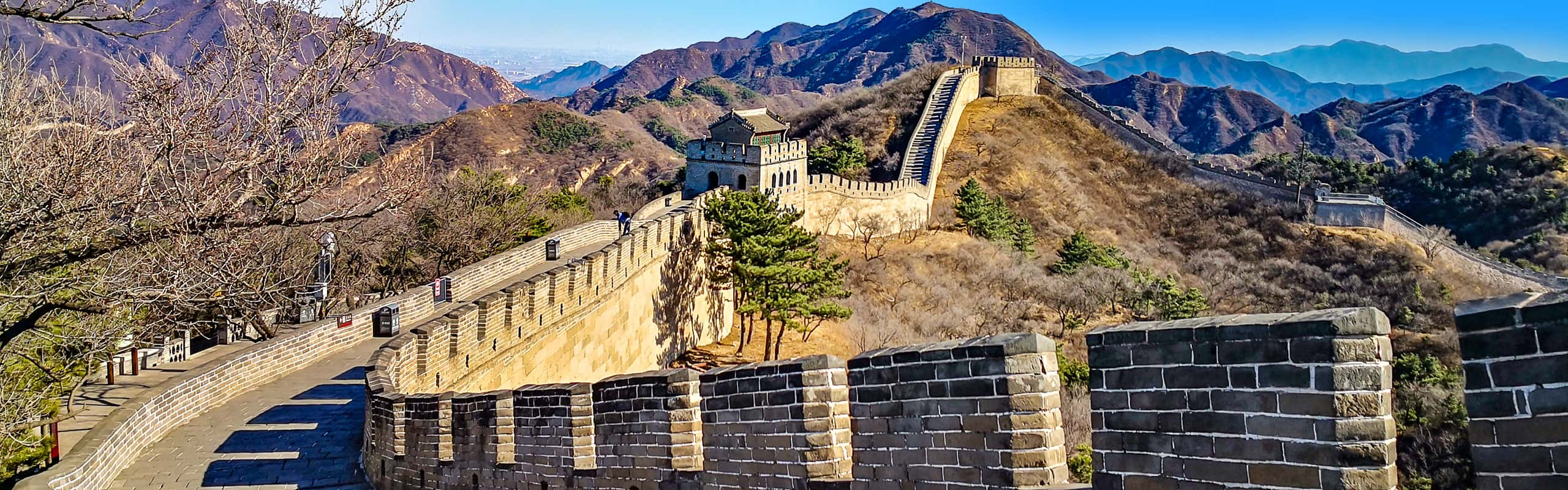

 1 Day Beijing All-inclusive Tour to Tiananmen Square, Forbidden City, and Mutianyu Great Wall USD99USD89
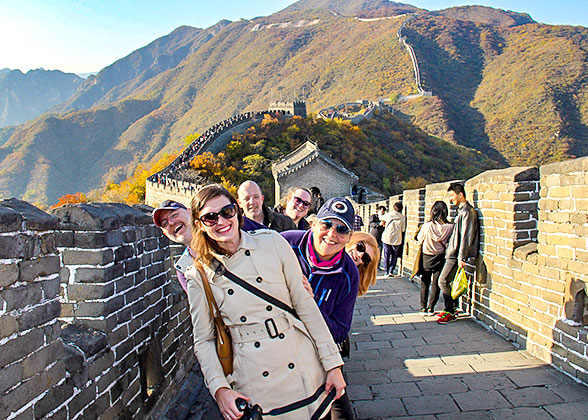 2 Days Beijing All-inclusive to Tiananmen Square, Forbidden City, Great Wall, Hutong, Temple of Heaven, and Summer Palace USD179USD159
 1 Day to Temple of Heave, Hutong, Lama Temple, and Summer Palace USD99USD89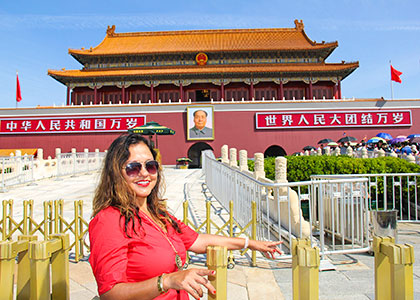
 1 Day Badaling Great Wall Tour with Exoskeleton Experience from USD129
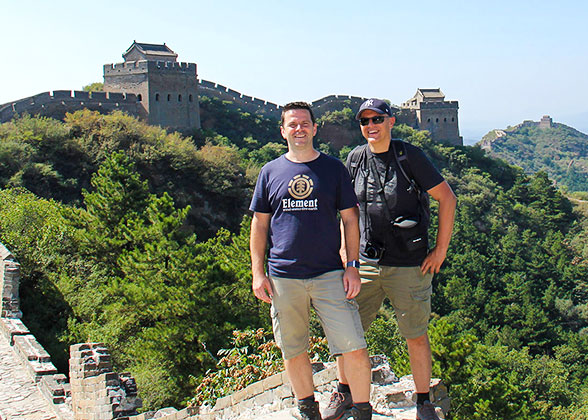 1 Day Jinshanling Great Wall Hiking Tour from USD129
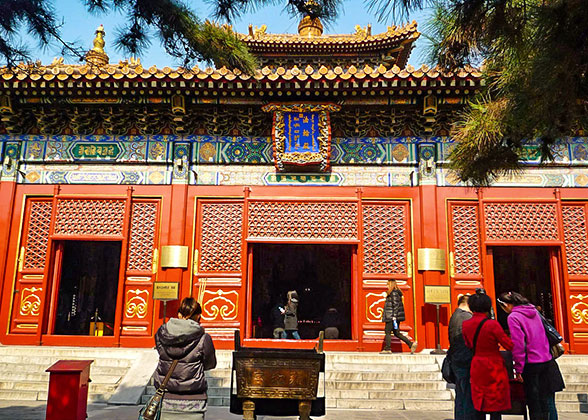 1 Day Lama Temple, Temple of Confucius, Imperial Academy, National Museum & Jingshan Park from USD89
 Half Day Tiananmen Square & Forbidden City Tour from USD89
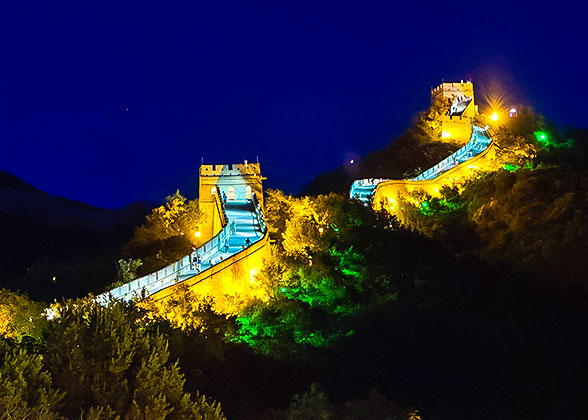 Badaling Great Wall Night Tour (May to October) from USD139
 1 Day Beijing New Tech: Driverless Cars, Robots, EVs from USD79
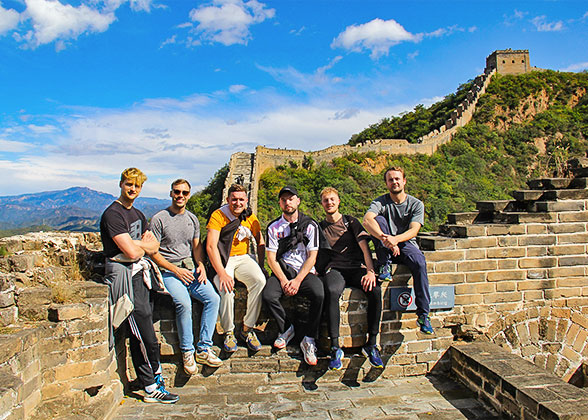 Great Wall Trekking and Camping from Jiankou to Mutianyu from USD469