Linggu Temple
|
|
|
|
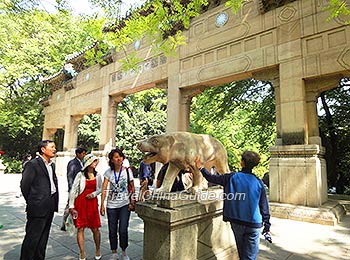
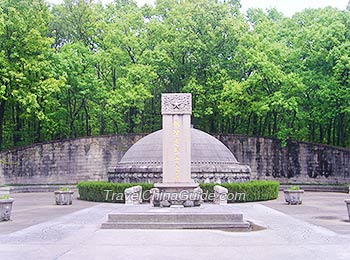
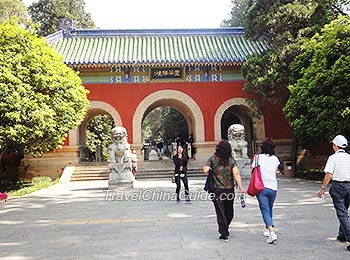
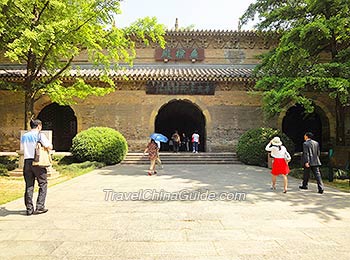
Linggu Temple contains the Xuanzang Memorial Hall, which was built in memory of a famous monk in the Tang Dynasty (618-907). The picture of the route that Xuanzang walked and the sutra he translated are also stored here. There are also several other sights such as Non-beam Hall, Linggu Pagoda and Songfeng Pavilion.
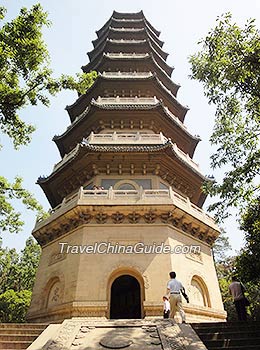 |
| Linggu Pagoda |
The name of Non-beam Hall has interesting origins. Originally the temple was named Wuliang Hall as a memorial ceremony, for a Buddha named 'Wu Liang' was held there. Because it is constructed without any wood, it can also be called 'Non-beam Hall'. However, 'non-beam' is also pronounced 'Wu Liang' in Chinese.
Linggu Temple is famous in Chinese history. It is said that in the Ming Dynasty, Linggu Temple flourished. Crowds filled the place to burn joss sticks. It is said that it could hold 1,000 monks at that time.
The vegetarian diet here is renowned for over 600 years. The ingredients of the dishes are chosen very carefully; the cooking is very meticulous; the appearance of the food is also very nice. Though the dishes are without meat, the taste is even better than the ones with meat. Shensong House, the famous vegetarian restaurant in Linggu Temple, lies to the east of Songlin Pavilion. Surrounded Shensong House, is a thick forest and blooming flowers. To the east of Shensong House, a spring runs under a bridge, and to the west, the sound of the bell emanates from the ancient temple. Dining here can bring you both the wonderful taste of the food and an enjoyment of natural beauty.
How to get to Linggu Temple
1. Take Metro line 2 to Zhonglingjie and leave from exit 1, then walk north for 15 minutes to get to the temple.
2. Take bus 202 to Linggusi Gongyuan.
| Entrance Fee | CNY 35; CNY 100 for a combo ticket covering the Open-air Music Hall in Dr. Sun Yat-sen's Mausoleum, Xiaoling Mausoleum of Ming Dynasty, and Meiling Palace; Free for children under 1.4m (4.6 feet). |
|---|---|
| Opening Hours | Mar. - Nov.: 6:30 - 18:00; Dec. - Feb. next year: 7:00 - 17:30 |
Tips:
There are two famous attraction sites near Linggu Temple, Dr. Sun Yat-sen's Mausoleum and Ming Xiaoling Mausoleum. Visitors can reach these two sites from Linggu Temple by sightseeing bus, battery car or small train. The sightseeing bus, small train and battery car ticket is CNY 10 per person, and the tourist special line costs CNY 2 for a single trip.
 12 Best Places to Visit in Nanjing