 |
| Rishengchang Former Bank |
The Rishengchang Former Bank (Rishengchang literally meaning sunrise prosperity), one of the earliest exchange shops in China, is located on West Street in
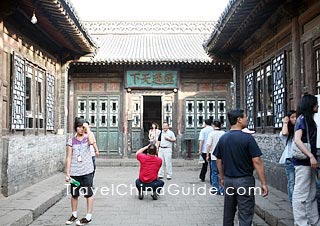
Pingyao Ancient City, Shanxi Province. The rectangular compound faces north and is 65 meters (71 yards) long and 20 meters (22 yards) wide. In total it occupies over 1,300 square meters (approximately a third of an acre). It was established in 1823 during the Qing Dynasty (1644 - 1911). At that time it had over 35 branches in China's major cities. In December 1995, Shanxi Provincial Government listed it as a Provincial Key Cultural Relic under the Reservation and it is now the Chinese Exchange Shop Museum.
During the Qing Dynasty China's currency was silver coin and there were obvious problems relating to security and convenience if traders had to carry large sums of money in coin form. The exchange shops offered a convenient alternative and thus bills of exchange came into use and an early form of banking created. Cash deposited at one branch could become payable by means of a bill at another as a secure method of transferring funds from one businessman to another regardless of time and distance. The Rishengchang Former Bank acquired the reputation of Huitong Tianxia, which means the silver coin and the bills of the exchange could reach every part of the country. Before the establishment of the modern banking system the Rishengchang Former Bank had a great influence on the Chinese economy during the 108 years between its opening and ultimate demise in bankruptcy. Due to its enormous influence upon the development of banking in China, the Rishengchang now has become a place of considerable interest to visitors in recent years.
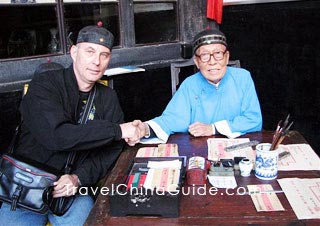 | | Our Guest Visited Rishengchang | | 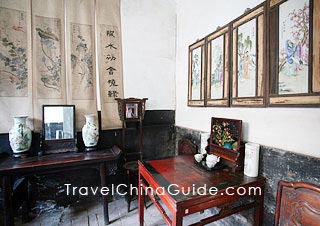 | | Manager's Room | |
What you can see today is the original Rishengchang Former Bank which was fully restored in 1995. The shop is within a compound with three courtyards. In the front of the compound, five rooms facing the street served as the gate of Rishengchang Former Bank. The board with the name of the shop hangs in central position above the five rooms. Passing through these rooms, you will come to the first courtyard in which four cashier's offices are situated on either side of the passage that runs along the axis of the compound. In the second courtyard, the three south facing halls were used for the exchange business. In the second courtyard there are also rooms which housed the staff who worked in the exchange shop, while the second storey served as store rooms. The third courtyard served as accommodation for the senior staff and due to its location away from the noise of the road also provided a resting place for important customers. For security, a net made from metal thread was fixed over the top of the whole compound. Small bells were hung on the net to sound a warning if intruders tried to enter the premises.
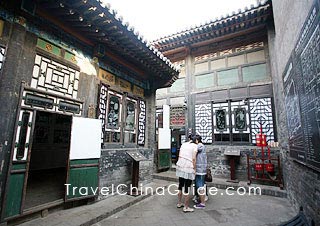 | | Back Hall | | 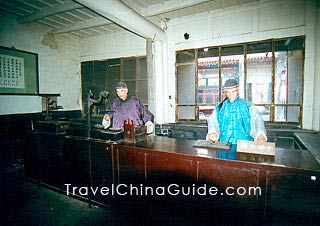 | | Cashiers' Office | |
A visit to the Rishengchang Former Bank will give the visitor an insight into the enterprise and ingenuity of the merchants of ancient China. In particular it will illustrate how the Shanxi Merchants made a vital contribution to the development of Chinese trade.
How to get to Rishengchang Former Bank
1. Take a tourist bus to Pingyao Ancient City from
Taiyuan Railway Station at 6:30am.
2. Take a bus from Taiyuan Jiannan Bus Station to Pingyao at 8:00, 8:10, 9:00 or 10:00 in the morning.
3. Take bullet train at
Taiyuan South Railway Station to
Pingyao Ancient City Railway Station. Upon arrival, you can take a taxi to the shop directly.
| Admission Fee | Visitors can buy a combo ticket at the cost of CNY 125, covering the admission fee for 22 small attractions including Rishengchang Former Bank.
Free for children under 1.2m (3.9 feet).
 See attractions covered by the combo ticket. See attractions covered by the combo ticket. |
- Last updated on Aug. 14, 2025 by Demi Li -
 See also Xietongqing Ancient Bank
 Recommended Guided Tour: