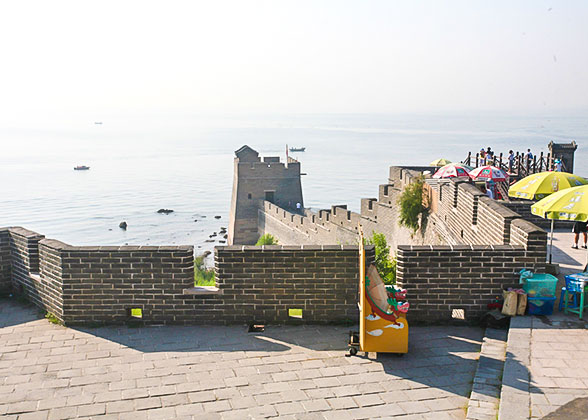
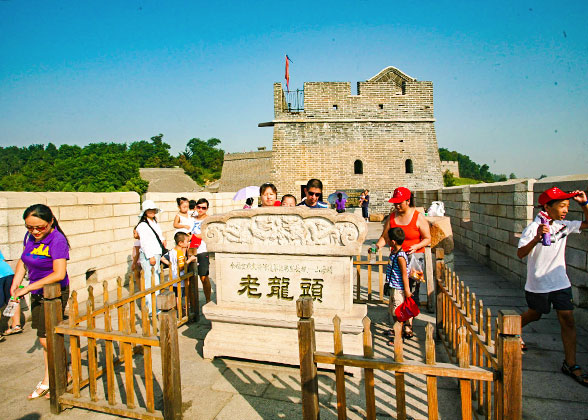
First constructed in 1381, Laolongtou Great Wall is situated in Qinhuangdao City, Hebei Province, 7 kilometers (4.3 miles) from Shanhaiguan Pass. As the only section of the Great Wall extending into the sea in China, its name, literally “Old Dragon's Head”, aptly describes its appearance: a colossal dragon’s head plunging into the sea to drink. Integrating mountains, sea, passes, and the Great Wall itself, it blends the Great Wall’s grandeur and precipitousness with the sea’s boundlessness, making a truly distinctive landscape.
 |
| Laolongtou Great Wall |
Best Attractions in Laolongtou
A landmark of Laolongtou Great Wall, Chenghai Tower perches atop the scenic area’s highest point. Originally built in the
Ming Dynasty and renovated multiple times, the structure we see today was reconstructed in the
Qing Dynasty to retain its original essence. Standing 14.5 meters (47.5 feet) tall, it features a brick-and-wood framework adorned with upturned eaves, carved beams, and painted pillars, exuding an air of ancient elegance. The second floor, the highest vantage point in the area, offers a panoramic view: the Great Wall merges seamlessly with the vast sea, while the distant sky and water blend into a unified expanse, as if heaven and earth converge.
2. The Estuary Stone Great Wall
The Estuary Stone Great Wall is the highlight of the Laolongtou Great Wall and the only section of the Great Wall built over the sea in China. Crafted from massive granite blocks, it stretches 22.4 meters (73.5 feet) into the Bohai Sea, standing 9.2 meters (30.2 feet) high and 8.3 meters (27.2 feet) wide. Resembling a giant dragon’s head diving into the sea, it has withstood centuries of waves without crumbling. Standing atop this stone wall, visitors can listen to the thunderous crash of waves against the rocks and feel the sea breeze. It is also one of the best spots to capture the breathtaking spectacle of the Great Wall meeting the sea, with sunrise and sunset offering the most dramatic views.
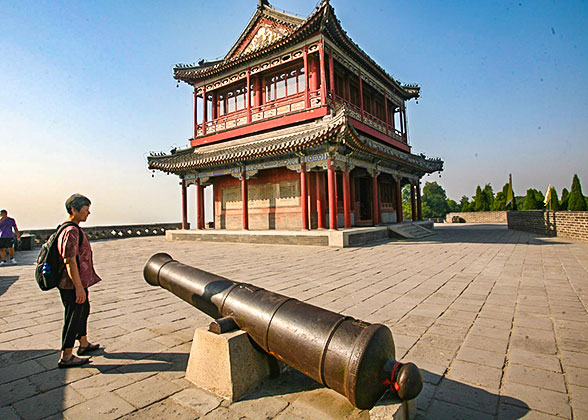 | | Laolongtou Chenghai Tower | | 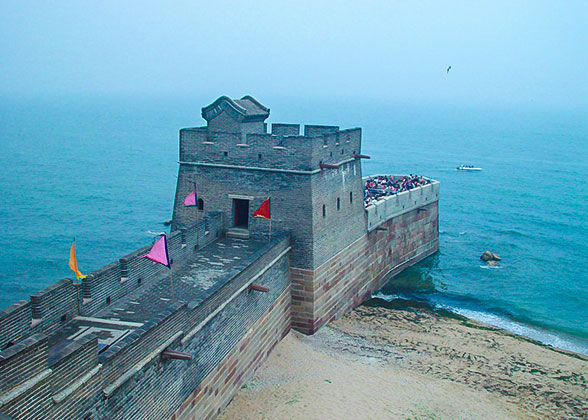 | | The Estuary Stone Great Wall | |
Jinglu Beacon Tower is the only beacon tower on the sea. “Lu” in ancient times referred to seawater, and “Jinglu” means to pacify the sea, embodying the ancient people’s aspiration to tame the tides and defend the frontier. Standing 11 meters (36 feet) tall with a circumference of 31.8 meters (104 feet), it features a complex internal structure divided into two floors: the upper floor is equipped with lookout holes and shooting embrasures for military use, while the lower floor served as barracks and weapons storage for soldiers.
Located north of Laolongtou Great Wall, Ninghai City’s north gate serves as the main entrance to the scenic area. Inside lies Longwu Camp, the most intact and largest surviving Ming Dynasty military camp in China. Additional notable sites include Xiangong Hall, which honors pioneering generals, as well as the Dragon King Temple and Guandi Temple, both of which serve as places where visitors may offer prayers for divine protection.
 | | Longwu Camp in Ninghai City | | 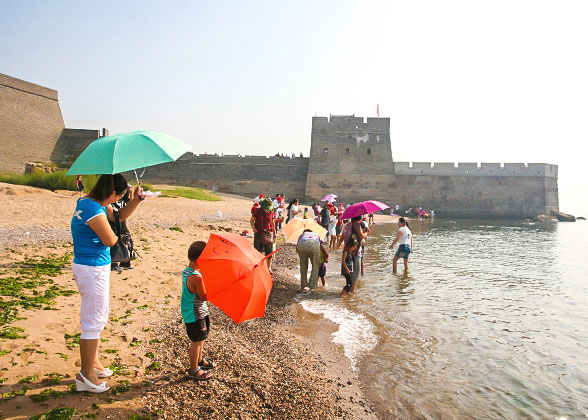 | | Old Stables, Laolongtou | |
Covering approximately 2,000 square meters (0.5 acres), the Eight-Diagram Tactics is designed based on the ancient Eight Trigrams layout. Composed of dozens of walls, it features diverse paths and exits in each section. Once entering, tourists must rely on their wisdom and judgment to navigate their way out; getting lost is part of the adventure, and it is this element of uncertainty that makes the maze so engaging.
A site for ancient people to worship the Sea God and pray for safe voyages, the Sea God Temple is situated on the seaside west of Laolongtou Great Wall. It mainly consists of a mountain gate, bell tower, drum tower, main hall, and side halls. The main hall houses vividly sculpted and solemnly expressive statues of the Sea Goddess and Dragon King. The temple’s highest point, the Sea-Viewing Pavilion, serves as another excellent observation platform within the scenic area.
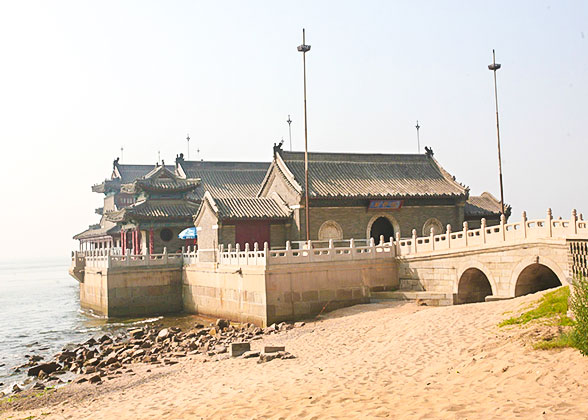 | | Sea God Temple | | 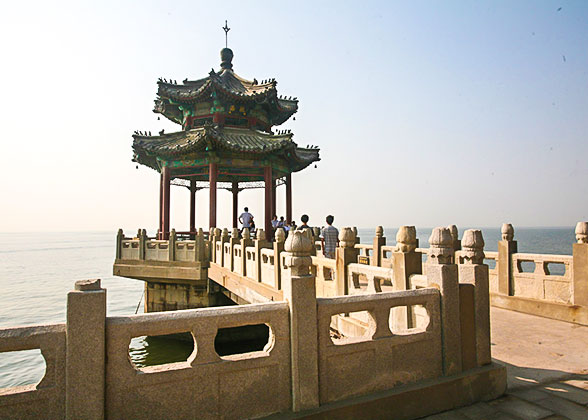 | | Sea-Viewing Pavilion | |
How to Tour the Laolongtou Great Wall?
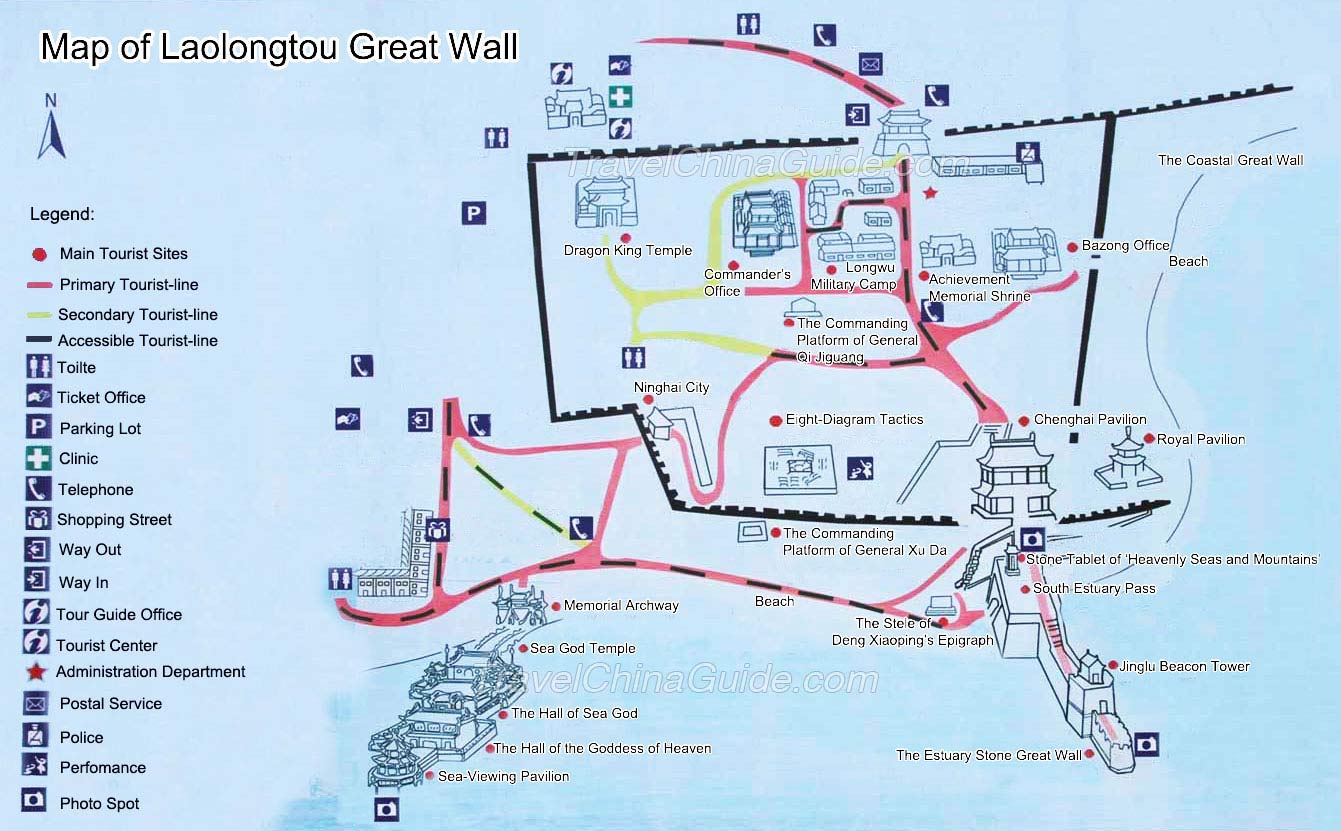
While the Laolongtou Great Wall Scenic Area is not overly large, its attractions are relatively scattered. Planning a reasonable route will allow you to fully appreciate its beauty.
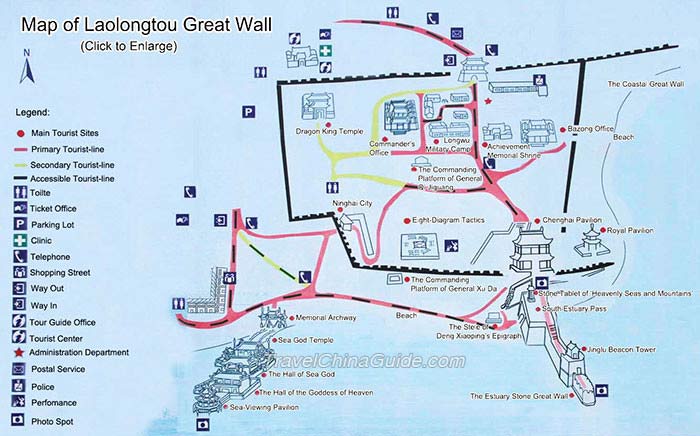 |
| Map of the Laolongtou Great Wall |

Recommended Tour Route:
Scenic Area Entrance → North Gate of Ninghai City → Longwu Camp → Garrison Department → Eight-Diagram Tactics → Qi Jiguang's Commanding Stage → Xiangong Hall → Battalion Commander's Office → City Wall Climbing Ramp → Chenghai Tower → West Arrow Tower of Ninghai City → Pavilion of Emperor-Inscribed Tablet → Estuary Stone Great Wall → Beach → Sea God Temple → Dragon Garden → Scenic Area Exit
Tour Duration: 3 - 4 hours
Upon entering through the main gate, you will first arrive at Ninghai City. Begin your tour by exploring Longwu Camp and the Eight-Diagram Tactics within the city. Then, take the ramp up to Chenghai Tower and climb to the top for a sweeping view of Laolongtou Great Wall and the Bohai Sea. Continue along the Great Wall, either circling Ninghai City or following the coastal walkway, to the Estuary Stone Great Wall, an ideal spot for photographing the Great Wall’s meeting with the sea. From there, ascend the Great Wall to Jinglu Beacon Tower to learn about the ancient Great Wall’s military functions. After descending, relax on the beach for a while before visiting the Sea God Temple to experience marine sacrificial culture. Finally, head to Dragon Garden to admire dragon-themed murals and sculptures, then walk north to the scenic area exit.
The optimal time to visit Laolongtou is from April to October. Thanks to its coastal location, the area remains cool even in summer.
The most recommended option is to take a taxi, which takes less than an hour and costs around CNY 100. Buses are not ideal, as they take at least two hours - an overly time-consuming journey.
1. The scenic area features mostly stone slabs and steps, requiring extensive walking. It is recommended to wear comfortable, non-slip sports shoes. Additionally, bringing a pair of slippers for seaside activities is advisable.
- Last updated on Feb. 04, 2026 by Sherry Xia -