Great Wall Protection
 Shandan Great Wall in Danger
-- TCG Survey Group in Shandan County, Gansu Province
In July 2009, TravelChinaGuide (abbr. TCG) sent a survey group to investigate the Great Wall situation in Shandan County, Zhangye City, Gansu Province. This is our second visit to the section located in that place after 2002. We found the situation is not optimistic. Compared to the pictures taken in 2002, many sections have become shorter, smaller or disappeared. The Great Wall is in danger!
|
|
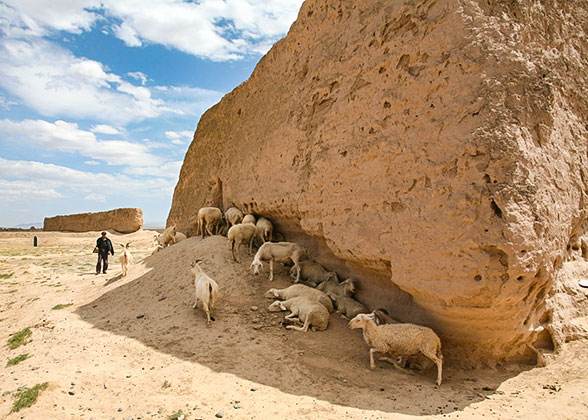
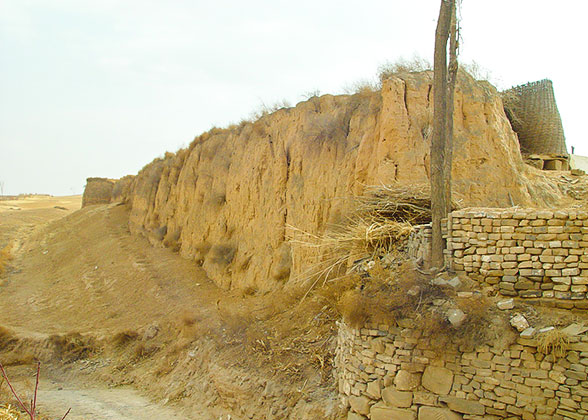
Mention of the Great Wall of China evokes an image of a huge dragon flying freely on beautiful mountains. Unfortunately, this great image exists only in the well-protected scenic areas, such as the Badaling, Mutianyu, and Simatai. Most other sections lie broken in remote vast grasslands and boundless deserts, exposed to thousands of years of rains, snows and winds. Many were swallowed by sand before becoming known to the world. The matter of protecting the Wall cannot be delayed.
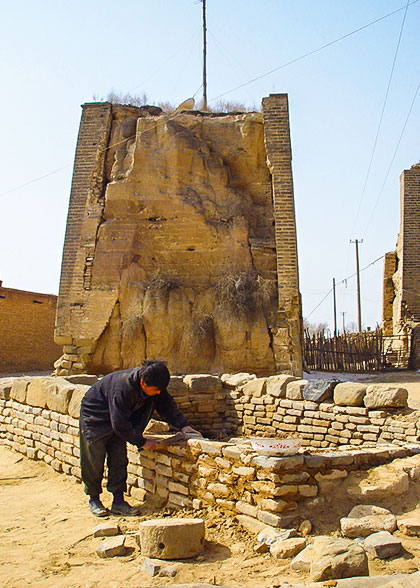 |
| Wall bricks are taken to build stockyard. |
The Great Wall, owing to its huge bulk, long length and variant construction materials, is difficult to protect well compared to other relics which can be kept in museums. Besides natural disasters such as storms and earthquakes, the wall also suffers from human sabotage. There are four primary types of man-made sabotages. The first is the taking of bricks, earth and stones from the wall for constructional materials. The second is modern construction (such as the highway building) that develops at the price of damaging the wall. The third is damage caused by tourism access development. In recent years, people have learned the importance of wall protection. Since they innocently repair the wall according to their own imagination without concern for its historical appearance, this is also considered a kind of damage.
Being one of the world cultural and natural heritages, the Great Wall of China, belongs to the world, so everyone has the responsibility to protect it. Visitors should behave themselves on the wall, never defacing the bricks, never moving the bricks and never throwing litter about. People who live near the wall should not take bricks, stones and earth from the wall to build their own houses, or dig in the wall for sheepfolds or latrines. Officials should complete and enforce relevant regulations and laws. In September of 2006, the State Council promulgated the regulation on the protection of the Great Wall which went into effect on December 1 of the same year.
 Great Wall Protection:
 Reply
Reply 14
14 8Reply420Reply24Reply