

Badaling Great Wall
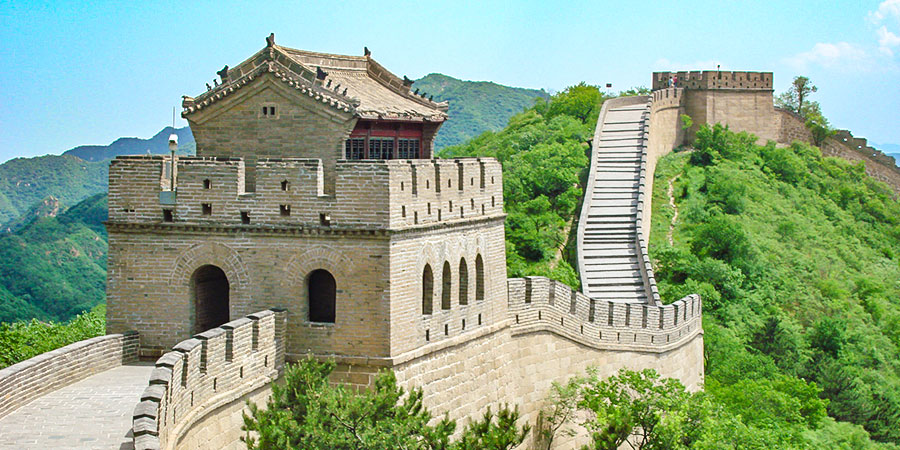
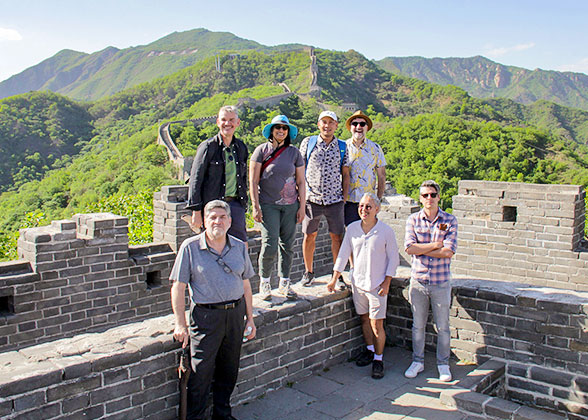
Badaling, famed as the most representative section of the Great Wall of China, not only is the best-preserved and most visited part but also was the initial section to be restored and developed into a tourist attraction. It has allured millions of tourists and even caught the eyes of world leaders.
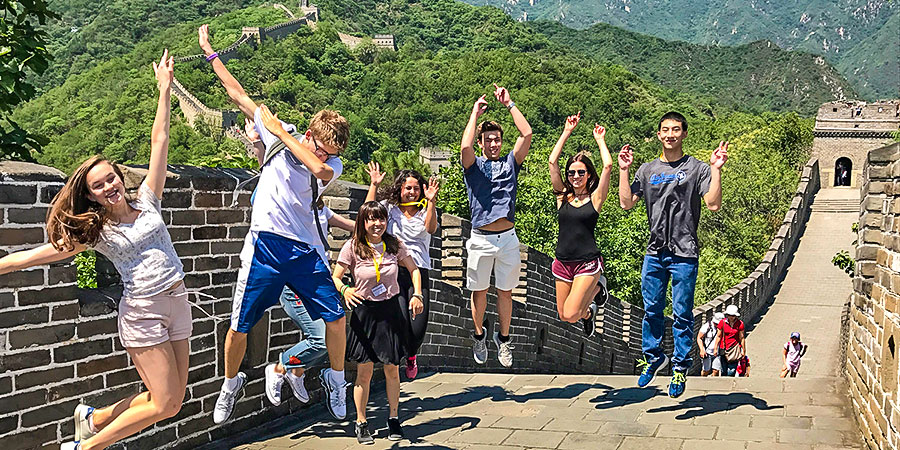 |
| Have Fun at Badaling |
Why visit Badaling rather than others
 It is the most popular section.
It is the best-preserved and most complete section.
Compared with other sections, most stairs are not very steep and they are equipped with handrails, so it is a relatively easier climb.
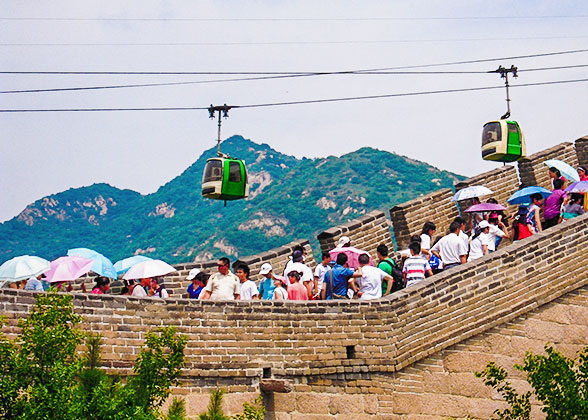
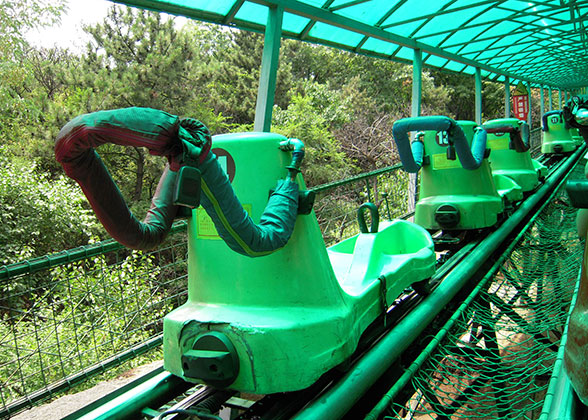
This section has been equipped with cable cars and pulleys to save energy, and it even has some facilities to make it easier for seniors and the disabled.
It is close to downtown Beijing, about 43 miles (70 kilometers) away, and easy to reach by public transportation.
Basic Facts about Badaling Great Wall
Most of the preserved parts were built and reinforced during the Ming Dynasty (1368 - 1644 AD) to defend Beijing against the intrusion of northern Mongolians. The total length of this section is 12 kilometers (7.5 miles) with 43 watchtowers, however, only 3.74 kilometers (2.3 miles) and 19 watchtowers have been restored and opened to visitors. In this section the wall averages about 7.8 meters (26 feet) tall, and 6 meters (20 feet) wide, which would allow five horses to gallop or ten soldiers to march abreast. It is built of huge bar-stones and bricks. The interior of the wall was stuffed with rammed earth and small stones to make it firm and solid. A number of holes have been drilled in the wall to shoot arrows and to watch enemies.
The watchtowers were built to accommodate soldiers, send messages, observe the enemy, and store supplies. It also has shooting and observing holes. It witnessed many significant events in history: Yuan Taizu, the first emperor of the Yuan Dynasty (1271-1368 AD) conquered it, took control over Beijing, then the whole of China, and began the Yuan Dynasty; Empress Dowager Cixi of the Qing Dynasty (1644 - 1911 AD) fled from there to western China in 1900 when an alliance of eight western countries controlled Beijing. It has drawn tens of millions of tourists both from home and abroad. More than 540 foreign leaders and celebrities have visited it, including former US presidents Nixon, Obama, Queen Elizabeth II of UK, former South Africa president Mandela, and Russian president Vladimir Putin.
Must-See Attractions in Badaling
 |
| Hero Slope |
1. Hero Slope
2. Hero Monument
3. Ancient Cannons
|
|
5. Night Tour of Badaling Great Wall
 |
| Badaling Great Wall at Night |
How to tour Badaling Great Wall - Hiking Tour
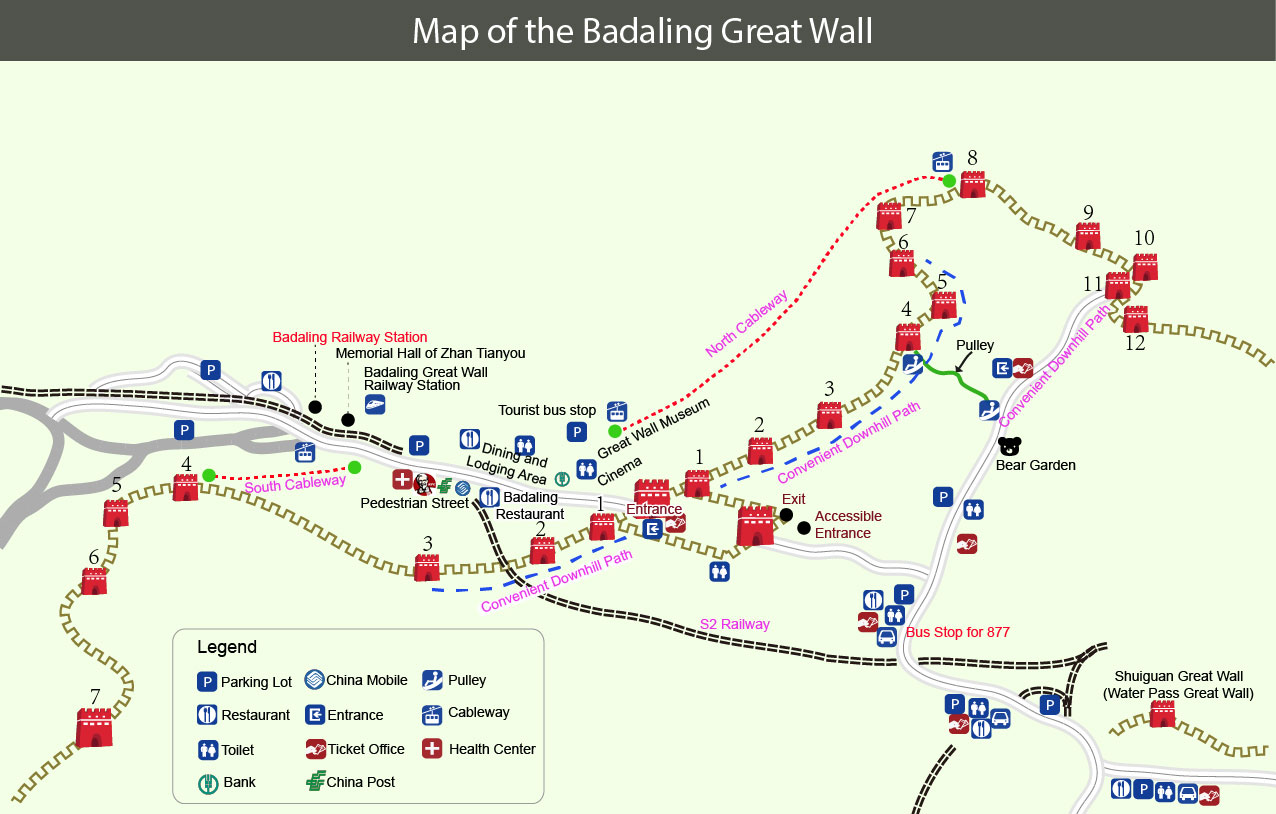 |
| Badaling Great Wall Map |
1. North Section Hiking Route: Magnificent but Crowded
 |
| Badaling Great Wall |
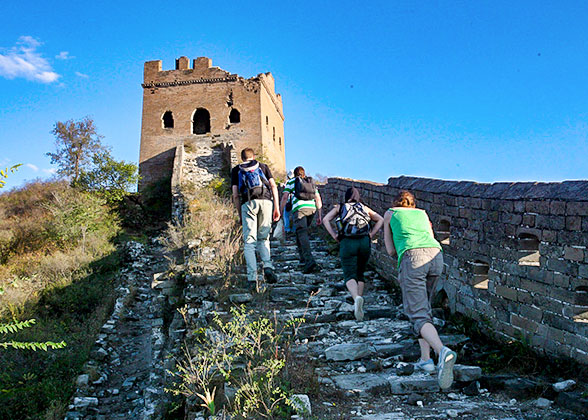
2. South Section Hiking Route: Less Crowded
More touring routes:
|
|
Opening Hours
Day Time:
Nov.1 to Mar.31: 7:30 - 17:00, last admission at 16:00.
Aerial Cable Car: 7:30 - 16:00, stop selling round trip tickets at 13:00.
Ground Cable Car: 8:50 - 16:00, stop selling round trip tickets at 13:00.
Pulley: The operation time depends on the passenger flow.
Night Time:
Cable Car: 17:30 - 19:30
Lighting time: 19:00 - 22:00
Tickets
Day Tour:
| Tickets | High Season (Apr. 1 to Oct.31) | Low Season (Nov.1 to Mar.31) |
|---|---|---|
| Entrance ticket | CNY40 | CNY35 |
| Entrance ticket + Cable car (single trip) | CNY140 | CNY135 |
| Entrance ticket + Cable car (round trip) | CNY180 | CNY175 |
| Entrance ticket + Pulley (single trip) | CNY120 | CNY115 |
| Entrance ticket + Pulley (round trip) | CNY160 | CNY155 |
Night Tour:
| Tickets | Weekdays | Weekends and Holidays |
|---|---|---|
| Entrance ticket | CNY 198 | CNY 298 |
| Entrance ticket + Cable car | CNY 298 | CNY 398 |
1. Only upward cable car service is available during the night tour.
2. Children under 1.2m (3.9ft) are free of charge for the night tour.
Badaling Great Wall Tickets BookingHow to Buy the Tickets
Badaling Great Wall Tickets Booking
When is the best time for a visit?
The best times are April, May, September, or October, when it is neither too cold nor too hot, and the surrounding natural scenery is amazing. Usually from mid-October to late October, the Great Wall is decorated by red leaves; while in the other time, it is surrounded by luxurious green plants. However, you should avoid the May Day holiday (May 1st - 5th), the National Day holiday (October 1st-7th) and the Chinese New Year, when the site will be overrun with tourists. See more Badaling Weather
Recommended Tours


How to get to Badaling Great Wall from downtown Beijing
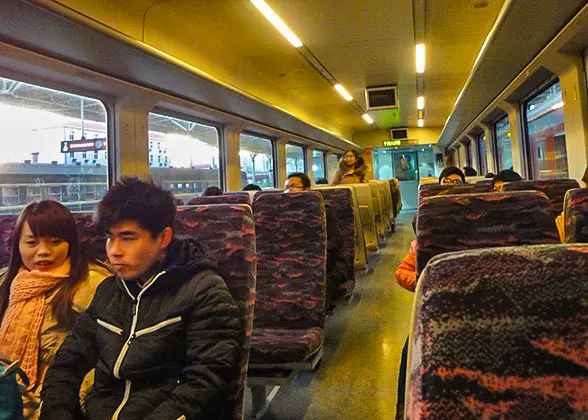
Best and Fastest Way: High Speed Train
| Route | Beijing North Railway Station -Badaling Great Wall Railway Station | Qinghe Railway Station - Badaling Great Wall Railway Station |
| Duration | 30 - 60 min | 20 - 30 min |
| Price | CNY 23 - 31 | CNY 16 - 25 |
| Departure hours | 06:10 - 17:27 | 06:43 - 20:37 |
| Number of departures per day | 6 | 18 |
See detailed Beijing - Badaling High Speed Train
|
|


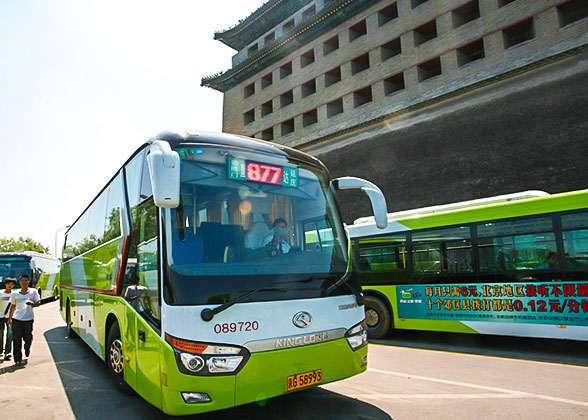
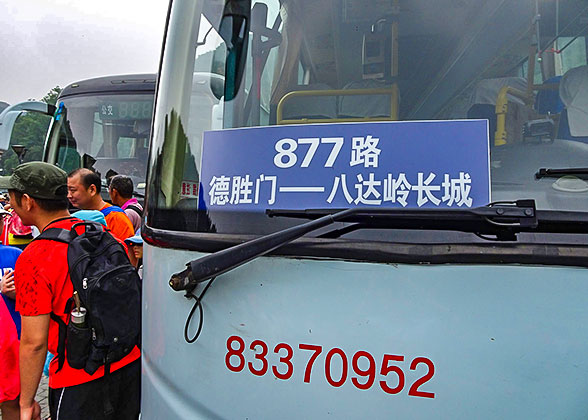
Bus 877: Beitucheng Bus Station ⇔ Badaling Great Wall
Interval: 10 - 20 minutes
Price: CNY 12
Departure Time:
From Beitucheng: 06:30 - 12:00
From Badaling: 11:00 - 16:00
Direct Tourist Bus: Qianmen ⇔ Badaling Great Wall
Single Journey Time: 1.5 - 2 hours
Interval: 10 - 30 minutes
Price: CNY 80 for a round trip
Departure Time:
From Qianmen: 07:00 - 11:00
From Badaling: 12:00 - 16:00
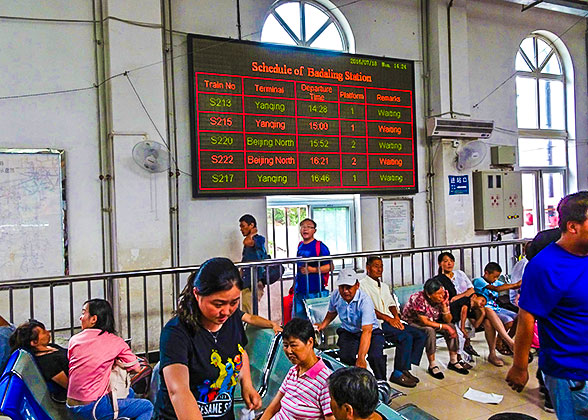
S2 Normal Speed Train: Nankou Railway Station ⇔ Badaling Railway Station
Single Journey Time: about 45 minutes
Price: CNY 6
Departure Time:
From Nankou Railway Station: 9:03 and 18:49 between Tuesday and Thursday; 9:03, 10:28 and 18:49 between Friday and Monday;
From Badaling Railway Station: 16:41/16:45 between Tuesday and Thursday; 13:29/13:32, and 16:41/16:45 between Friday and Monday. See more How to Get to Beijing Great Wall: Train vs. Bus
|
|
Last Option Bus 919: Beitucheng Bus Station ⇔ Badaling
Bus 919 is usually crowded and has many stops on the way. The duration is 2 hours and ticket fare is CNY 12, respectively. In addition, the drop-off site is 1.6 km (1.0 mi) from the entrance and you need to walk or take the free shuttle bus to get there. See more How to Get to the Badaling Great Wall
Badaling Great Wall Shuttle Bus
Departure Time: 6:30 - 17:00
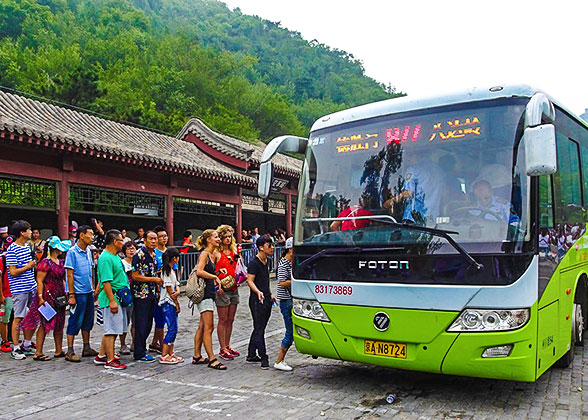
Route: Changcheng Tiandi Station (Chaxi Parking Lot) → South Great Wall Ground Cable Car Station → North Great Wall Aerial Cable Car Station/Entrance of the Great Wall (Guntiangou Parking Lot)
Journey Time: 8 minutes
Price: Free
|
|

Back Mountain and Front Mountain of Badaling
The Badaling Scenic Area is divided into the back mountain and the front mountain, which refer to the inner and outer sides of the Great Wall respectively. These two areas differ in terms of transportation methods and tourist facilities.
Back Mountain - Inner Side
Tourist Facilities: The Aerial Cable Car Station, Ground Cable Car station, China Great Wall Museum, Dinning & Shopping Area and other facilities are all located in the back mountain.
Transportation: The drop-off points for the high-speed train, direct tourist buses, scenic area shuttle buses, and S2 train are all located in the back mountain. Among them, the exit of the high-speed train station, as well as the drop-off points for tourist buses and shuttle buses, are relatively close to the cable car station and the Great Wall entrance. However, the drop-off point for the S2 train is relatively far. Tourists taking the S2 train need to transfer to a shuttle bus to reach the Great Wall entrance.
Front Mountain - Outer Side
Tourist Facilities: Facilities such as a pulley station and a bear park are located in the front mountain.
Transportation: The stop for Bus No. 877 is in the front mountain, close to the pulley station.
Which one is better? As the best-preserved and most popular section, Badaling is a must-see for first-time visitors to China. Mutianyu is also a good choice with high popularity among foreigners, but generally less tourists than Badaling, which makes it accessible on big holidays.
Further Reading
Top 8 Fun Facts about the Badaling Great Wall
Top 8 Things to Do on the Badaling Great Wall
Badaling Great Wall Travel Review
Which Section of Great Wall to Visit
6 Best Places to See Great Wall of China
Top 10 Things to Do in Beijing
