Juyongguan Great Wall
Juyongguan Great Wall, also known as Juyong Pass, is one of the most famous and scenic sections of the Great Wall of China, located 60 kilometers (37 miles) from downtown Beijing. As one of the three famous passes along the Great Wall of China, it has a history of over a thousand years and features a well-designed fortified city and exquisite watchtowers, surrounded by beautiful scenery.
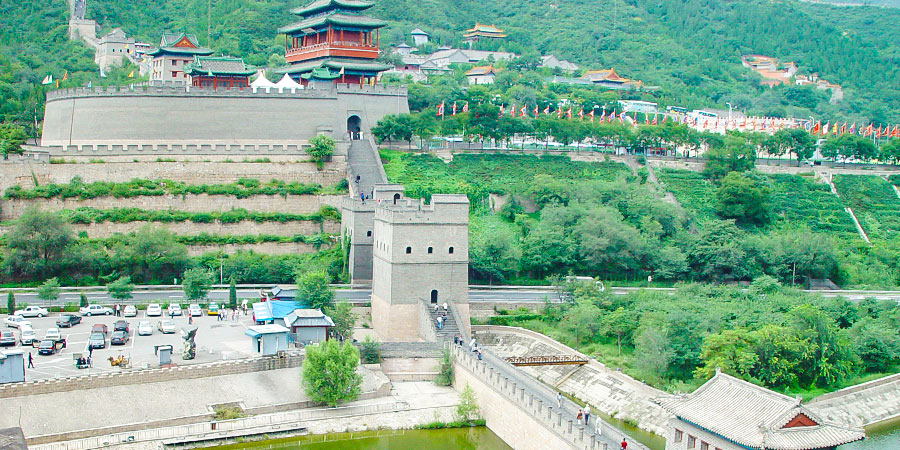 |
| Juyongguan Pass |

Why Visit Juyongguan Rather Than Others
 Juyong Pass ranks as the first of the three impregnable passes along the Great Wall (the other two are Jiayuguan Pass and Shanhaiguan Pass).
Besides the ancient wall, many old buildings, like towers and temples, can be seen there.
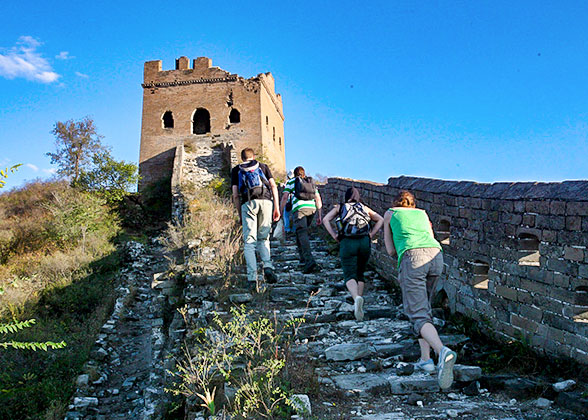
The stairs on the west side are steeper, and those on the east side are gentler, enabling both energetic adventurers and families with children to find a suitable route.
Compared to Badaling and Mutianyu, Juyongguan has fewer tourists, enabling you to avoid the crowds and enjoy a quiet visit.
|
|

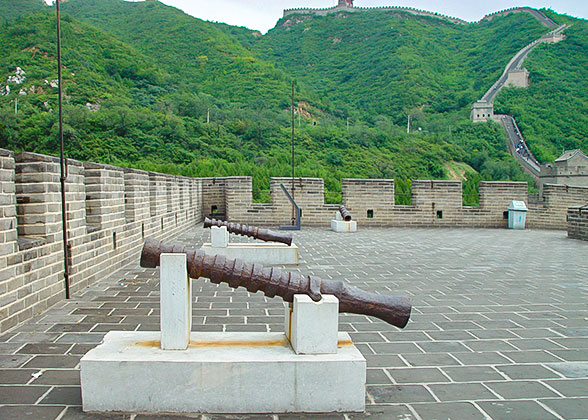
Basic Facts of Juyongguan Great Wall
Situated in a valley surrounded by mountains on two sides, it has long been a military stronghold.
It was first built in the Spring and Autumn Period (770 - 476 BC) and Warring States Period (476 - 221 BC) by Yan State as a fortification, and was linked to the Great Wall of China in the Southern and Northern Dynasties (386 - 589).
Zhu Yuanzhang (1328 - 1398), the first emperor of the Ming Dynasty (1368 - 1644), ordered the pass to be rebuilt to protect the northern borders from Mongol invasions. The extant pass was built then, and renovated in 1992.
The mountain to the east is the 150-meter (490-foot) high Cuiping Mountain, with 1,500 meters (4,900 feet) of wall on its ridges. To the west is 350 meters (1,150 feet) Jingui Mountain, with 1,200 meters (3,900 feet) of wall built on it. The walls on the two mountains look like giant arms cradling the buildings of the valley.
The pass is roughly circular with a perimeter of about 4,142 meters (4,530 yards) long. The widest point of the wall is 16.7 meters (55 feet), while the narrowest measures only 1.2 meters (3.9 feet).
It consists of two gates, one in the south and the other in the north, respectively called Nan (south) Guan (gate) and Bei (north) Guan. Two high watchtowers were built at each gate.
Must-see Attractions in the Juyongguan Great Wall
1. Juyong Pass
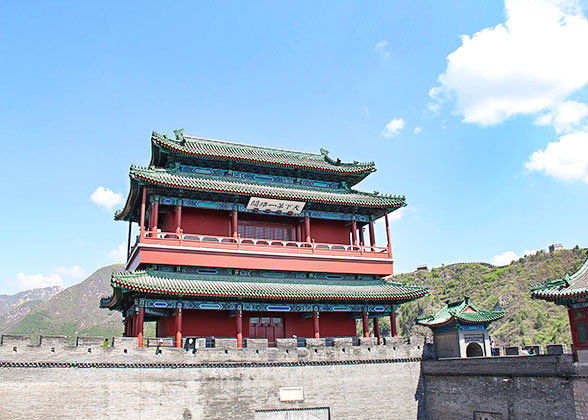
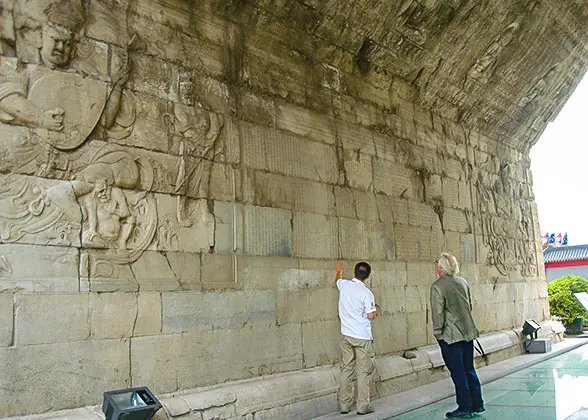
Juyong Pass is known as the “First Pass under Heaven”, a complex defensive structure that was once the most difficult place for ancient soldiers to live and guard. Standing at 32 meters (105 feet) high and having three layers, its solid structure and commanding position made it an indispensable fortress, symbolizing the tenacity and strength of ancient China's defense system.
|
|
2. Cloud Platform
3. Juyongguan Great Wall Museum
4. The Horse God Temple
How to Tour the Juyongguan Great Wall
 |
| Map of Juyongguan Great Wall |
1. Leisurely East Route Tour; 1 hour
2. Challenging West Route Tour; 2 - 3 hours
|
|
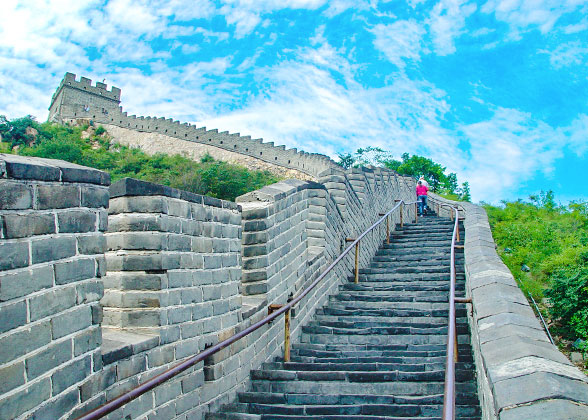
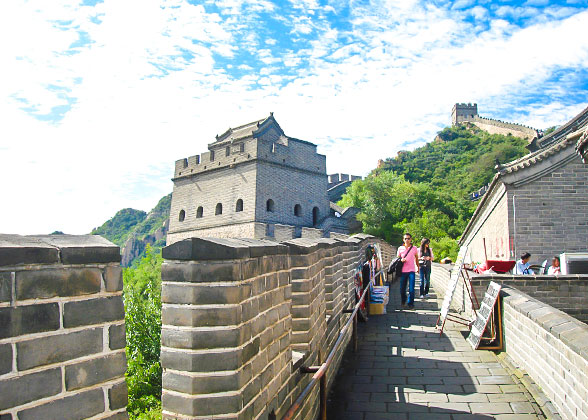
3. Comprehensive Loop Tour; 3 - 4 hours
4. Night Tour Route
When is the Best Time to Visit?
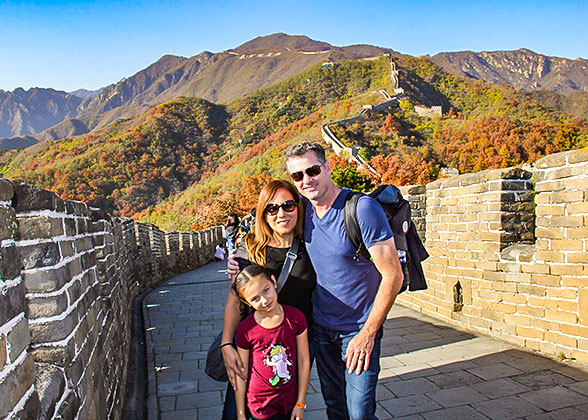
The best times to visit Juyongguan are April, May, September and October. In April and May, the green mountains are dotted with beautiful flowers. The ancient wall is immersed in a sea of flowers. In autumn, the flamboyant leaves form another highlight of the scenic area.
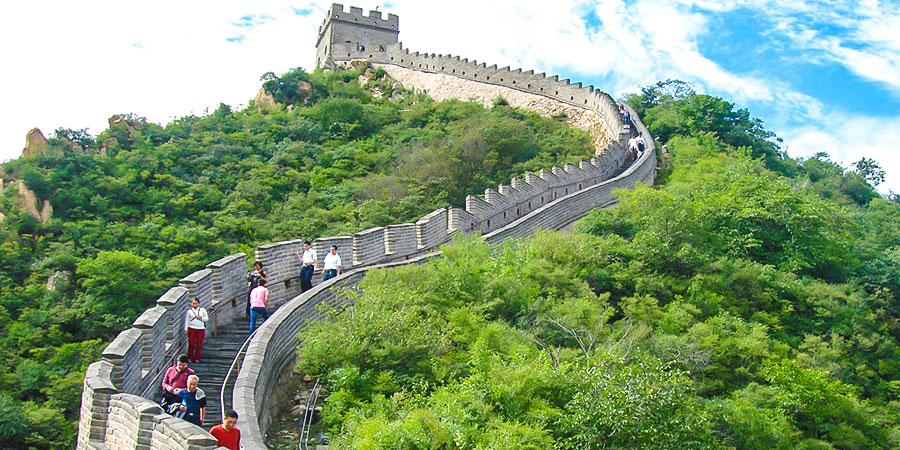 |
| Juyongguan Great Wall in Spring |
Opening Hours:
| Day time | March 16 - October 7 | North Gate (North Pass Tower): 6:30 - 18:00, last admission at 17:30 South Gate (South Pass Tower): 8:30 - 17:00, last admission at 16:30 |
| October 8 - March 15 | 8:30 - 17:00, last admission at 16:30 | |
| Night time | Friday, Saturday, and holidays from April 29 to October 15 | 18:30-22:30, last admission at 22:00 |
Admission Fee:
| Day time | April to October | CNY 40 |
| November to March | CNY 35 | |
| Night time | CNY 40 | |
Juyongguan Great Wall Tickets BookingHow to buy the tickets?
How to Get to Juyongguan Great Wall from Downtown Beijing
 By City Bus:
Option 1: Bus 919
Take Bus 919 at Beitucheng bus station and get off at Juyongguan Great Wall Station. The entire journey costs CNY 10 and typically lasts around 2 hours.
Note: Avoid taking the 919 express as it doesn't stop at Juyongguan Great Wall Station. It is advisable to double-check with the driver prior to boarding the bus to ensure you're on the right one.
Option 2: Bus 870/883 + Bus 879/Chang 20
Take Bus 870 or 883 at Deshengmen and get off at Nankou Dongjie Station, then transfer to Bus 879 or Chang 20 to reach Juyongguan Great Wall Station. This option takes approximately 2.5 hours and the total fare amounts to CNY 12.
Non-stop tourist bus:
Dongzhimen ⇔ Juyongguan Great Wall, only runs on weekends from May to October
- Departure: At 08:30, catch the bus from Dongzhimen Bus Station.
- Arrival and Exploration: Around 10:00, arrive at the Juyongguan Great Wall. You will then have 4 hours to freely explore the Great Wall.
- Return: Gather at around 14:00 to board the bus for the return journey to Dongzhimen, arriving at approximately 15:30.
Single journey time: 1.5 hours
Ticket fare: CNY 80 for a round-trip
If you are not familiar with Beijing, a group tour may be the most worry-free option. The tour group will offer pick-up services from the city center, along with round-trip transportation and professional tour guide commentary, ensuring a hassle-free experience.
Where to Eat at the Juyongguan Great Wall
Tips for Visiting the Juyongguan Great Wall
2. Wear comfortable, non-slip sports shoes and gloves.
3. There is no cable car service at Juyongguan Great Wall. If you're not good at sports, it's advisable to choose the east route.
4. If time allows, you can also visit the Badaling Great Wall or the Ming Tombs near the Juyongguan Great Wall. They are approximately a 20-minute and a 30-minute drive from Juyongguan respectively.