Lhasa Weather
Lhasa, located at an altitude of about 3,650 meters (11,975 feet), has a plateau temperate semi-arid monsoon climate. Its significant climatic features include large diurnal temperature differences, uneven distribution of precipitation, long hours of sunlight, and thin and dry air. Specifically:
 |
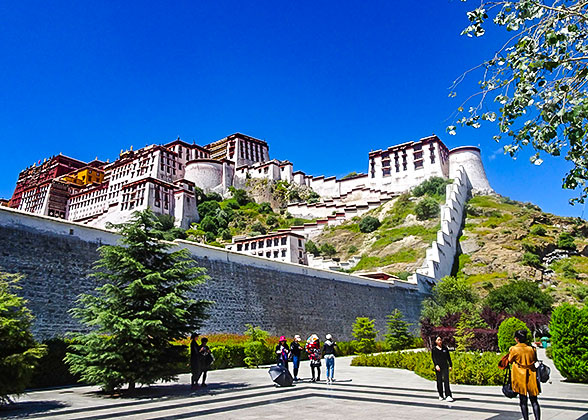
| Visitors Admiring Potala Palace |
Temperature
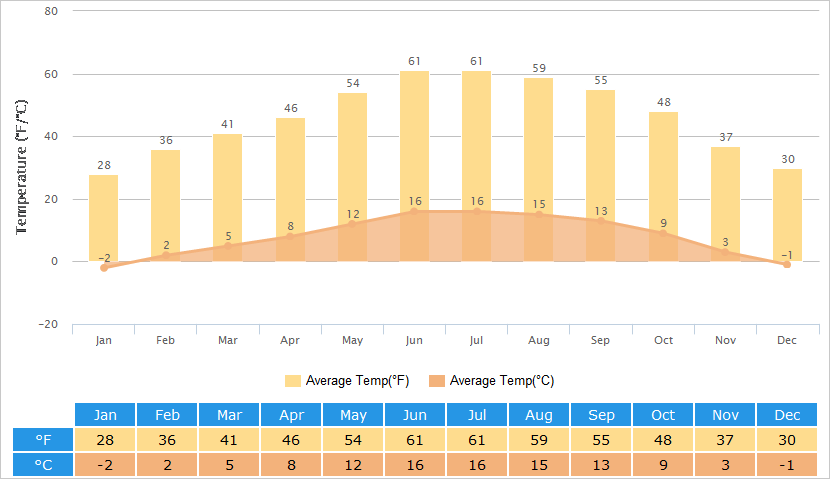
The annual temperature difference in Lhasa is not very large. The hottest month in Lhasa is July, with daily highs and lows around 20-28 degrees Celsius (68-82 degrees Fahrenheit) and 12-15°C (54-59°F), respectively; while the coldest month in Lhasa is January, with daily highs and lows around 5-12°C (41-54°F) and -10-0°C (14-32°F), respectively. Generally speaking, the daytime is nearly always mild and neither cold nor hot throughout the year.
However, the temperature difference between day and night is extremely large. From the above data, it can be seen that whether in the hottest July or the coldest January, the daily temperature difference can reach around 15°C (27°F). Sometimes, this value can even reach around 20°C (36°F). In other words, no matter when you travel to Lhasa, you need to bring two sets of clothes of different thicknesses to ensure comfort during both day and night.
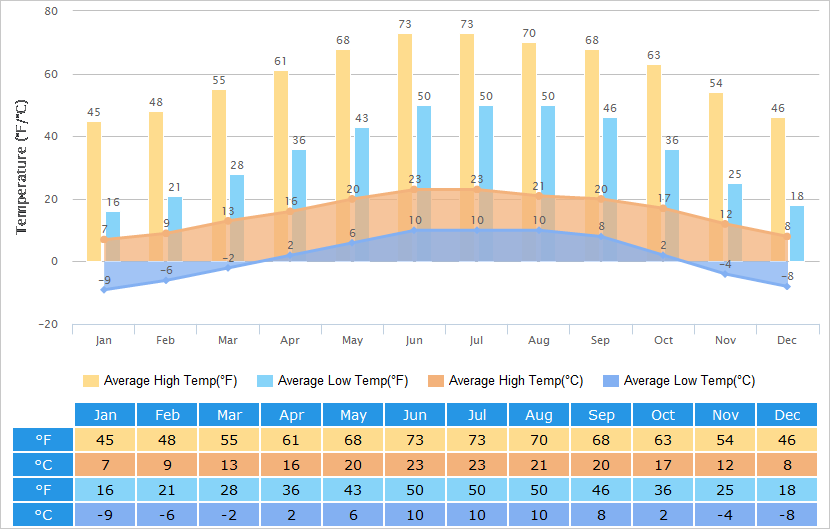
Average Temperatures of Lhasa
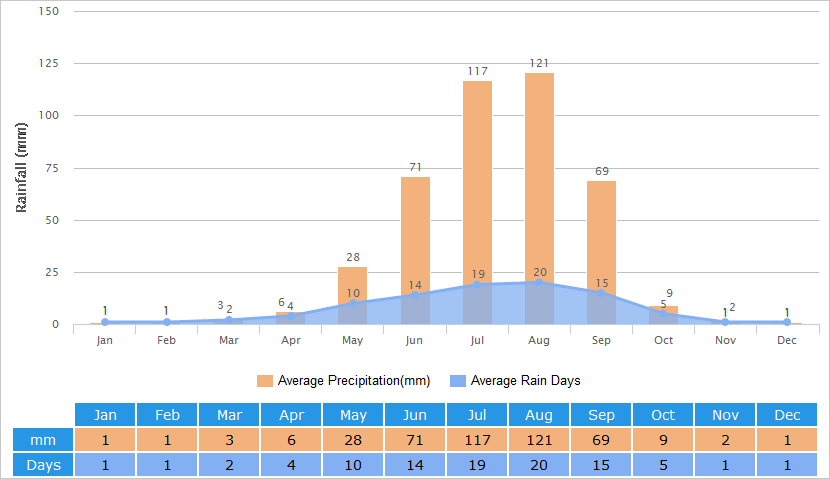
Precipitation
Lhasa has distinct dry and rainy seasons.
The rainy season is from June to September, during which more than 90% of the annual precipitation occurs. In these months, the average number of rainy days per month is about 15-20. However, you don’t need to worry about travel in Lhasa during these months being inconvenient or unpleasant due to frequent rain: most of the rain falls at night, and during the daytime, the weather has already cleared up.
 |
| Dry Season with Clear Sky |
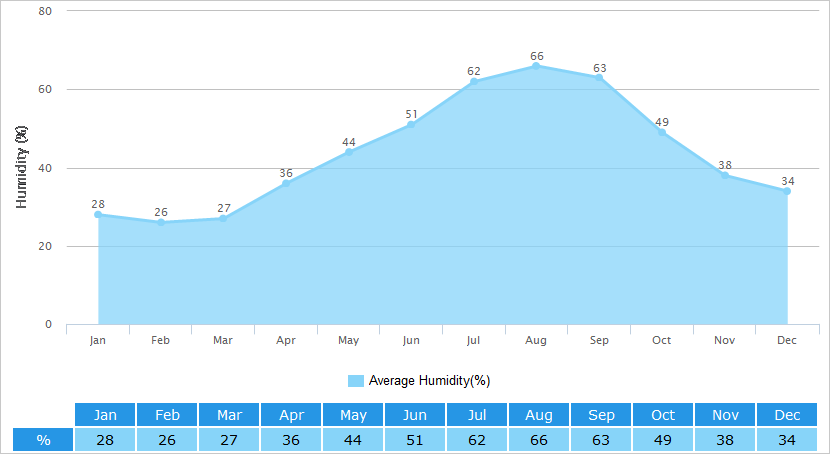
October to May is Lhasa’s dry season, with only a little precipitation. From November to February, the average number of days with precipitation per month is only one. During this period, Lhasa almost always has bright sunshine, clear blue skies, and extremely high visibility. However, it should be noted that the air in Lhasa at this time is uncomfortably dry, and without any precautions, one will end up with chapped lips and skin during the stay.
Humidity Graph of Lhasa
Sunshine Hours & UV Rays
As one of the highest cities in the world, Lhasa boasts rich sunlight, famed as “City of Sunlight”. Specifically, it receives more than 3,000 hours of sunshine annually, whereas Shanghai and Chengdu at the same latitude have 1,239 hours and 1,986 hours, respectively. The average daily sunshine hours are about 7 to 10 hours.
The solar radiation here is very strong. It’s not an exaggeration to say that sun protection is needed all year round: even in the winter months, the UV index can reach 5 to 7 at its highest.
 |
| Lhasa with Strong Sunshine even in Winter |
Best Time to Visit Lhasa
May through October is the best time to visit Lhasa.
During this period, the weather of Lhasa is relatively mild and comfortable, especially during the daytime. Additionally, whether in May and October of the dry season or in June to September of the rainy season, the daytime is generally sunny, creating ideal conditions for travel.
Scenery-wise, Lhasa is particularly beautiful during these months: from May to August, the trees are lush, the grass is vibrant green, and flowers are in full bloom; while September and October mark Lhasa’s most colorful season, as the leaves gradually turn yellow. Against this backdrop of natural beauty, cultural landmarks such as the Potala Palace become even more captivating.
7-Day Lhasa Weather Forecast
Lhasa Weather by Month
Lhasa Climate - Seasons & Travel Recommendations
Spring: March - May
What to Wear: Dressing in layers can help you easily add or remove clothing as needed in spring with large daily temperature differences. Specifically, a three-layer system is highly recommended: for the outer two layers, wear a three-in-one jacket with a fleece lining; for the innermost layer, opt for a light sweater in March and April, and a long-sleeve T-shirt in May. For the lower body, sweatpants and long johns are recommended. Be sure to bring lip balm and moisturizer.
Travel Recommendations and Tips:
1. Lhasa in spring has fewer tourists and relatively affordable travel costs, excluding the Qingming Festival holiday and May Day holiday.
2. In addition to classic attractions like the Potala Palace, Barkhor Street, and the Jokhang Temple, spring in Lhasa offers some special sights: snow-capped mountains clearly visible in the crisp air, migratory birds at the Lhasa River and Lalu Wetlands, and peach blossoms blooming everywhere.
3. Several lively festivals are celebrated in Lhasa during the spring, such as the Saga Dawa Festival and the Namtso Lake Thawing Festival, both of which are typically held in May.
 |
| Warm Daytime of Spring |
Summer: June - August
What to Wear: During the daytime, wear a T-shirt with a lightweight sun-protective jacket or shirt; during the nighttime, wear a T-shirt with a trench coat or the outer shell of a three-in-one jacket. For pants, jeans and sweatpants are both OK. When visiting Lhasa in summer, sun protection items such as sunscreen, sunglasses, and sun hats are essential. Also, bring an umbrella just in case.
Travel Recommendations and Tips:
1. Summer is when Lhasa has the coziest temperature and its natural scenery is at its most vibrant of the year. However, you may want to know that it tends to be crowded and expensive, especially in July and August, which coincide with the Chinese summer vacation.
2. The Shoton Festival in August is one of the biggest festivals of the year, featuring exhibitions of giant thangkas, Tibetan opera performances, and more.
 |
| Warm or Cool Summer of Lhasa |
Autumn: September - November
What to Wear: Since there is a significant temperature gap between day and night, you are recommended to pack at least one of each of the following types of tops: long-sleeve T-shirts, sweaters, denim jackets, 3-in-1 jackets, and down jackets. This will allow you to mix and match your outfits based on the specific temperature of each destination per day. For bottoms, pack sweatpants and long johns.
Travel Recommendations and Tips:
1. In autumn, the number of tourists in Lhasa gradually decreases, and the city becomes quieter. However, it will be very crowded during the National Day holiday in early October.
2. When visiting Lhasa during this season, in addition to seeing the Potala Palace and other famous attractions, be sure to take time to enjoy the autumn scenery of the city. The Lalu Wetlands, Norbulingka, and Zongjiao Lukang Park are all excellent destinations.
3. The Lhamo Festival in November 2026 is well worth experiencing, where you can witness blessing ceremonies and enjoy traditional songs and dances at the Jokhang Temple.
 |
| Colorful Autumn of Lhasa |
Winter: December - February
What to Wear: To stay warm, you can wear a long-sleeve T-shirt, a sweater, and a down jacket, along with sweatpants and thermal pants. It’s also a good idea to wear a hat and scarf, especially in the early morning or evening. Thick boots are advised to wear. Besides, to protect your lips and skin from the dry air, apply lip balm, moisturizer, and body lotion.
Travel Recommendations and Tips:
1. If you don’t mind the cold, winter is actually a great time to visit the city: the climate of Lhasa is extremely sunny, there are fewer crowds, and prices for hotels, flights, and attraction tickets are lower.
2. With exceptionally high visibility in winter, you are recommended to catch the view of the golden sun shining on the snow-capped mountains during sunrise.
3. At this time of year, Yamdrok Lake and Namtso Lake freeze over into a dreamlike blue ice, creating a pure and awe-inspiring sight.
4. The Tibetan New Year usually falls in February of the Gregorian calendar, and it is an excellent time to experience Lhasa’s customs and culture.
 |
| Cold but Sunny and Quiet Winter |
Related information: Shigatse Weather.