Chinese Minority Food
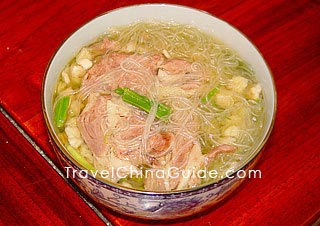 |
| Bread in Mutton Stew of Hui Minority in Xi'an |
Hui Cuisine
The Hui ethnic group possesses the most Muslims, which influences the cuisine greatly and makes it the representative of the Chinese Muslim food. With a long history, Hui cuisine embodies the life habit - cleanness. Their diet never involves pig meat, the meat of non-ruminating animals, fierce animals and their blood. But those meats that are allowed and which have been prepared under the auspices of an imam can be made into delicious dishes. Muslims are not allowed to smoke or drink wines, but encouraged to enjoy teas. When there are guests come to visit, welcoming hosts will produce tea together with fruits and fried cakes. The tea can contain sugar, Chinese wolfberry, sesame, red Chinese date, longan, and raisins, which are rich in nutrition.
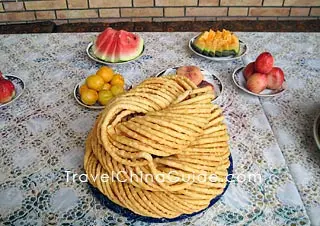 |
| Sangzi of Hui Minority in Xinjiang and Ningxia |
There are four main characteristics of Hui Cuisine. Most of the staple food is made of flour rather than rice, and can have many forms. Sweeteners play an important role in the meals - these people tend to add honey or sugar to their dishes. Hui people like eating beef and mutton which also stimulate the appetite and are nourishing. One of the typical meals is roast mutton. They have also renovated and adapted aspects of Han cuisine - for example dumplings in a sour soup is one of their favorites.
Tibetan Cuisine
Tibetan cuisine includes Zanba (roasted highland qingke barley flour), meat, and milk products. The products reflect the differences between the various pastoral and farming areas. Favored by all are vegetables such as cabbages and wine made from qingke barley and corn.
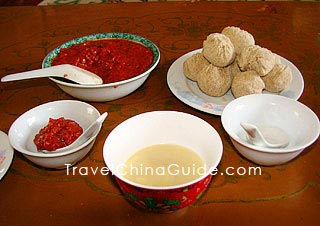 |
| Tibetan Tsampa |
Although Tibetan cuisine has no real classified styles, it can be roughly divided into four typical flavors: Ngari's Qiang Cuisine, Lhasa's Lhasa cuisine, Nyingchi's Rong cuisine and the Court Cuisine that comprises dishes common among the former aristocrats of Tibet. In total there are some 200 or more recipes. Qiang cuisine caters for the people who live in the pastoral area with a high altitude. The food preparation pays particular heed to helping people cope with the very cold climate. Examples of produce are cheese, acidulous milk, butter and stock made from boiled cattle hoofs. The latter being something akin to the calf's foot jelly prepared in the West. Lhasa cuisine uses a wide range of ingredients and is cooked in many different ways. Carbonade with radish, boiled mutton, beef catsup are all popular dishes. Rong Cuisine is found in southeast Tibet where there is a lower altitude. Wild fungi and mushrooms are readily available and used to flavor food. Court cuisine is a quintessential art using the best traditions of Tibetan dietary skills and cooking methods for a wide variety of different produce in order to serve attractive and flavorsome dishes.
Specialties are yoghourt made from yak milk which is also used to produce excellent and famed cheeses. Zanba in Lhasa and a particularly excellent recipe for stewed chicken with mushrooms in Nyingchi, and so on。
You May Like:
Food & Drink in Tibet
Top 10 Minority Food Restaurants in Beijing