Culture & Religion of Tang Dynasty
In science, the Tang Dynasty (618 - 907) contributed a lot to the development of astronomy, medicine and printing technique in Chinese history. The famous astronomer, Monk Yixing, was the first to successfully measure the length of the meridian line. The well-known King of Medicine, Sun Simiao, wrote a medical book Qianjin Fang (Thousand Golden Prescriptions) which was considered the treasure of traditional Chinese medicine. In 868, the Chinese translation of the Diamond Sutra was printed, nowadays recognized as the earliest engraved printing in the world.
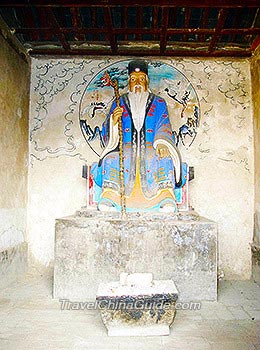 |
| Statue of King of Medicine, Sun Simiao |
In addition, the form of the ancient novel called 'Chuan Qi' (story) began to take shape during this period. Having a complete story structure and various characters, novels in that period started to reflect social reality. Some representative works were Zhenzhong Ji, Yingying Zhuan and LiwaZhuan. All the novels during this period laid the foundation for the later flourishing development of novels in the Ming (1368 - 1644) and Qing (1644 - 1911) Dynasties.
 |
| Xian Geat Mosque was originally built in 742 AD of Tang Dynasty |
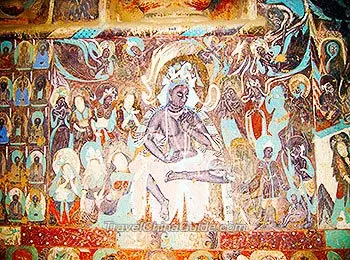
In the early period, the rulers' policy towards religion was tolerant. There were mainly two traditional religions - Buddhism and Daoism. During the reign of Emperor Taizong, a famous Buddhist Monk named Xuan Zang went to seek the Buddhist Sutra in India. After enduring an arduous journey, he obtained a total of 657 sutras for which the Big Wild Goose Pagoda was especially built to preserve. In the process of translating the classical sutras, Buddhist monks in the Tang Dynasty gradually formed a mature system of ideology which contained different sects of Buddhism. Along with the rapidly developed Buddhism, some religions from foreign states, such as Islam and Christianity, were spread to China which enriched Tang's religions. However, in Emperor Wuzong's reign, coercion was reinforced on Buddhism, which caused many sects to disappear except for Zen and a few other remaining sects.
|
|

- Last updated on Aug. 08, 2025 by Gabby Li -