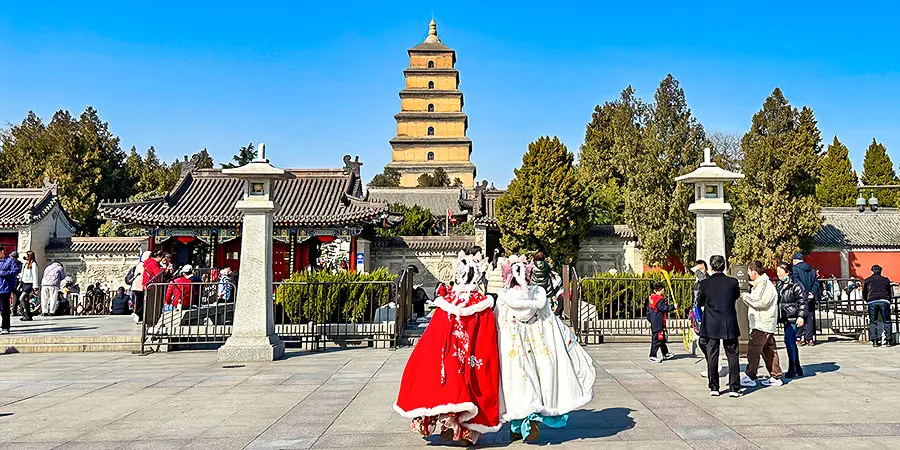
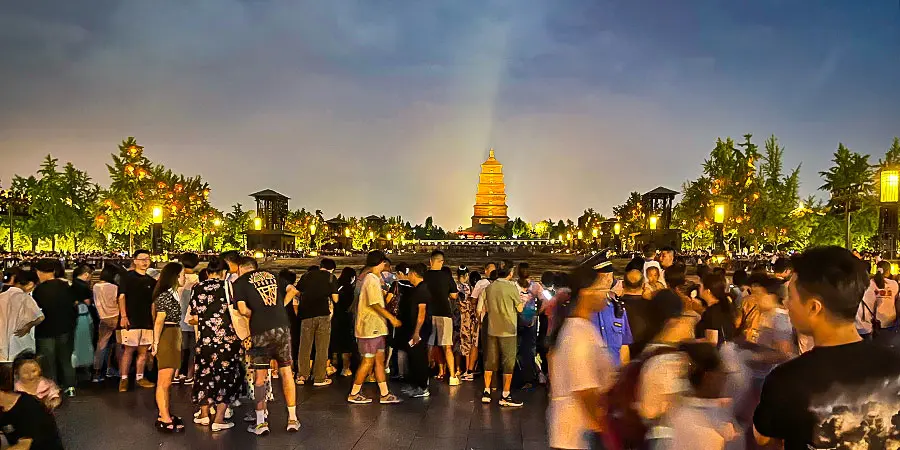
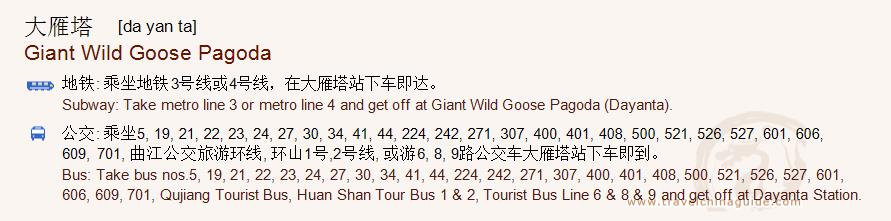
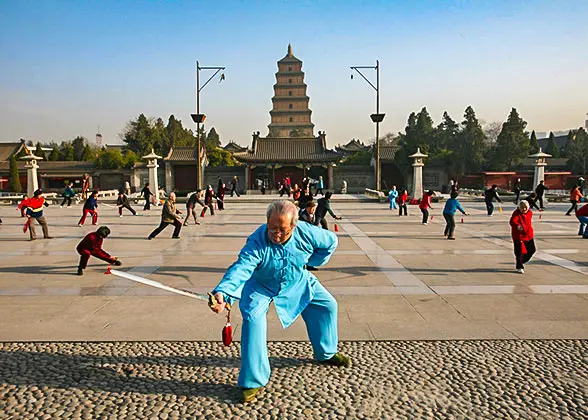
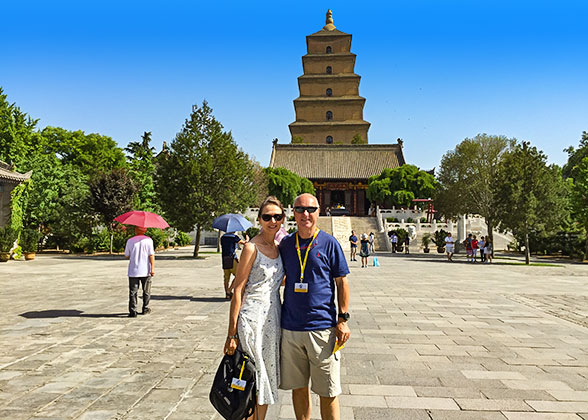
As the symbol of Xi’an, the Giant Wild Goose Pagoda, also called Big Wild Goose Pagoda, is a well-preserved ancient building and a holy place for Buddhists. Located in the Da Ci’en Temple complex about 4 kilometers (2.5 miles) south to the city center, the pagoda enjoys a history spanning more than 1,370 years and has been listed as a UNESCO World Heritage.
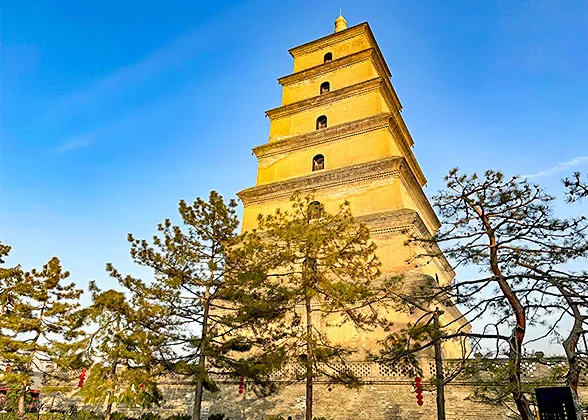
This 7-storied pagoda built with bricks is 64.5 meters (210 feet) high, with four arch-shaped doors on each floor. From an external view, the pagoda looks like a square cone with its two sides tapering to a pointed top. Inside the pagoda, stairs twist up so that visitors can climb and overlook the panorama of the city.
Giant Wild Goose Pagoda, Symbol of Xi'an
Why is it Called Giant Wild Goose Pagoda?
There is a legend about the pagoda’s name. According to ancient stories of Buddhists, there were two branches, for one of which eating meat was not a taboo. One day, they couldn’t find any meat to buy. Upon seeing a group of big wild geese flying by, a monk said to himself: “Today we have no meat. I hope the merciful Bodhisattva can give us some.” At that very moment, the leading wild goose broke its wings and fell to the ground. All the monks were startled and believed that Bodhisattva showed his spirit to order them to be more pious. In response to this divine message, they established a pagoda where the wild goose fell and stopped eating meat thereafter. Hence its name.
Giant Wild Goose Pagoda History
As the home of Giant Wild Goose Pagoda, the Da Ci’en Temple was initially built in 648 of Tang Dynasty (618-907) under the order the crowd prince then, to commemorate his mother who had been gone. Four years later, Xuanzang, the first abbot of the temple who had made a long journey to India to obtained Buddhist scriptures and relics, requested permission of the emperor to build a Buddhist pagoda to store sutras and statues. After the emperor agreed, Xuanzang supervised the construction of a 5-storied pagoda, which was renovated to a 7-storied one in the following dynasty and remained the same number of floors afterward.
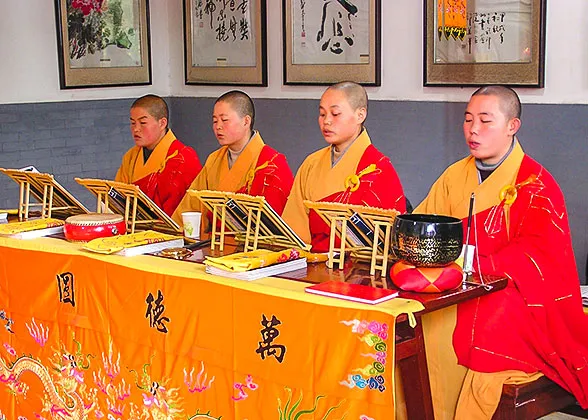
Reciting Scriptures in Da Ci'en Temple
Burning Incense for Praying
What to See in Giant Wild Goose Pagoda
First Floor - Steles and Brief Introduction to the Pagoda
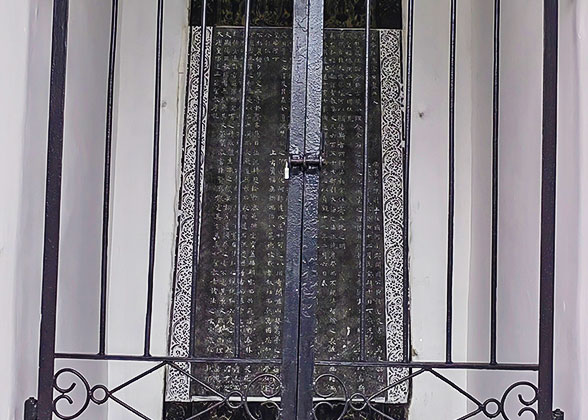
There are two steles next to the entrance to this floor, engraved with articles composed by two emperors in Tang Dynasty for sutras translated by Xuanzang. On the door header, you can find delicate drawings composed of engraved lines.
Stele with Emperor's Writing
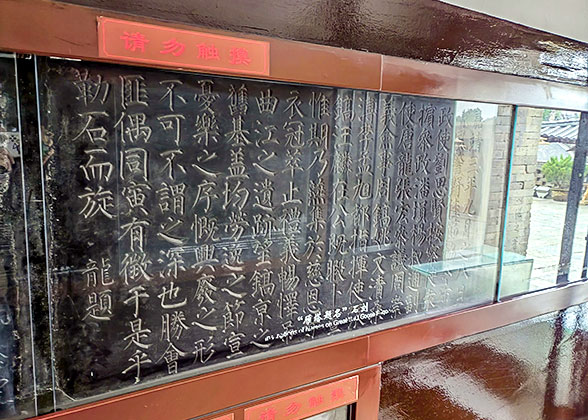
Stele with Names of Imperial Exam Winners
Entering the pagoda, you will first find many steles engraved with names of people who passed imperial examinations more than 1,300 years ago, and right now, you can touch the stele with your finger through a small opening. Besides, brief introduction to the pagoda is presented on the display boards and couplets.
Stairs and Couplets inside Dayan Pagoda
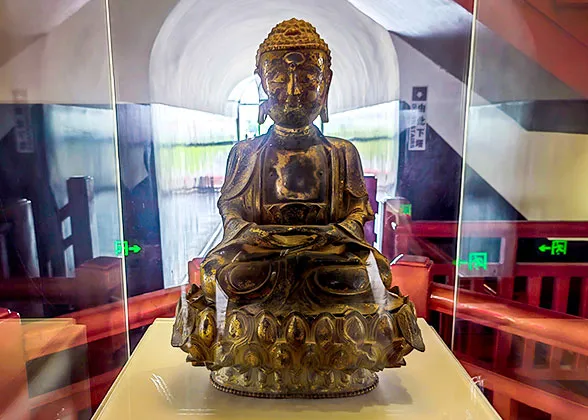
Gilded Bronze Statue of Sakyamuni
Second Floor - Gilded Bronze Buddha Figurine in Ming Dynasty (1368-1644)
Ascend the stairs to the second floor, and you’ll see a gilded bronze statue of Sakyamuni, founder of Buddhism. The Buddha figurine sits on a seat in a shape of a blooming lotus flower, which is connected with the holy character of the Buddha.
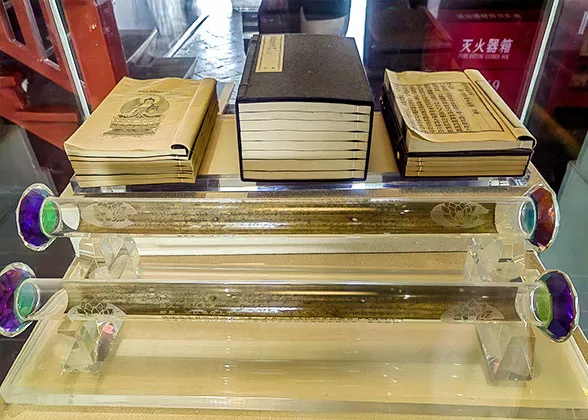
Third Floor - Replicas of Pattra-leaf Scriptures
In the middle of this floor, there are two replicas of pattra-leaf Buddhist scriptures brought back by Xuanzang. If you take a close look at them, you’ll be attracted by well-written words on the leaves. On this floor, there are further thread-bound sutras translated by Xuanzang on display.
Replicas of Pattra-leaf Scriptures
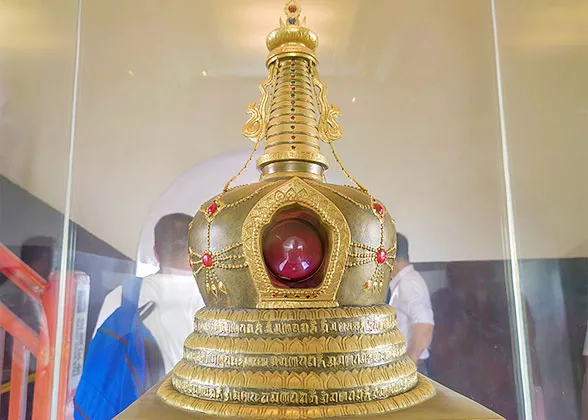
Golden Stupa Containing Buddha Sarira
Fourth Floor - Exquisitely Decorated Stupa
Once you step on this floor, the beautiful golden stupa decorated with elegant patterns and rubies will amaze you. In the stupa enshrines Buddha Sarira preserved in a ruby glass ball-shaped cover.
Fifth Floor - Wind Bells and Ancient Bricks
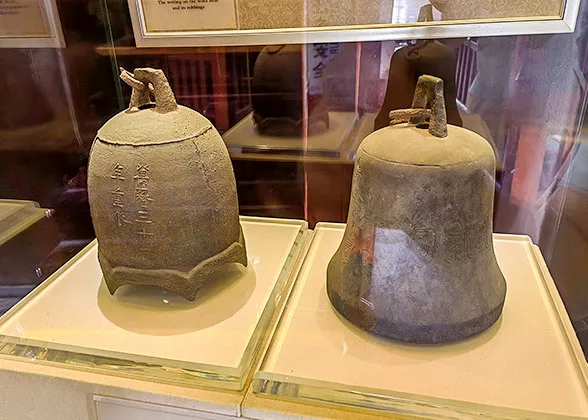
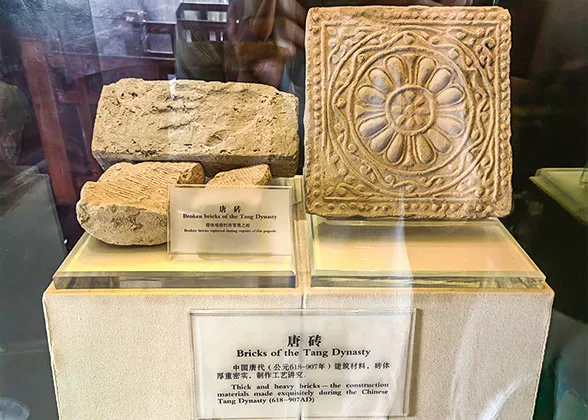
Before you enter the pagoda, you may already find wind bells hung under the eave corners. When it winds, they sway gently and make clear and melodious sounds. On this floor, two wind bells respectively kept from 100 and 400 years ago are on display, with inscriptions on both surfaces. You can further view ancient bricks with flower-shaped engraving and also handprints of the craftsmen.
Wind Bells Once Hung outside the Pagoda
Millennium-old Bricks of Dayan Pagoda
Sixth and Seventh Floors - Panorama of Xi’an
Giant Wild Goose Pagoda Map
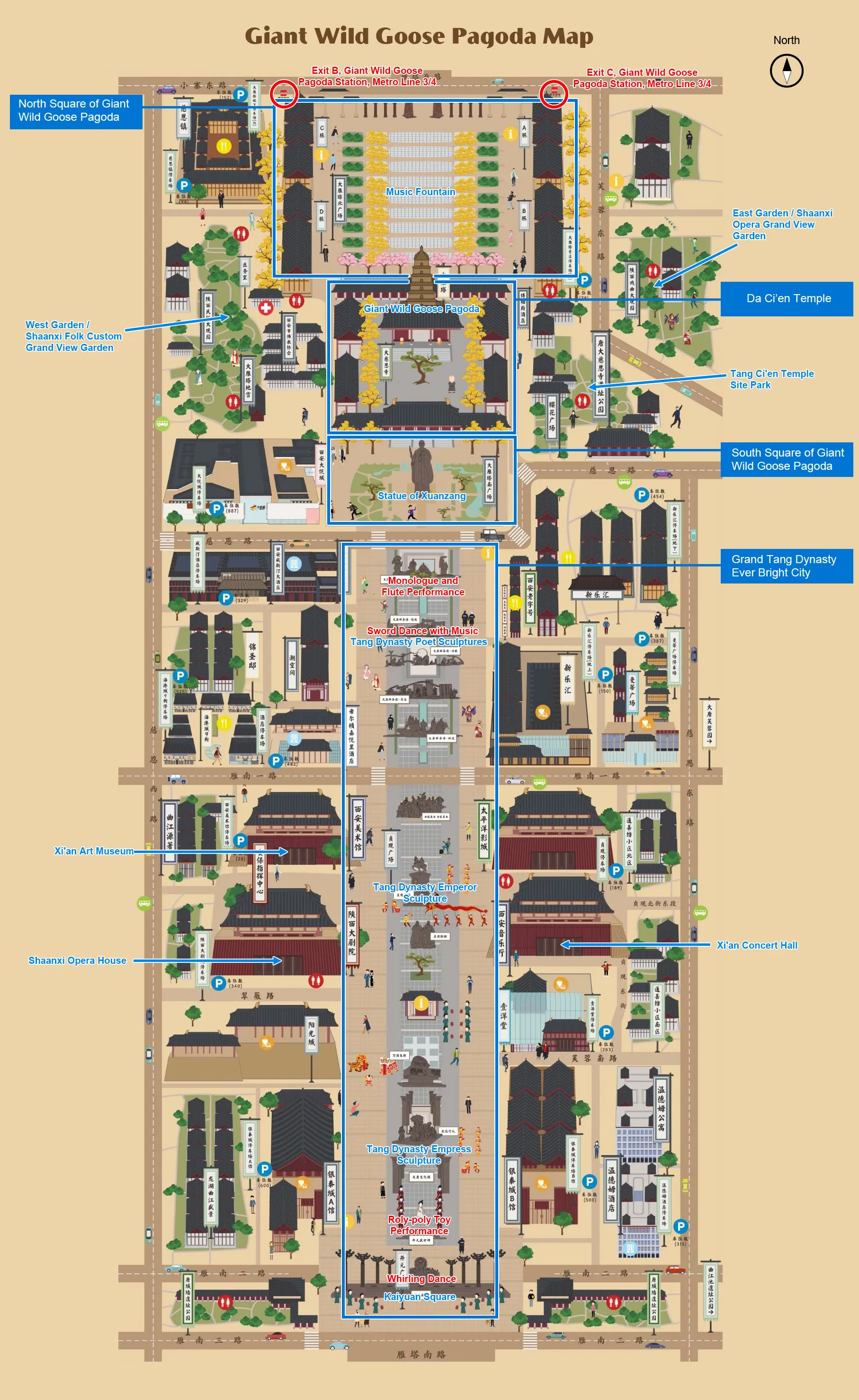
There is no collection on these two floors, but city views outside the pagoda are the real highlights. Through the windows on the two floors, you’ll be astonished by the peony garden to the west, the music fountain on the north square, and Grand Tang Dynasty Ever Bright City to the south. If the weather is clear enough, the distant Qinling Mountains are also visible.
Fun Facts about Giant Wild Goose Pagoda
1. Giant Wild Goose Pagoda Once Obviously Tilted.
Back to more than 300 years ago, people then have recorded that the Giant Wild Goose Pagoda tilted to the northwest. Till 1996, the top of the pagoda had tilted for about 1 meter (1 yard) away. According to geological experts, rainwater infiltration, heavy earthquakes, and the uneven surface of groundwater jointly caused this. To deal with it, people injected water into the ground and stopped the tilt. Currently, the pagoda is gradually getting back to the central position, but it still takes about 1,000 years for it to stand completely upright!
2. The Pagoda’s Body is Approximately in a Golden Ratio.
How can the pagoda undertake many heavy earthquakes in the history but never fall down? The secret lies in its golden-ratio body, with the upper length of the first floor of about 25.5 meters and floors above being about 40 meters high. Such a design enables the pagoda to stand steadily and survive from the shaking caused by earthquakes.
Giant Wild Goose Pagoda Travel Tips
Giant Wild Goose Pagoda, Xi'an
1. Before entering the pagoda, many people choose to walk around it clockwise in a full circle to pray for a peaceful life. In the process, you will see the gently swaying wind bells and the two famous steles as national treasures of China.
2. The stairs inside the pagoda are narrow and steep, and also large in number, so you need to ascend and descend carefully, and also mind your head.
3. Since the photograph hole on seventh floor is in a small circular shape and makes it not that convenient to move your camera freely, it’s more recommended to take panoramic photos on the sixth floor with much larger space to find the best camera angle.
4. On the right of the entrance to the pagoda, there is a free luggage storage station, and it’s highly suggested to store heavy backpacks and so on if you decide to ascend the pagoda.
Ticket Price & Opening Hours
Ticket Price
(1) Entrance Fee for Da Ci’en Temple: CNY 10, and free for children no taller than 1.2 m (3.9 ft) or under the age of 6, and also the elderly over 65. (2) Fee for Ascending the Pagoda: CNY 25. Note: Those who want to ascend the pagoda should get both the tickets to the temple and the pagoda.
Opening Hours
08:30-17:40 from October 15 to February 25/29. 08:30-18:00 from March 1 to October 14. Note: Ticket selling and entry to the attraction both stop 1 hour before the closing time.
You need to get to the entrance to the Da Ci’en Temple first to visit the pagoda, so take metro Line 3 or Line 4 to Giant Wild Goose Pagoda Station, get out from Exit B or C, and then walk southward for about 10 minutes to the entrance.
By Bus
Take Bus No. 21, 22, 23, 24, 44, 189, 242, 271, 307, 408, 500, 606, 609, or 920 to South Square of Giant Wild Goose Pagoda, and walk eastward for about 8 minutes to reach the entrance of the Da Ci’en Temple.
 Giant Wild Goose Pagoda Tickets Booking
 Related Videos of Locals Doing Morning Exercise around the Pagoda: