Huaqing Palace (Huaqing Pool)
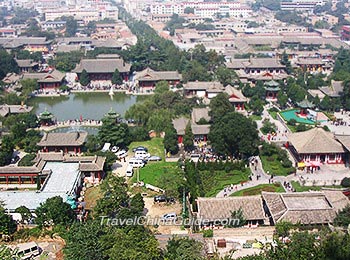
About 30 kilometers (19 miles) east of Xi’an and not far from Terracotta Army, the Huaqing Palace or Huaqing Hot Springs at the foot of Mount Li is one of four most famous imperial gardens in China and a popular holiday resort for ancient royal members.
Its original structure, the Palace Li, was built under the order from King You of Western Zhou Dynasty (1046BC-771BC), and additions were constructed in the following dynasties.
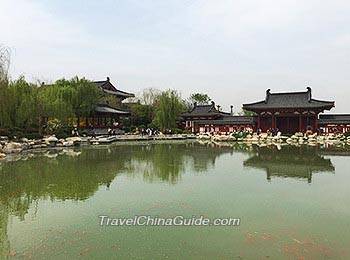
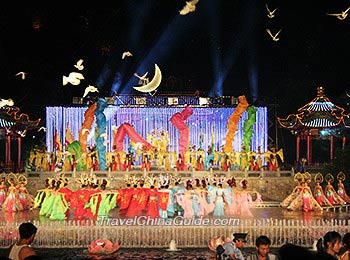
What makes the Huaqing Palace so famous are hot springs within and also the romantic yet sorrowful love story between Emperor Xuanzong and his favorite concubine Yang Yuhuan of the Tang Dynasty (618-907). During his reign, the Emperor spent dizzying amounts of his funds to expand the Palace to a luxurious one. Almost every autumn, the emperor took his concubine Yang here to enjoy themselves and did not return back to the capital until next spring. They really had some sweet times here before the Emperor had to order the kill of Yang because of a rebellion. If interested, you can learn their love story through a large stage show, the Song of Everlasting Sorrow performed right here inside the Huaqing Palace.
Its original structure, the Palace Li, was built under the order from King You of Western Zhou Dynasty (1046BC-771BC), and additions were constructed in the following dynasties.
What makes the Huaqing Palace so famous are hot springs within and also the romantic yet sorrowful love story between Emperor Xuanzong and his favorite concubine Yang Yuhuan of the Tang Dynasty (618-907). During his reign, the Emperor spent dizzying amounts of his funds to expand the Palace to a luxurious one. Almost every autumn, the emperor took his concubine Yang here to enjoy themselves and did not return back to the capital until next spring. They really had some sweet times here before the Emperor had to order the kill of Yang because of a rebellion. If interested, you can learn their love story through a large stage show, the Song of Everlasting Sorrow performed right here inside the Huaqing Palace.
Upon your arrival at the scenic area, you will be amazed by the imperial hot spring pool sites, ancient-style buildings, and attractive lake and mountain views. What’s more, a large number of staff members and also tourists wear traditional Chinese costumes, making you feel like traveling through time tunnel back to the prosperous Tang Dynasty. Below are some of the highlights inside:
Imperial Pools of the Tang Dynasty
 |
| Haitang Pool for Yang Yuhuan |
To protect these sites from wind and rain, ancient-style buildings are constructed above, except for the Prince Pool. Right next to the pool are two lotus-shaped facilities with multiple hot spring outlets, and it’s highly recommended to wash your hands and face because the water is said to be beneficial for skin care.
|
|
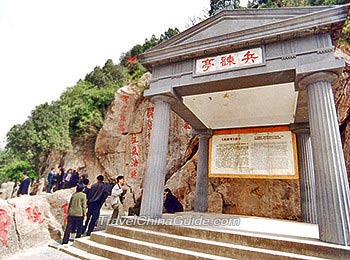

Five-Room Building
|
|


 |
| Newsgirl in Huanyuan Garden |
The Huanyuan Garden, despite all the glory and turbulence, still remains its charm. A 1,200-year-old pomegranate tree gently leans toward the lake, and koi fish in vibrant colors swim among water lilies. Besides, performers dressing up as newsboys, cigarette sellers, patriotic students, and passers-by in Cheongsams bring you back to the unstable and dynamic era of the Republic of China (1912-1949).
Pear Garden & Frost Flying Hall
West of the Pear Garden stands Frost Flying Hall, aka Feishuang Hall in Chinese, the bedroom palace of Emperor Xuanzong. The name, Frost Flying, comes from an interesting story. It’s said that the whole hall is quite warm even in winter due to the hot springs. When the snow fell down upon it, all snow turned into frost at once.
Nine-Dragon Lake
 |
| Nine-Dragon Lake View |
The lake further features the stage of the show “Song of the Everlasting Sorrow”, which is descended under the water during the day and lifted at night for the performance. It’s surprising that some highlight scenes of the night-time show are performed here in the daytime.
Mount Li
|
|

Recommended Visit Routes
Visit the whole scenic area: Wangjing Gate / West Gate - take cableway to the mountainside of Mount Li - Laomu Palace - Beacon Tower - Huanyuan Garden including Five-room Building - Imperial Pools - Jinyang Gate / East Gate.
Bountiful Performances in Huaqing Palace
|
|


| Performance | The Song of Everlasting Sorrow | 12.12 Xi'an Incident |
|---|---|---|
| Ticket Fee | Eastern and Western Areas: CNY 269/299/309/339; Central Area: CNY 339/409/389/409; VIP Area: CNY 588/888/988 | CNY 268 |
| Free for children under 1.3 meters (4.3 feet) not occupying a seat. | ||
| Show Time | Ice and Fire Version from December to February: 18:30-19:40; 20:00-21:10; 21:30-22:40. A fourth show may be added during 22:45-23:55 on China’s public holiday, and please pay attention to the specific timetable released by the attraction. Classic Version from March to October: 20:10-21:20; 21:35-22:45; 23:00-00:10; 00:25-01:35. The forth show is usually performed from Friday to Sunday, and whether the forth will be performed should be checked beforehand. Note: The performance might be canceled due to extreme weather. Please refer to the latest notice given by the attraction. | The show lasts about 1 hour, and is performed seven times the most a day at 8:50, 10:05, 11:20, 13:30, 14:45, 16:00, and 19:50, and it’s suggested to check the latest timetable. |
Huaqing Palace Travel Tips
1. Since the attraction covers a relatively large area, it’s necessary to wear a pair of comfortable shoes, and don’t forget to prevent sunburn in scorching summer from June to August.
2. If you want to enjoy hot springs just like the emperor and the concubine did, it’s recommended to choose the Baoji Pool in Huaqing Yutang Hotel southwest to the attraction. The opening hours last from 10:00 to 22:00, and admissions stop at 21:00.
Tips on Hot Spring for your reference
Tips on Hot Spring for your reference
How to Get to the Huaqing Palace from Xi’an
 By Metro
1. The nearest station to the attraction is Huaqingchi / Huaqing Pool Station of Metro Line 9.
2. From Xi’an Railway Station: Take Line 4 to Wulukou, transfer to Line 1 to Fangzhicheng, and transfer to Line 9 to Huaqingchi.
3. From Xi’an North Railway Station: Take Line 2 to Beidajie, transfer to Line 1 to Fangzhicheng, and transfer to Line 9 to Huaqingchi.
 By Bus
There are direct buses between the Huaqing Palace and the long-distance bus terminal near the Xi’an North Railway Station. You can buy the bus ticket on the spot between Exit A and D of Line 4 / Line 14 at the north square of the Xi’an North Railway Station. The bus departs every 15 minutes, and a single-way journey takes CNY 30 per person and about 50 minutes.
Huaqing Palace Entrance Fee & Hours
| Entrance Fee for Huaqing Palace Scenic Area including Mount Li | CNY 120 Free for children under 1.2 meters (3.9 feet) or the age of 6 |
|---|---|
| Opening Hours | 7:30-19:10 Ticket office closes at 18:30 every day, and last admissions are at 18:40. |
 Huaqing Palace Tickets Booking
How to Get to Nearby Attractions
1. Museum of Qin Terracotta Warriors and Horses: Bus 602.
2. Mount Li: You can take cableway from the West Side Gate of the attraction to the middle section of the mountain range.
Top 10 Things to Do in Xian
Top 10 Things to Do in Xian
Recommended Tours

- Last updated on Jul. 22, 2026 by Sherry Xia -