Qin Shi Huang Mausoleum (Mausoleum of the First Qin Emperor)
 Since Sep. 8, 2024, the Emperor Qinshihuang's Mausoleum Site Museum has opened the exhibition, Archaeological Discoveries at the Mausoleum of Complex of China's First Emperor with 230 cultural treasures in eight categories on display for the first time which reveal the buried history and mystery of China's first emperor, to celebrate the 50th Anniversary of the Archaeological Excavation of Terracotta Warriors and Horse.
 Read details of the Exhibition of Archaeological Discoveries
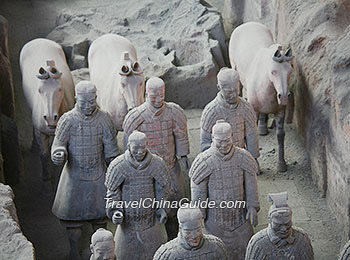
The Qin Terracotta Warriors and Horses are world famous, attracting a large number of tourists from home and abroad to visit each year. However, they are only a part of the yet unexcavated mausoleum of Emperor Qin Shi Huang located to its west. Inside it, greater things are yet to come.
Qin Shi Huangdi (259 BC - 210 BC), the first emperor of China, ascended the throne at the age of 13, when construction of his tomb began. On completion of his many conquests, he ordered 720,000 conscript laborers to hurry up on building his royal tomb. It was finished just-in-time in 210 BC for his use. His son, the second Qin Emperor,saw his entombment.
Read more: Qin Shi Huang Facts: 10 Things to Know about the First Emperor of China
Read more: Qin Shi Huang Facts: 10 Things to Know about the First Emperor of China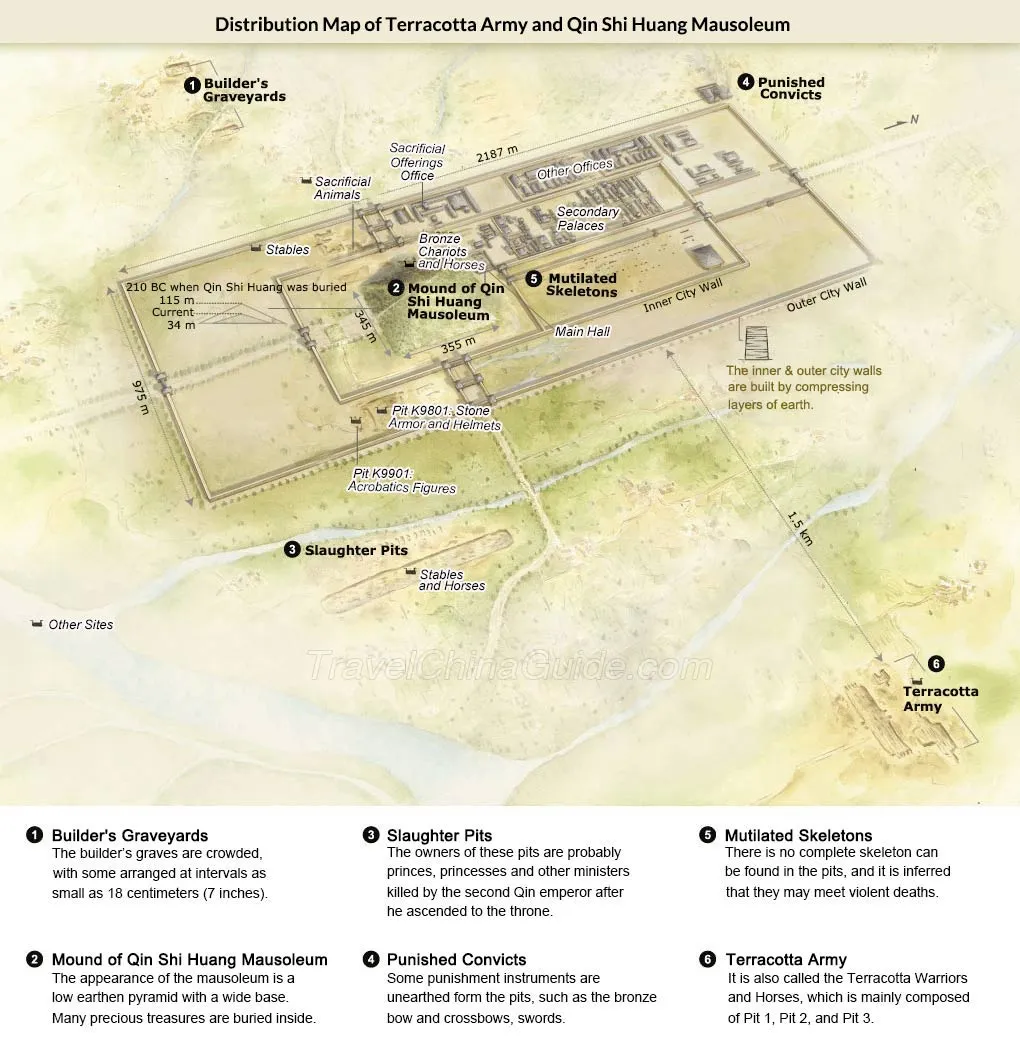 |
Map of Qin Shi Huang's Mausoleum Maps Maps |
Location
|
|
Dimensions
|
|

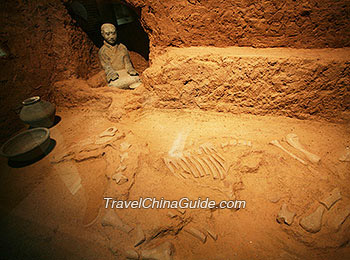
The labourers came from three groups of people. The first were the craftsmen. The second were the prisoners. The third were the people working to repay a debt. These people had violated the rules at that time and had to pay a fine. But with no money to pay fines, they were forced to build the mausoleum. According to historical records, the mausoleum was a notorious crime scene. Many laborers died of hardship during its construction, and all the workmen were entombed along with the emperor in order to keep their mouths shut.
Also all the barren royal concubines accompanied Emperor Qin Shi Huang on his last journey.
Historical Records on Underground Palace
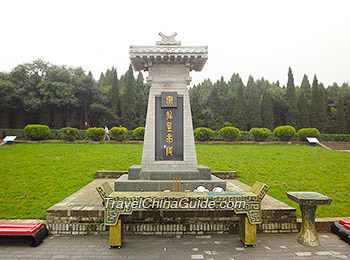
Remains of the Mausoleum
Hopefully one day, the entire mausoleum will be unearthed and displayed to the public.
|
|
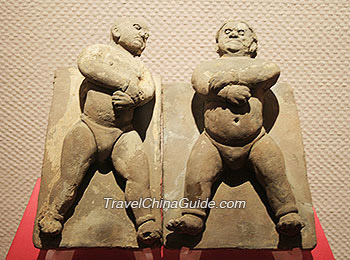
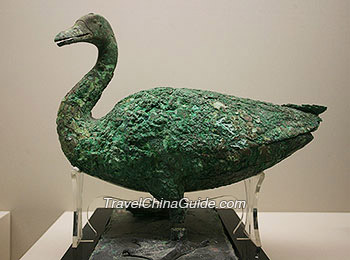
 Qinshihuang Mausoleum (Mausoleum of the First Qin Emperor) 9 Mysteries of Qin Shi Huang Tomb You May Want to Know City Walls to Protect Qin Shi Huang Mausoleum Underground Palace of Qin Shi Huang Mausoleum Why Don’t They Excavate the Qin Shi Huang Mausoleum? Has Qin Shi Huang Tomb ever been robbed in the past? Hot Topics on Qin Shi Huang Mausoleum Where was Qin Shi Huang buried? Pit K0006 - Civil Official Figures Pit K0007 - Bronze Aquatic Birds Pit K9801 - Stone Armor and Helmets Pit K9901 - Acrobatics Figures
How to get to Qin Shi Huang Mausoleum
From Xian:
Take metro line 1 to Fangzhicheng, then change to line 9 to Huaqing Pool, and transfer to Lintong Bus 602 to the Qin Bing Ma Yong (Terracotta Army Museum) stop. Or take tourism bus no. 5 (306) from Fangzhicheng Station to the Museum directly.
Take bus 307, which departs from Tangchengqiang Jiuqu Hub, and passes Tang Paradise and Big Wild Goose Pagoda. The whole line takes 2.5 hours and costs CNY 8.
From Lintong:
Take bus no.101 to Qinling Station.
Xian Bus Search
Getting Around:
Battery-powered motor vehicles and ancient-style carriage are available for visitors to tour around the mausoleum;
30 free shuttle buses are traveling between the Qin Shi Huang Mausoleum and the Museum of Qin Terracotta Warriors and Horses for tourists' convenience. One can take them by showing the entrance ticket.
Take metro line 1 to Fangzhicheng, then change to line 9 to Huaqing Pool, and transfer to Lintong Bus 602 to the Qin Bing Ma Yong (Terracotta Army Museum) stop. Or take tourism bus no. 5 (306) from Fangzhicheng Station to the Museum directly.
Take bus 307, which departs from Tangchengqiang Jiuqu Hub, and passes Tang Paradise and Big Wild Goose Pagoda. The whole line takes 2.5 hours and costs CNY 8.
From Lintong:
Take bus no.101 to Qinling Station.
Xian Bus Search
Getting Around:
Battery-powered motor vehicles and ancient-style carriage are available for visitors to tour around the mausoleum;
30 free shuttle buses are traveling between the Qin Shi Huang Mausoleum and the Museum of Qin Terracotta Warriors and Horses for tourists' convenience. One can take them by showing the entrance ticket.
| Admission Fee: | CNY 120; free for children under 1.4 m (4.6 ft); children taller than 1.4m and under age 16 can enjoy half-price tickets; foreign students studying in China with valid student ID can enjoy half-price tickets. |
| Opening Hours: | March 16 to November 15: sell ticket from 08:30 to 17:00, stop check-in at 18:00; November 16 to March 15: sell ticket from 08:30 to 16:30, stop check-in at 17:30 |

- Last updated on Aug. 04, 2025 by Alex Jin -