


Xi'an Travel Guide
Xi'an, located in central-northwest China, records the great changes of the country just like a living history book. Called Chang'an, meaning the everlasting peace, in ancient times, it is one of the birthplaces of the ancient Chinese civilization in the Yellow River Basin area. More than 3,000 years of history, including over 1,100 years as the capital city of ancient China, have endowed Xian with amazing historical heritages and cultural relics, which attract people from all over the world to make their tours.
Why is Xi'an so popular among worldwide travelers?
(1) Xi’an is the most famous and influential ancient capital in China.
Xian was the capital of 13 dynasties in ancient China, including Qin (221-207 BC)- the first unified dynasty of China founded by Emperor Qin Shi Huang and Western Han (202 BC-9 AD)- the first flouring and prosperous period in China history. In Tang Dynasty (618-907), Xian was the largest and most prosperous city in the world. All over China, you can hardly find another city with such a significant historical status and with so many historical remains. In 1981, UNESCO listed Xian as a “World Historical City”, on a par with Cairo, Rome, and Athens.
(2) Tradition and modernity integrate perfectly in Xi’an.
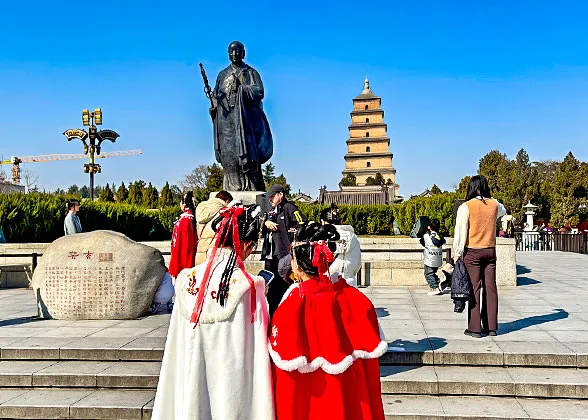
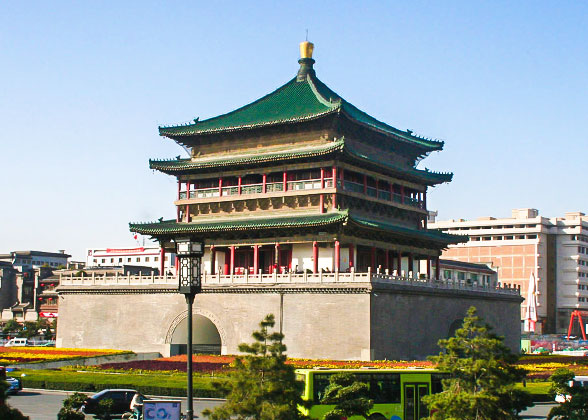
In Xian, the most attractive part of your tour will be the unrivalled experience to enjoy the present moment as well as touch the history. For example, wearing Hanfu, traditional Chinese clothing, and visiting various historical attractions are just like taking a time machine to travel back to ancient times; standing on the City Wall, you will see the ancient Bell Tower and rows of quaint-style architecture on one side, and find impressive high-rise modern buildings on the other side; strolling in the themed streets of Great Tang All Day Mall, actors in traditional costumes give lively performances and you can interact with them, as if you are really having fun together with historical celebrities.
|
|

(3) Xi’an is a paradise for foodies.
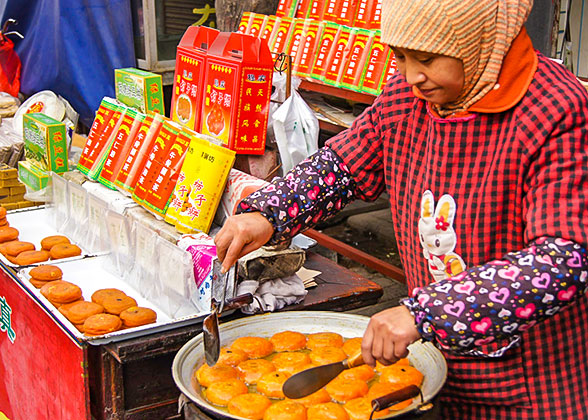
Xian owns a reputation as “the capital of table delicacies”, and its specialties are marked by rich varieties and delicious tastes. Coming to Xian, you can not only feast your eyes on abundant historical and cultural attractions, but also treat yourself to real feasts. It’s not a joke that one gets 3 pounds heavier after visiting Xi’an. Must-tries include Crumbled Flatbread in Mutton Stew, Shaanxi Hamburger, Biang Biang Noodles, and Cold Skin Noodles.
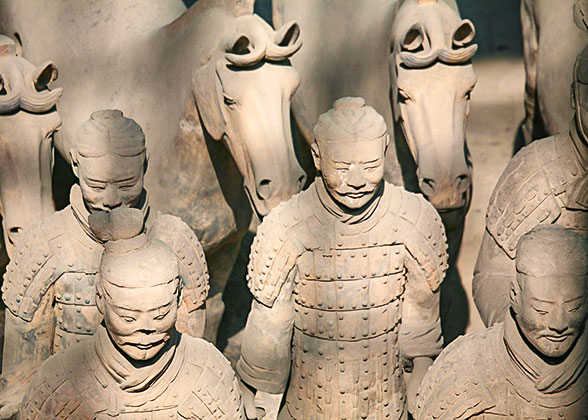
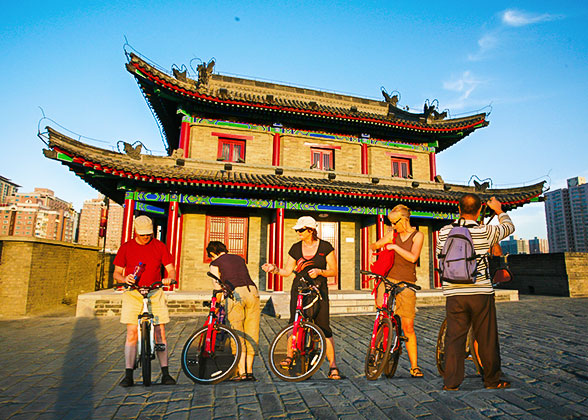
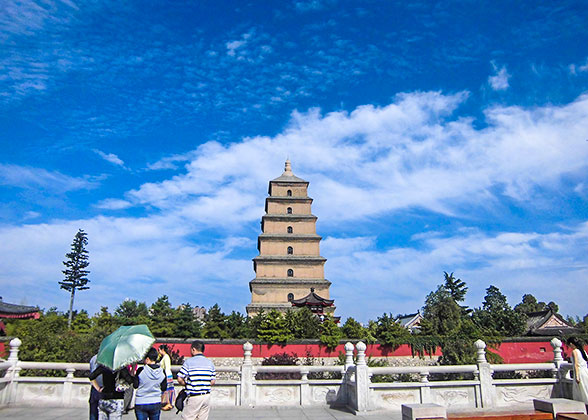
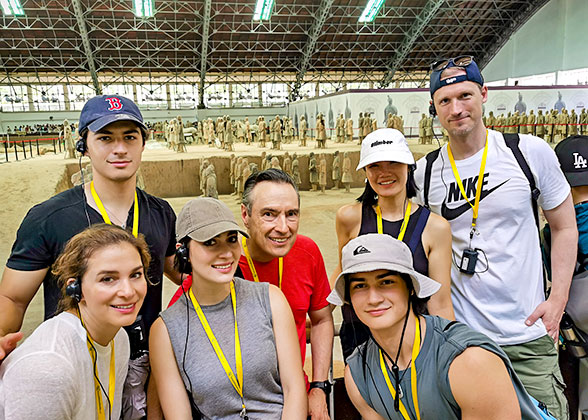
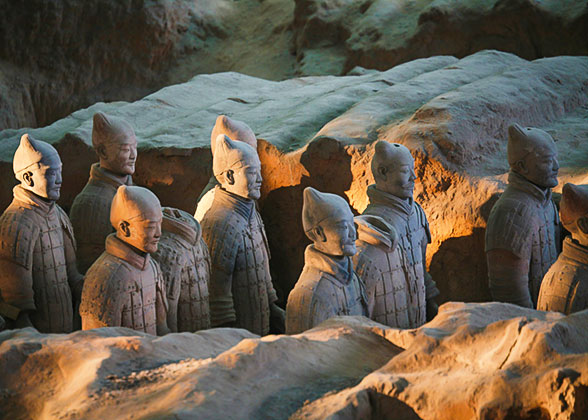
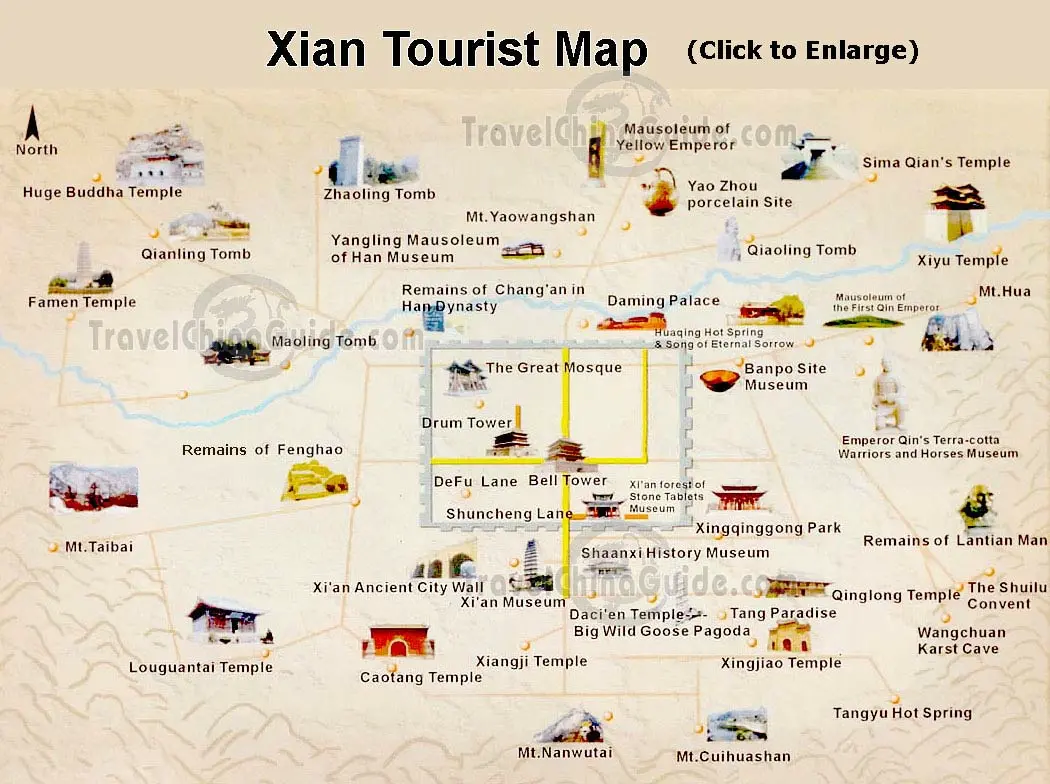
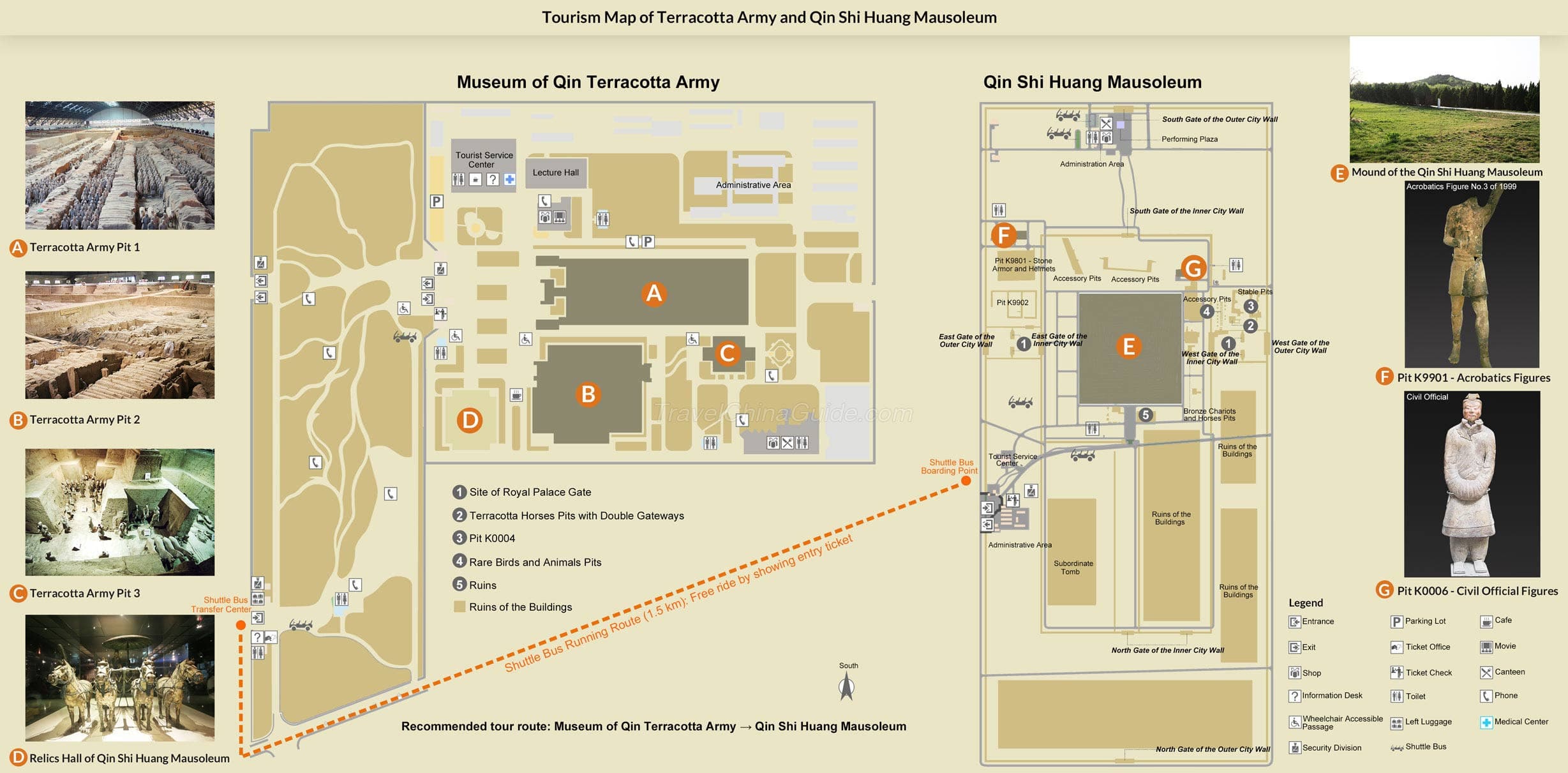
The most shining highlight in Xian is absolutely the famous Terracotta Army of the Qin Dynasty; followed by the impressive City Wall, the solid military defense project protecting ancient Xi’an people from invasions; the magnificent Bell Tower and Drum Tower which were used to tell the time; and the monumental Giant Wild Goose Pagoda. Heading to the east suburb, you can climb Huashan Mountain, one of most dangerous and challenging mountains on the earth.

Travel Planning
 |
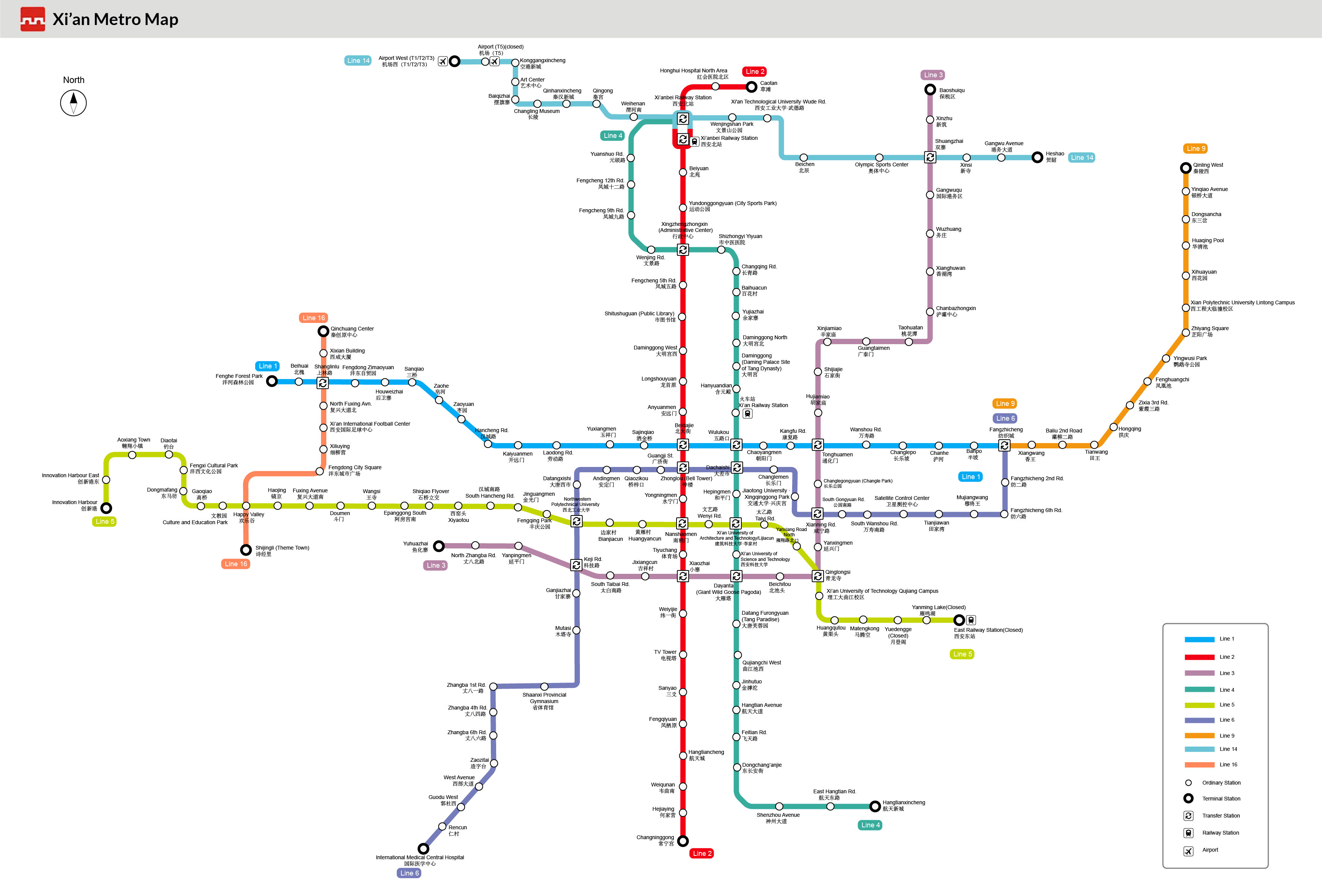
As for accommodation, to travel around the city conveniently, it’s suggested to pick a hotel near a metro station, especially near the Bell Tower Station of the Metro Line 2 and Line 6, or near the Giant Wild Goose Pagoda Station of the Metro Line 3. More practical tips and suggestions are offered to you in the following topics:
Recommended Guided Tours
Get to Xi’an: The Xi’an Xianyang International Airport is a gateway to Xi’an, and has about 30 international air routes. People in Tokyo, Seoul, Bangkok, Milan, Dubai, Paris, Istanbul, Mosco, London and some other cities can take a direct flight to Xi’an. If there is no direct flight between your city and Xi’an, you can consider transferring in Beijing, Shanghai, Guangzhou, Hong Kong, and then take a plane or high speed train to Xi’an.
Get Around in Xi’an: This city has a high-efficient transportation system composed of metros, buses, taxies, online-hailing taxies, and shared bicycles. By virtue of high speed and high efficiency, metros are more recommended to take to travel around the city. After landing in Xi’an Xianyang International Airport or getting off the train at Xi’an Railway Station or Xi'an North Railway Station, Line 14, Line 2 and Line 4 are ready to take you to the other parts of the city. What’s more, quite a lot of attractions in Xi’an can be arrived by metro. For instance, you can get to the Bell Tower, Drum Tower and the Muslim Quarter by Line 2 or Line 6, to the City Wall by Line 2 or Line 5, to the Giant Wild Goose Pagoda by Line 3...
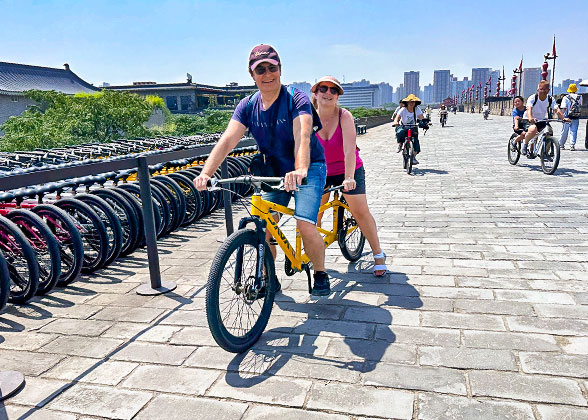
You may encounter traffic jams by bus, taxi, or online-hailing taxi, especially during morning and evening rush hours on weekdays. For those who want to view streetscapes in a short-distance journey, shared bicycles are more recommended.
|
|


You may encounter traffic jams by bus, taxi, or online-hailing taxi, especially during morning and evening rush hours on weekdays. For those who want to view streetscapes in a short-distance journey, shared bicycles are more recommended.
Xi’an experiences a warm temperate semi-humid continental monsoon climate with four seasons. Spring from March to May is pleasantly warm and breezy with a little rainfall, summer from June to August is hot and rainy, autumn from September to November is cool with a certain amount of precipitation, and winter from December to February is cold and dry. In general, spring and autumn with less rain and mild weather are seen as the best times to visit Xi’an, when the weather conditions are suitable for outdoor sightseeing and natural scenery including cherry and magnolia flowers, and autumn leaves are fantastic.
 |
 Read more about: Xi'an Nightlife; 9 Best Night Markets
You May Like
- Last updated on Apr. 10, 2026 by Sule Su -