Naxi Nationality
 Population and Distribution:
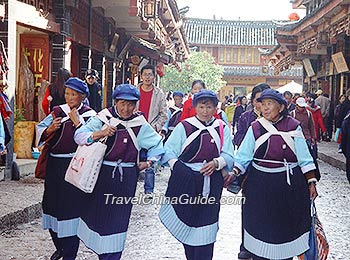
Naxi people mostly live in the Naxi Autonomous County in Lijiang, Yunnan Province, while the rest live in Sichuan and Tibet. Their population is 308,893 according to the 2000 census. In the name Naxi (also spelled Nakhi), Na means senior and honored and Xi means people.
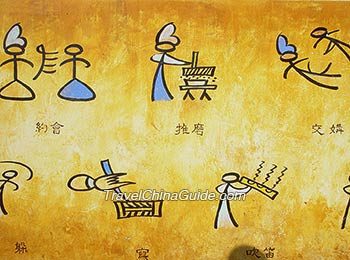
Language and Character:Their language belongs to the Tibetan-Burman group of the Sino-Tibetan phylum. In the past, they used a pictographic language called 'Dongba' and another called 'Geba'. In 1957, they designed characters based on the Latin alphabet and now most can write in Chinese. The Dongba Scripture (or Dongba Jing) that their ancestors left has recorded all facets of the Naxi life and is highly valued for posterity as a means of studying their character and history.
|
|
 Religion:
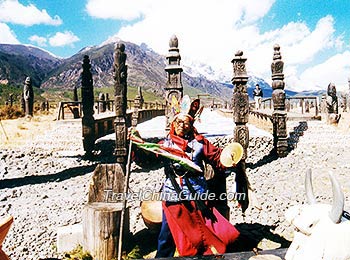
 Before the foundation of modern China in 1949, most of the people held the faiths of Dongba Jiao, believing that all have spirits and those spirits could never die. When they encountered significant events such as marriage, death, festivals, or disasters, they would invite a wizard to chant. Although there was Buddhism, Taoism and Christianity being taught there, few Naxi people turned to those religions.
Life Styles: They live on farming, stockbreeding and handicrafts. Reaches of the Jinshajiang River is abundant in botanical resources such as trees and medicinal herbs. The Lijiang horse has also enjoyed the reputation for years of one of the 'Three treasures of Lijiang' which were presented to the official courts because of its ability to transport goods in mountainous area.
Their breakfast is simple and usually consists of steamed bread, but lunch and supper are often more sumptuous. They like to pickle pork. The pickled Pipa pork is famous for lasting several years.
|
|
 Festivals:
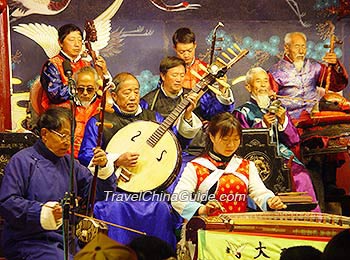
 Based on the lunar calendar, the main Naxi festivals are Chinese New Year, Qingming Festival, Dragon Boat Festival, Mid-Autumn Day, and Torch Festival. Generally, these festivals are celebrated with worship and sacrificial activities.
Other Customs:They are warm and kind. After a hunt, they will share a piece of the kill with a casual passerby. When visited, they will prepare six or eight delicious dishes to treat their guests. Most of the young Naxi people insist that they have one spouse and usually they have a very complicated process to protect their monogamous marriage. But for those living beside Luguhu Lake in Lijiang, they still keep the 'walking' marriage which is the only remaining vestige of a matrilineal clan among all the ethnic groups of China.
More Ethnic Groups in Yunnan Area:Yi Bai Hani Dai Zhuang Lisu Jingpo Blang Nu Jino
- Last updated on Aug. 07, 2025 by Gabby Li -