Xibe Nationality
With a population of 188,824 according to the year 2000 census, the Xibe ethnic minority mainly inhabits Liaoning, Jilin, and Xinjiang Uygur Autonomous Region. Most believe they are descendants of the Xianbei people, a nomadic tribe that established the Northern Wei Dynasty (386 - 534).
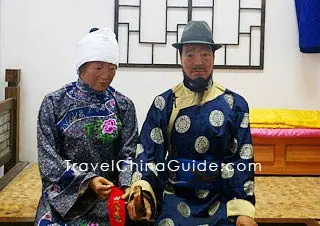 |
| Xibe People |
 Language:
Xibe living in Xinjiang speak the Xibe language, part of the Tungus-Manchu group of the Altaic phylum; whereas those in the Northeast China usually speak Chinese and Mongolian. Belief:
The Xibe people once were animists (believing physical phenomena and animals are manifestations of spirits), Shamanists, Lamaists, and believed in the power of ancestors. More recently, as they assimilated other cultures, they also observed Confucianism. Food:
Although the Xibe festival calendar is nearly the same as for the Han, the specific celebrations for Chinese New Year, Qingming Festival and Dragon Boat Festival are quite different. Horse riding competitions reflect their strong equestrian heritage for shooting and riding. There also are diverse water play, wrestling, singing and dancing. On the lunar New Year's Eve, family members prepare a dumpling dinner for New Year's Day; next day they eat noodles for longevity and to greet the New Year. Large scale activities on the eighteenth day of the fourth lunar month commemorate the day a Xibe tribe immigrated westwards to Xinjiang.In the past, the Xibe hunted and fished for sustenance; now they have productive agriculture and stock husbandry. Their staples are comprised of rice and wheat flour, mutton and pork. Meals are accompanied with milk, milk tea and oil tea. During the winter hunting season they enjoy wild boar, widgeon (a fresh water duck), and hare.
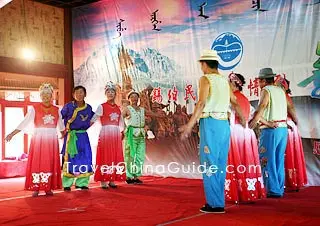 |
| Dance of Xibe Nationality |
Clothes:
Most Xibe wear long gowns. Old women still wear the traditional green and blue cheongsam which originated late in the Qing Dynasty (1644 - 1911). The young women prefer more colorful cheongsams. Young girls wear one braid in their hair, whereas married women curl two in their hair. Festivals:
Other Customs:
There are also some taboos and customs that people of other groups should know about. For example, people do not wear clothes made of fox leather or fur. Whenever a guest leaves, all the hosts will bid him goodbye at their front door. Finally, a piece of red cloth at the door indicates that there are sick people inside, and visitors are not welcome.
More Ethnic Groups in Xinjiang Area:
Uygur Kazak Hui Mongol Kirgiz Uzbek Tatar Dongxiang Tagik Russ