Uygur (Uigur) Nationality
The Uygur ethnic minority, with a population of 8,399,393 according to the national census in 2000, lives mainly in the Xinjiang Uygur Autonomous Regions, especially to the south of Mt. Tianshan. They have their own language and alphabet which belongs to the Turkic group of the Altaic phylum. The name Uygur, which they also use to refer to themselves, means alliance or assistance.
 Belief:
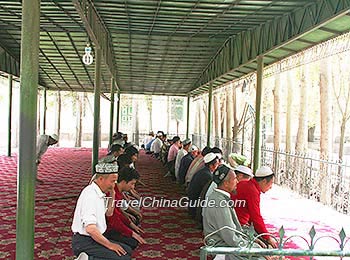
They had believed in Shamanism, Manicheam, Jing, Zoroastrianism, and Buddhism. Since the 11th century they have gradually turned to Islam. This has strongly influenced their way of life and most festivals celebrated today relate to this religion. The grand festivals celebrated include the Corban Festival, Kaizhai Festival, and Almsgiving Festival.
Economy:
They have a profound history of more than two thousand years. Historical records indicate that Uygur people had strong trade and communication links with a variety of middle Asian countries and other ethnic groups of China. They work mainly with agriculture though are talented in the construction of handicrafts which are constructed for commercial purposes.
Crafts:
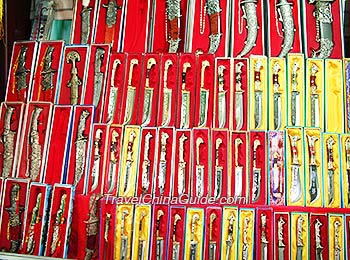
They are renowned for their abilities in processing gold, gem, silk and leather goods. Hetian is rich and proud of its fine jade which is regarded as a rare first-class gem. Whilst the Kuqa County is known for its production of delicate knives.
Food and Food Culture:
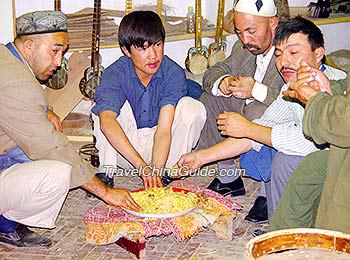
The staple food is Nang, noodles and Zhuafan. Nang is a kind of crisp baked pie, usually eaten with tea. Popular drinks include tea, milk tea and oil tea. Various fruits, mutton and beef are also typical favorites.
There are a number of important customs relating to appropriate behaviors of visitors. Eldest people sit in the most distinguished seat and guests are expected not to look around the house. Leaving a small amount of food in your bowl demonstrates impolite to your host.
Clothes:
They like to wear cotton clothes. Typically men wear gowns while women prefer to wear one-piece dresses. Many decorations such as ear rings, bracelets, and necklace and so on are women's favorite. Vibrantly colored and embroidered caps are an important component of their dress.
Other Traditions:
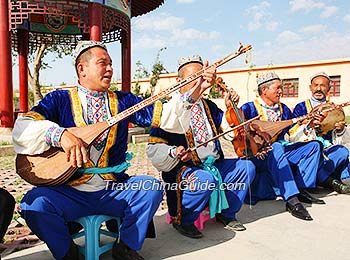
They particularly enjoy dancing and singing. Festivities such as wedding ceremonies are celebrated with all guests, joining in their traditional folk dance. The Uygur culture reflects its wisdom, literary and artistic talents. Poems and oral legends are always popular. The story of Afanti is a popular tale amongst Uygur children.
 Recommended Video Clips:
Xinjiang Uygur Dancing Uygur Dance Show Uygur Women's Dance Show
More Ethnic Groups in Xinjiang Area:
Kazak Hui Mongol Kirgiz Uzbek Tatar Dongxiang Xibe Tagik Russ
Belief:They had believed in Shamanism, Manicheam, Jing, Zoroastrianism, and Buddhism. Since the 11th century they have gradually turned to Islam. This has strongly influenced their way of life and most festivals celebrated today relate to this religion. The grand festivals celebrated include the Corban Festival, Kaizhai Festival, and Almsgiving Festival.
|
|
 Economy:
They have a profound history of more than two thousand years. Historical records indicate that Uygur people had strong trade and communication links with a variety of middle Asian countries and other ethnic groups of China. They work mainly with agriculture though are talented in the construction of handicrafts which are constructed for commercial purposes.
Crafts:They are renowned for their abilities in processing gold, gem, silk and leather goods. Hetian is rich and proud of its fine jade which is regarded as a rare first-class gem. Whilst the Kuqa County is known for its production of delicate knives.
|
|
 Food and Food Culture:
The staple food is Nang, noodles and Zhuafan. Nang is a kind of crisp baked pie, usually eaten with tea. Popular drinks include tea, milk tea and oil tea. Various fruits, mutton and beef are also typical favorites.
There are a number of important customs relating to appropriate behaviors of visitors. Eldest people sit in the most distinguished seat and guests are expected not to look around the house. Leaving a small amount of food in your bowl demonstrates impolite to your host.
Clothes: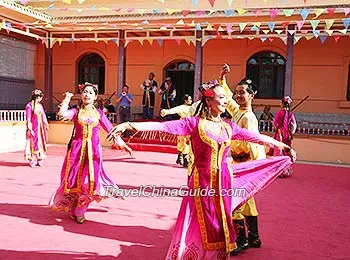 |
| Dance of Uygur Minority |
Other Traditions:They particularly enjoy dancing and singing. Festivities such as wedding ceremonies are celebrated with all guests, joining in their traditional folk dance. The Uygur culture reflects its wisdom, literary and artistic talents. Poems and oral legends are always popular. The story of Afanti is a popular tale amongst Uygur children.
Recommended Video Clips:Xinjiang Uygur Dancing Uygur Dance Show Uygur Women's Dance Show
More Ethnic Groups in Xinjiang Area:Kazak Hui Mongol Kirgiz Uzbek Tatar Dongxiang Xibe Tagik Russ
- Last updated on Aug. 07, 2025 by Gabby Li -