Sanxingdui Museum (Three-Star Piles Museum)
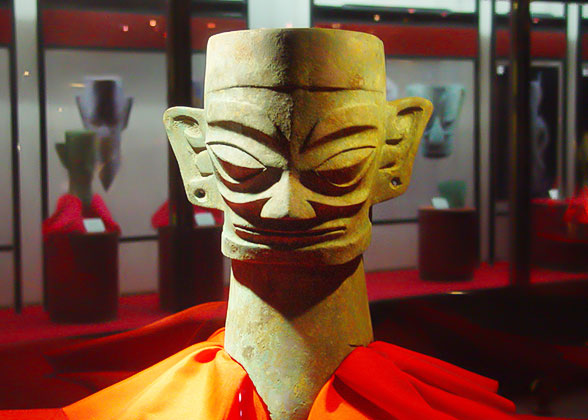 |
Bronze Human Head Sanxingdui Museum Pictures Sanxingdui Museum Pictures |
Three-Star Piles refer to three earth mounds at the site. The Relic area stretches for about 12 square kilometers (about 4.6 square miles), which is the largest, oldest, and most connotational Shu cultural relic in Sichuan. It is said that the Heavenly Emperor cast down three handfuls of earth which fell near the Jian River and became three earth mounds on Chengdu Plain. The three earth piles, described as three golden stars in a line, hence became known as Three-Star Piles. Now affirmed by modern archaeology, the three earth mounds are in reality the southern wall of an ancient city that was built of earth. There are two breaches in the city wall, after the collapse and subsequent erosion; it became the three mounds we see today.
|
|
 |
The discovery of Three-Star Piles Relic is heart-stirring but some cultural relics remain enigmatic. According to experts, the relic is the centuries-old center of the ancient Shu on Chengdu Plain. Traditionally, archaeology considered Shu as a closed area and without communications to the Central Plain (the most developed region in ancient China), but the cultural relics unearthed here have affirmed ancient Shu is no less developed than the Central Plain and it is even the most representative cradle of Chinese civilization in the upper reaches of the Yangtze River. So research of the discovered site is a significant means to comprehend the development of history and culture in Sichuan, and even the southwest area of China as a whole, but the site is still enigmatic. The ancient Shu characters are one of the two or three unbroken characters. Some cultural relics can not be named as the archaeologists have never seen their ilk before, which also add some mysterious color to the site.
|
|
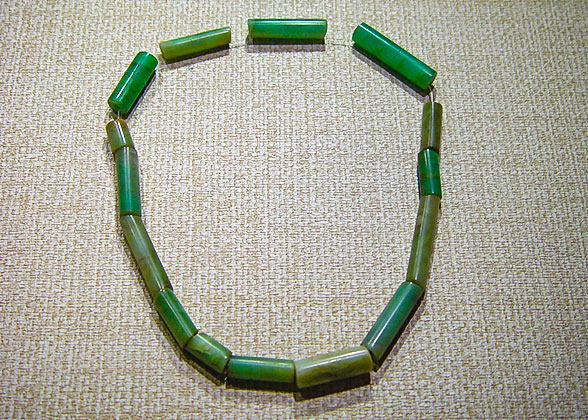
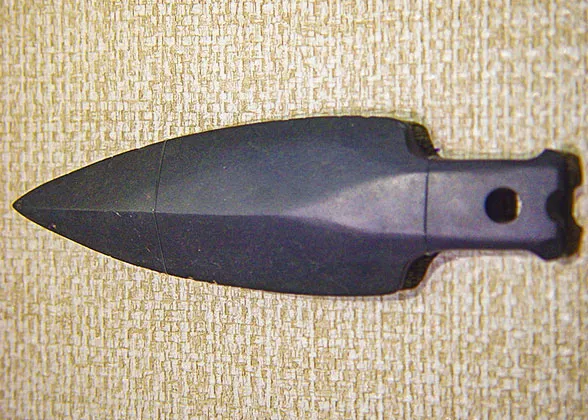
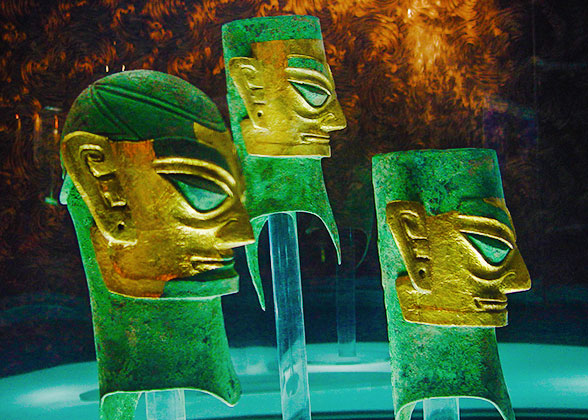
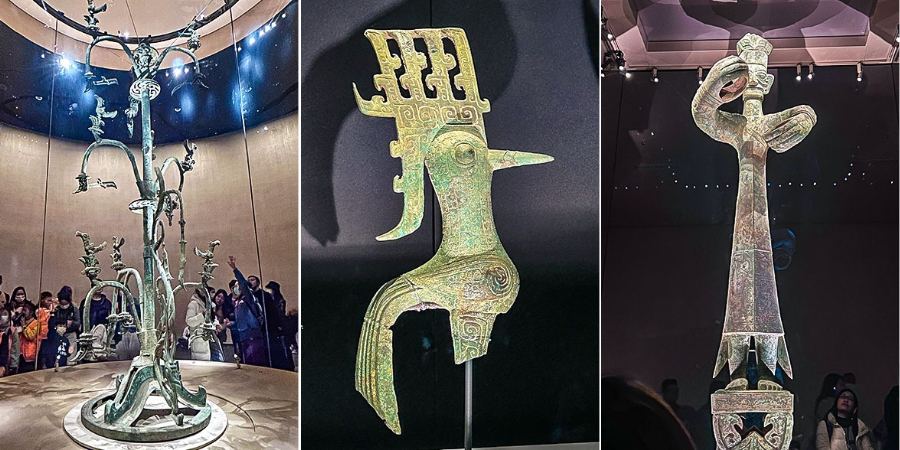
In order to well preserve and display the cultural relics, the Sanxingdui Museum laid the foundation in 1992 and opened in October, 1997. It is divided into four sections, displayed more than 1000 pieces of cultural relics from the site and the two sacrificial pits of Shang Period, including gold plate, bronze ware, jade articles, pottery and ivory. Each of the four sections has its own theme.
Section 1 - Splendor of Ancient Shu Culture
Section 2 - Mystery of the Primitive Faith
Section 3 - Exquisite Cultural Artifacts
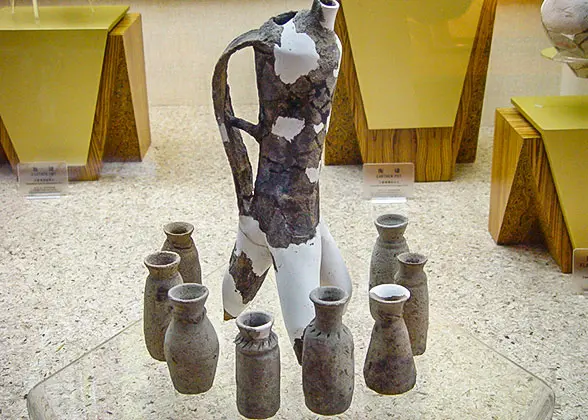 |
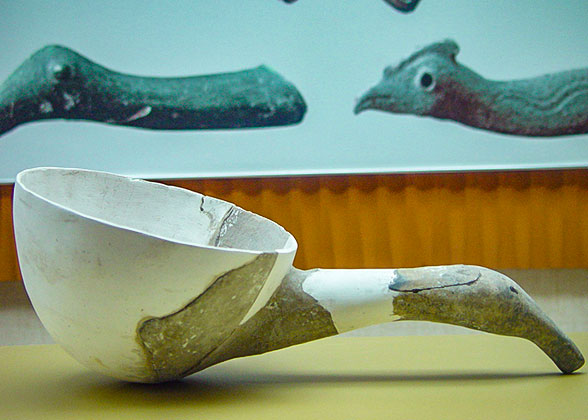
| Earthen Wine Vessels |
Section 4 - Three-Star Piles Excavation and Study
This section is a scientific display that introduced the impact of the Three-Star Piles Relic overseas, the discovery and excavation of the site, the vital position of the relic in academic study, to reflect all facets of the site.
For the swarms of tourists all year around, a new Exhibition Hall was opened on May Day in 2004, covering an exhibition area of 7,000 square meters. The exhibition in this hall is mainly a complex display of jade articles, gold plate and pottery, with the old Exhibition Hall specializing in bronze wares.
Three-Star Piles Relic is the spiritual homeland of the ancient Shu people and the Museum is the place for modern people to meet the ancient Shu.
A Latest Discovery of Sanxingdui Site Pushed World’s Welding History Forward 2,000 Years
Traces of welding technique was found on a turtle shell-like bronze ware with the help of x-rays, pushing world’s welding history forward 2,000 years. It is not an easy thing to weld bronze parts together even today, because of the fast solidify speed of bronze liquid. Researchers once found phosphorus in Sanxingdui bronze wares, which may be the reason of the advanced craftsmanship back then. But phosphorus was not discovered by late 17th century by German. It still remains unknown how and where did Sanxingdui artists get it?
Moreover, by October, 2024, archaeologists has identified 19 kinds of jade and stone materials at the discovered jade workshop dating back over 3,400 years at Sanxingdui, and found that the origin of raw materials was likely Longmen Mountain area in the northwest of the Chengdu Plain.
How to get to Sanxingdui Museum from Chengdu
2. Take a direct tourist bus at Wide and Narrow Alley, Chengdu Research Base of Giant Panda, Wuhou Temple or Chunxi Road to the museum directly.
See detailed information Chengdu Sightseeing Bus
Chengdu Bus / Metro Search
| Entrance Fee | CNY 72; Free for children under 1.3m (4.3 feet). |
|---|---|
| Opening Hours | 8:30-18:00 (Ticketing stops at 17:00) Restoration Exhibition Hall: 9:00-17:00 |
 Sanxingdui Museum Ticket Booking Top 10 Things to Do in Chengdu 10 Best Places to Visit in Chengdu for First-time Visitors Top 10 China Tourist Places for Culture Lovers