Thatched Cottage of Du Fu
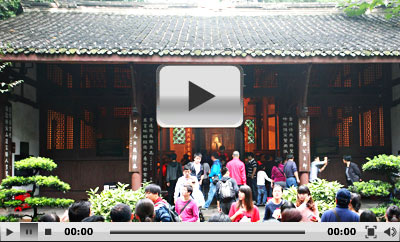
Thatched Cottage of Du Fu is about 5km (3 miles) west of Tianfu Square. Just as the name implies, it was the home of a famous poet, Du Fu, in Tang Dynasty (618-907).
Du Fu was born in Gongyi City, Henan Province in 712. In 746, he took the official examination in Chang'an (now known as Xian) and continued to live there for more than ten years after the failure. But, in order to get away from the An-Shi Rebellion breaking out in 758, he fled to Chengdu in 759. With the help of friends, the thatched cottage was built in 760 beside the Flower Bathing Brook on the western outskirts of Chengdu. During the four years stay there, he composed more than 240 poems that are considered to be precious national treasures.
From then on, Thatched Cottage of Du Fu was renovated and enlarged repeatedly. There were two very important reconstructions in 1500 and 1811 respectively, both of which set the scale and structure of the present thatched cottage. Today, it is a shrine to Chinese literature and a commemorative museum in the form of a traditional garden.
|
|
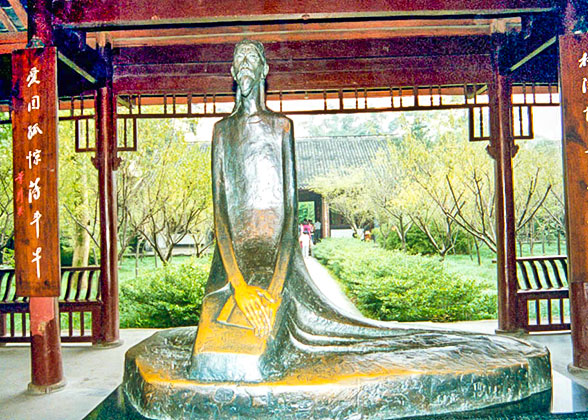
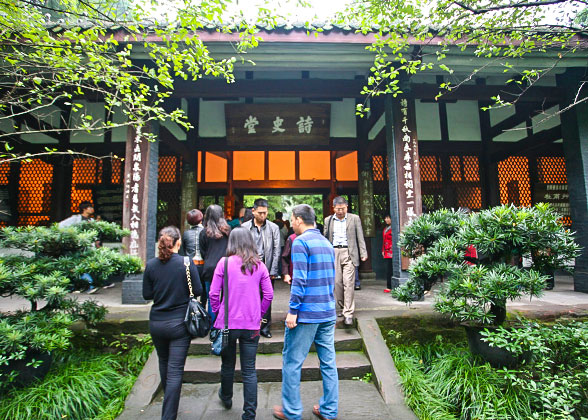
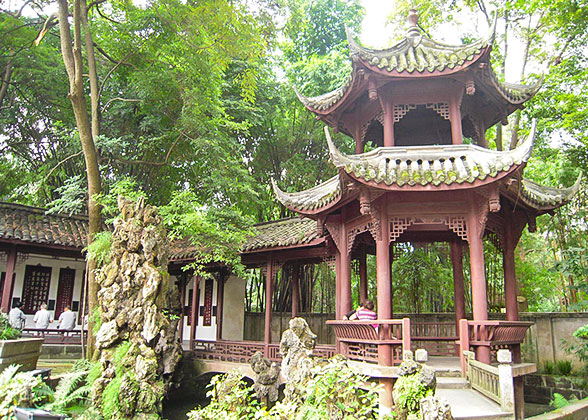
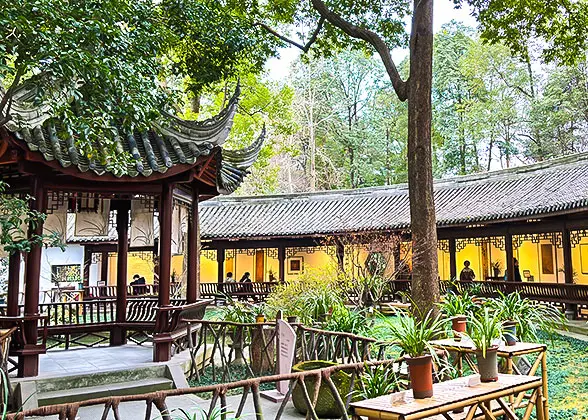
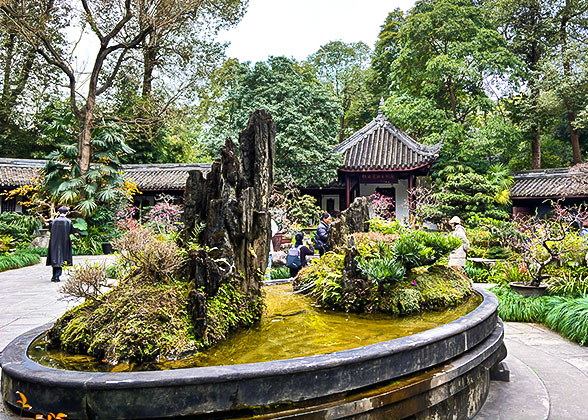
The Thatched Cottage of Du Fu covers a total area of 24 hectares (about 59 acres), and is the combination of both Fan'an Temple in the east and the Plum Garden in the west. Construction inside belongs to the Qing Dynasty (1644-1911) style, with gardens in the unique compound style of traditional Chinese gardening. Inside the thatched cottage: gardens are quiet; streams are winding; bridges and pavilions are interwoven; trees reach for the sky; plum trees and bamboos stand side by side; and classical architectural styles bring you a strong cultural atmosphere. Besides, whenever you walk here, you will feel uplifted, because the plum blossoms in spring, the lotus flowers in summer, the chrysanthemums in autumn and the orchids in winter will bring you the enjoyment of both man-made beauty and nature's romance.
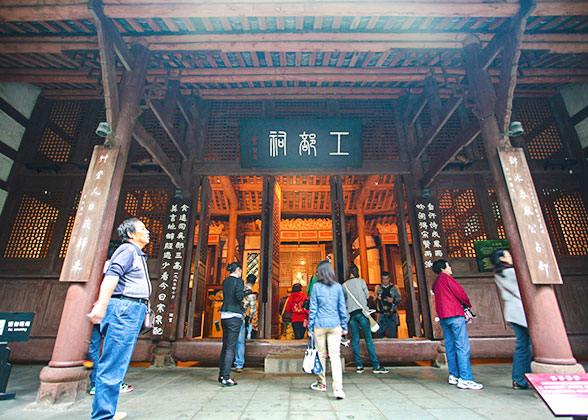
The area includes several amazing structures. Next to each other in a line that divides the whole thatched cottage area into two parts are the Screen Wall, the Gate, the Lobby, the History in Verse Hall, the Faggot Gate, and the Gong Bu Temple. On each side there are cloisters and other attached buildings echoing each other. This layout gives the place solemnity, simplicity, elegance, and grace.
|
|
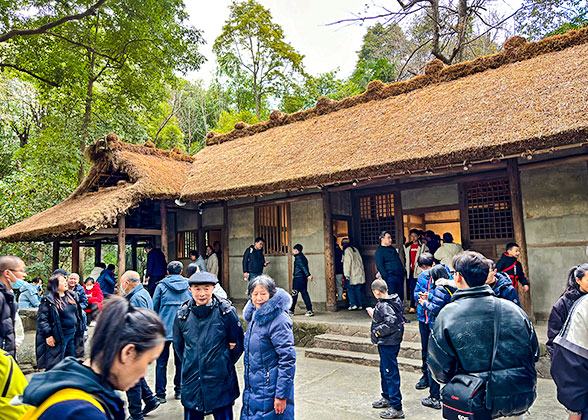
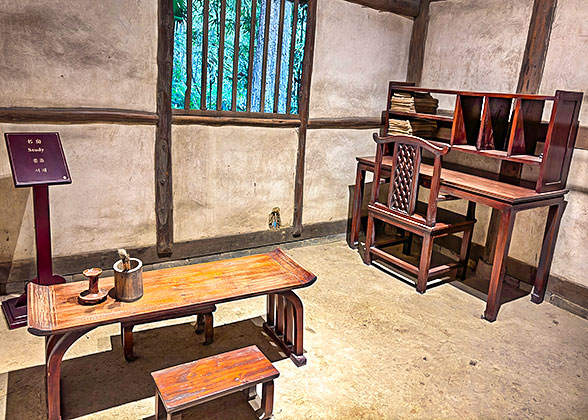
To the east of the Gong Bu Temple stands the Tablet Pavilion, which is on the original site of the Thatched Cottage of Du Fu. It has 5 main and 4 attached rooms with thatched roofs and is surrounded by bamboo fences, vegetable gardens and herb plots. All these endow a strong atmosphere of culture. Again, the grand bronze statue of Du Fu in the Memorial Hall and the vivid earthen figure of Du Fu in Gong Bu Temple all impart a feeling of deep respect for the poet.
The Du Fu Thatched Cottage stretches out its arms to welcome visitors from all over the world.
 |  |
 |  |
How to get to Thatched Cottage of Du Fu
2. Take Metro Line 13 to Du Fu Thatched Cottage Station, exit C2 out, and walk westward for 400m (437.5 yard) to it.
| Entrance Fee | CNY 50 Free for children under 1.3 meters (3.9 feet) and no more than 6 years old |
| Opening Hours | 8:00 - 18:30 |
 Nearby Attractions:
Sichuan Museum: the largest comprehensive museum in southwestern China; numerous historical collections.
Huanhua Stream Park: the largest urban forest park in Chengdu.
 Top 10 Things to Do in Chengdu 10 Best Places to Visit in Chengdu for First-time Visitors