Silk Road Safari
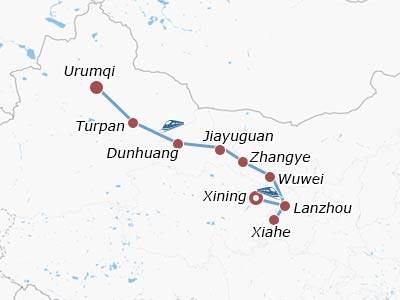
605: 13 Days Private Tour of Xining - Lanzhou - Xiahe - Lanzhou - Wuwei - Zhangye - Jiayuguan - Dunhuang - Turpan - Urumqi
Tour Type: Private Tour, any parts of the itinerary can be customized
Guide & Driver: English-speaking guide, experienced driver with an air-conditioned vehicle
Meals: 12 breakfasts, 11 lunches
Highlights:
Guide & Driver: English-speaking guide, experienced driver with an air-conditioned vehicle
Meals: 12 breakfasts, 11 lunches
Highlights:
- Travel in depth to the old Silk Road & learn about the culture and history
- Visit Sangke Grassland and Labrang Monastery, a Tibetan University
- See the rainbow mountains in Zhangye and the fortress at Jiayuguan
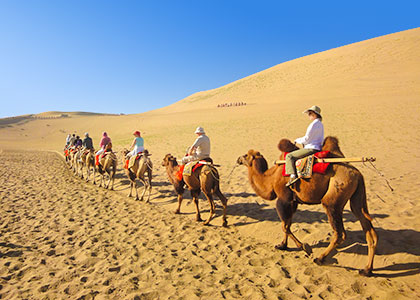
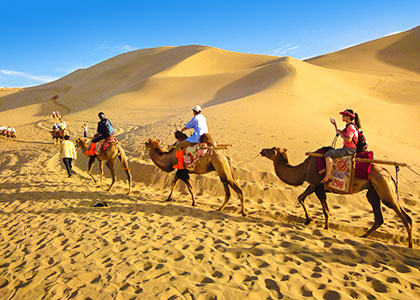
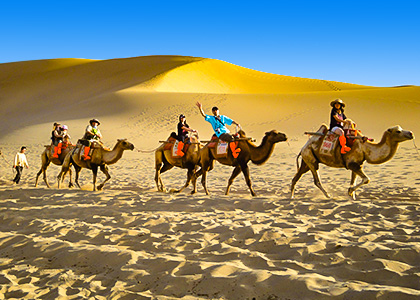
- Marvel at the amazing Mogao Caves & enjoy a camel riding in the Gobi Desert

- Itinerary
- Prices
- Reviews
Expand All
Collapse All
Day 1 Arrival in Xining
You will take a flight to Xining today. Our local guide will expect you outside the arrival hall of the airport and transfer you to the hotel in downtown Xining. Relax during the remainder of the day and prepare for the following China private tour.
Meals: No meals, advice freely available
Meals: No meals, advice freely available
Day 2 Xining - Lanzhou
Ta'er Monastery. Bullet train to Lanzhou. Railway station-hotel transfer, Gansu Provincial Museum. (B+L)
You will visit the Ta'er Monastery this morning. Built in 1577 during the Ming Dynasty in order to commemorate Tsong Khapa, the founder of the Gelug sect of Tibetan Buddhism, the Ta'er Monastery is famous for the three treasures, including the Butter Sculpture, delicate murals and the barbola. Then take a bullet train to Lanzhou, where your local guide will meet you at the railway station and transfer you to the hotel. After a short rest, continue to visit the Gansu Provincial Museum.
Meals: Western buffet breakfast, Lunch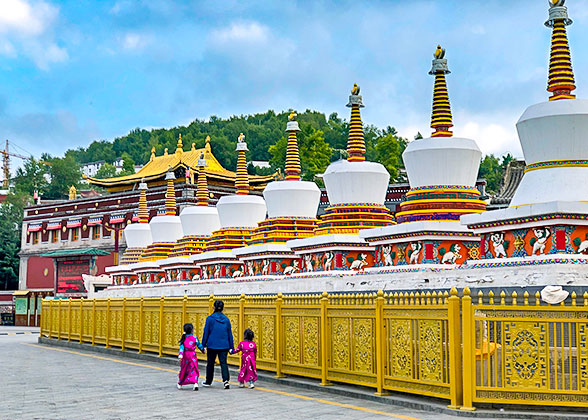
Meals: Western buffet breakfast, Lunch
Ta'er Monastery
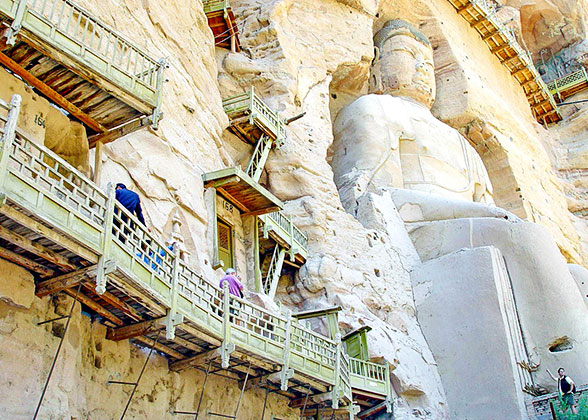
Bingling Thousand Buddha Caves
Day 3 Lanzhou
Boat trip to Binglingsi Grottoes. (B+L)
Today you will take an intensive visit to the Bingling Thousand Buddha Caves by boat. The excavation of the caves could be dated back to about 1,700 years ago during the Western Jin Dynasty. Expansion has been taken in the following dynasties. Now you can see well-preserved 183 niches, 694 vivid Buddha statues, 82 clay sculptures and about 900 square meters (about 1,076 square yards) of colorful murals.
Meals: Western buffet breakfast, Lunch
Meals: Western buffet breakfast, Lunch
Day 4 Lanzhou - Xiahe
Lanzhou-Xiahe transfer, Sangke Grassl, a Tibetan Family. (B+L)
It will take you about 4 hours to arrive at Xiahe by car this morning. After the hotel registration, you could visit the Sangke Prairie after a short rest. Surrounded by mountains from all sides, the Sangke Prairie is reputed for the excellent pasture and frequent Tibetan Buddhist ceremonies. You will also visit a Tibetan family on the prairie to have a taste of the traditional Tibetan food and learn about the unique custom.
Meals: Western buffet breakfast, Lunch
Meals: Western buffet breakfast, Lunch
Day 5 Xiahe - Lanzhou
Labrang Monastery, Xiahe-Lanzhou transfer. (B+L)
There is a visit to the Labrang Monastery and watch the morning devotion there. Labrang Monastery is one of the six largest monasteries and one of the most prestigious institutions of Tibetan Buddhism in China. You will not only be impressed by the splendid Tibetan Buddhist buildings but also gain more knowledge about Tibetan Buddhism from the large collection of Buddhist statues, sutras and murals. Finally, we will transfer you back to Lanzhou.
Meals: Chinese breakfast, Lunch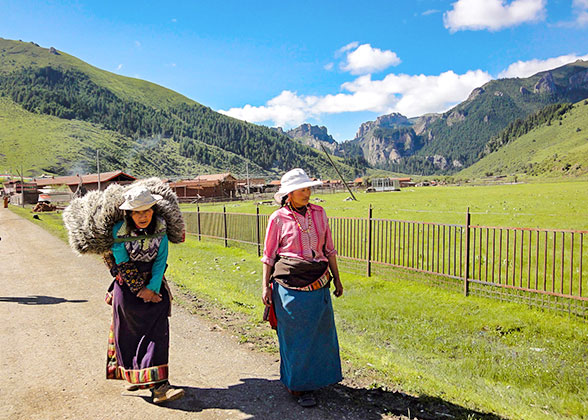

Meals: Chinese breakfast, Lunch
Local People at Sangke Prairie
Monks at Labrang Monastery
Day 6 Lanzhou - Wuwei - Zhangye
Lanzhou-Wuwei-Zhangye transfer, Leitai Han Tombs, Confucius Temple. (B+L)
Today we will drive you to Wuwei. Here, you could tour around the Leitai Han Tomb about 1,800 years ago, which is famous for the bronze statue Galloping Horse Treading on a Flying Swallow. Then, go to the Confucius Temple which is the largest and best-preserved Confucius Temples in northwest China. After that, transfer to Zhangye and register in the hotel.
Meals: Western buffet breakfast, Lunch
Meals: Western buffet breakfast, Lunch
Day 7 Zhangye
Giant Buddha Temple, Zhangye Museum, Danxia Landform. (B+L)
Today, you will first visit the Giant Buddha Temple. Built in 1098, the temple is said to be where Kublai Khan was born, collecting the largest indoor clay reclined Buddha in Asia, the rare hand-written classics of the Ming Dynasty (1368 - 1644) and thousands of cultural relics. Then continue to visit the Zhangye Museum to explore the history of this city. Housing more than 10,000 exhibitions, the museum plays a very important role in promoting the culture publicity and exchange. Finally we will transfer you to visit Danxia Landform.
Meals: Chinese breakfast, Lunch
Meals: Chinese breakfast, Lunch
Day 8 Zhangye - Jiayuguan
Zhangye-Jiayuguan transfer, Jiayuguan Pass, First Fire Tower of Great Wall, Wei-jin Art Gallery. (B+L)
Continuously going westward, you could arrive in Jiayuguan City and visit the famous Jiayuguan Pass. Reputed as 'the Greatest Pass under Heaven', Jiayuguan Pass is one of the most important and majestic military fortresses along China Great Wall. Your next stop is the First Fire Tower of Great Wall which is the west end of the Ming-dynasty Great Wall. The 56-meter-high (184 feet) tower stands on the cliff of the Gobi desert, with the Talai River flowing by and the majestic Jiayuguan Pass at a distance. Then proceed to the Wei-Jin Art Gallery. Namely Wei-Jin Mural Brick Tomb, it is a huge tomb group of more than 1,400 tombs built between the 3rd and 5th century during the Wei and Jin dynasties. Regarded as the largest subterranean gallery in the world, it houses vast collection of murals which reflect the unique culture about 1,500 years ago.
Meals: Chinese breakfast, Lunch

Meals: Chinese breakfast, Lunch
Jiayuguan Pass
Local Tradtional Shoe Maker
Day 9 Jiayuguan - Dunhuang
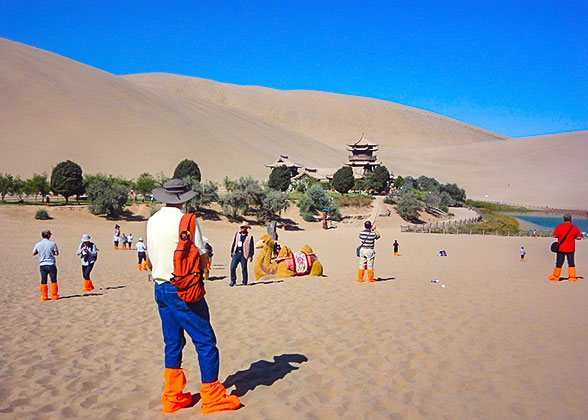
Jiayuguan-Dunhuang transfer, Echoing-Sand Dune (camel-riding) and Crescent Lake. (B+L)
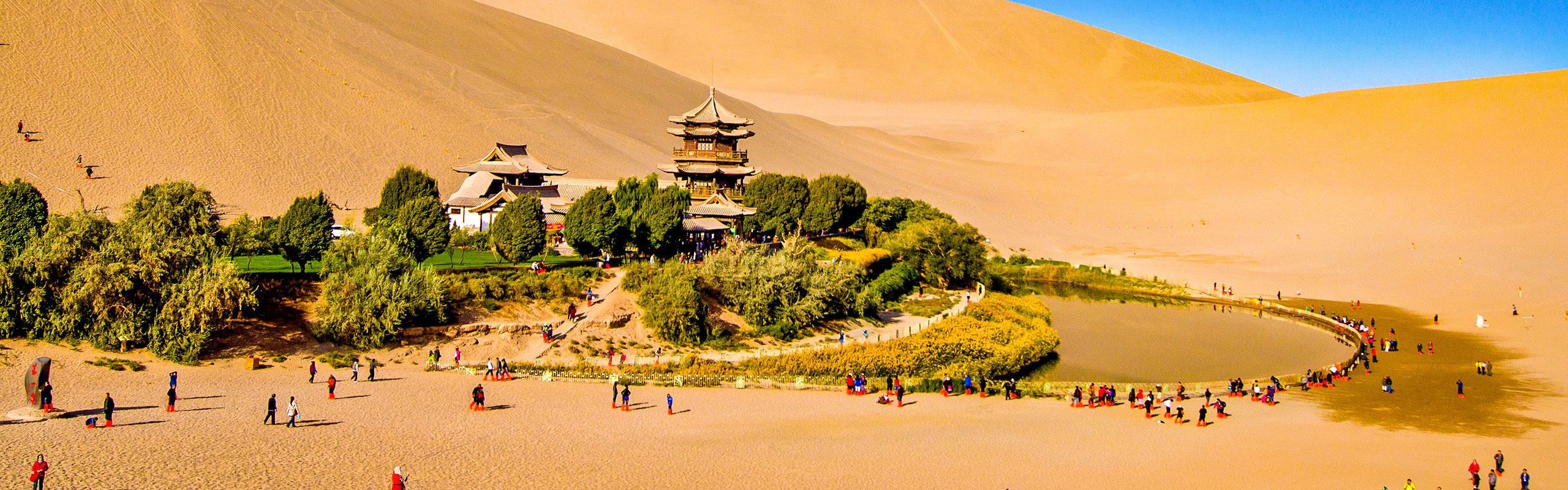
After breakfast, you will head for Dunhuang and register in the hotel. Then go for a camel-ride along the Echoing-Sand Mountain to reach the Crescent Lake. As its name indicates, the sand in the Echoing-Sand Mountain echoes when wind blows or when you slide down the slope of the mountain. Amongst the endless sands, there is the Crescent Lake which resembles a crescent naturally. The most amazing part is that for thousands of years, it does not dry up because of the movement of the desert.
Meals: Western style breakfast, Lunch
Meals: Western style breakfast, Lunch
Riding the Camels at Echoing-Sand Mountain
Visit Crescent Lake
Day 10 Dunhuang - Turpan
Mogao Grottoes, Dunhuang Museum. High speed train to Turpan. Railway station-hotel transfer. (B+L)
Today's highlight is the noted Mogao Caves treasuring exquisite murals and Buddhist statues. The excavation was started between 3rd and 5th century during the Jin Dynasty and continued in the following dynasties. Now there are altogether 735 grottoes, 45,000 square meters (about 53,820 square yards) murals and 2,415 colorful Buddhist statues. The second stop of the day is Dunhuang Museum where you will learn more about Dunhuang City and the development of the ancient Silk Road. Then take a high speed train to Turpan in Xinjiang. Our local guide will meet you at the railway station and transfer you to the hotel.
Meals: Western buffet breakfast, Lunch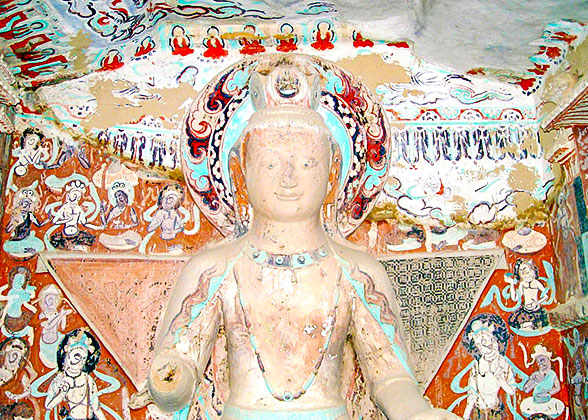
Meals: Western buffet breakfast, Lunch
Statue at Mogao Grottoes
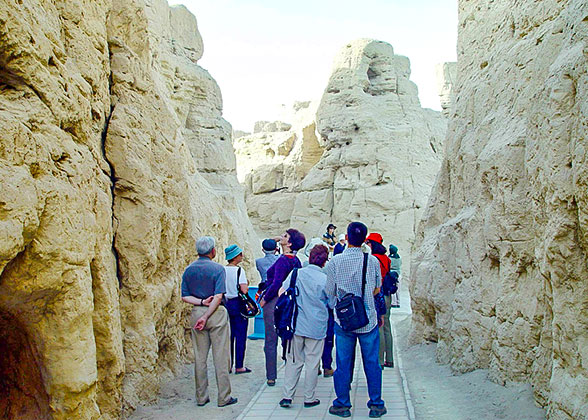
Ancient City of Jiaohe
Day 11 Turpan
Jiaohe Ruins, Karez Well, Sugong Pagoda. (B+L)
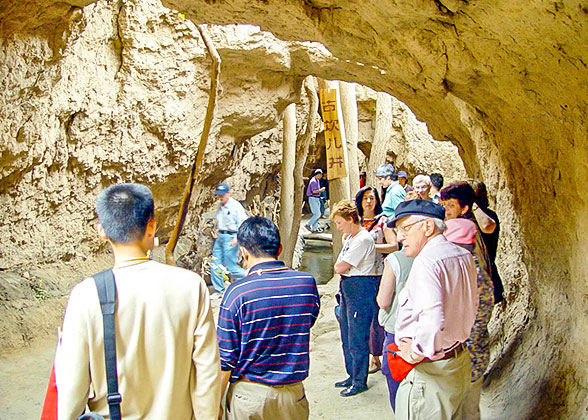
After having breakfast in the hotel, you will go to visit the Ancient City of Jiaohe (Yarkhoto). In the ancient city with 2,300 years of history, you can still find the past glory from the ruins. After that, go on to the Karez Well which has played an important role in irrigation and potable water supply of this area for 4,000 years. The last stop is the Emin Minaret (Su Gong Ta) which is a 44-meter-high (144 feet) conical pagoda with strong Islamic flavor. Built in 1777, it is the largest ancient tower in Xinjiang.
Meals: Western buffet breakfast, Lunch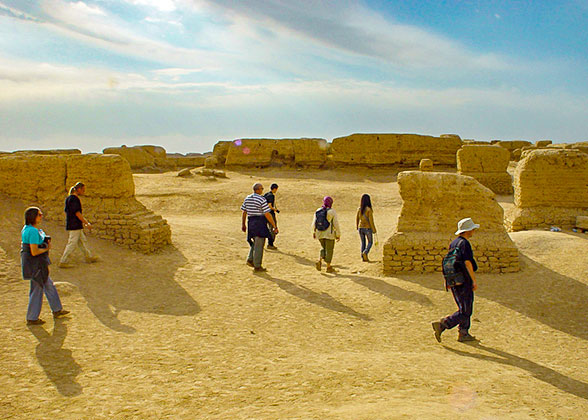
Meals: Western buffet breakfast, Lunch
Visit Ancient City of Gaochang
Karez System
Day 12 Turpan - Urumqi
Baizikeli Thousand Buddha Cave, Gaochang Ruins, Flaming Hill (drive by). Land transfer from Turpan to Urumqi. (B+L)
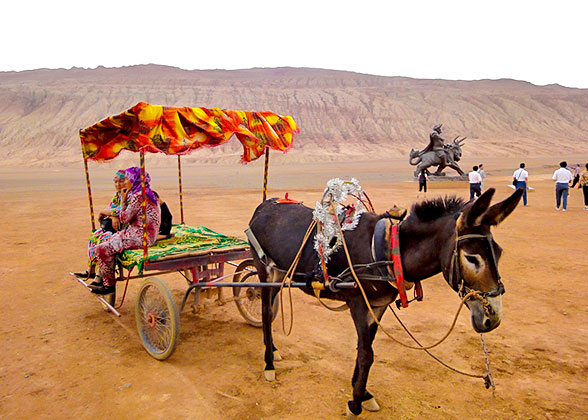
Your private Turpan tour will be extended to the Bizaklik Thousand Buddha Caves, the Ancient City of Gaochang and the Flaming Mountain. The Bizaklik Thousand Buddha Caves were first excavated in the Southern and Northern Dynasties (4th to 6th century) and finished in the 13th century during the Yuan Dynasty. The colorful murals and vivid Buddhist statues show the development of Buddhism and the history of this area. Gaochang is another ruin of ancient city in Turpan. Though has a history of more than 2,000 years, the ancient city is still standing there with clear outline. Not far from the Ancient City of Gaochang is the Flaming Mountain where the temperature on the surface reaches 47.8 C (118.04 F) in the hottest summer, hence the name. After the day's trip, we will transfer you to Urumqi for a one-night stay.
Meals: Western buffet breakfast, Lunch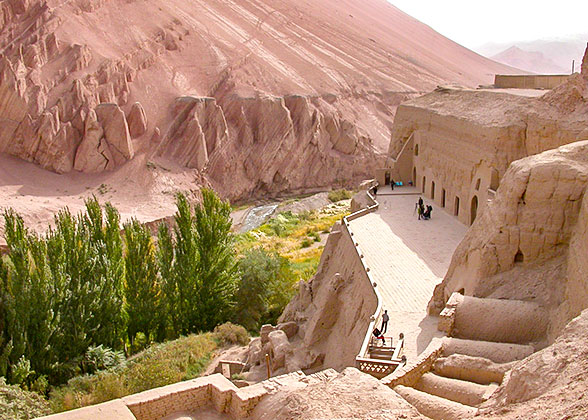
Meals: Western buffet breakfast, Lunch
Bizaklik Thousand Buddha Caves
The Flaming Mountain
Day 13 Departure from Urumqi
Hotel-airport transfer & see you off. A pleasant onward trip! (B)
Today our guide will see you off at the airport for your onward flight. Wish you a pleasant trip home!
Meals: Western buffet breakfast
Meals: Western buffet breakfast
Expand All
Collapse All
This trip can be customized to meet your individual needs!
| Destinations | Standard Hotels | Luxury Hotels |
|---|---|---|
| Xining | Qinghai Hotel  | Sofitel Xining |
| Lanzhou | Legend Hotel | Grand Soluxe Hotel Gansu |
| Xiahe | Labrang Civil Aviation Hotel | Labrang Civil Aviation Hotel |
| Zhangye | Dinghe International Hotel | Dinghe International Hotel |
| Jiayuguan | Holiday Plaza Hotel Jiayuguan | Holiday Plaza Hotel Jiayuguan |
| Dunhuang | Dunhuang Hotel Building No. 8 | Dunhuang Hotel Building No. 8 |
| Turpan | Mercure Hotel Turpan Downtown | Mercure Hotel Turpan Downtown |
| Urumqi | Excemon Xinjiang Yilite Hotel | Conrad Urumqi Hotel |
Tour Prices 2026 & 2027
| With Standard Hotels | |
|---|---|
| 2-3 travelers | 4-5 travelers |
USD4509 | USD3469 |
| With Luxury Hotels | |
|---|---|
| 2-3 travelers | 4-5 travelers |
USD4739 | USD3699 |
- Prices are per person on twin sharing.
- If you are a group of 6 people or more, we will offer a more favorable price by your group size.
Price Includes
- Train fares within itinerary
- Hotel accommodation with breakfasts
- Lunches as itinerary specifies
- Private English-speaking guides
- Private drivers & air-conditioned vehicles
- Entrance fees to tourist sites
Price Excludes
- Airfares of arrival and departure
- Entry visa fees
- Personal expenses
- Tips or gratuities for guides and drivers
Itineraries you may also like: