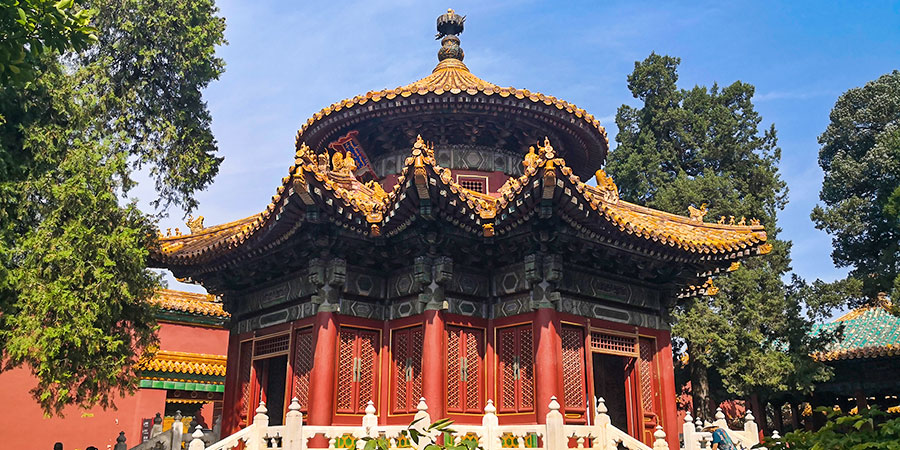
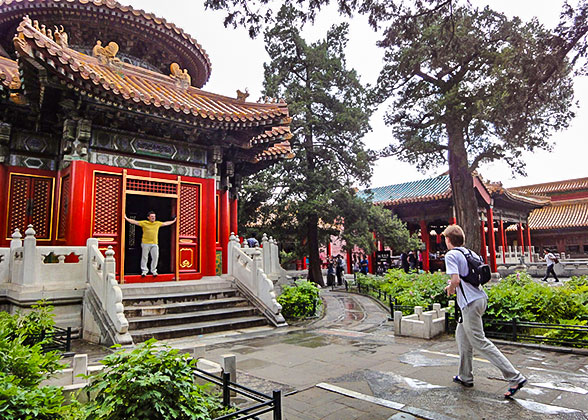
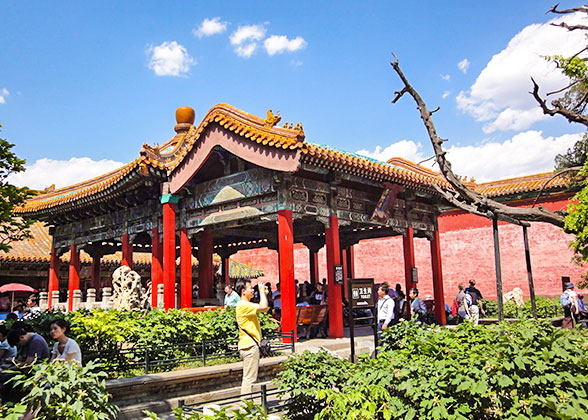
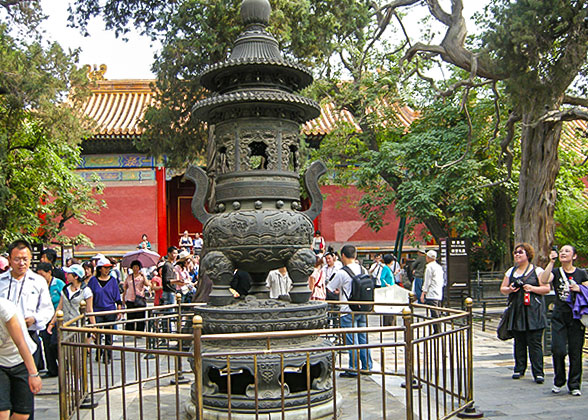
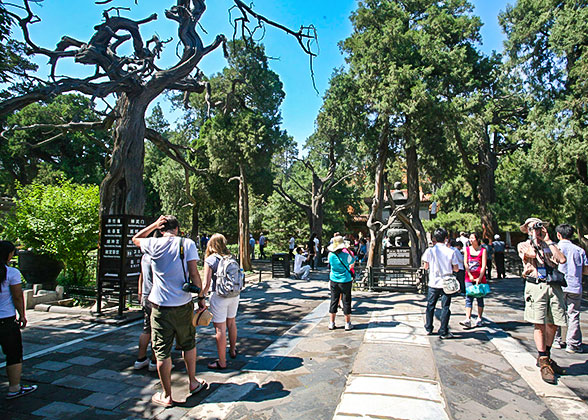
The Imperial Garden is located outside of the Gate of Terrestrial Tranquility. Constructed during the Ming dynasty in 1417, it is rectangular in shape and covers approximately 12,000 square meters. This was a private retreat for the imperial family and is the most typical of the Chinese imperial garden design. There are some twenty structures, each of a different style, and the ways in which they harmonise with the trees, rockeries, flower beds and sculptural objects such as the bronze incense burners both delight and astonish visitors. It is a worthy tribute to the art of the designers that so much can be achieved in so small a space.
The Hall of Imperial Peace (Qin'andian) is the dominant building in the garden and occupies the central position. Surrounded by a wall, it dates from the 15th Century. Growing in front of the hall is a four hundred year old pine tree. Known as the Consort Pine, it symbolises the harmony between the Emperor and Empress. The door to the hall is protected from evil spirits by two gilded unicorns. Inside the hall prayers were offered up to the Taoist God of Water, Zhenwudadi, for the protection of the Forbidden City from destruction by fire. At each of the four corners of the garden there is a pavilion. These symbolise the four seasons. The Pavilion of Myriad Springs (Wanchunting) is the most famous and occupies the eastern corner. Built in 1535 and restored during the Qing dynasty, as its name implies, it is this pavilion that symbolizes spring.
Located in the north-east is Duixiushan, Gathering Beauty Hill is a little artificial mountain with a cave. Yujingyuan (Pavilion of Imperial View) sits on top of the mountain. Emperors would climb up to the pavilion on the Double Ninth Festival to enjoy the scenery with the royal family.
Incense Burner
Imperial Garden, Forbidden City
Visitors will see some of the footpaths are paved with varied patterns of coloured pebbles, symbolising good luck and fortune. The more observant visitor will find a group of pictures depicting shrews punishing their husbands. It seems strange that such pictures should appear here in feudal China at a time when male dominance and more especially the omnipotence of the emperor prevailed!
At the northern end of the garden is Shenwumen, the Gate of Divine Might and the rear exit from the Forbidden City.
Having visited all the sites on the east and west sides of the Inner Court, you may leave via the Gate of Divine Might.

 Next:
Next: Further Reading: