Great Wall of Northern and Southern Dynasties
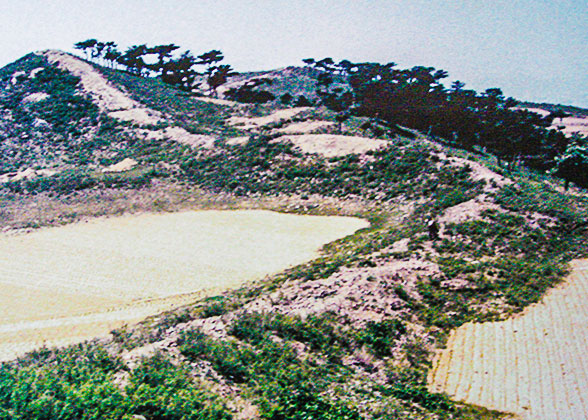 |
| Relics of Tieque Pass of Northern Dynasties, Wuning County, Hebei |
During the turbulent Northern and Southern Dynasties, China split into two parts: the Northern Dynasty and Southern Dynasty. The former included a series of regimes: Northern Wei, Western Wei (535-557), Eastern Wei, Northern Qi and Northern Zhou. The latter included four short-lived dynasties: Liu Song (420–479), Southern Qi (479–502), Liang (502–557) and Chen (557–589).
The Great Wall was built by the Northern Dynasty as a defense against aggression from northern nomadic tribes, while the Southern Dynasty, which was free from the threats of northern nomads, built no walls. The defensive line ran from Shanxi to Shanhaiguan, via Hebei and Beijing. The relics have been found near Pianguan, Shanxi.
Northern Wei Dynasty Great Wall
|
|
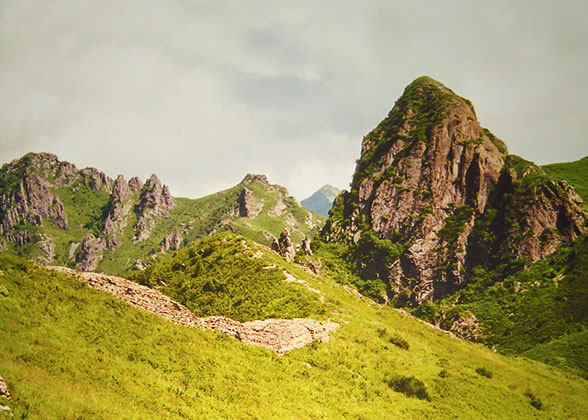
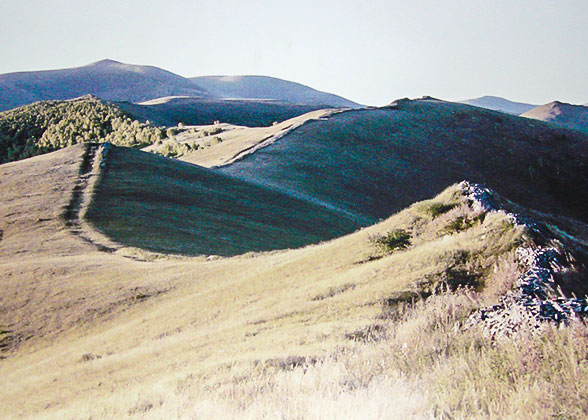
Later in 446, a thinner and lower earth wall, known as Sai Wei, was erected around the capital city of Pingcheng. It started from Shanggu (today's Guangling County, Shanxi), and ran northward to Tianzhen County, Shanxi. Then, it turned westward, and ended at the eastern bank of the Yellow River. The total length is about 311 miles (500 kilometers). The Sai Wei worked together with the northern wall, forming a sound defense.
Eastern Wei Dynasty Great Wall
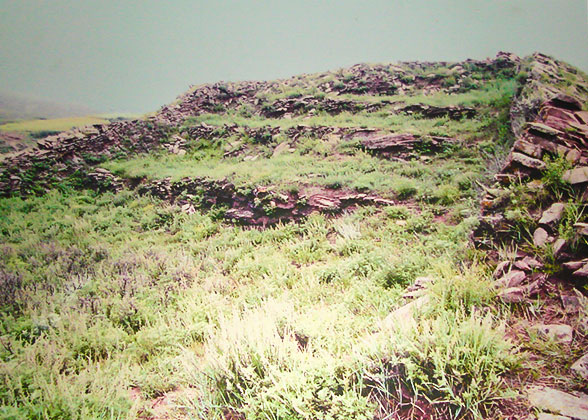 |
| Wall Ruins of Eastern Wei in Ningwu County, Shanxi |
Later, the Northern Wei split into the Western Wei (535-557) and the Eastern Wei (534-550). To prevent intrusions by the Rouran people, the Eastern Wei built the wall from Maling Garrison (to the west of today's Ningwu, Shanxi) to Tudeng (to the east of Ningwu, Shanxi), stretching about 47 miles (75 kilometers) long. Though it was not long, the wall blocked the passage, through which the northern nomadic people entered the central plain. The wall helped to consolidate the northern boundary of Eastern Wei Dynasty.
Northern Qi Dynasty Great Wall
 1. In 552, the Northern Qi built the first section to prevent invasions by its western neighbor- Western Wei. This section ran from Huangluling (today's Fenyang, Shanxi) in the south, and ended at Sheping Garrison (today's Wuzhai County, Shanxi) in the north, stretching about 124 miles (200 kilometers).
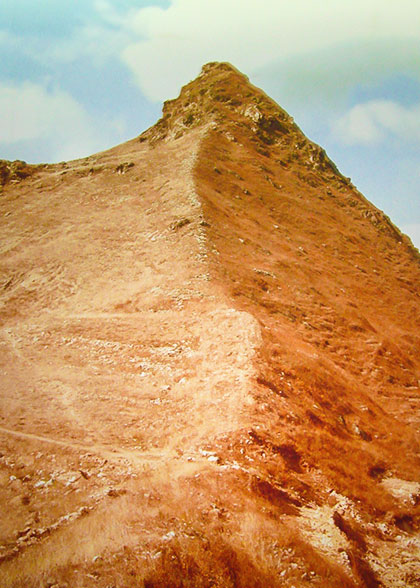 |
| Wall Ruins of Northern Qi, Miyun, Beijing |
2. When the northern Turks became powerful, they often invaded the northern boundary of the Northern Qi. In 555, the Northern Qi had to renovate and extend the northern Great Wall built by the Northern Wei. This section was about 279 miles (450 kilometers) long, running westward from Xiakou near today's Juyongguan, to Hengzhou in today's Datong, Shanxi.
3. In 556, another large-scale construction took place. The wall was extended to the Bohai Sea near today's Shanhaiguan in the east. By then, the whole wall was about 932 miles (1,500 kilometers) long. Many garrisons were set up along the wall.
4. In 557, an inner defensive line was built from Kuluobo near Pianguan in the west, via Yanmenguan and Pingxing Pass, and ended at Wuhe Garrison near Xiaguan Pass.
5. In 563, the wall was constructed on the Taihang Mountain along the boundary of Shanxi and Hebei.
6. In 565, threatened by the northern Turks, the Northern Qi extended the previous wall built by the Eastern Wei to Yanmenguan, restored the inner defensive line built in 557, and added the wall between Xiaguan and Juyongguan, via Chajianling, Futuyu, Zijingguan, and Mashuikou. Also, it repaired the wall between Juyongguan and Shanhaiguan.
Northern Zhou Dynasty Great Wall
|
|
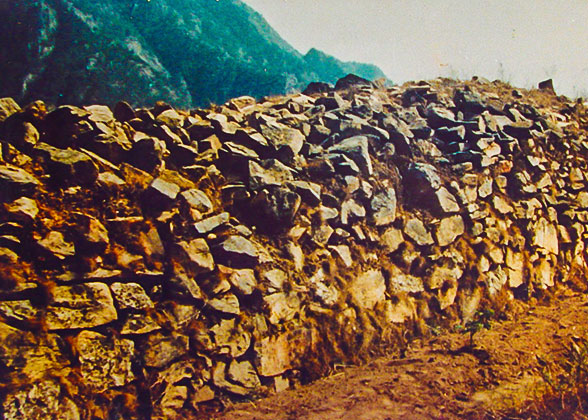
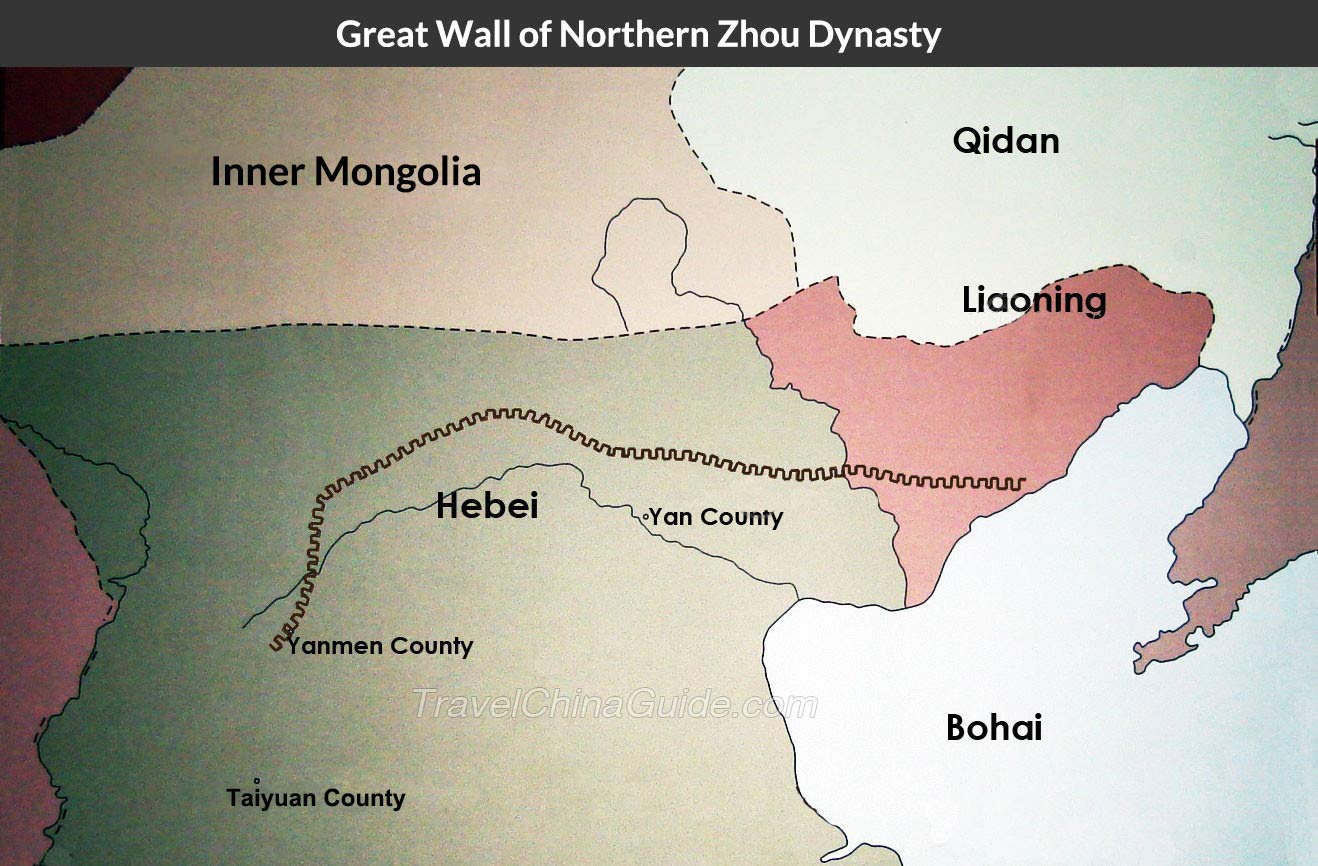
Relics of China Great Wall of Northern and Southern Dynasties
 Reply
Reply 0
0 0ReplyReply00Reply