 |
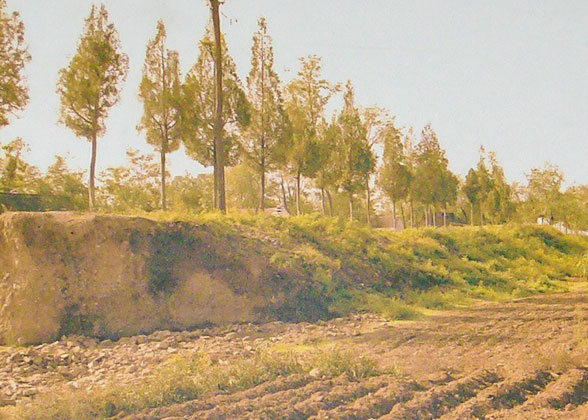
Zhao State Great Wall Relics in Linxian County,
Henan Province |
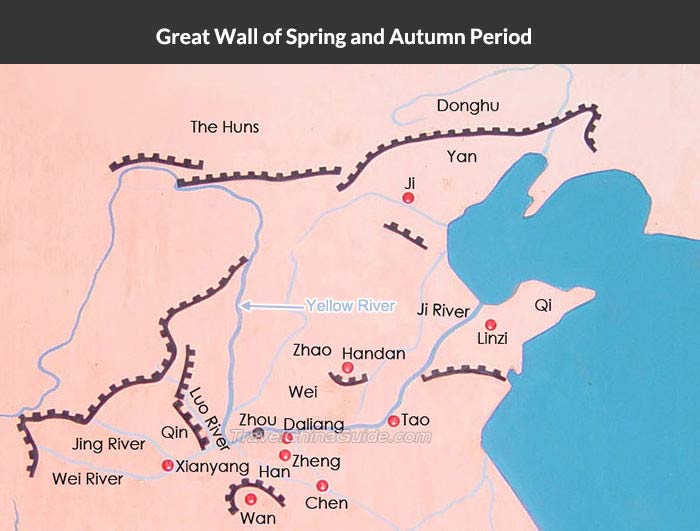
The Great Wall of the Zhou Dynasty (1046-256BC), the earliest one in Chinese history, was built by different states to protect their territories against the attacks from northern nomadic tribes and the neighboring states. During the era of chaos, the whole country was torn apart by many states who actively built walls along their own borders. Therefore, the Great Wall of the Zhou Dynasty was not connected, but separate and diverse.
Distinctive Features of the Great Wall of Zhou Dynasty

It was not a long continuous wall, but many walls. The walls are not parallel. Some run from the west to the east; some extend from the north to the south; others basically form a square.
Compared with the Great Wall of later dynasties, the walls are short, varying from a few hundred to two thousand kilometers long.
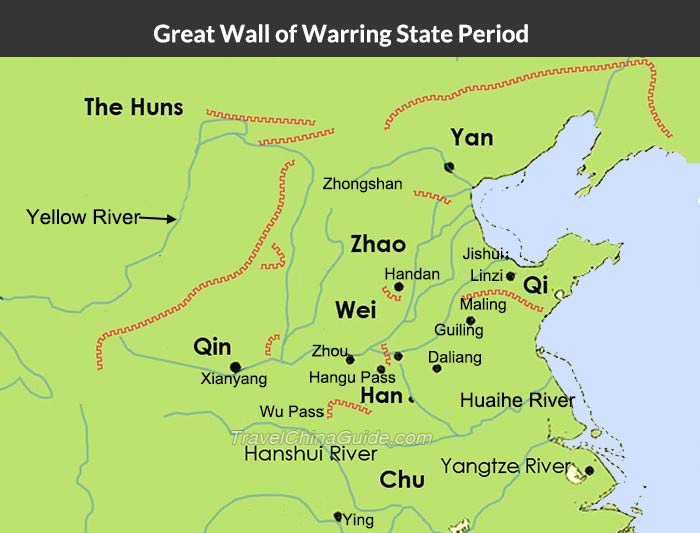
| | 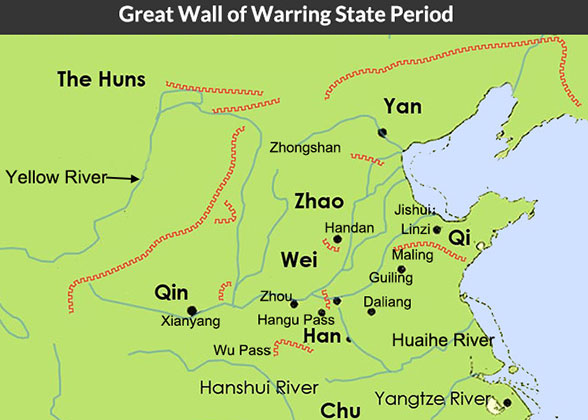 | | Map of Warring States Period | |
When and Why Was the Zhou Dynasty Great Wall Built
The Zhou Dynasty consists of three periods: the Western Zhou Dynasty (1046-771BC), the Spring and Autumn Period (770-476BC), and the Warring States Period (475-221BC). The history of the Great Wall of China dates back to the Western Zhou Dynasty when continuous forts called "Lie Cheng" were built to defend against northern Xianyun tribe.
During the Spring and Autumn Period and the Warring States Period, the larger states waged wars on one another, and smaller ones were annexed one after another. Under such a critical circumstance, many states built the defensive walls along their borders, including the Chu State, Qi State, Han State, Wei State, Zhao State, Yan State, Qin State, and Zhongshan State. In addition, the Qin, Zhao, and Yan States border the powerful nomadic tribes in the north, so they had to erect the northern walls.
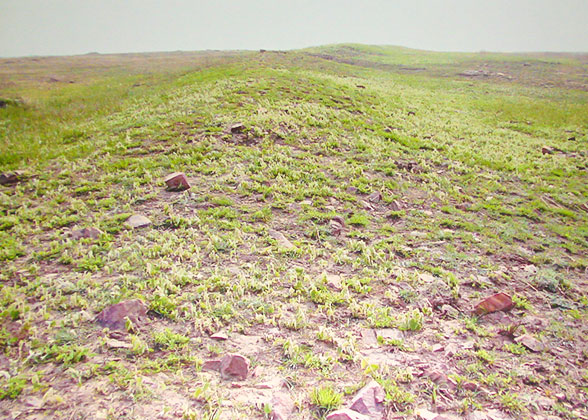 | | Ruins of Chu Wall in Ye County, Henan | | 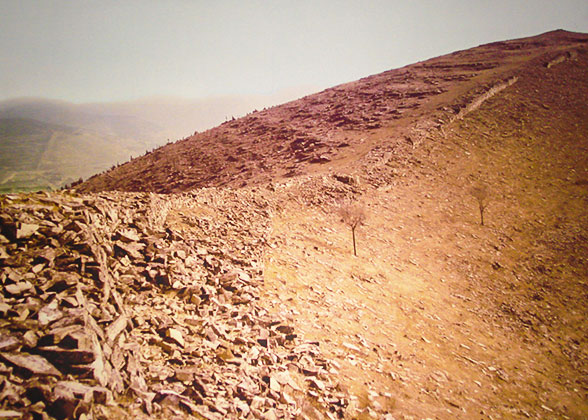 | | Wall Ruins of Qi in Changqing, Shandong | |
Zhou Dynasty Great Wall Built by Various States
Chu StateAs the earliest Great Wall in China, the Chu State Wall was built in the 7th Century BC to protect its border against attacks from other states. The military defensive system resembles a square. Thus, it is also known as “Square Wall”. There were over 700 pass cities along the wall, such as Zhoujiazhai. Nowadays, the relics have been found in south Henan Province.
Qi StateThe Qi State Wall was built in the 6th Century BC to shore up its territory. It is modeled after previous dams and waterworks. The military defense comprises 398.5 miles (641.32 km) of wall, as well as passes, gates, beacon towers, fortresses and barracks. Today, relics have been found in central Shandong Province, including Jinan, Tai’an, Laiwu, Weifang, Rizhao and Qingdao.
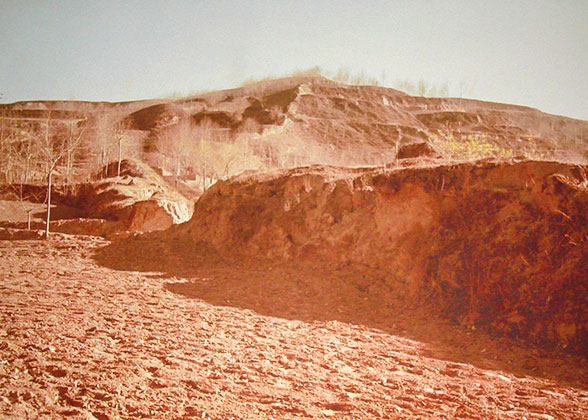 | Wall Ruins of the Qin
in Lintao, Gansu | | 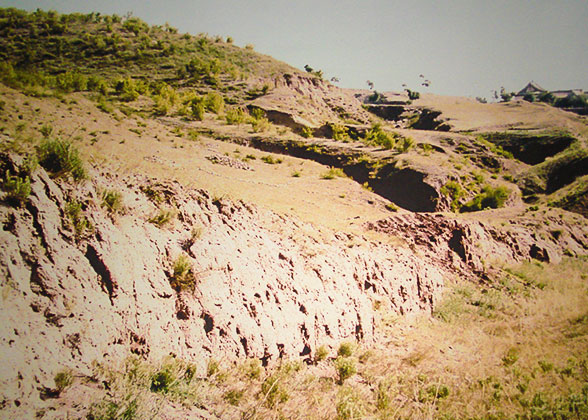 | Northern Wall Ruins of Zhao at
Northern Wusutu, Hohhot, Inner Mongolia | |
Qin State
In the early Warring States Period, the Qin State suffered from weak economy and constant invasions from the Wei State. To defend the territory, Duke Ligong and Duke Jian of Qin built the wall to the west of Yellow River and Luohe River in 461BC and 409BC respectively. The wall was also known as Qianluo Wall.
Another section was built at the northwestern frontier to defend against the Yiqu tribe. In 324BC, King Huiwen of Qin built fortifications. Around 272BC, King Zhaoxiang of Qin defeated the Yiqu tribe eventually, and built the wall.
Later in 221BC, Emperor Qin Shi Huang unified China, and established the Qin Dynasty. He linked the walls built by different states, such as Qin, Yan and Zhao, and added some sections, forming the Qin Dynasty Great Wall.
Zhongshan State
Zhongshan State was a small state between Zhao State and Yan State. The powerful Zhao State attempted to annex the Zhongshan State through waging several wars. Under such critical circumstances, Zhongshan State erected the wall in 374BC. Nowadays, relics have been detected at Laiyuan, Tangxian, Shunping, and Quyang in Hebei Province. It was made of stone or a combination of earth and stone.
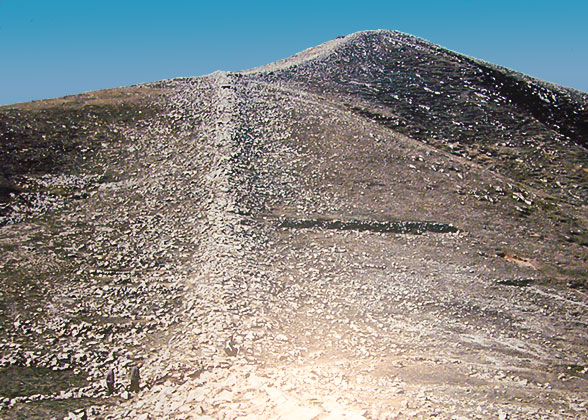 | Wall of Zhongshan State
in Tang County, Hebei | | 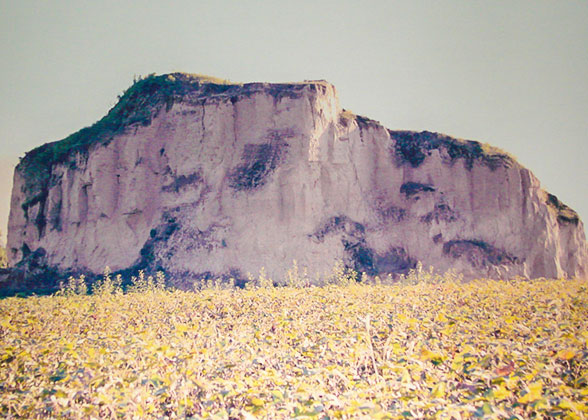 | Western Wall Ruins of Wei
built in Huayin County, Shaanxi | |
Wei State
In the 4th Century BC, the Wall of the Wei State was constructed to protect its capital city Daliang, today’s Kaifeng in Henan Province, against the invasion by the strong Qin State. It has two lines: the west line and south line. Nowadays, relics have been found in Huayin, Dali, and Hancheng in Shaanxi Province.
Han State
The wall was originally built by the Zheng State in 356BC, and is connected with the west line of Wei State Wall. After conquering the Zheng State, the Han State continued using the wall to defend against the neighboring Wei State and Qin State. Hence, the wall was known as Zhenghan Wall. Relics have been found at the boundary of Xingyang and Xinmi in Henan Province.
Zhao State
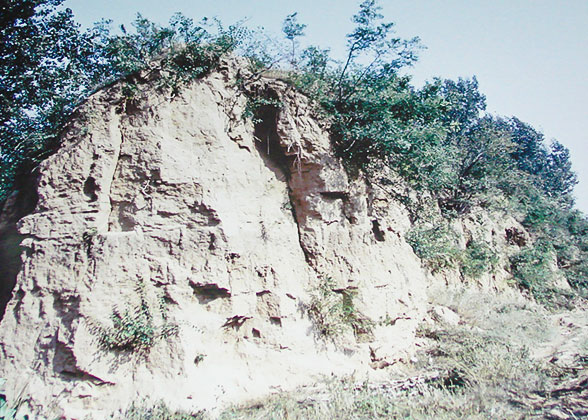 |
Wall Ruins of Yan,
Yingjin River, Inner Mongolia |
The Zhao State Wall has two lines: the northern line and southern line. The northern line was erected in 333BC to prevent the incursions by Donghu tribe. The relics of the northern line have been found in Baotou, Inner Mongolia. The southern line was built in 300BC to prevent the attacks from other states, like Wei and Qin. It leaves some relics at the boundary of Hebei and Henan Provinces.
Yan State
The Yan State also built two defensive lines in the south and north. The Southern Wall was to stop the attacks from neighboring Zhao and Qi States. The Northern Wall was built to guard against intrusions by nomadic Donghu people. It was the last wall during the Warring States Period. Today, you can see relics in northwest Liaoning Province, like Jianping County and Faku County.
- Last updated on Feb. 03, 2026 by Sherry Xia -