Nepal to Tibet Independent Overland Trip
TSA09: 11 Days Kathmandu - Nagarkot - Kathmandu - Gyirong Border - Everest Base Camp - Dingri - Shigatse - Gyantse - Lhasa
- Itinerary
- Reviews
Expand All
Collapse All
Trip Overview
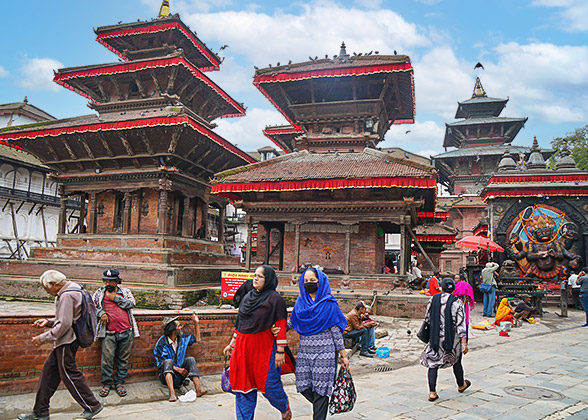
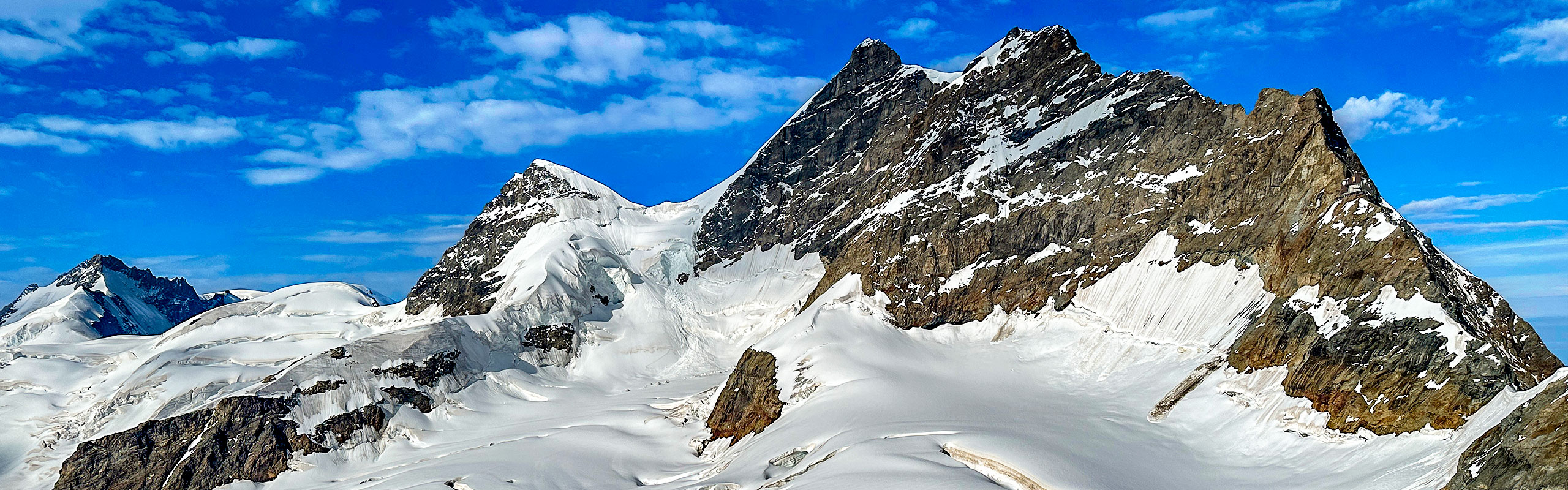
Nepal, the paradise for trekkers, and Tibet, the roof of the world, are connected by the mighty Himalayas, offering the most epic adventures in Asia. How about combining them in one go? Start in Kathmandu, where millennia-old heritages tell stories of Hindu and Buddhist harmony. Then, trek the classic Sankhu-to-Nagarkot trail for sweeping views of Mt. Everest, the highest peak in the world. Afterward, cross into Tibet to delve into the sacred Potala Palace and soak up the unique culture of the snowy plateau.
Although it’s an independent trip, we’ve sorted out all the practical information to make your journey smoother. Exploring Nepal on your own is fairly easy, but the Tibet part is a bit troublesome, requiring a Tibet Travel Permit, as well as a guide and a driver from a licensed local travel agency. If you prefer a hassle-free experience, we’re glad to arrange a private guided tour for you.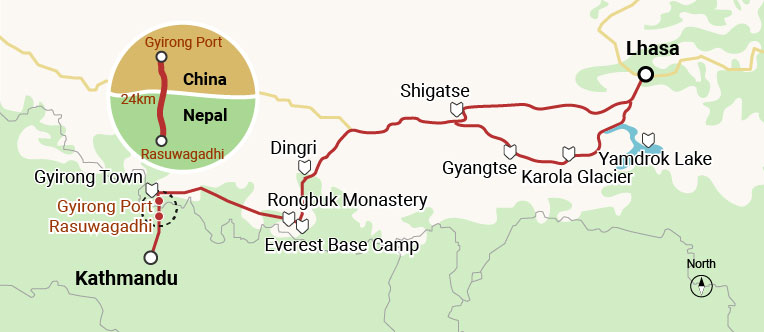
Although it’s an independent trip, we’ve sorted out all the practical information to make your journey smoother. Exploring Nepal on your own is fairly easy, but the Tibet part is a bit troublesome, requiring a Tibet Travel Permit, as well as a guide and a driver from a licensed local travel agency. If you prefer a hassle-free experience, we’re glad to arrange a private guided tour for you.
Map of Nepal to Tibet
Day 1 Arrival in Kathmandu
Upon arrival at Kathmandu’s Tribhuvan International Airport, make your own way to the hotel you’ve booked and check in.
► Airport to Hotel Transport: If your hotel doesn’t provide a free pickup, grab a prepaid taxi from the arrival gate. The ride to downtown Kathmandu takes about 20-30 minutes and costs around NPR 700-1000 (USD 5-7), with a surcharge of about NPR 100 (USD 0.7) after 9:00 pm. Alternatively, get a local SIM card on arrival and register to use ride-hailing apps like Pathao or inDrive, which offer transparent prices and various vehicle choices. Public buses are also available, but they require transfers and cannot go directly. Besides, if you’re carrying luggage, they’re not recommended overall.
► Communication and Internet Access: Nepal has two main telecom providers: Ncell and Nepal Telecom (NTC). As your trip includes trekking, it’s advisable to choose NTC for its more reliable coverage in mountain areas. You can purchase a SIM card with your passport at the airport arrival hall.
► Hotel Accommodation: Thamel is an ideal choice, with numerous hotels, guesthouses, cafes, and restaurants catering specifically to international travelers. A comfortable mid-range hotel with air conditioning, 24-hour hot water, and free Wi-Fi costs around NPR 4,000-8,000 (USD 25-50) per night.
► Money Exchange: Nepal’s official currency is the Nepalese Rupee (USD 1≈NPR 151.5). As airport counters offer unfavorable rates, exchange only enough money for your taxi and SIM card fares. In Thamel, you’ll find plenty of exchange spots with better rates; compare a few for the best deal.
After settling in, you can either rest at your hotel, or stroll around the Thamel to experience its vibrant market life. Wander through the narrow alleys crisscrossed with wires overhead to browse handicraft shops teeming with woolen scarves, copper ornaments and wood carvings, or unwind at a rooftop café or bar.
► Airport to Hotel Transport: If your hotel doesn’t provide a free pickup, grab a prepaid taxi from the arrival gate. The ride to downtown Kathmandu takes about 20-30 minutes and costs around NPR 700-1000 (USD 5-7), with a surcharge of about NPR 100 (USD 0.7) after 9:00 pm. Alternatively, get a local SIM card on arrival and register to use ride-hailing apps like Pathao or inDrive, which offer transparent prices and various vehicle choices. Public buses are also available, but they require transfers and cannot go directly. Besides, if you’re carrying luggage, they’re not recommended overall.
► Communication and Internet Access: Nepal has two main telecom providers: Ncell and Nepal Telecom (NTC). As your trip includes trekking, it’s advisable to choose NTC for its more reliable coverage in mountain areas. You can purchase a SIM card with your passport at the airport arrival hall.
► Hotel Accommodation: Thamel is an ideal choice, with numerous hotels, guesthouses, cafes, and restaurants catering specifically to international travelers. A comfortable mid-range hotel with air conditioning, 24-hour hot water, and free Wi-Fi costs around NPR 4,000-8,000 (USD 25-50) per night.
► Money Exchange: Nepal’s official currency is the Nepalese Rupee (USD 1≈NPR 151.5). As airport counters offer unfavorable rates, exchange only enough money for your taxi and SIM card fares. In Thamel, you’ll find plenty of exchange spots with better rates; compare a few for the best deal.
After settling in, you can either rest at your hotel, or stroll around the Thamel to experience its vibrant market life. Wander through the narrow alleys crisscrossed with wires overhead to browse handicraft shops teeming with woolen scarves, copper ornaments and wood carvings, or unwind at a rooftop café or bar.
Day 2 Kathmandu Highlights: Kathmandu Durbar Square, Boudhanath Stupa, Pashupatinath Temple
Today, plan a full-day exploration of Kathmandu’s UNESCO treasures.
Start from Thamel and follow Google Maps for a 20-minute walk to Kathmandu Durbar Square, one of the three royal plazas of Kathmandu Valley. Pay your special attention to Kumari Temple to get insights into Nepal’s mysterious “living goddess” culture: a young girl revered as the earthly manifestation of the city’s guardian deity. Her striking red attire, dramatic eyeliner, and the third eye drawn on her forehead give her an otherworldly charm. She appears briefly at the second-floor window only around 11:00 am and 4:00 pm - time your visit accordingly. Also, climb the nine-story tower at Hanuman Dhoka Palace for a bird’s-eye view of ancient temples blending with everyday local life over the square.
• Entrance Fee: NPR 1,000 (USD 6.5). Open all day, but its on-site museums usually close at 4:00 pm.
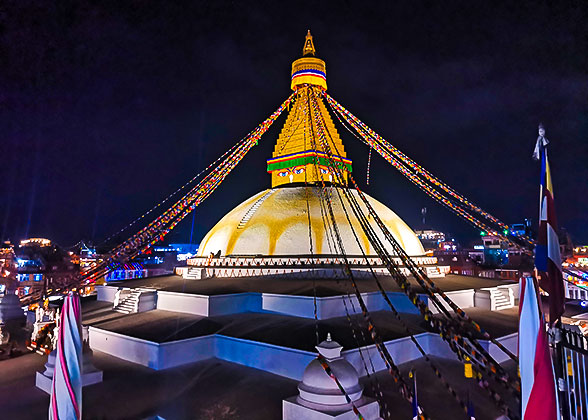
Next, head to Boudhanath Stupa, Nepal’s most iconic Tibetan Buddhist site and one of the world’s largest spherical stupas. To get there, you can either take a 30-minute taxi ride for NPR 500-800 (USD 3-5), or walk 15 minutes to Ratna Park Stop to catch a blue minibus that takes 40 minutes for NPR 30 (USD 0.2). Once arrival, walk clockwise around the stupa three times and spin the prayer wheels to experience the locals’ devotion. Climb to the second-tier platform for an up-close view of the symbolic Buddha eyes painted on all four sides of the tower, and overlook the colorful prayer flags fluttering over the stream of pilgrims.
• Entrance Fee: NPR 400 (USD 2.5). Open daily from 5:00 am to 6:00 pm, extend to 7:00 pm in summer.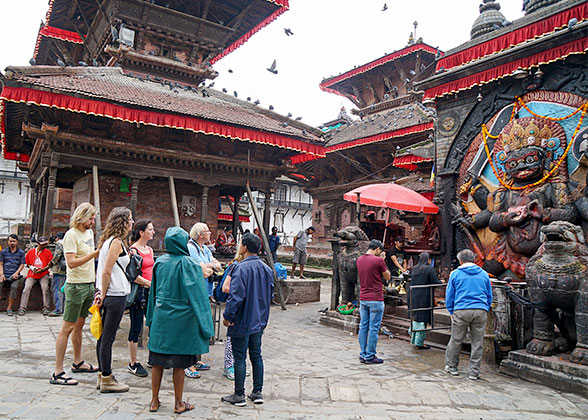
 From the stupa, walk about 25 minutes or take a 15-minute taxi ride to the sacred Hindu Pashupatinath Temple. The main purpose here is to witness Nepal’s most powerful open-air cremation ceremony by the Bagmati River. You’ll also notice sadhus around, locally revered as holy men, with colorfully painted faces. Stay until early evening to witness the Aarti ritual, a moving collective prayer led by priests showing Hindus’ peaceful acceptance of life and death.
• Entrance Fee: NPR 1,000 (USD 6.5), but note that the main temple sanctum is off-limits to non-Hindus. Open daily from 5:00 am to 9:00 pm, but closes for a midday break from noon to 5:00 pm.
At last, wrap up your day with a 20-minute taxi ride for around NPR 500 (USD 3), or hop on a blue minibus back to your hotel in Thamel.
► Insider Tips:
1. Kathmandu’s bus stops lack route maps and schedules, and the vehicles are of poor quality. The cost generally ranges from NPR 25 to 50 (USD 0.15 to 0.3) and requires cash. You can try it out with a map app, but it’s not recommended to travel all through by bus.
2. When visiting religious sites in Nepal, dress modestly - cover your shoulders and knees - and remove your shoes and hat before entering.
Start from Thamel and follow Google Maps for a 20-minute walk to Kathmandu Durbar Square, one of the three royal plazas of Kathmandu Valley. Pay your special attention to Kumari Temple to get insights into Nepal’s mysterious “living goddess” culture: a young girl revered as the earthly manifestation of the city’s guardian deity. Her striking red attire, dramatic eyeliner, and the third eye drawn on her forehead give her an otherworldly charm. She appears briefly at the second-floor window only around 11:00 am and 4:00 pm - time your visit accordingly. Also, climb the nine-story tower at Hanuman Dhoka Palace for a bird’s-eye view of ancient temples blending with everyday local life over the square.
• Entrance Fee: NPR 1,000 (USD 6.5). Open all day, but its on-site museums usually close at 4:00 pm.
Next, head to Boudhanath Stupa, Nepal’s most iconic Tibetan Buddhist site and one of the world’s largest spherical stupas. To get there, you can either take a 30-minute taxi ride for NPR 500-800 (USD 3-5), or walk 15 minutes to Ratna Park Stop to catch a blue minibus that takes 40 minutes for NPR 30 (USD 0.2). Once arrival, walk clockwise around the stupa three times and spin the prayer wheels to experience the locals’ devotion. Climb to the second-tier platform for an up-close view of the symbolic Buddha eyes painted on all four sides of the tower, and overlook the colorful prayer flags fluttering over the stream of pilgrims.
• Entrance Fee: NPR 400 (USD 2.5). Open daily from 5:00 am to 6:00 pm, extend to 7:00 pm in summer.
Kathmandu Durbar Square
Boudhanath Stupa, Kathmandu
• Entrance Fee: NPR 1,000 (USD 6.5), but note that the main temple sanctum is off-limits to non-Hindus. Open daily from 5:00 am to 9:00 pm, but closes for a midday break from noon to 5:00 pm.
At last, wrap up your day with a 20-minute taxi ride for around NPR 500 (USD 3), or hop on a blue minibus back to your hotel in Thamel.
► Insider Tips:
1. Kathmandu’s bus stops lack route maps and schedules, and the vehicles are of poor quality. The cost generally ranges from NPR 25 to 50 (USD 0.15 to 0.3) and requires cash. You can try it out with a map app, but it’s not recommended to travel all through by bus.
2. When visiting religious sites in Nepal, dress modestly - cover your shoulders and knees - and remove your shoes and hat before entering.
Day 3 Kathmandu: Visit Swayambhunath Stupa and Patan Durbar Square
Begin the day with a 10-minute taxi ride from your hotel to Swayambhunath Stupa, a UNESCO-listed site where Buddhism and Hinduism coexist harmoniously. Admire the main tower with a massive white dome base and witness the classic “wisdom eyes of the Buddha,” believed to perceive everything in the universe. You’ll also see adorable monkeys roaming around everywhere – they’ve also earned this place the nickname “Monkey Temple.” Don’t worry - they won’t bother you as long as you don’t tease them with food.
• Entrance Fee: NPR 200 (USD 1.5). Open daily from dawn to dusk.
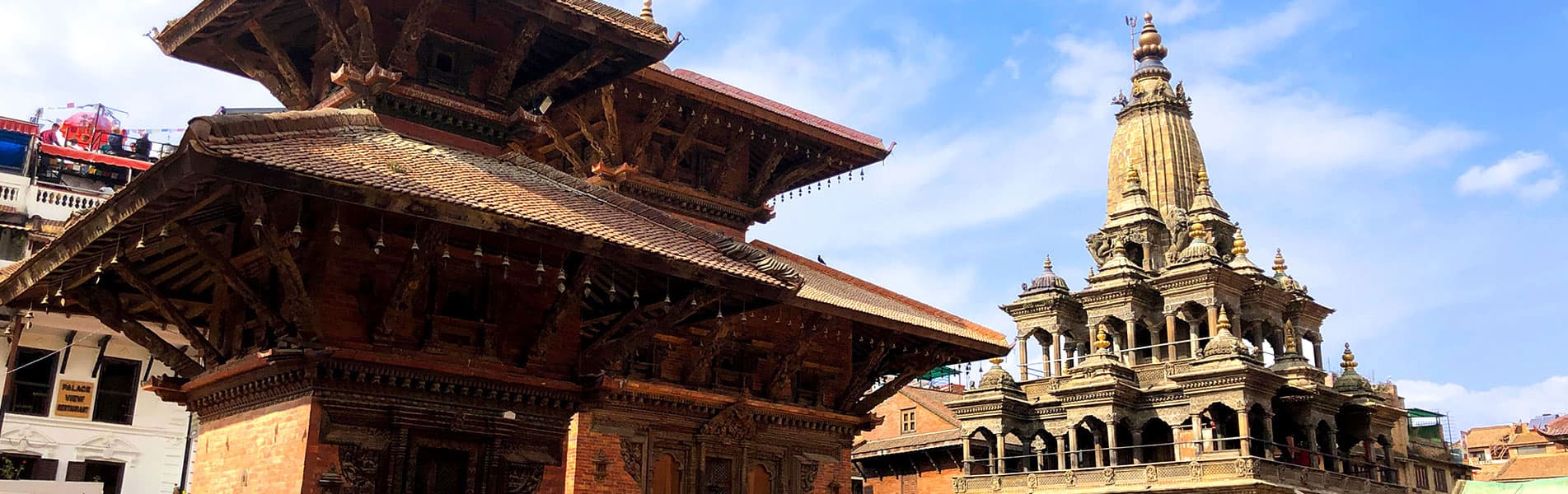
Next, continue your tour with a 20-minute taxi ride to Patan Durbar Square, another royal plaza in the Kathmandu Valley. Walk into its core Royal Palace and catch a glimpse of the famous sunken bath, a masterpiece once served both as the king’s cleansing chamber and a sacred space for rituals. Up close, the intricate carvings of the serpent god Naga and the mythical bird Garuda, along with the shining gilded bronze spout will amaze you. Besides, make time for the Golden Temple, where gilded stupas, copper ritual objects, and finely carved mythological figures will leave you in awe of Patan’s masterful metalwork as well.
• Entrance Fee: NPR 1,000 (USD 6.5). Open all day, though Patan Museum operates from 10:30 am to 5:30 pm.
Finally, take a 30-minute, NPR 400 (USD 2.6) taxi back to your hotel. Or try a motorbike, which costs around NPR 100 (USD 0.7).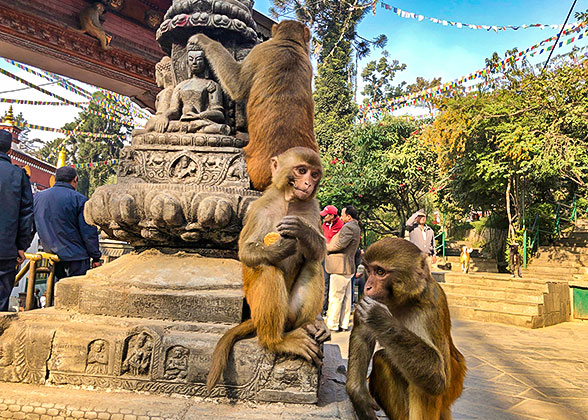
• Entrance Fee: NPR 200 (USD 1.5). Open daily from dawn to dusk.
Next, continue your tour with a 20-minute taxi ride to Patan Durbar Square, another royal plaza in the Kathmandu Valley. Walk into its core Royal Palace and catch a glimpse of the famous sunken bath, a masterpiece once served both as the king’s cleansing chamber and a sacred space for rituals. Up close, the intricate carvings of the serpent god Naga and the mythical bird Garuda, along with the shining gilded bronze spout will amaze you. Besides, make time for the Golden Temple, where gilded stupas, copper ritual objects, and finely carved mythological figures will leave you in awe of Patan’s masterful metalwork as well.
• Entrance Fee: NPR 1,000 (USD 6.5). Open all day, though Patan Museum operates from 10:30 am to 5:30 pm.
Finally, take a 30-minute, NPR 400 (USD 2.6) taxi back to your hotel. Or try a motorbike, which costs around NPR 100 (USD 0.7).
Monkeys at Swayambhunath Stupa, Kathmandu
Patan Durbar Square
Day 4 Visit Bhaktapur Durbar Square; Hike from Sankhu to Nagarkot
Dedicate your morning to Bhaktapur Durbar Square, the third of the valley’s royal plaza. From your hotel, take a taxi for 30-40 minutes for NPR 700-1000 (USD 4.5-6.5), or catch a 1-hour bus ride from nearby Ratna Park Station to Bhaktapur Bus Station for NPR 50 (USD 0.3). Once reaching the square, pass through the Golden Gate, a gem of Nepalese metalwork, and explore the fantastic 15th-century 55 Window Palace. Take a closer look at its detailed black sandalwood window carvings, featuring flowers, mythical animals, and both Hindu and Buddhist deities - another sign of religious harmony. If interested, move to the nearby pottery center to watch artisans making pottery, or even try it yourself.
• Entrance Fee: NPR 1,800 (USD 18). Open all day.
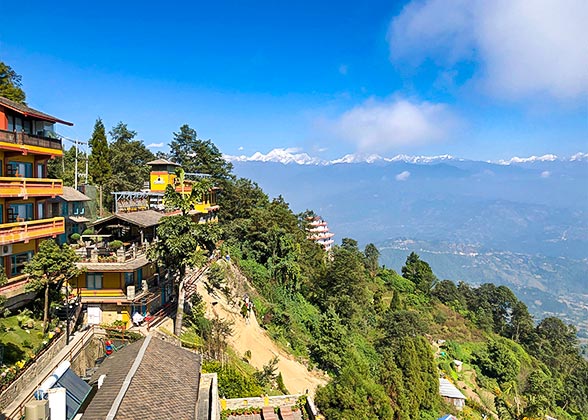
Then, after a 40-minute taxi ride to Sankhu, kick off a 15-km (9-mile) trek to Nagarkot, one of the best hiking trails near Kathmandu, taking 4-5 hours. From Sankhu Bus Park, walk through rustic red-brick local residences, go straight past Dhalanko junction, and follow dirt roads through small villages until you spot a Hindu temple by the Salinadi River, featuring typical red walls, golden spires, and copper bells hanging at the door - a serene and solemn sight. Keep climbing through dense woods and steep paths before reaching Nagarkot’s viewpoint, where Himalayan snow peaks come into full view. If you arrive by dusk, take your time to enjoy a stunning sunset.
► Good to know: Buses and taxis are unreliable in Nagarkot at night, so it’s best to pre-arrange taxi or hotel pickup service for your return to Thamel in Kathmandu. Alternatively, stay overnight at a local hotel or resort in Nagarkot to catch the legendary sunrise over the Himalayas.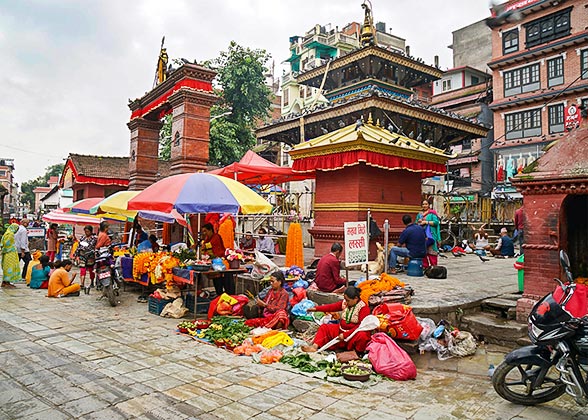
• Entrance Fee: NPR 1,800 (USD 18). Open all day.
Then, after a 40-minute taxi ride to Sankhu, kick off a 15-km (9-mile) trek to Nagarkot, one of the best hiking trails near Kathmandu, taking 4-5 hours. From Sankhu Bus Park, walk through rustic red-brick local residences, go straight past Dhalanko junction, and follow dirt roads through small villages until you spot a Hindu temple by the Salinadi River, featuring typical red walls, golden spires, and copper bells hanging at the door - a serene and solemn sight. Keep climbing through dense woods and steep paths before reaching Nagarkot’s viewpoint, where Himalayan snow peaks come into full view. If you arrive by dusk, take your time to enjoy a stunning sunset.
► Good to know: Buses and taxis are unreliable in Nagarkot at night, so it’s best to pre-arrange taxi or hotel pickup service for your return to Thamel in Kathmandu. Alternatively, stay overnight at a local hotel or resort in Nagarkot to catch the legendary sunrise over the Himalayas.
Streetscape in Nepal
Landscape of Nagarkot
Day 5 Transfer from Kathmandu to Gyirong Border, Enter Tibet
Today, extend your trip from Kathmandu to Tibet. For a smooth departure, book a vehicle in advance through your hotel or a taxi service to the Rasuwagadhi - Gyirong Border. The mountain roads are rugged and narrow, with frequent risks of landslides and traffic jams, so the drive is usually limited to 15-30 km/h, taking about 6-8 hours. Upon arrival, go through immigration and customs procedures, and then enter Tibet.
► Insider Tips:
1. Due to unpredictable road conditions, be prepared for an overnight stay at the border.
2. Rental cars differ widely in quality; compare the prices and check it in person to confirm it’s licensed and in good condition.
► Tibet Entry Requirements for International Travelers:
1. Passport: Ensure validity of at least 6 months.
2. Group Visa: International travelers entering Tibet from Kathmandu must obtain a Group Visa from the Chinese Embassy in Kathmandu - independent travel is not permitted.
3. Tibet Travel Permit: This requires an application through a licensed local Tibet travel agency. Processing takes at least 10 working days, so start your application no later than 25 days in advance. The original permit will be kept by your Tibetan guide.
4. Alien’s Travel Permit: Required in restricted areas like Everest Base Camp and Rongbuk Monastery, and obtainable in Shigatse or Lhasa by your travel agency.
5. Guide & Vehicle: You need to be accompanied by a licensed guide and use a registered tour vehicle provided by your agency throughout your stay. Self-driving, hailing taxis, and any non-tourist vehicles are prohibited.
6. Money Matters: The Chinese Yuan (USD 1≈CNY 6.7) is the official currency. Mobile payments are widely used, so it’s advisable to download apps like Alipay and WeChat. Besides, exchange a small amount of cash at the border to pay for toilets or snacks in remote areas.
► For more details, please read: How to Travel from Nepal to Tibet?
Once you cross into Tibet, meet your pre-arranged guide and driver, who will escort you to your hotel in Gyirong, a town sitting at around 2,800 m (9,186 ft), known as the “back garden of Mt. Everest”.
► Insider Tips:
1. Due to unpredictable road conditions, be prepared for an overnight stay at the border.
2. Rental cars differ widely in quality; compare the prices and check it in person to confirm it’s licensed and in good condition.
► Tibet Entry Requirements for International Travelers:
1. Passport: Ensure validity of at least 6 months.
2. Group Visa: International travelers entering Tibet from Kathmandu must obtain a Group Visa from the Chinese Embassy in Kathmandu - independent travel is not permitted.
3. Tibet Travel Permit: This requires an application through a licensed local Tibet travel agency. Processing takes at least 10 working days, so start your application no later than 25 days in advance. The original permit will be kept by your Tibetan guide.
4. Alien’s Travel Permit: Required in restricted areas like Everest Base Camp and Rongbuk Monastery, and obtainable in Shigatse or Lhasa by your travel agency.
5. Guide & Vehicle: You need to be accompanied by a licensed guide and use a registered tour vehicle provided by your agency throughout your stay. Self-driving, hailing taxis, and any non-tourist vehicles are prohibited.
6. Money Matters: The Chinese Yuan (USD 1≈CNY 6.7) is the official currency. Mobile payments are widely used, so it’s advisable to download apps like Alipay and WeChat. Besides, exchange a small amount of cash at the border to pay for toilets or snacks in remote areas.
► For more details, please read: How to Travel from Nepal to Tibet?
Once you cross into Tibet, meet your pre-arranged guide and driver, who will escort you to your hotel in Gyirong, a town sitting at around 2,800 m (9,186 ft), known as the “back garden of Mt. Everest”.
Day 6 Gyirong Town - Rongbuk Monastery - Mt. Everest Base Camp - Dingri County
Today, your guide and driver will escort you to Everest Base Camp (EBC), the main viewing point for non-professional climbers at 5,200 m (17,060 ft). The 6.5-hour road trip includes a stop at Rongbuk Monastery, the world’s highest perched on a rocky cliff at 5,154 m (16,909 ft). Step inside its white-walled, red-roofed halls, soak in the scent of juniper and butter oil, and revere the statues of Shakyamuni and Guru Padmasambhava, another key figure in Tibetan Buddhism. If you visit during the Saga Dawa Festival in May or June, you may witness the solemn shamanic dance rituals.
Upon reaching EBC, the sheer majesty of the Mt. Everest will leave you deeply moved. Catch your chance to snap a photo in front of the Everest Monument to mark this milestone moment! Afterward, ascend to the Gawula Pass Viewpoint for a panoramic vista of the 8,000-m (26,247 ft) rolling Himalayan giants.
Then, enjoy a 2.5-hour road trip to Dingri County, during which views of pristine lakes, dramatic gorges, and the towering ranges will dazzle your eyes. Once you arrive, check in at your hotel and unwind.
►FYI: Today, you’ll climb nearly 2,500 m (8,202 ft), which can easily induce altitude sickness. We recommend taking preventive medication in advance, getting good rest, and eating more carbohydrate food. While hiking, slow down your pace and keep your head and neck warm. Tell your guide at once if you feel unwell. After checking in tonight, avoid showers, exercise, and alcohol to save energy for the coming days.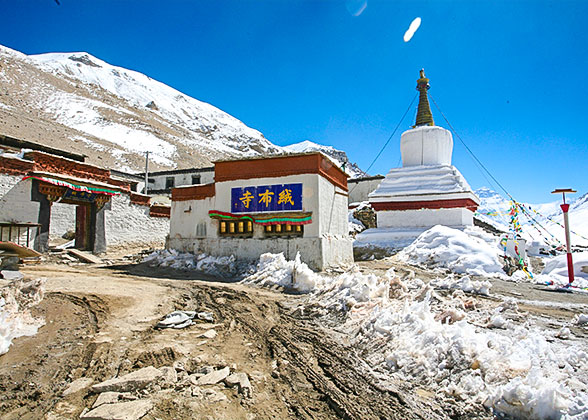
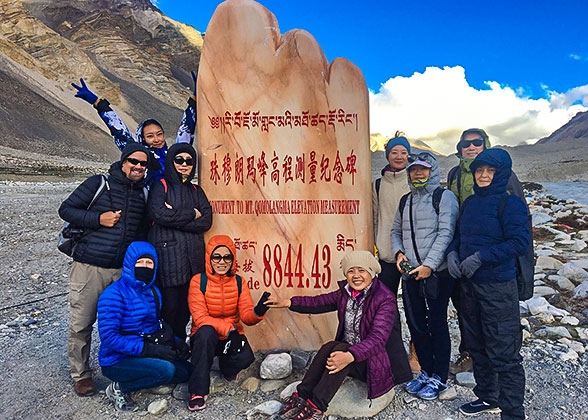
Upon reaching EBC, the sheer majesty of the Mt. Everest will leave you deeply moved. Catch your chance to snap a photo in front of the Everest Monument to mark this milestone moment! Afterward, ascend to the Gawula Pass Viewpoint for a panoramic vista of the 8,000-m (26,247 ft) rolling Himalayan giants.
Then, enjoy a 2.5-hour road trip to Dingri County, during which views of pristine lakes, dramatic gorges, and the towering ranges will dazzle your eyes. Once you arrive, check in at your hotel and unwind.
►FYI: Today, you’ll climb nearly 2,500 m (8,202 ft), which can easily induce altitude sickness. We recommend taking preventive medication in advance, getting good rest, and eating more carbohydrate food. While hiking, slow down your pace and keep your head and neck warm. Tell your guide at once if you feel unwell. After checking in tonight, avoid showers, exercise, and alcohol to save energy for the coming days.
Rongbuk Monastery, Tibet
The Everest Base Camp, Tibet
Day 7 Transfer from Dingri to Shigatse; visit Tashihunpo Monastery
After breakfast, set off on a 4.5-hour road trip to Shigatse, Tibet’s second-largest city, known for world-class alpine glaciers and sacred lakes. The main roads are well-paved during the journey, but the Everest section has sharp bends and steep slopes, so consider packing some motion sickness tablets.
After arriving, visit Tashihunpo Monastery, the very living place for Panchen Lama, one of the two major spiritual leaders of Tibetan Buddhism. Explore its red-walled and golden-roofed halls, worship the world’s largest gilded bronze statue of Maitreya Buddha and the stupas enshrining the relics of past Panchen Lamas. You may also witness a lively debating session: in the shady courtyard, questioning monks dramatically jump and clap with vivid facial expressions to pose theological challenges, while the respondents must answer without hesitation, creating a rhythmic, captivating ambience. Regular debates usually take place around 3:00 pm on weekdays; ask your guide to confirm the exact timing ahead of time.
Finally, check into your hotel in Shigatse.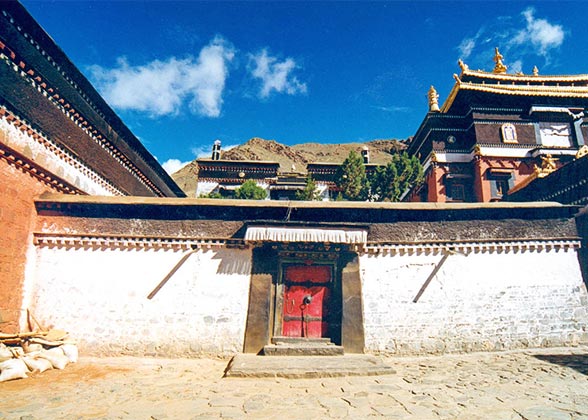
After arriving, visit Tashihunpo Monastery, the very living place for Panchen Lama, one of the two major spiritual leaders of Tibetan Buddhism. Explore its red-walled and golden-roofed halls, worship the world’s largest gilded bronze statue of Maitreya Buddha and the stupas enshrining the relics of past Panchen Lamas. You may also witness a lively debating session: in the shady courtyard, questioning monks dramatically jump and clap with vivid facial expressions to pose theological challenges, while the respondents must answer without hesitation, creating a rhythmic, captivating ambience. Regular debates usually take place around 3:00 pm on weekdays; ask your guide to confirm the exact timing ahead of time.
Finally, check into your hotel in Shigatse.
Tashihunpo Monastery, Shigatse
Jokhang Temple
Day 8 Shigatse - Palkhor Monastery - Karola Glacier - Yamdrok Yumtso Lake - Lhasa
This morning, embark on a 2-hour drive to Gyantse, a tranquil county east of Shigatse. Once there, venture into Palkhor Monastery and exclaim over its iconic Kumbum Stupa, aka Ten-Thousand-Buddha Pagoda, an imposing nine-story structure with 108 gateways. Inside, browse a wealth of well-preserved statues and murals, rich in color and graceful in line, depicting Buddhist tales, historical events, and life stories of key Buddhas - masterpieces of medieval Tibetan art.
After the religious discovery, proceed to marvel at the natural wonder of Karola Glacier, one of Tibet’s three major continental glaciers and the closest to the road, just 300 m (984 ft) away! From the roadside, the immense white icefall seems to surge toward you - just press your shutter to capture the shocking scene. There’s also a boardwalk leading to the viewing platform offering closer sights to the glacier tongue, with an entry fee of CNY 50 (USD 7.5) - double check if your travel agency covers that. And note that the round-trip hike on steep, windy boardwalk takes 1-2 hours and may cause altitude sickness, so assess your fitness carefully.
Then, continue your road trip and pass by Yamdrok Yumtso Lake, one of Tibet’s three sacred lakes. Indulge in its turquoise water shimmering in varying hues of blue and green under the changing sunlight, particularly stunning against the backdrop of snowy peaks.
Your final destination today is Lhasa. Upon arrival, check in at your hotel.
After the religious discovery, proceed to marvel at the natural wonder of Karola Glacier, one of Tibet’s three major continental glaciers and the closest to the road, just 300 m (984 ft) away! From the roadside, the immense white icefall seems to surge toward you - just press your shutter to capture the shocking scene. There’s also a boardwalk leading to the viewing platform offering closer sights to the glacier tongue, with an entry fee of CNY 50 (USD 7.5) - double check if your travel agency covers that. And note that the round-trip hike on steep, windy boardwalk takes 1-2 hours and may cause altitude sickness, so assess your fitness carefully.
Then, continue your road trip and pass by Yamdrok Yumtso Lake, one of Tibet’s three sacred lakes. Indulge in its turquoise water shimmering in varying hues of blue and green under the changing sunlight, particularly stunning against the backdrop of snowy peaks.
Your final destination today is Lhasa. Upon arrival, check in at your hotel.
Day 9 Lhasa: Barkhor Street, Jokhang Temple, Sera Monastery
Your sightseeing in Lhasa today starts at Barkhor Street, a broad road that encircles the city’s most renowned Jokhang Temple and functions as the daily pilgrimage route for local Tibetans - you’ll see devotees making full-body prostrations along the path. It is also a well-known commercial hub in Lhasa, where you can find many unique handcrafted Tibetan incense, silver ornaments, thangka paintings, and woven fabrics.
►FYI: The street boasts many Tibetan costume rental studios, complete with makeup and accessories, with prices ranging from CNY 80 to 300 (USD 12 to 44). If interested, you can have a try.
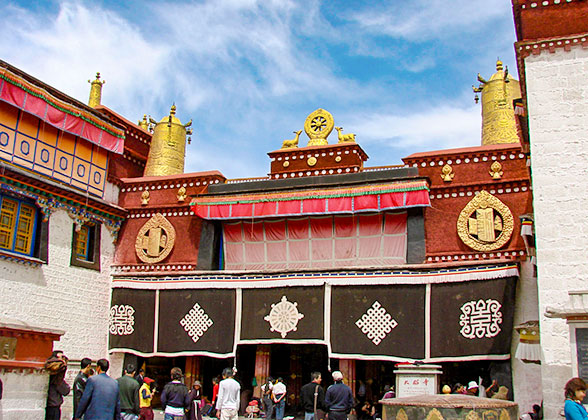
Afterward, follow the pilgrims and arrive at Jokhang Temple. There is a Tibetan saying goes: “Jokhang came first, then Lhasa City” - a testament to this thousand-year-old temple’s profound significance. While strolling around, cast your eyes on the exquisite structure, which ingeniously combines vibrant colors and murals, Chinese-style flying eaves, and Hindu animal carvings. Inside the main hall, pay homage to the revered life-sized statue of the Shakyamuni Buddha at age 12. Be aware that photography is allowed for an extra charge of CNY 90 (USD 14).
Later, a 30-minute drive whisks you to Sera Monastery, one of the six great monasteries of Tibetan Buddhism’s major school. Its white and red walls, elaborate wooden windows, and colorful prayer flags set against shifting sunlight, make every corner a perfect photo spot. At around 3:00 pm from Monday through Saturday, you can also catch the monastery’s famous debating sessions, lasting for about two hours.
After the visit, get back to your hotel.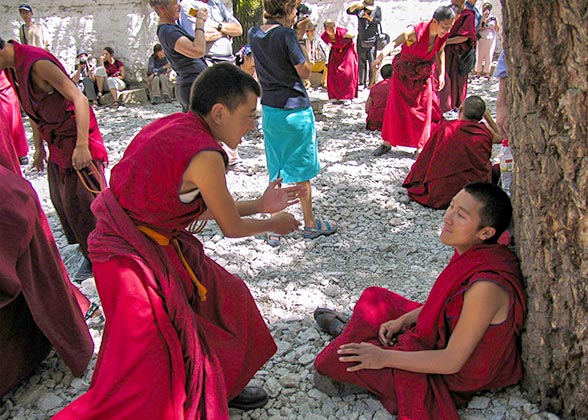
►FYI: The street boasts many Tibetan costume rental studios, complete with makeup and accessories, with prices ranging from CNY 80 to 300 (USD 12 to 44). If interested, you can have a try.
Afterward, follow the pilgrims and arrive at Jokhang Temple. There is a Tibetan saying goes: “Jokhang came first, then Lhasa City” - a testament to this thousand-year-old temple’s profound significance. While strolling around, cast your eyes on the exquisite structure, which ingeniously combines vibrant colors and murals, Chinese-style flying eaves, and Hindu animal carvings. Inside the main hall, pay homage to the revered life-sized statue of the Shakyamuni Buddha at age 12. Be aware that photography is allowed for an extra charge of CNY 90 (USD 14).
Later, a 30-minute drive whisks you to Sera Monastery, one of the six great monasteries of Tibetan Buddhism’s major school. Its white and red walls, elaborate wooden windows, and colorful prayer flags set against shifting sunlight, make every corner a perfect photo spot. At around 3:00 pm from Monday through Saturday, you can also catch the monastery’s famous debating sessions, lasting for about two hours.
After the visit, get back to your hotel.
A Debating Session in Sera Monastery, Lhasa
Potala Palace, Lhasa
Day 10 Lhasa: Potala Palace, Tibet Museum, Norbulingka Park
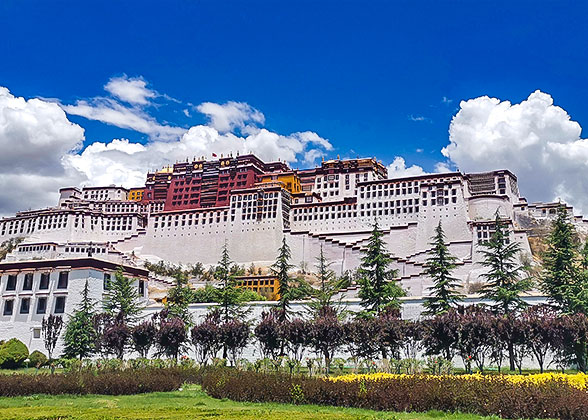
The first stop today is Potala Palace, Tibet’s most celebrated cultural symbol and the world’s highest palace-fortress complex. From afar, take a first glance at its two main sections: the White Palace, serving as the winter residence and administrative center for successive Dalai Lamas, and the Red Palace, the complex’s religious activity center. Inside the red one, honor the stupas housing the relics of past Dalai Lamas, especially those of the Fifth and Thirteenth, lavishly inlaid with countless gems and gold. In the Great East Hall, admire the mural depicting Princess Wencheng’s marriage to Tibet, which promoted ethnic integration between Tibet and the Chinese Central Plains.
►Tip: The Potala Palace sits at 3,767 m (12,359 ft) and involves many steps, making a challenging climb. Consider bringing a portable oxygen canister and wearing comfortable sneakers.
Next, enjoy a 10-minute drive west to the Tibet Museum. Start at the folk culture exhibition on the first floor to get an overview of Tibetan cuisine, lifestyle, attire, and housing. Then, visit the Liberation Memorial Hall of Millions of Serfs before heading upstairs to the history and culture exhibition for insights into the snowy plateau’s past and its historical ties with the Central Plains. Finally, step out onto the upper observation deck for a panoramic shot of the Potala Palace.
End your day at Norbulingka Park, China’s largest Tibetan-style man-made garden. Stroll to Tsokyil Palace, a lakeside palace featuring a Chinese-style hipped roof with yellow glazed tiles, carved marble railings, and painted wooden details, a fine example of Han Chinese architectural influence. Rest on the spacious lawns under centuries-old trees, watch sunlight filter through the leaves, and admire the buildings’ delicate eaves and colorful paintings. Step inside Takten Migyur Palace, study the murals tracing Tibetan history from its old days to modern times. At last, go back to your hotel.
►Tip: The Potala Palace sits at 3,767 m (12,359 ft) and involves many steps, making a challenging climb. Consider bringing a portable oxygen canister and wearing comfortable sneakers.
Next, enjoy a 10-minute drive west to the Tibet Museum. Start at the folk culture exhibition on the first floor to get an overview of Tibetan cuisine, lifestyle, attire, and housing. Then, visit the Liberation Memorial Hall of Millions of Serfs before heading upstairs to the history and culture exhibition for insights into the snowy plateau’s past and its historical ties with the Central Plains. Finally, step out onto the upper observation deck for a panoramic shot of the Potala Palace.
End your day at Norbulingka Park, China’s largest Tibetan-style man-made garden. Stroll to Tsokyil Palace, a lakeside palace featuring a Chinese-style hipped roof with yellow glazed tiles, carved marble railings, and painted wooden details, a fine example of Han Chinese architectural influence. Rest on the spacious lawns under centuries-old trees, watch sunlight filter through the leaves, and admire the buildings’ delicate eaves and colorful paintings. Step inside Takten Migyur Palace, study the murals tracing Tibetan history from its old days to modern times. At last, go back to your hotel.
Day 11 Departure from Lhasa
Today, your guide and driver will escort you to Lhasa Gonggar Airport for your departure flight. Safe travels home! If you’re craving for more, consider continuing the exploration to neighboring India. Feel free to contact us for more information!
Expand All
Collapse All
This trip can be customized to meet your individual needs!
Itineraries you may also like: