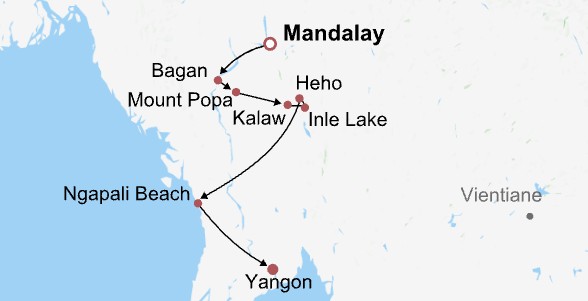
What to see in Myanmar for first-time travelers?
We’ve selected the most unmissable attractions and experiences across the country for first-time travelers.
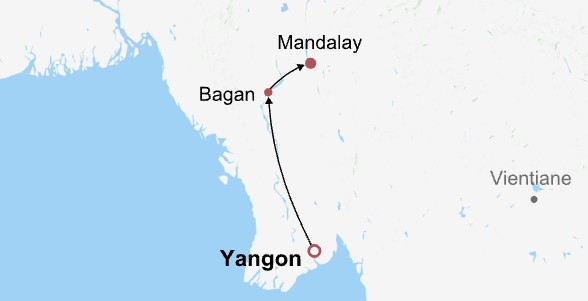
Yangon: The stunning Shwedagon Pagoda, the national emblem covered with 7 tons of gold, is the biggest draw! Additionally, the Sule Pagoda, Chaukhtatgyi Buddha Temple, and Indian and China Towns are also ideal for a deep exploration of Buddhism and the blending of cultures.
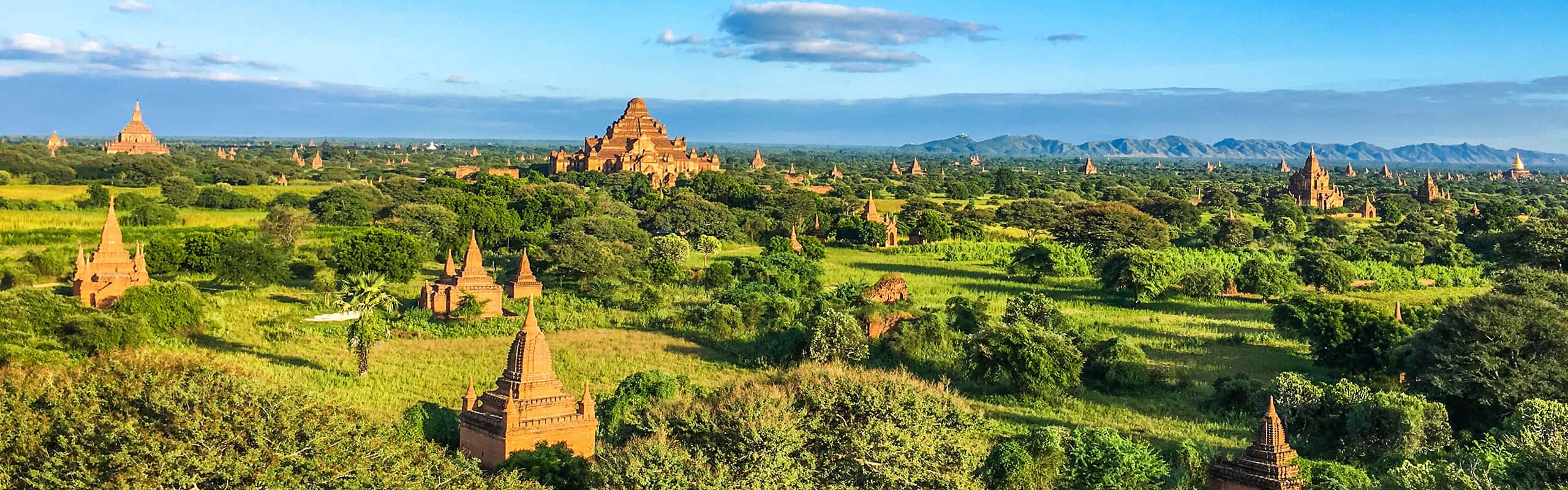
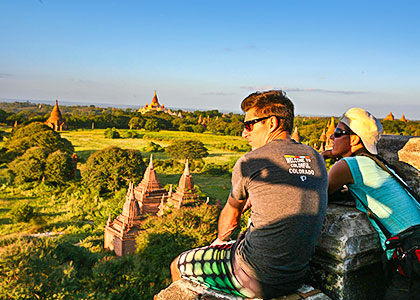
Bagan: In the UNESCO-listed Bagan, the “Land of Ten Thousand Temples”, enjoy a temple-hopping tour to trace the past glory of the Pagan Kingdom, including the most exquisite Ananda Temple, as well as the breathtaking sunrise and sunset, Sulamani Temple, and Shwezigon Paya.
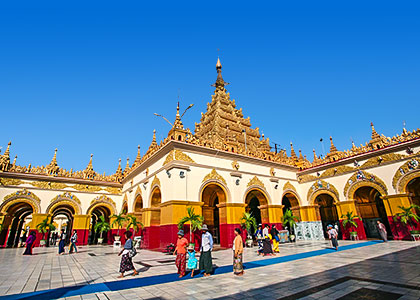
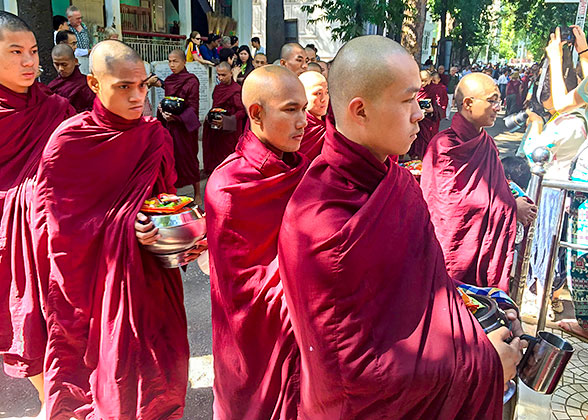
Mandalay: Witness the mass alms-giving ceremony for over a thousand monks at Mahagandayon Monastery. Furthermore, admire the most photogenic sunset over the world's longest and oldest teakwood bridge, the U Bein Bridge, and the stupa forest in Kuthodaw Pagoda.
Inle Lake: Gaze in awe at its unique one-legged fishermen, experience the floating life, and explore floating gardens and five-day rotating markets. It also offers vibrant religious sites like the Phaung Daw Oo Pagoda and Shwe Indein Pagoda.
Read more on
Things to Do.
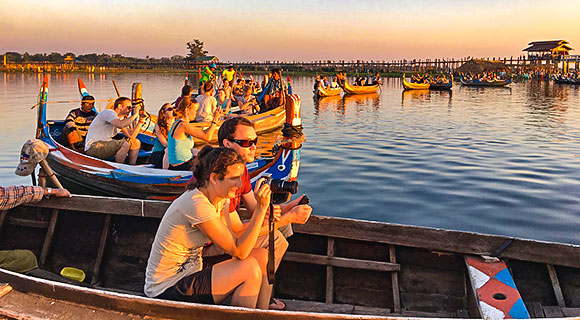
U Bein Bridge, Mandalay
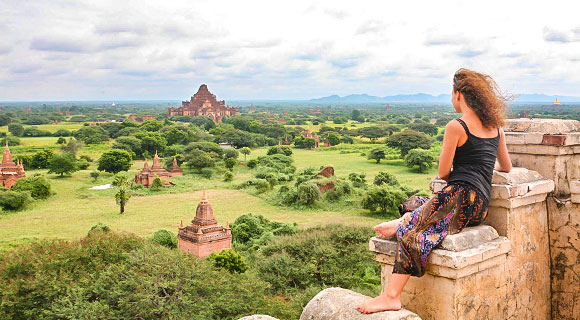
Shwesandaw Pagoda, Bagan
How many days are enough for a Myanmar tour?
7-10 days: This is the minimal duration for a comprehensive Myanmar tour, which should cover Yangon's most revered Shwedagon Pagoda, Bagan's countless temples, the lunch donation at Mandalay’s Mahagandayon Monastery, U Bein Bridge, and Mandalay Hill.
11-14 days: Extend your Myanmar vacation packages to two weeks if you wish to include Inle Lake, Ngapali Beach, the hiking paradise Kalaw, and the Irrawaddy River cruise.
15 days or more: It will be ideal to cover all the country’s the landmarks and its neighboring countries such as Thailand, Vietnam, and Cambodia.
When is the best time to visit Myanmar?
The best months for a Myanmar tour last from October to March, which is the cool season. With an average temperature of 20 to 28°C (68 to 82.4°F), the clear skies, abundant sunshine, and little rainfall make it perfect for outdoor pursuits, including hot air balloon rides in Bagan. Book your itinerary in advance, as it's also the peak season.
Besides, the hot season from April to June is the hottest, when temperatures can approach 35℃ (95°F) and even 40℃ (104°F) sometimes. Sunscreen and timely water replenishment are essential. However, the vibrant Thingyan Water Festival in April offers the finest taste of local culture, making it worthwhile to visit in this month as well. Moreover, the rainy season between July and September features frequent rainfall but fewer tourists and more affordable pricing, making it suitable for those who prefer tranquility.
Do I need a visa to travel to Myanmar?
Yes, most visitors need a visa for Myanmar tours. An e-visa, valid for a single entrance with a maximum of 28 days, is available to citizens of 100 countries, including the United States, Australia, and France. The fee is USD 50. Please confirm that your passport is valid for at least 6 months. Additionally, eight countries, including Italy and Germany, benefit from a visa-on-arrival policy for a stay of no more than 30 days, costing USD 50.
Is Myanmar cheap or expensive?
Overall, the local consumption level is moderately cheaper than in some neighboring Asian countries like Thailand, but higher than what some people imagine as extremely low. For instance, in Yangon, a mid-range lunch would cost around USD 5-10, and a 3-star downtown hotel typically costs between USD 40 and 70 per night in peak season from November to February. A significant amount goes into accommodation and tourist attraction tickets. Moreover, the price is significantly affected by currency rate fluctuations.
Is Myanmar safe for tourists?
Despite the ongoing civil conflict, it is generally safe to travel to places like Yangon, Bagan, Mandalay, and Inle Lake. Still, it's best to avoid the northern region and border areas like Myawaddy. Since most of Myanmar's population practices Buddhism, locals are very welcoming to foreign tourists. Furthermore, be mindful not to capture pictures of sensitive political scenes, keep your valuables hidden, and avoid traveling alone at night. Choosing a professional escorted Myanmar tour might make your trip more secure.
How to get to and travel around Myanmar?
Yangon International Airport and Mandalay International Airport are the main airports for foreign tourists. Although there aren't any direct flights to Myanmar from Europe or North America, visitors can transfer in hubs like Singapore and Bangkok of Thailand.
Domestic flights of around 30 minutes to 1 hour are accessible between major cities like Yangon, Mandalay, Bagan, and Heho. Another popular option is night buses, which are favored by local residents, with different prices depending on the route and the bus company, generally ranging from USD 10 to 25. There are also railways, which go slowly but are restricted to foreign visitors. Moreover, the Irrawaddy River cruises offer an unparalleled river view experience while facilitating transportation between these destinations.
When exploring within a city, it’s convenient to use the Grab app to hail a taxi. You can also rent a motorbike from local stalls for around USD 5-10 per day or a bicycle for USD 1-5 per day. In addition, traditional horse-cart rides provide an immersive experience in places like Bagan and Mingun.
Read more on Myanmar Transportation.
Can I use US dollars in Myanmar?
Yes, US dollars, as well as credit cards, are accepted in Myanmar, but only in major cities’ big malls and restaurants. It’s advisable to exchange some large-denomination dollars for local kyat (USD 1 = MMK 2100) in major cities like Yangon and Mandalay for purchasing at street stalls and in small towns and villages. Furthermore, the local currency exchange rate fluctuates significantly, so check the latest information beforehand.
Read more on Myanmar Travel Tips.