Xishuangbanna Weather in July
Overall, the most notable feature of Xishuangbanna's weather in July is the oppressive heat. While the highest temperature isn’t extreme, the high humidity and frequent rainfall make it feel very sticky and uncomfortable. It’s somewhat more bearable in the early mornings and late evenings. July is also the peak rainy season, with rain falling almost every day. Therefore, although July falls during the summer holiday, it is not Xishuangbanna’s peak tourist season. For budget-conscious travelers, this makes it a good option.
Xishuangbanna’s climate in July is a bit hot, with daytime highs of 26-32 degrees Celsius (79-90 degrees Fahrenheit). In downtown areas, especially during midday, the extreme high temperatures can reach 35-37 degrees Celsius (95-99 degrees Fahrenheit). However, as long as you walk under shaded areas or take regular breaks under cool shelter, you can still explore the city with ease; these places are significantly cooler than sunny areas.
Frequent rain can help keep out direct sunlight, thereby lowering the temperature somewhat. But high humidity intensifies the sticky feelings, in reality making the perceived temperature higher than the actual temperature.
After sunset, Xishuangbanna experiences a temperature drop, with common nighttime lows of 22-24°C (72-75°F) and the lowest usually not below 20°C (68°F). You may not feel the true cool feeling until 22:00.
July marks the peak period of Xishuangbanna’s rainy season, with an average precipitation of 227 mm from 26 rainy days. Therefore, be prepared, it may rain almost every day when you are there.
The rain is usually in the form of sudden downpours or thunderstorms, accompanied by thunder, lightning, and strong winds. In many places, it’s possible to endure high-intensity downpours in short periods. This discourages many visitors from coming. But on the contrary, it is because of the abundant rainfall that the plants grow in lush and vibrant conditions, and the waterfalls in the forest become quite significant, attracting adventurers to explore the rainforest.
July is the typhoon season of southern China, but Xishuangbanna is rarely directly hit by typhoons. However, it’s still possible to be affected by the outer bands of typhoons. For example, in July 2025, influenced by it, the city experienced moderate to heavy rain, localized downpours, and gusts exceeding Force 8. Thus, it’s necessary to check the weather alerts and adjust travel plans accordingly.
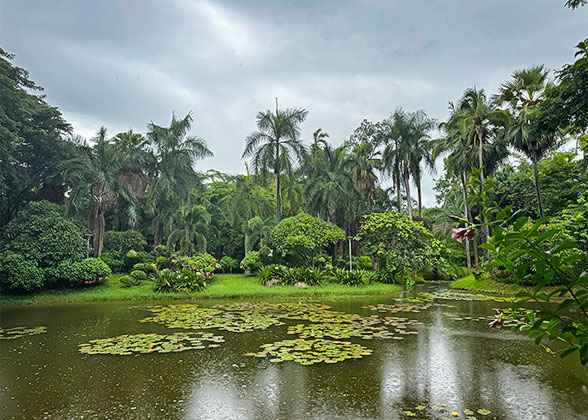
Influenced by the rain, July is one of the most humid months in Xishuangbanna. The average humidity usually exceeds 85%. Moreover, it often approaches 100% in the early morning or after rain. Therefore, it’s necessary to wear breathable clothes to keep your skin dry.
Due to the frequent rainy climate, there are very limited sunshine hours in Xishuangbanna in July, averaging 5-6 hours per day. If there are several consecutive days of overcast and rainy weather, daily sunshine can be as little as two hours. However, on days without rain, daily sunshine can reach up to eight hours; in short, there is considerable variation.
In the aspect of sunshine intensity, it’s not wise to skip sun-protective measures because of the rainy season. Clouds do little to block UV rays, and they are often even stronger when the sky clears up after a rain. Here are some tips to protect your skin from sunburn.
(1). Due to high temperatures and sweating in July, sunscreen can easily wear off. It’s advisable to reapply the sunscreen every 2-3 hours.
(2). Avoid prolonged outdoor activities and take regular breaks between 10:00 and 16:00, when UV rays are strongest.
It really depends. The pros and cons of traveling to Xishuangbanna in July are pretty distinct.
The weather of Xishuangbanna in July is hot and humid. Midday periods, on sunny days, with strong UV rays, make visitors feel hot and sticky, not suitable for long outdoor exposure. Frequent rainfall might bother you, and intensifies the humid air.
Although July is the summer holiday in China and one of the busiest months for many of China’s destinations, it’s not the peak season in Xishuangbanna. Thus, there are far fewer tourists than in other tourist cities, accommodation prices are more reasonable, and the attractions are less crowded. So, in addition to the unpleasant climate, other travel experiences can be good.
 Top Clothing: Considering the hot and humid weather this month, we recommend wearing short-sleeved shirts in linen material, which is breathable and moisture-wicking. A light jacket is helpful to protect your skin from sunburn.
Bottom Clothing: You can wear shorts or skirts to stay cool. But lightweight pants are more practical to prevent mosquito bites, especially when you explore the rainforest.
Shoes: Since showers occur frequently and roads can be slippery, you are advised to wear sandals, flip-flops or non-slip sneakers, which are comfortable to walk in and water-resistant.
Accessories:
In the rainy season, it’s necessary to pack a portable umbrella or a raincoat.
As the climate of Xishuangbanna in July is hot and humid, mosquitoes are quite prevalent, making insect repellent essential.
Always remember to carry sun-protective items, including sunglasses, high-SPF sunscreen and a wide-brimmed hat.
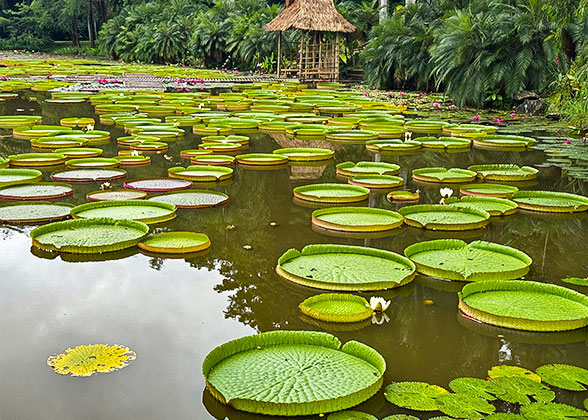
1. See the Victoria Amazonica at the Tropical Botanical Garden. July is one of the best months to appreciate it. Its leaves are so huge that they can support a child, which is amazing. Note: The flowers bloom around 18:00-19:00 and close by 8:00 the next morning, sinking beneath the water. The blooming period lasts only three days, with the color changing from white to pink and then to purplish-red each day.
2. Escape the heat by participating water splashing activity at Dai Ethnic Group Garden. There are water splashing events every day, distinctive Dai-style bamboo buildings, intangible cultural heritage workshops, and folk performances. It’s a great place to experience Dai culture, which is not only cool but also fun.
3. Although many people enjoy exploring the rainforest in the rain, it’s still advisable to check the weather forecast in advance or consult a professional, since July is the peak rainy season. And you should definitely avoid visiting during heavy rain.
Hot Weather
Frequent rain can help keep out direct sunlight, thereby lowering the temperature somewhat. But high humidity intensifies the sticky feelings, in reality making the perceived temperature higher than the actual temperature.
After sunset, Xishuangbanna experiences a temperature drop, with common nighttime lows of 22-24°C (72-75°F) and the lowest usually not below 20°C (68°F). You may not feel the true cool feeling until 22:00.
 |
| A Bit Cool at Night |
Peak Rainy Season
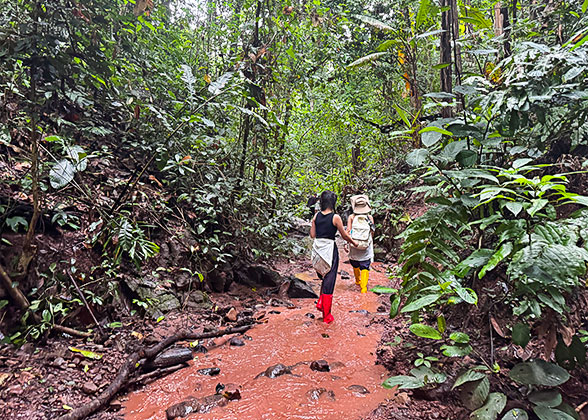
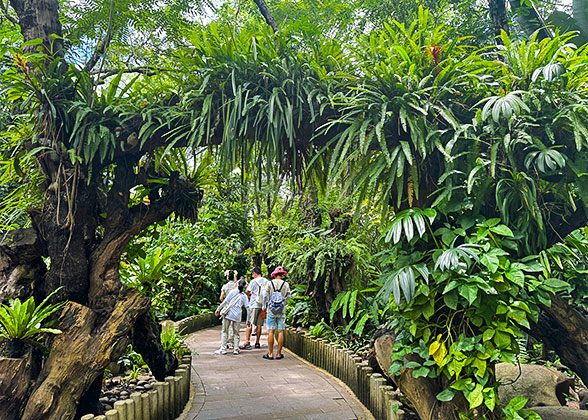
The rain is usually in the form of sudden downpours or thunderstorms, accompanied by thunder, lightning, and strong winds. In many places, it’s possible to endure high-intensity downpours in short periods. This discourages many visitors from coming. But on the contrary, it is because of the abundant rainfall that the plants grow in lush and vibrant conditions, and the waterfalls in the forest become quite significant, attracting adventurers to explore the rainforest.
July is the typhoon season of southern China, but Xishuangbanna is rarely directly hit by typhoons. However, it’s still possible to be affected by the outer bands of typhoons. For example, in July 2025, influenced by it, the city experienced moderate to heavy rain, localized downpours, and gusts exceeding Force 8. Thus, it’s necessary to check the weather alerts and adjust travel plans accordingly.
|
|
One of the Most Humid Months
Sunshine Hours and UV Rays
 |
| Lush Plants in July |
In the aspect of sunshine intensity, it’s not wise to skip sun-protective measures because of the rainy season. Clouds do little to block UV rays, and they are often even stronger when the sky clears up after a rain. Here are some tips to protect your skin from sunburn.
(1). Due to high temperatures and sweating in July, sunscreen can easily wear off. It’s advisable to reapply the sunscreen every 2-3 hours.
(2). Avoid prolonged outdoor activities and take regular breaks between 10:00 and 16:00, when UV rays are strongest.
Is July a good time to visit Xishuangbanna?
The weather of Xishuangbanna in July is hot and humid. Midday periods, on sunny days, with strong UV rays, make visitors feel hot and sticky, not suitable for long outdoor exposure. Frequent rainfall might bother you, and intensifies the humid air.
Although July is the summer holiday in China and one of the busiest months for many of China’s destinations, it’s not the peak season in Xishuangbanna. Thus, there are far fewer tourists than in other tourist cities, accommodation prices are more reasonable, and the attractions are less crowded. So, in addition to the unpleasant climate, other travel experiences can be good.
 |
| Unique Tropical Plants in Xishuangbanna |
Packing List for Visiting Xishuangbanna in July 2027
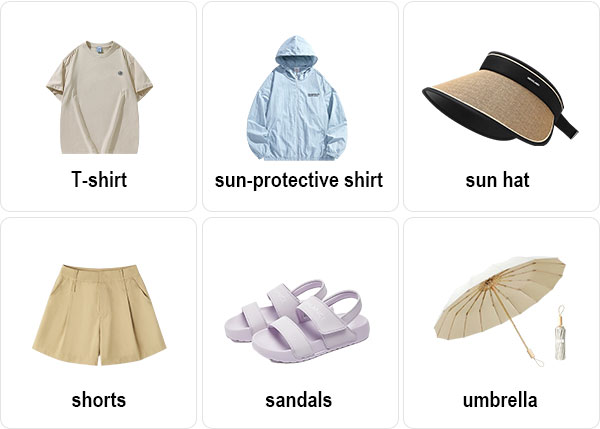 |
Top Clothing: Considering the hot and humid weather this month, we recommend wearing short-sleeved shirts in linen material, which is breathable and moisture-wicking. A light jacket is helpful to protect your skin from sunburn. Bottom Clothing: You can wear shorts or skirts to stay cool. But lightweight pants are more practical to prevent mosquito bites, especially when you explore the rainforest. Shoes: Since showers occur frequently and roads can be slippery, you are advised to wear sandals, flip-flops or non-slip sneakers, which are comfortable to walk in and water-resistant. Accessories: In the rainy season, it’s necessary to pack a portable umbrella or a raincoat.
As the climate of Xishuangbanna in July is hot and humid, mosquitoes are quite prevalent, making insect repellent essential.
Always remember to carry sun-protective items, including sunglasses, high-SPF sunscreen and a wide-brimmed hat.
Travel Highlights and Tips
2. Escape the heat by participating water splashing activity at Dai Ethnic Group Garden. There are water splashing events every day, distinctive Dai-style bamboo buildings, intangible cultural heritage workshops, and folk performances. It’s a great place to experience Dai culture, which is not only cool but also fun.
3. Although many people enjoy exploring the rainforest in the rain, it’s still advisable to check the weather forecast in advance or consult a professional, since July is the peak rainy season. And you should definitely avoid visiting during heavy rain.
|
|

7-Day Xishuangbanna Weather Forecast
- Last updated on Aug. 07, 2026 by Gabby Li -