How many days are enough to visit Yunnan?
A minimum 5-day trip is advised for new travelers. You can visit Kunming and Lijiang: the former features convenient transportation and mild weather, while the latter is renowned for its snowcapped mountains and ancient towns. Have 7 to 10 days? The popular Kunming - Dali - Lijiang - Shangri-La tour leads you to explore Yunnan’s most highlights. If your vacation lasts two weeks or longer, either dig deeper into this area, or extend to nearby minority cultural destinations like Guilin and Guizhou, or even cross border to explore Southeast Asian counties like Vietnam and Myanmar.
How to plan a Yunnan tour? What to see?
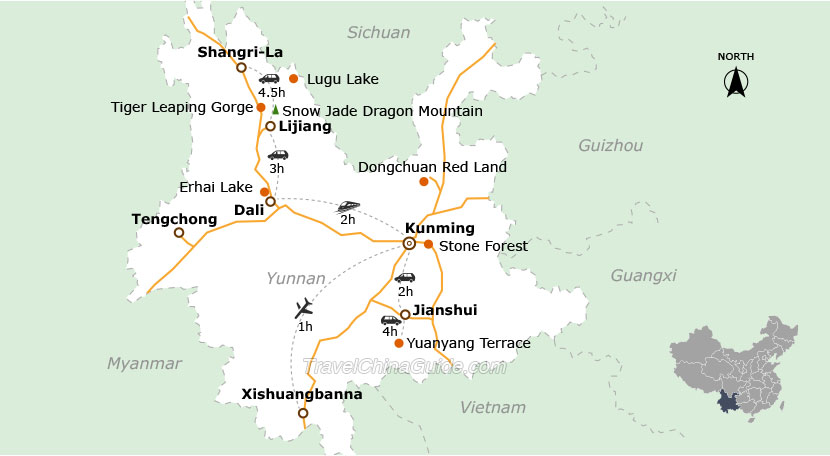
Like a vivid 3D scroll, Yunnan unfolds in three distinct parts. The most recommended itinerary is a 10-day panorama trip from Kunming to Lijiang, Dali, and Shangri-La. En route, you’ll not only marvel at Jade Dragon Snow Mountain, Tiger Leaping Gorge, Lugu Lake, Erhai Lake, Potatso National Park, and Meli Snow Mountains, but also delve into Naxi people’s life at Lijiang Old Town, Tibetan faith at Songzanlin Monastery, and the art of Bai people’s tie-dying in Zhoucheng Village.
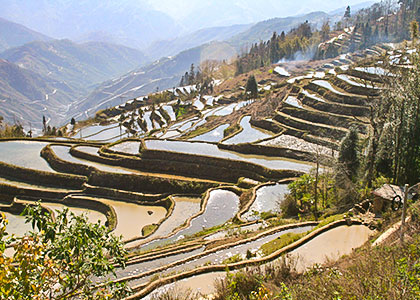
If you’re intrigued by Southeast Asian flair, or it’s your second visit, southwest Yunnan is an ideal pick. Centered on Xishuangbanna, this area brims with tropical charm: trek through pristine forest parks while spotting wild elephants, and dive into the vibrant life of Dai ethnic villages. Prefer hidden gems? Go east. Use Kunming as your transit point to explore the iconic karst Stone Forest, plus Yuanyang Rice Terrace, Jianshui Ancient Town, and Yi-inhabited Puzhehei Village.
What is the best time to visit Yunnan?
October to the next April is the optimal window for Yunnan tours, when most cities like Kunming, Dali and Lijiang boast pleasant weather, abundant sunlight, and beautiful landscapes. Shangri-La is a perfect destination to escape the summer heat from June to August. Head to Xishuangbanna to elude cold winter from December to February. Try to skip nationwide long holidays such as National Day holiday from October 1 to 7 and Spring Festival in January or February, when soaring accommodation and transportation costs and overcrowded scenic spots may mar your travel experience.
What to pack for your Yunnan trip?
Onion-style dressing is crucial to cope with Yunnan’s changeable climate.
1. Daily Outfits
For the classic Kunming - Dali - Lijiang - Shangri-La route:
• Spring (March-May) & Autumn (September-November): long sleeve tops, 3-in-1 jackets, and jeans.
• Summer (June-August): breathable short-sleeved shirts, thin pants, and a spare light jacket.
• Winter (December-February): thin sweaters, down overcoats, and thick sweatpants.
Xishuangbanna: cool summer clothing all year round.
2. Footwear: comfortable hiking boots or sneakers.
3. Accessories: Sun hats, sunblock, sunglasses, and raingear.
How to get there and travel around?
As Yunnan’s transport hub, Kunming is the first stop for most tourists. Kunming Changshui International Airport (KMG) is accessible by direct flights from major Southeast Asian cities like Bangkok, Singapore, Kuala Lumpur, Vientiane, and Rangoon, as well as other popular destinations including Seoul, Osaka, and Dubai. Also, there are many direct flights from domestic cities - Shanghai, Beijing, Xi’an, Chengdu, Hangzhou, and Chongqing. Due to long journey times and possibly high fares, inter-provincial bullet trains are not recommended, though Kunming has two railway stations. Dali, Lijiang, Shangri-La, and Xishuangbanna are accessible by air, but their airports merely serve domestic flights and international services from a few Southeast Asian countries.
For a trip within Yunnan, high-speed rail is your top pick. There are over 10 daily round-trip trains among Kunming, Dali, Lijiang, and Xishuangbanna, and it’s much more time-saving and cost-efficient than flying. For more remote areas, transfers in Kunming are often required. As a result, charter services or our guided Yunnan tour packages are more convenient.
How to reach Yunnan from Hong Kong?
Flying is highly recommended. From Hong Kong to Kunming, 2-3 direct flights depart daily at 12:05, 17:05 and 21:15, taking under 3 hours. Others are not advised, as all have a transfer in Shanghai, Beijing, Chengdu, Hangzhou, Xian, or other cities, with a longer travel time. One direct flight to Lijiang is also accessible, departing at 18:45 and taking 3 hours, which is much faster than other transfer flights.
For rail travelers, one bullet train runs daily from Hong Kong West Kowloon Station at 11:14 to Kunming West Station in roughly 7.5 hours. A second-class ticket is CNY 800-900 (USD 115-130), and a first-class one CNY 1300-1400 (USD 187-201). Other trains involve one layover in Shenzhen or Guangzhou, with the journey time of 8 hours or more.
Do you get altitude sickness in Yunnan?
The average altitude across Yunnan is roughly 2,000 meters (6,562 feet), with most scenic spots sitting under 3,000 meters (9,843 feet). Visitors rarely face altitude sickness, but those with heart or lung diseases are advised to consult a doctor early to confirm travel safety. Serious altitude discomfort is usually caused by straight visiting high-elevation areas like Jade Dragon Snow Mountain, Feilai Temple, or Potatso National Park – 3,100-4,200 meters (10,171-13,780 feet) above the sea level, or doing intense activities in Shangri-La without enough rest. Kids and seniors are more susceptible to minor discomfort, but it may subside within 2 to 3 days if you drink adequate water, stick to light diets, and avoid alcohol.
What is Yunnan famous for food?
Yunnan cuisine is characterized by “freshness, fragrance, sourness, and spiciness”. Its celebrated specialties include cross-bridge rice noodles, steam pot chicken, and wild mushroom hot pots, while the street snacks like fried rice-flour cake and sweet flower cake are well worth a bite.



 Yunnan Minority Discovery8 Days Best Yunnan Tours to Kunming - Dali - Lijiang - Shangri-La from USD1159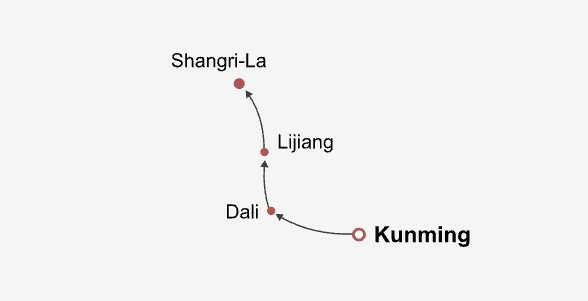
 Yunnan Unique Charms6 Days Kunming - Dali - Lijiang from USD889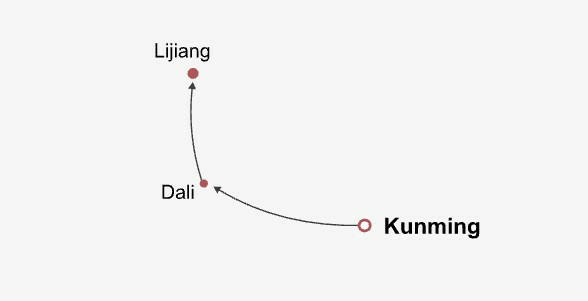
 From Ancient Town to Sacred Land5 Days Lijiang & Shangri-La from USD709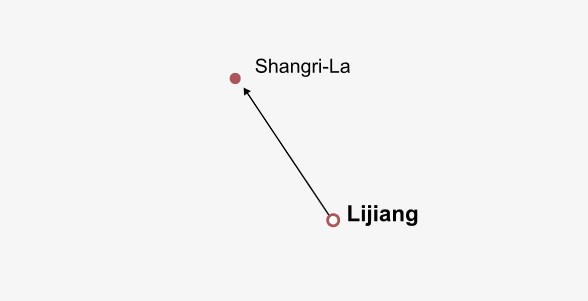
 Lijiang Highlights3 Days Lijiang Private Tour from USD339
 Old Town & Rice Terraces Photo Tour6 Days Kunming - Jianshui - Yuanyang from USD1049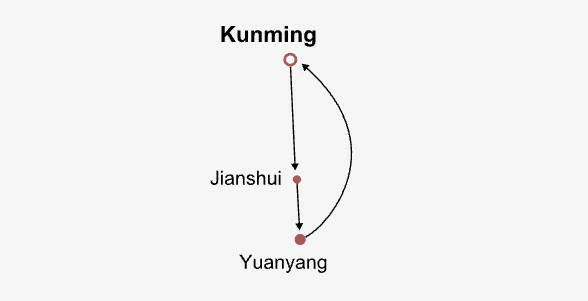
 A Journey to Meili Snow Mountain6 Days Shangri-La - Deqin - Meili Snow Mountain - Benzilan - Shangri-La from USD1129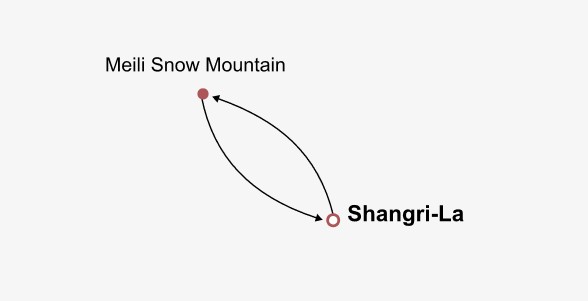
 Deep Touches of Ethnic Villages15 Days Kunming - Lijiang - Guiyang - Kaili - Rongjiang - Zhaoxing - Sanjiang - Longsheng - Yangshuo - Guilin from USD2739USD2465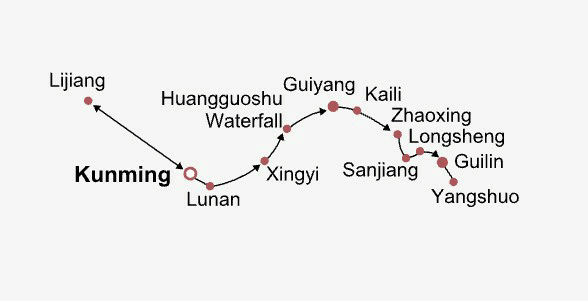
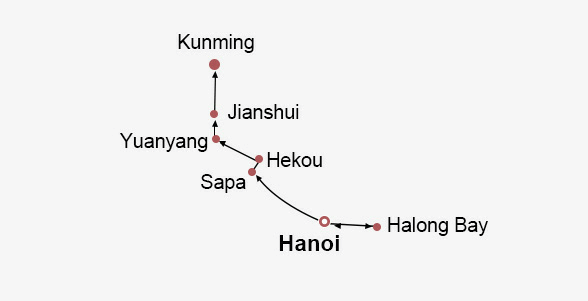
 Vietnam to China Overland Trip10 Days Hanoi, Halong Bay, Sapa, Hekou, Yuanyang, Jianshui & Kunming from USD1929USD1736