Terracotta Army, Xian

Xi'an Tours

Explore China's ancient capital and Terracotta Warriors
Note: During the Chinese Spring Festival Holiday from Feb 15 to 23, 2026, the Terracotta Army Museum will extend its opening hours to 7:30 - 19:30, with admission stopping at 17:30. Meanwhile, the Shaanxi History Museum and Xi'an Museum will also extend their closing time to 19:30, and the Bell Tower and Drum Tower will remain open until 21:30. Please plan your sightseeing accordingly.

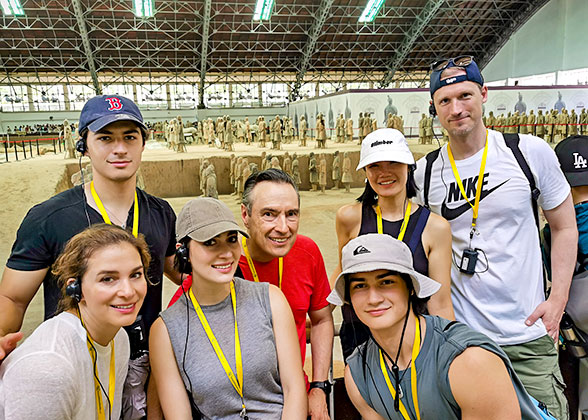
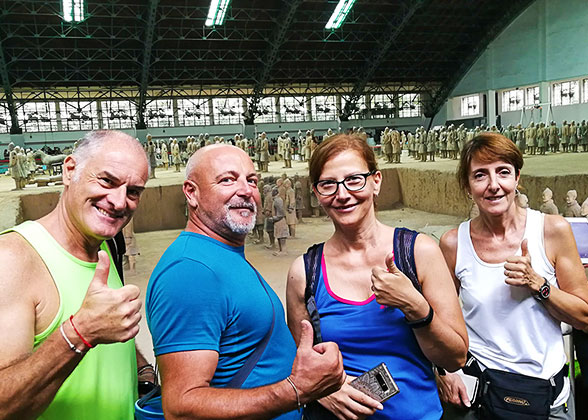
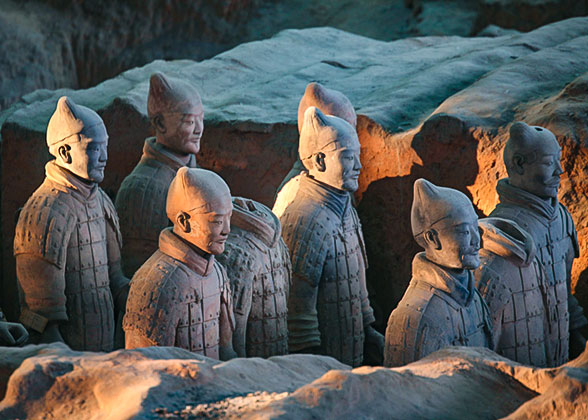
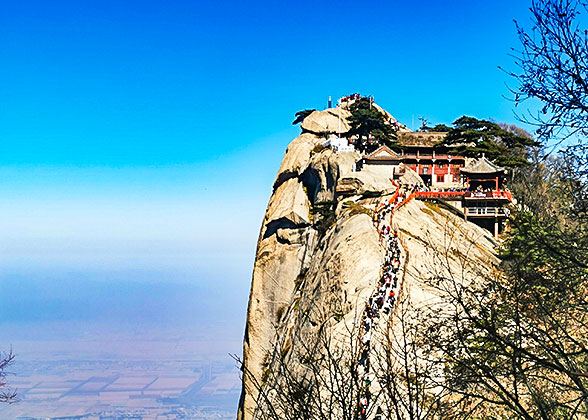
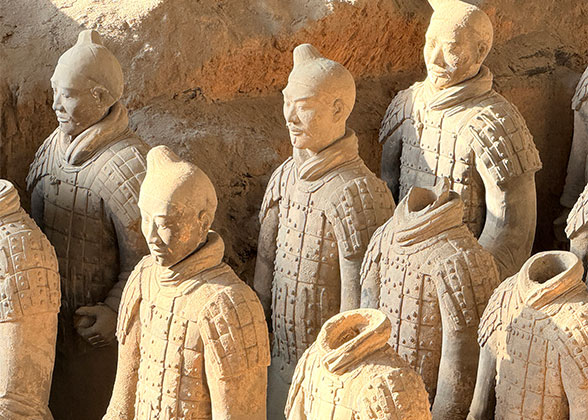
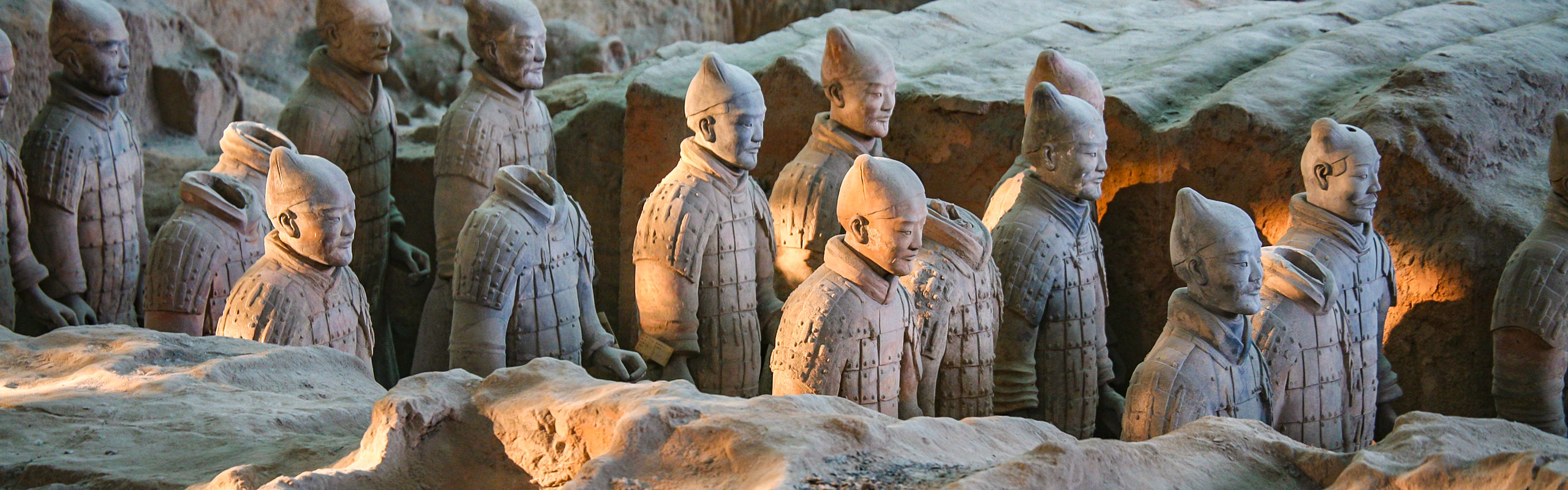
Xi'an, the former capital of 13 dynasties, is a living history book of China. Whether you’re a history buff, nature lover, or foodie, this city will leave you profoundly impressed. We offer pocket-friendly mini-group day tours and 1 to 4 days’ customizable private tours with hassle-free transfers, avoiding crowds and tourist traps for a pure, immersive experience. Follow our knowledgeable guide to marvel at the Terracotta Army, with untold life-size warriors created 2,000 years ago to sentinel the mausoleum of Qin Shi Huang, the first emperor of China. Climb up the ancient City Wall, snap photos at millennium-old Small and Giant Wild Goose Pagodas, and snack through the vibrant Muslim Quarter. Thrill-seekers can conquer Mt. Huashan and brave the world’s most dangerous hike. To dive deeper into Xi’an’s ancient side, don’t miss some low-key sites, such as Yangling Mausoleum of Han Dynasty, Stele Forest, Qianling Mausoleum, and Famen Temple.

With 5 days or more, you can venture a bit further. Consider Chengdu for giant pandas, Chongqing for mountain city views, Luoyang for Longmen Grottoes, Pingyao for ancient city’s scene, or Zhangjiajie for its Hallelujah Mountain. First-timers to China? The classic route to Beijing, Xi’an, Shanghai, and Guilin is highly recommended, offering a fantastic mix of ancient monuments, natural scenery, and modern wonders at one time. The more you share with us, the better we can craft a unique itinerary just for you!
... Read more

Xi'an Mini Group Tours

Best Xi'an Private Tours

FAQs on Xi'an Tours

How many days do I need for Xi’an?

A 2-to-3-day Xi’an tour package can generally cover all the must-visit spots, including the Terracotta Army, City Wall, Muslim Quarter, Great Mosque, Shaanxi History Museum, and Giant Wild Goose Pagoda. 4 to 5 days are enough for an in-depth exploration with extra visits to Mt. Huashan, Stele Forest, Qianling Mausoleum, and Famen Temple. If you have a longer vacation, it is convenient to extend your Xi’an tour to other hot destinations like Chengdu, Chongqing, Zhangjiajie, Guilin, Beijing, and Shanghai.

When is the best time to visit Xi’an?

Xi’an is favorable for visiting all year round, but the best time is from March to May and from September to November in view of the climatic conditions. If you come in January, the coldest month, it’s better to wear padded coats, thick long pants, scarves, and hats, while in July, the hottest month, you should wear breathable light T-shirts, shorts or skirts, and apply sunscreen. Traveling during the May Day (May 1st to 3rd) and National Day (Oct 1st to 7th) is not recommended as the main attractions will be packed with domestic visitors. Also, be prepared for the relatively crowded summer vacation from July to August.

Is Terracotta Army Museum busy? Do I need to book tickets in advance?

Yes, the Terracotta Army Museum is always crowded and noisy. There are 30,000 visitors per day at usual times, and even more on holidays, up to 70,000 visitors. At its entrance and the largest Pit No. 1, long queues can always be seen. Therefore, it’s very necessary to book tickets or guided tour services in advance.

Tips for Avoiding Crowds:
1. Avoid Holidays: It’s best to visit the museum on weekdays, and avoid Chinese major holidays like the National Day Golden Week from October 1st to 7th, Chinese New Year in January or February, and the May Day holiday.
2. Go Early: It’s a wise choice to get up early to queue before the opening at 8:30 am, when the crowds and the tour groups have not yet arrived, to fully enjoy the joy in the museum. Otherwise, go there after 3:00 pm. 
3. Visit in Winter: From November to February, daily attendance often drops to just a few thousand, ideal to enjoy the museum at a more relaxed, contemplative pace.


Where to stay in Xi’an?

The city center, especially the Bell Tower area is best for first-time visitors and independent travelers. There are 4-star and 5-star hotels, economic and comfortable inns, and budget hostels, and it is very convenient for you to dine and reach the scenic spots. South of downtown is also highly recommended, as many of the city’s main attractions are located here. The Giant Wild Goose Pagoda area in the south is a popular choice due to its vibrant attractions and nightlife. The western and northern suburbs are not recommended for tourists due to poor transportation links.

What are the best foods to try in Xi’an?

The local specialties, such as Chinese Hamburger, Cold Noodles, and Biang Biang Noodles, are highly recommended. You’ll find these everywhere, but for a truly local experience, the time-honored restaurant chain Ziwu Road Zhang’s Chinese Hamburger, very popular among locals, can be a reference. You can find a branch near your location to taste some snacks for about CNY 20-30 (USD 3-4) per person. A more formal sit-down dinner at a quality local restaurant costs roughly CNY 50-100 (USD 7-15) per person. You’re advised not to consider the well-known Muslim Quarter, as it is often crowded and specifically tailored toward tourists, which may not offer the best value for money. The nearby Sajinqiao Food Street would be a better choice. Our guide will be willing to give you some appropriate recommendations whenever needed.


Can I visit Xi’an without a visa?

Xi’an is one of the cities in China that implements a 240-hour visa-free transit policy, so international visitors who meet the requirements (holding a valid passport and onward flight ticket with a confirmed seat to a third country) can apply for it at Xi’an Xianyang International Airport to stay for no more than 10 days.


Can I do a day trip from Beijing to Xi’an?

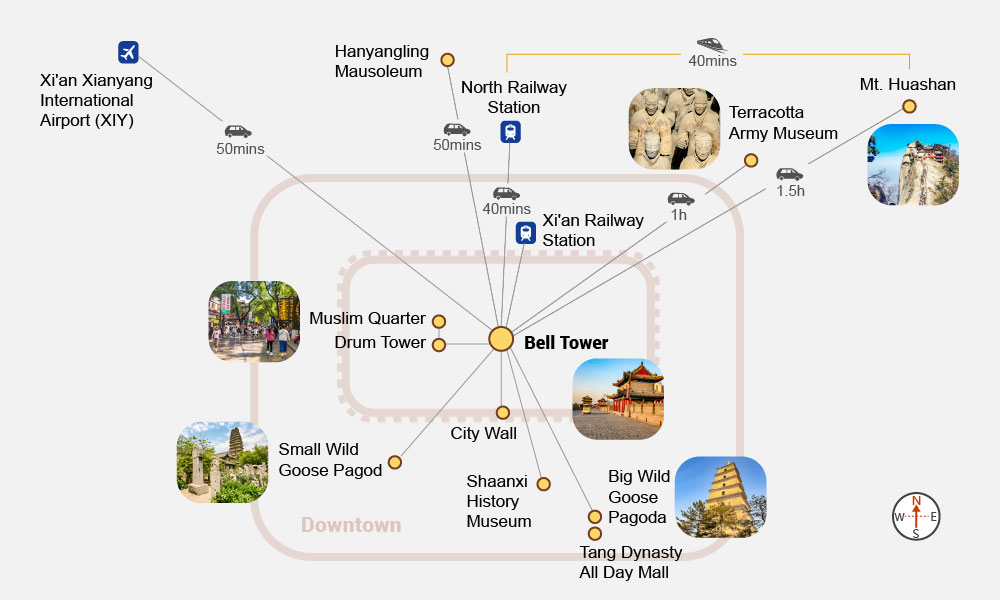
Xi’an has a well-developed public transportation network, with dozens of subway lines and countless buses that can take you to almost all the main spots like the Terracotta Army Museum, City Wall, Shaanxi History Museum, and Giant Wild Goose Pagoda. Taxis and online-hailing vehicles, which take one hour and cost about CNY 100 from the airport to the city center, are also available at any time. Note that there may be traffic jams during the rush hours.

Can I do Mt. Huashan in one day? What is the best season for Mt. Huashan?

There are convenient 5-to-6-hour high-speed trains that allow you to travel between the two cities in the same day, but the time left for your Xi’an tour is so limited that you can only tour the Terracotta Army Museum. It is recommended that you take the round-trip overnight sleeper train to ensure a full day to visit more sights like the City Wall and the Muslim Quarter.

Is it safe to travel to Xi’an?

Xi’an is overall safe for you. As for public security, it’s OK to wander around freely even at night in some well-lit places. Heinous crimes like robbery might not occur, but you still need to be cautious of pickpockets stealing your mobile phones, cash, and other valuables when you are in a crowded area. Additionally, be aware of potential scams, such as inviting you to a tea ceremony or giving you a free small gift by scanning unknown QR codes, and when encountered, just ignore them. If you're on one of our guided tours, you’ll definitely avoid all these hassles.

Most importantly, pay great attention to traffic safety. Be vigilant and carefully watch in both directions when crossing the road even at the green light, although the practice of cars yielding to pedestrians in Xi’an is relatively good across China. It’s better not to expect motorcycles, as well as rushing bicycles and e-bikes that often don't take red lights seriously, to give way to you. Note that on the zebra crossing, the latter two are also being ridden and mixed with pedestrians, unlike in some developed countries where people get off and push them. Also, some narrow sidewalks are often obstructed by parked bicycles, e-bikes, or street stalls, forcing pedestrians into non-motorized lanes. Compounding the danger, it’s quite common for two-wheeled vehicles in these lanes to ride against the traffic.