The development of Chinese Buddhist architecture can be traced back to the introduction of
Buddhism. The main Buddhist architectural items include temples, pagodas, and grottos. Buddhist architecture is regarded as a great art treasure where
Chinese calligraphy, sculpture and
Chinese painting combine. Being the spiritual symbols of Buddhism, they are not only monastic holy places, but also serve as sacred land that can purify souls.
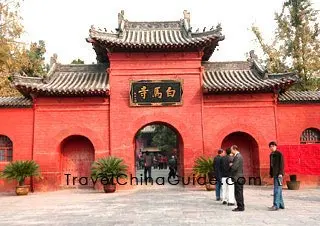
The Buddhist temple is the holy place where Buddhist doctrine is maintained. Differing from other religions' temples, Chinese Buddhist temples have many characteristics of their own. For example, similar to Chinese palaces and dwelling houses, they are comprised of a number of small yards. The oldest temple in China -
White Horse Temple is a typical example of this.
The architectural styles of Buddhist temples in China were mainly formed in three periods: Han Dynasty (206BC-220), Northern and Southern Dynasties (386-589), and Tang Dynasty (618-907). The first period sees the retention of Indian styles. In the second period, wooden framework was added to the original styles. In the third period, the styles of Buddhist temples were totally Sinicized and the pavilion-like pagoda, which is unique to China, became popular.
Pagoda
As the symbol of Buddhism where people climb to have a bird's-eye-view, it is often erected in temples. Pagodas can be made of stone, wood, colored glaze or metal. Pagodas have an odd number of layers. Seven-layer and Nine-layer pagodas are commonly built. The shape of cross-section is rectangular, eight-sided or even circular. Initially, the pagoda served as the central axis alongside which rows of halls and monks' rooms spread out. Later, pagodas were built near the main palace hall.
Grotto
It is another type of Buddhist architecture, which is often chiseled into cliffs. In the 3rd century, Chinese Buddhists began to build grottoes and Xinjiang is the first area where grottoes were hewn. Grottoes are decorated with painted sculptures, carvings and frescos. Craftsmen revealed real life pictures and their understanding of society in these art works, which gave them great historical and cultural value. The four famous grottoes in China are:
Mogao Caves,
Longmen Grottoes,
Yungang Grottoes and
Maiji Caves. They are well preserved and attract many visitors from home and abroad.
- Last updated on May. 07, 2026 by Sule Su -

 Pictures of