Epic Tibet: Mt. Everest, Kailash & Lake Manasarovar
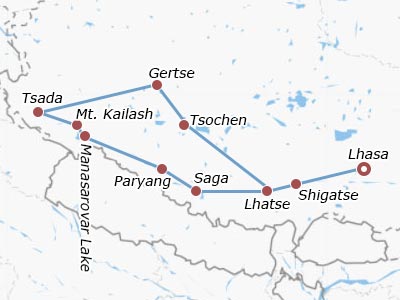
14 Days Private Tour of Lhasa - Gyantse - Shigatse - Mt. Everest - Saga - Tarchen - Mt. Kailash - Purang - Lake Manasarovar - Saga - Lhatse - Shigatse - Lhasa
Tour Type: Private tour with an English-speaking guide, flexible and customizable
Transportation: Air-conditioned private car with an experienced driver
Hotels: 3 or 4-star comfortable hotels, local guest houses, open to your choice
Meals: 11 breakfasts, 10 lunches, 5 dinners
Code: S-510
Transportation: Air-conditioned private car with an experienced driver
Hotels: 3 or 4-star comfortable hotels, local guest houses, open to your choice
Meals: 11 breakfasts, 10 lunches, 5 dinners
Code: S-510

- Itinerary
- Reviews
Trip Highlights
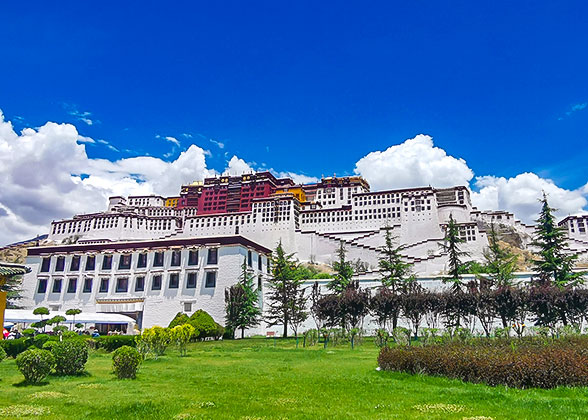
- Explore Lhasa’s breathtaking landmark, Potala Palace, and the spiritual heart, Jokhang Temple.
- Witness a dramatic Buddhist debate among monks dressed in crimson robes at Sera Monastery.
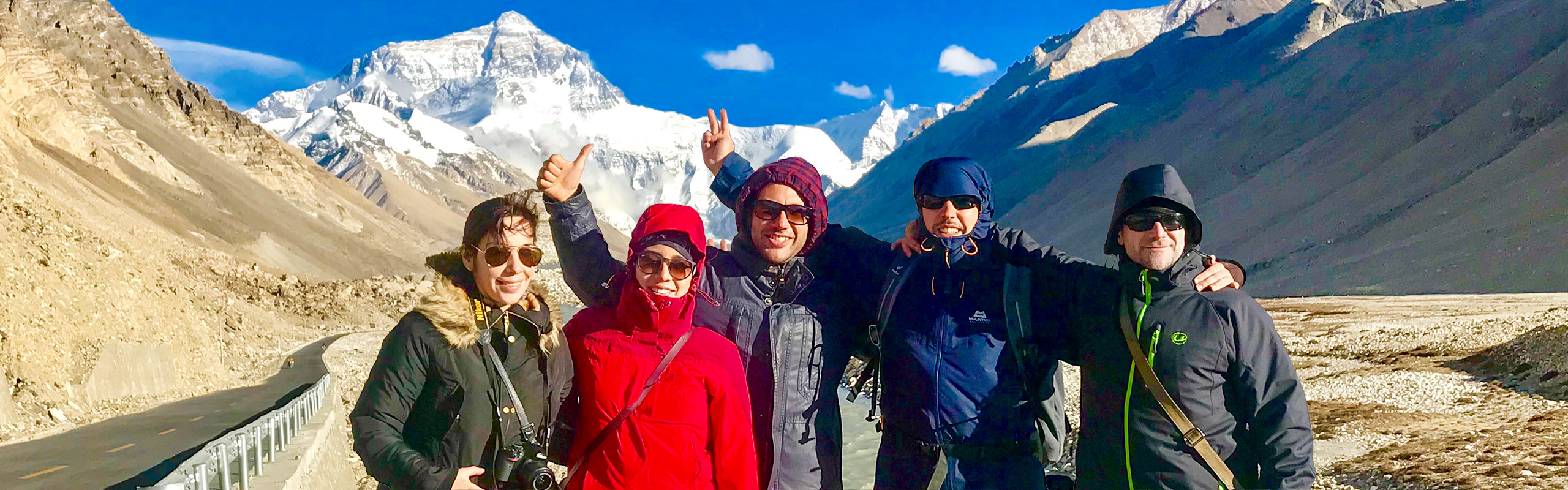
- Stay overnight at the Mt. Everest Base Camp, at an altitude of 5,200 meters, to get a close-up view of the world’s highest peak.
- Challenge yourself with a classic 3-day trek around Mount Kailash, the sacred mountain for four religions.
- Immerse yourself in the turquoise-blue waters of Tibet’s two holy lakes: Yamdrok Yumtso Lake and Lake Manasarovar.
Expand All
Collapse All
Day 1 Arrival in Lhasa, Airport Pick-up
Welcome to explore the Tibetan Plateau with us! After your flight lands at Lhasa airport, your private guide and driver will warmly welcome you with a white khata, a sacred silk scarf representing our best wishes for distinguished guests. Afterwards, they’ll escort you to your downtown hotel in a comfortable private car. The average altitude of Lhasa city is approximately 3,650 meters (11,680 ft.), so after check-in, we highly recommend unwinding in your oxygen-supplemented room and have a good rest!
► Altitude Sickness Tips:
1. On the first day of arrival, avoid showering, drinking alcohol, running, or jumping.
2. Carry oral glucose solution for quick energy replenishment, which can ease mild altitude sickness symptoms within a short time.
3. Those with severe cold, cardiovascular, pulmonary, or blood-related conditions should consult a professional doctor before traveling to Tibet.
Accommodation: Tangka Hotel (4 stars)
► Altitude Sickness Tips:
1. On the first day of arrival, avoid showering, drinking alcohol, running, or jumping.
2. Carry oral glucose solution for quick energy replenishment, which can ease mild altitude sickness symptoms within a short time.
3. Those with severe cold, cardiovascular, pulmonary, or blood-related conditions should consult a professional doctor before traveling to Tibet.
Accommodation: Tangka Hotel (4 stars)
Potala Palace, Lhasa
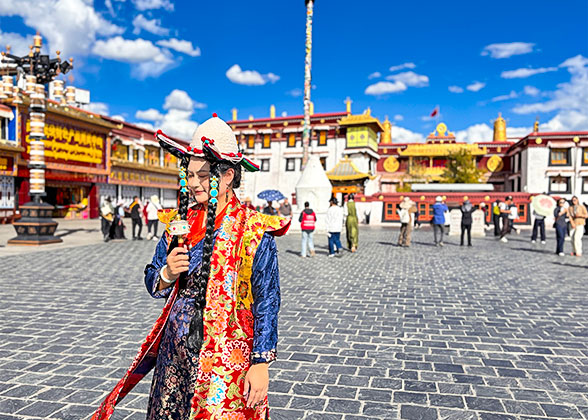
Barkhor Street in Central Lhasa
Day 2 Lhasa
Explore Drepung Monastery and witness Buddhist monks debating at Sera Monastery. (B+L)
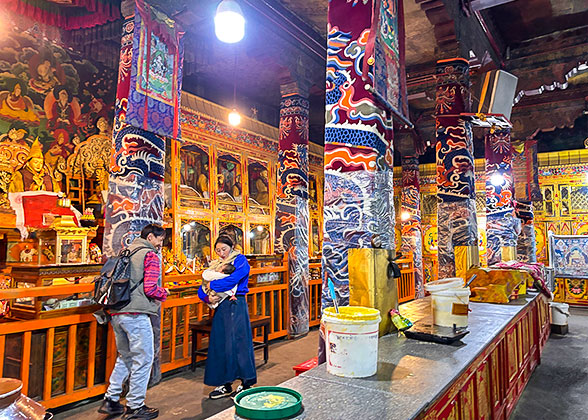
Kick off your Lhasa exploration with two monasteries of the “Three Great Temples”. Both are significant monasteries of the Gelug sect, aka ‘Yellow Hat’ sect, the largest school of Tibetan Buddhism. Your guide will first accompany you to Drepung Monastery, once the world’s largest Buddhist monastery, which housed over 10,000 monks and was home to successive Dalai Lamas. Climb stairs slowly to appreciate the castle-like structure, and learn about the Gaden Phodrang government founded by the 5th Dalai Lama from 1642 to 1959. Explore the core temple of the monastery, Tsokchen Hall, where monks chant scriptures and hold ceremonies, and overlook the entire valley from the sloping hillside platform, famous as the "Buddha-displaying Platform." Every year on the Shoton Festival, a giant thangka of Buddha is displayed here, making it the liveliest day of the year at Drepung Monastery.
► Tips:
1. Take a thick shawl, as the mountain breeze can still be chilly in the afternoon. Prepare high-energy chocolate, as high altitude causes rapid energy expenditure.
2. The debate area is made of natural gravel; wear non-slip, soft-soled shoes. Respect local religious rituals, and do not touch religious implements or monks' robes without permission.
Finishing the temple visit, your guide will escort you back to your hotel.
Meals: Western buffet breakfast, Lunch
Accommodation: Tangka Hotel (4 stars)
★ Watch a Unique Tibetan Monk Debate
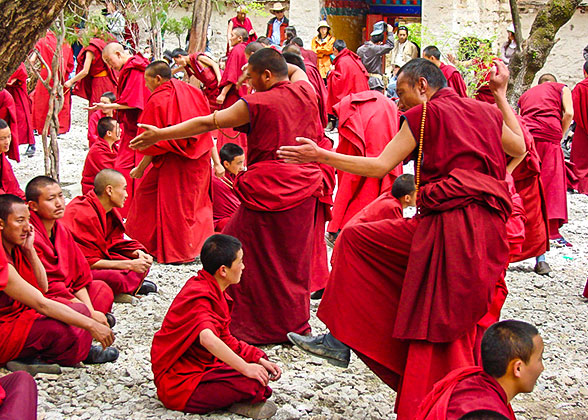
In the afternoon, head to Sera Monastery at an altitude of 3,870 meters (12,700 ft.), where red and white temples are built against the mountainside and the monks' quarters are scattered like chess pieces on the slope. What truly makes your heart race is not only the altitude but also the scene of the centuries-old debate tradition. At 3 pm, you’ll witness dozens of young monks form a circle and debate in pairs: one stands, clapping his hands exaggeratedly and asking questions in a loud, clear voice, causing his robe hem to fly, while the other squats in deep thought. In the debate, a high-five symbolizes "cutting off ignorance," a stomp represents "deterring wrong views," and the rapid questioning and answering train mental agility. According to a local monk, "We debate not to win or lose, but to let the truth emerge through the clash of ideas."► Tips:
1. Take a thick shawl, as the mountain breeze can still be chilly in the afternoon. Prepare high-energy chocolate, as high altitude causes rapid energy expenditure.
2. The debate area is made of natural gravel; wear non-slip, soft-soled shoes. Respect local religious rituals, and do not touch religious implements or monks' robes without permission.
Finishing the temple visit, your guide will escort you back to your hotel.
Meals: Western buffet breakfast, Lunch
Accommodation: Tangka Hotel (4 stars)
Prayer Hall of Drepung Monastery
Monks Debating in Sera Monastery
Day 3 Lhasa
Explore Potala Palace, Jokhang Temple, and Barkhor Street, and experience Tibetan life at an old Tibetan Sweet Teahouse. (B+L)
View More Videos
The Grand Potala Palace
We’ll then stroll around the Dragon King Pool Park, where a pool is formed when a large amount of soil was taken during the construction of the Potala Palace, creating a depression that later filled with water. Capture a stunning reflection of the Potala Palace, and experience the local life here.
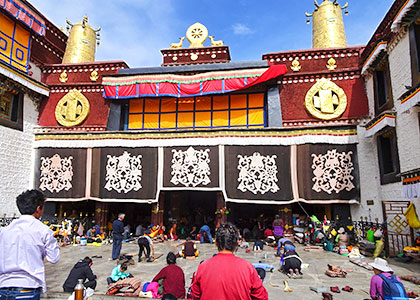
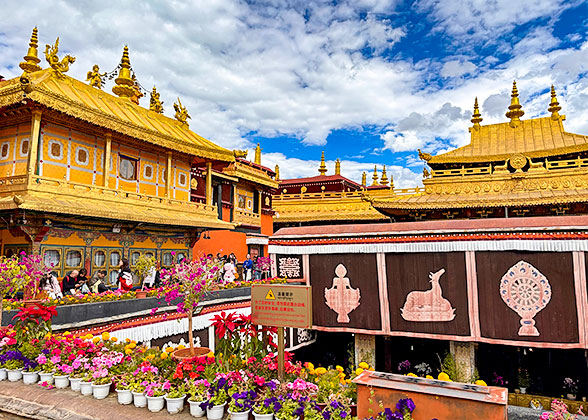
In the afternoon, let’s head to the old town of Lhasa, and visit Jokhang Temple, a pinnacle of Tibetan religious architecture. The 4-story main hall stands majestically, with its golden roof shimmering in the sunlight. The Chinese patterns on the brackets and eaves perfectly complement the Tibetan murals and wood carvings, which vividly depict the legendary story of Princess Wencheng's journey to Tibet and the temple construction. The soul of the temple lies in a life-size statue of the twelve-year-old Shakyamuni Buddha brought to Tibet by Princess Wencheng (620-680 AD). When you gaze at the ever-burning butter lamps and listen to the continuous chanting, you may understand the spiritual totem etched into every bone of the Tibetan people. Leaving the temple, get to the bustling Barkhor Street, witnessing the hurried yet devout flow of pilgrims, inhaling the fragrant scent of cypress branches in the air. If interested, browse the handicrafts sold along the street, such as carpets, ornaments, wooden bowls, and Thangkas.
★ Special Treat: Experience Authentic Local Life in a Sweet Teahouse
Afterward, your guide will accompany you to a century-old teahouse to sip a cup of sweet tea and savor Tibetan noodles while enjoying a vibrant symphony of everyday life. This is also a popular local social hub, where you can see Tibetan men chatting while playing with their prayer beads, and women whispering amongst themselves, occasionally bursting into hearty laughter.In the end, your guide and the driver will escort you back to your hotel.
Meals: Western buffet breakfast, Lunch
Accommodation: Tangka Hotel (4 stars)
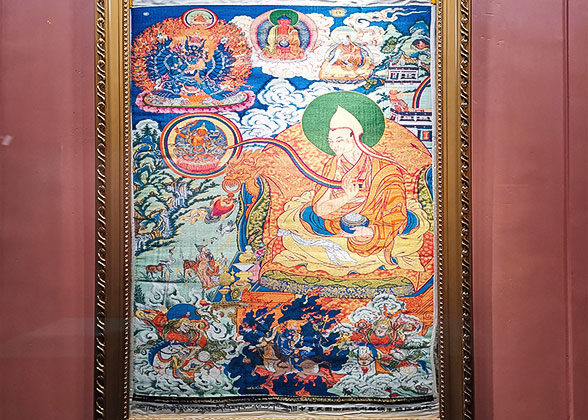
Exquisite Thangka in Potala Palace
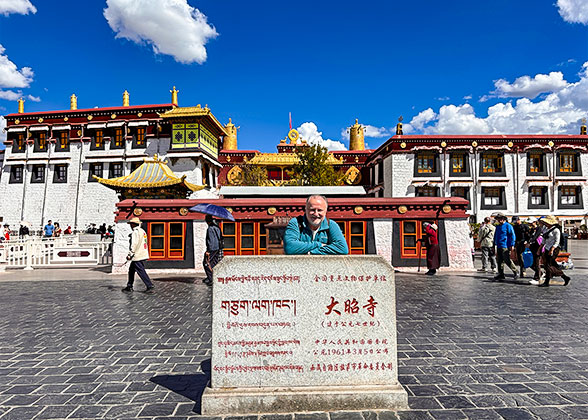
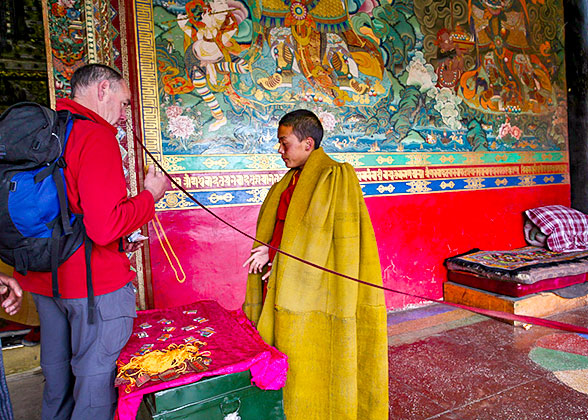
Our Guest before Jokhang Temple
Day 4 Lhasa - Gyantse - Shigatse
Drive to Shigatse via Gyantse; on the way, visit Yamdrok Yumtso Lake, pass by Karola Glacier, and visit Gyantse Palcho Monastery. (B+L)
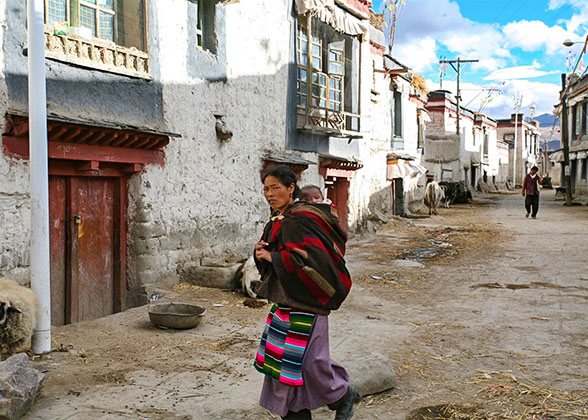
Today, we’ll venture out beyond Lhasa and drive to Tibet’s second-largest city, Shigatse. On the way, first drop by the beautiful holy lake, Yamdrok Yumtso Lake. On sunny days, you’ll see the Tiffany blue color, while it presents emerald green on cloudy days. When clouds drift across the lake's surface, even five or six shades of blue alternate, and layers of blue and green can be seen when encountering changeable weather.
► Beside the lake, local villagers offer photo opportunities with Tibetan mastiffs, lambs, and yaks, for about CNY 20-30 (USD 3-4.5). If interested, bargain the price before taking photos.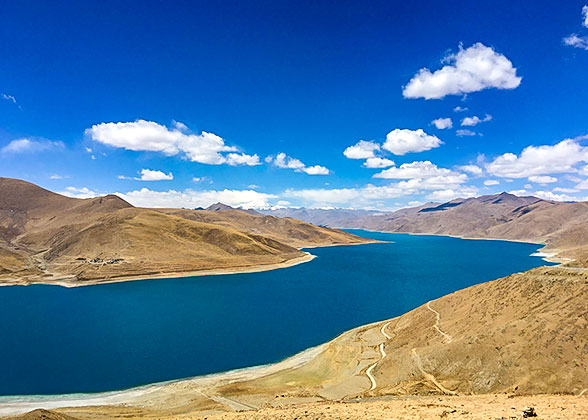
 At noon, enjoy lunch at Nakartse County, and then continue the trip. As the temperature drops, prepare to wear warm clothes, and we’ll pass by the Karola Glacier, standing at an altitude of 5,040 meters (16,535 ft.). Due to global warming, the glacier’s ice tongue is currently retreating significantly, but it is still a glacier very close to the road, making it relatively easy to admire its close-up views.
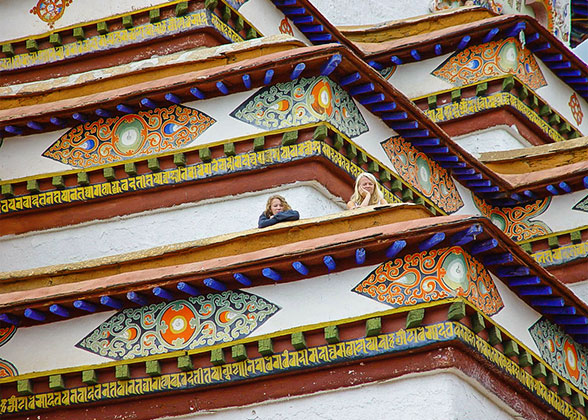
In the afternoon, stop by Gyantse County, which was historically the third-largest city in Tibet, housing a lot of hidden gems. Your guide will lead you to Palcho Monastery, which is unique among Tibetan monasteries because its colleges belong to three sects: Sakyapa, Kadampa, and Gelugpa. Admire the exquisite murals with a wide range of subjects, such as exoteric and esoteric Buddhism and historical figures, depicted with fluid lines and vibrant colors. You’ll also be amazed at the 35.2-meter (115-foot) high Kumbum Stupa, aka ‘Ten Thousand Buddha Stupa’. The 9-story stupa has 77 Buddhist halls and niches, each of which enshrines statues and is filled with murals, making it a veritable Buddhist museum. Afterward, we’ll continue drive to Shigatse for hotel check-in.
Meals: Western buffet breakfast, Lunch
Accommodation: Gesar Hotel Shigatse - VIP Building (4 stars)
► Beside the lake, local villagers offer photo opportunities with Tibetan mastiffs, lambs, and yaks, for about CNY 20-30 (USD 3-4.5). If interested, bargain the price before taking photos.
Yamdrok Yumtso Lake, Gyantse
Gyantse Old Street
In the afternoon, stop by Gyantse County, which was historically the third-largest city in Tibet, housing a lot of hidden gems. Your guide will lead you to Palcho Monastery, which is unique among Tibetan monasteries because its colleges belong to three sects: Sakyapa, Kadampa, and Gelugpa. Admire the exquisite murals with a wide range of subjects, such as exoteric and esoteric Buddhism and historical figures, depicted with fluid lines and vibrant colors. You’ll also be amazed at the 35.2-meter (115-foot) high Kumbum Stupa, aka ‘Ten Thousand Buddha Stupa’. The 9-story stupa has 77 Buddhist halls and niches, each of which enshrines statues and is filled with murals, making it a veritable Buddhist museum. Afterward, we’ll continue drive to Shigatse for hotel check-in.
Meals: Western buffet breakfast, Lunch
Accommodation: Gesar Hotel Shigatse - VIP Building (4 stars)
Beautiful Plateau on the Way
Kumbum Stupa in Palcho Monastery
Day 5 Shigatse - Everest Base Camp
Drive to Everest Base Camp, visiting Sakya Monastery and passing by Gawula Pass on the way. Explore Everest Base Camp and Rongbuk Monastery. (B+L+D)
This morning, we’ll depart early from Shigatse to the Everest Base Camp and be ready for an 8 to 10-hour scenic overland trip along the winding mountain roads. Driving out of Shigatse, we’ll travel west along the south bank of the Yarlung Tsangpo River; the view opens up, with golden or green river valley farmland and scattered herds of yaks and sheep dotting the grassland. Further on, terrain gradually becomes drier, with gentle hills and alpine meadows unfurling. You can see mani stones and prayer flags fluttering on the mountain slopes, and occasionally pass by small Tibetan villages and stupas.
After about 3 hours, we’ll stop by Sakya Monastery, whose biggest draw is the 60-meter (197-foot) high and 11-meter (36-foot) wide giant ‘Scripture Wall’. The earliest books date back to 11th-13th century, and it is estimated that the monastery has preserved about 84,000 scrolls. On the outer hall stand four stone pillars from the Yuan Dynasty (1271-1368 AD), and one of them was bestowed by Kublai Khan, the founding emperor of the Mongol-led Yuan Dynasty.
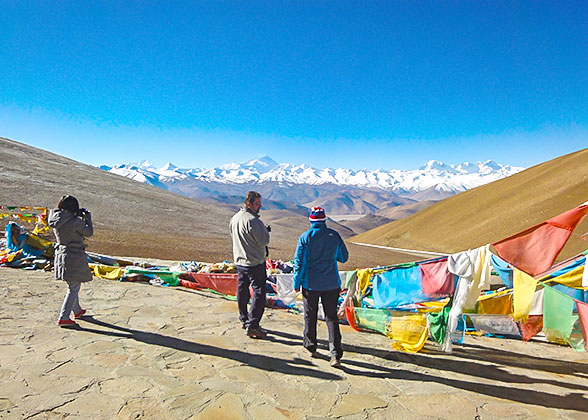
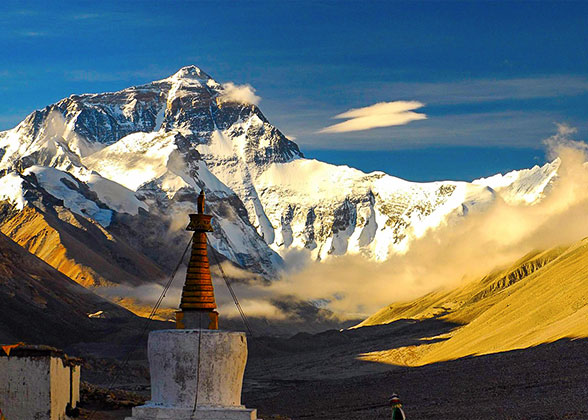
Continue the trip, and we’ll pass by the Gawula Pass, where you can overlook five spectacular snow-capped mountains at an altitude of over 8,000 meters (26,247 ft.) at once. After traversing through the thrilling, zigzagging hairpin bends of the famous ‘108 Turns’, we’ll reach the Everest tourist center at Tashi Dzong Town. Here, let’s transfer to an eco-shuttle to the Everest Base Camp for about 30 minutes. Getting off the bus, you’ll be immediately impressed by the world’s highest peak, especially when you see the sunset turn the snow-capped peaks golden. Your guide will then accompany you to explore the Rongbuk Monastery, which offers another excellent perspective to enjoy Mount Everest. Also, capture a photo of the Everest Monument, which records the peak's altitude.
Tonight, you’ll stay overnight at the base camp. If interested, have an epic stargazing on summer nights.
Meals: Western buffet breakfast, Lunch, Dinner
Accommodation: EBC Tent Guesthouse (no private washroom)

After about 3 hours, we’ll stop by Sakya Monastery, whose biggest draw is the 60-meter (197-foot) high and 11-meter (36-foot) wide giant ‘Scripture Wall’. The earliest books date back to 11th-13th century, and it is estimated that the monastery has preserved about 84,000 scrolls. On the outer hall stand four stone pillars from the Yuan Dynasty (1271-1368 AD), and one of them was bestowed by Kublai Khan, the founding emperor of the Mongol-led Yuan Dynasty.
Continue the trip, and we’ll pass by the Gawula Pass, where you can overlook five spectacular snow-capped mountains at an altitude of over 8,000 meters (26,247 ft.) at once. After traversing through the thrilling, zigzagging hairpin bends of the famous ‘108 Turns’, we’ll reach the Everest tourist center at Tashi Dzong Town. Here, let’s transfer to an eco-shuttle to the Everest Base Camp for about 30 minutes. Getting off the bus, you’ll be immediately impressed by the world’s highest peak, especially when you see the sunset turn the snow-capped peaks golden. Your guide will then accompany you to explore the Rongbuk Monastery, which offers another excellent perspective to enjoy Mount Everest. Also, capture a photo of the Everest Monument, which records the peak's altitude.
Tonight, you’ll stay overnight at the base camp. If interested, have an epic stargazing on summer nights.
Meals: Western buffet breakfast, Lunch, Dinner
Accommodation: EBC Tent Guesthouse (no private washroom)
Rongbuk Monastery, Dingri
Mount Everest
Day 6 Everest Base Camp - Saga
Drive from Everest Base Camp to Saga, with photo stops by Shishapangma Nature Reserve and the Peiku-tso Lake. (B+L+D)
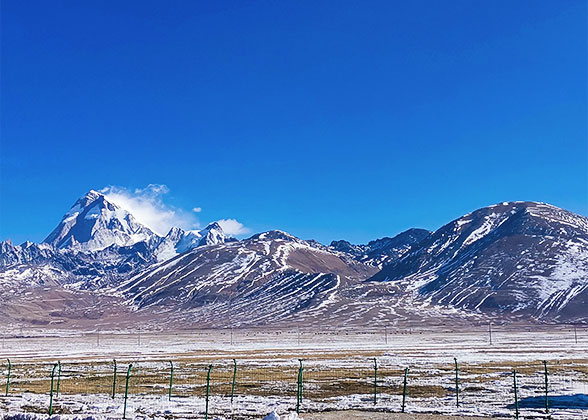
Capture the last chance to glimpse the ethereal Mt. Everest shrouded in the morning mist. After breakfast, we’ll leave for Saga County, taking around 8 hours. Along the way, as the Mt. Everest gradually recedes into the distance, the 8,027-meter (26,335-foot) high Shishapangma Peak draws closer. This is the only snowy peak of over 8,000 meters that completely stands in China, and it ranks 14th among the world’s snow mountains. What makes it even more intriguing is the Peiku-tso Lake lying at the foot of the mountain, whose crystal blue waters offer a stunning reflection of the azure sky and the snowy peaks, creating a soothing sight. Stop for great photos, and you may also spot Tibetan gazelles and wild asses on the way. After arriving in Saga, check in at a local hotel.
Meals: Breakfast, Lunch, Dinner
Accommodation: Schery Hotel Saga
Meals: Breakfast, Lunch, Dinner
Accommodation: Schery Hotel Saga
View Snow Mountains from a Distance
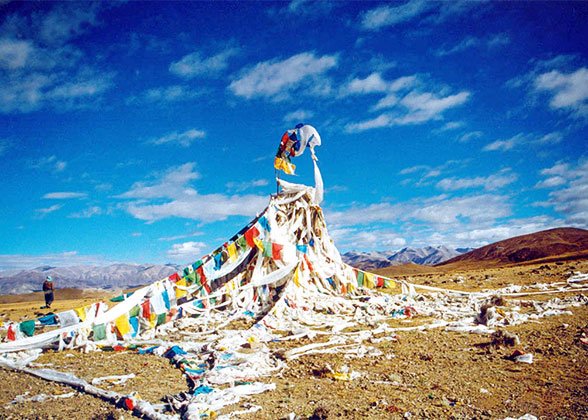
Prayer Flags on the Mountain
Day 7 Saga - Tarchen
Drive past Paryang Grassland, Mayumla Mountain Pass, and Gongzhucuo Lake before arriving in Tarchen. View Mount Kailash in the distance. (B+L+D)
After breakfast, your guide and the driver will accompany you to embark on the road trip to Tarchen, the gateway to the sacred Mount Kailash. The 8 to 10-hour journey traverses through the high-altitude areas of 4,500-5,000 meters (14,760-16,400 ft.), and thus, if needed, prepare oxygen cans and warm clothing, as well as energy bars to take precautions against altitude sickness. Along the way, immerse yourself in the magnificent grassland, snow-capped mountains, and lakes.
We’ll first pass through the Paryang Grassland, a typical alpine meadow sandwiched between the Himalayas and the Gangdise Mountains, with snow-capped peaks set against the blue sky with white clouds. Looking west, you’ll see green grass interspersed with golden sand dunes, and there is a great chance of spotting Tibetan wild asses, gazelles, and other wild animals. With luck, you may encounter herds of cattle and sheep crossing the highway.
When green meadows begin to vanish, pastures recede, the scenery along the way is replaced by exposed rock formations, and the undulating Gobi Desert. On the distant horizon, a gentle ridge eroded by the wind into a golden spine comes into your eyes; that is the Mayumla Pass, at an altitude of 5,211 meters (17,100 ft.), the southern gateway to Ngari, Tibet’s most remote area. At the mountain pass stands a rusty elevation marker, and colorful prayer flags flutter in the wind, as if praying to the sky for every passerby. After a short photo stop, descend the mountain, and you’ll be suddenly captured by a piece of sapphire blue, Gongzhucuo Lake, filled with the purest glacial water, resembling a mirror fallen from the sky.
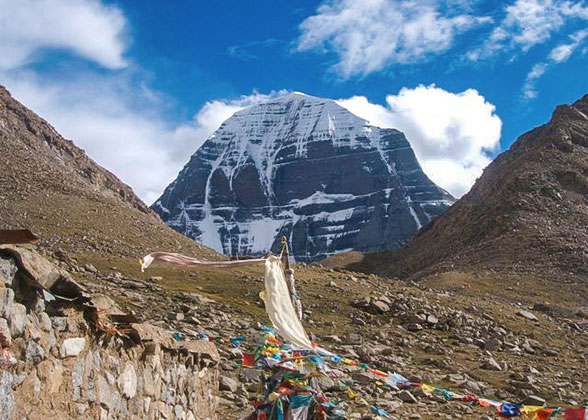
Continue driving west; when we approach Tarchen, you’ll view Mount Kailash from a distance. Mt. Kailash is considered the birthplace of the four major religions: Hinduism, Buddhism, Bonism, and ancient Jainism. It is believed to be the center of the world and the most sacred place in Tibet. Upon arrival, check in at the hotel in Tarchen. Have a good rest for the upcoming sacred trek.
Meals: Breakfast, Lunch, Dinner
Accommodation: Tarchen Himalayan Hotel
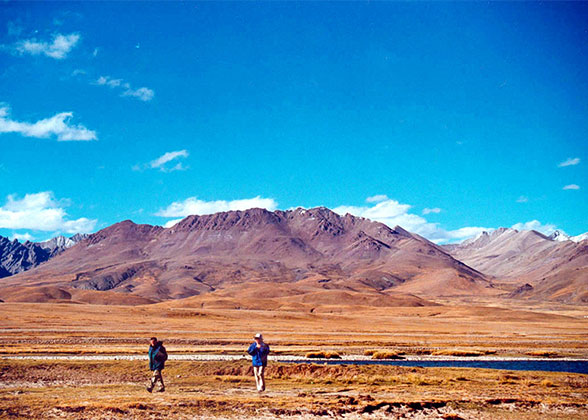
We’ll first pass through the Paryang Grassland, a typical alpine meadow sandwiched between the Himalayas and the Gangdise Mountains, with snow-capped peaks set against the blue sky with white clouds. Looking west, you’ll see green grass interspersed with golden sand dunes, and there is a great chance of spotting Tibetan wild asses, gazelles, and other wild animals. With luck, you may encounter herds of cattle and sheep crossing the highway.
When green meadows begin to vanish, pastures recede, the scenery along the way is replaced by exposed rock formations, and the undulating Gobi Desert. On the distant horizon, a gentle ridge eroded by the wind into a golden spine comes into your eyes; that is the Mayumla Pass, at an altitude of 5,211 meters (17,100 ft.), the southern gateway to Ngari, Tibet’s most remote area. At the mountain pass stands a rusty elevation marker, and colorful prayer flags flutter in the wind, as if praying to the sky for every passerby. After a short photo stop, descend the mountain, and you’ll be suddenly captured by a piece of sapphire blue, Gongzhucuo Lake, filled with the purest glacial water, resembling a mirror fallen from the sky.
Continue driving west; when we approach Tarchen, you’ll view Mount Kailash from a distance. Mt. Kailash is considered the birthplace of the four major religions: Hinduism, Buddhism, Bonism, and ancient Jainism. It is believed to be the center of the world and the most sacred place in Tibet. Upon arrival, check in at the hotel in Tarchen. Have a good rest for the upcoming sacred trek.
Meals: Breakfast, Lunch, Dinner
Accommodation: Tarchen Himalayan Hotel
Grassland on the Way
Mount Kailash, Tibet
Day 8 Mount Kailash Kora Trek: 20 km (12 mi), 6-8 hours
Trek first 20 km of the Mount Kailash Kora: Tarchen - Prayer Flag Square - Dirapuk Monastery. (B)
★ Challenge Yourself with a Once-in-a-lifetime Mount Kailash Kora
This morning, your guide will pick you up from your hotel and kick off the 3-day sacred Mount Kailash Kora trek, aka Mount Kailash Parikrama, in a total of 52 km (32 mi). It is said that the greatest wish of a Tibetan Buddhist in life is to make a pilgrimage to Mount Kailash: circumambulating the mountain once can cleanse sins, ten times can spare one from the torments of hell for 500 lifetimes, and 100 circumambulations can lead to Buddhahood. If during the Horse Year, one circumambulation means 12 times the merit for the believer, equivalent to 13 circumambulations in a normal year. And thus, the Horse Year will attract more visitors than normal times.After breakfast, follow your guide to walk west about 2 hours from Tarchen Town at 4,670 m (15,322 ft) to the Prayer Flag Square, an iconic starting point of the pilgrimage, which is adorned with colorful prayer flags. In the center stands a white pagoda, and it is said that passing through it can get divine blessings. Here also offers a perfect perspective to capture a close-up view of the south face of Mount Kailash.
Continue trekking north upstream along the Lha Chu Valley. This section is relatively steady and flat, and the gentle ascent can make you gradually acclimatize to the high altitude. On the way, you’re likely to see yaks, marmots, and pilgrims prostrating themselves in prayer.
After about 4 hours’ hiking, we’ll reach the Dirapuk Monastery at 5,100 m (16,732 ft), on the back of the mount, just opposite the grand north face. Tonight, stay overnight at a local guest house.
► Warm Tips:
1. Due to the limited living conditions, the local guesthouse has only multiple-bed dormitory spaces, with no private washrooms or breakfasts.
2. Though meals are not included during the pilgrimage, there's a supply point every 5 to 6 km (3.1-3.7mi), where a warm space offers instant noodles, rice, and hot tea. Bring some glucose and a small amount of high-calorie dry food; try to keep your backpack as light as possible.
Meals: Breakfast
Accommodation: Local Guest House (dorm bed, no private washroom)
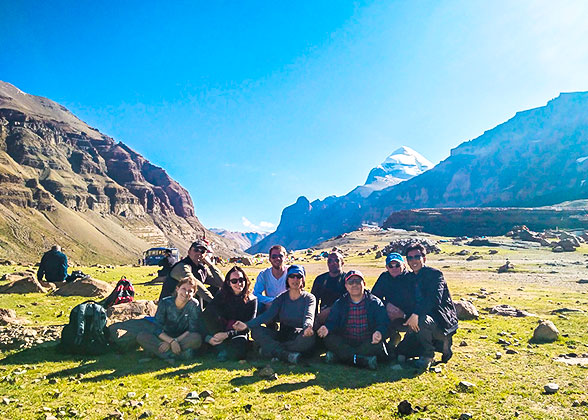
Our Guests at Mount Kailash
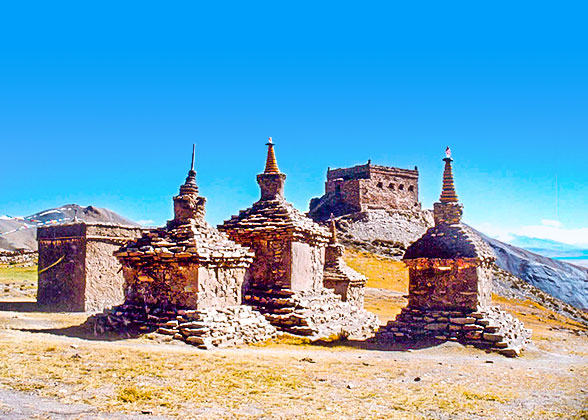
Pagodas around Mount Kailash
Day 9 Mount Kailash Kora Trek: 24 km (15 mi), 8-10 hours
Dirapuk Monastery - Dolma La Pass - Zutulphuk Monastery.
Be ready for a challenging hike today, with thin air, high altitude, and the steepest ascent of the route. This morning, we need to depart early, better before 6:00 am, so that we can reach before dark. The first leg starts from Dirapuk Monastery to Dolma La Pass, spanning a distance of only about 5 km (3 mi). However, an altitude rise of nearly 600 meters (1,969 ft) makes your every step strenuous. On the way, we’ll pass by a sky burial site, adorned with prayer flags and clothing, symbolizing reincarnation and rebirth. Follow your guide and proceed slowly according to your physical condition.
After crossing the highest point, Dolma La Pass at 5,630 m (18,471 ft), we’ll start descending. Pay extra attention to the road conditions, as sometimes it may be frozen according to the season. If needed, use ropes or both hands and feet. The last section from the mountain foot to Zutulphuk Monastery at 4,790 m (15,715 ft) is a much easier trek through the scenic Menchu River valley. At the end of the day, rest your legs at a local guest house.
Accommodation: Local Guest House (dorm bed, no private washroom)
After crossing the highest point, Dolma La Pass at 5,630 m (18,471 ft), we’ll start descending. Pay extra attention to the road conditions, as sometimes it may be frozen according to the season. If needed, use ropes or both hands and feet. The last section from the mountain foot to Zutulphuk Monastery at 4,790 m (15,715 ft) is a much easier trek through the scenic Menchu River valley. At the end of the day, rest your legs at a local guest house.
Accommodation: Local Guest House (dorm bed, no private washroom)
Day 10 Mount Kailash Kora Trek: 10 km (6 mi), 3-4 hours; Drive to Purang
Trek the last 10 km of the pilgrimage from Zutulphuk Monastery to Tarchen, and then transfer to Purang County, with photo stop at Lakes Manasarovar & Rakshastal. (L+D)
This morning, your guide will accompany you to finish the final leg of the Mount Kailash Kora, descending from Zutulphuk Monastery to Tarchen Town. As the altitude decreases, in general, the trek becomes gentler, and you can move easily. Get out of Zutulphuk Monastery, the first part may be a little gravel and dusty, and it is suggested that you use trekking poles to protect knees. Further on, the path flattens out, offering scenic sweeping views of the Baga Grassland and distant views of Mount Namnani. Take a break at Zongdui, and trek back to Tarchen.
Finishing your sacred pilgrimage that reshapes the trajectory of life, hop in your private car. Your guide and the driver will escort you to Purang County. Rest in the car while enjoying the stunning scenery along the way. Following the ring road around the lakes, you can not only view the Lake Manasarovar on one side but also the Lake Rakshastal on the other side. A local legend goes that the two lakes were once a loving couple: Lake Manasarovar was a beautiful and gentle goddess, while Lake Rakshastal was a devoted and brave warrior. However, due to a misunderstanding, the warrior was sealed away, and the lovers were forever separated by a dike, gazing at each other from eternity. When you stand on the road between the two lakes, you'll witness the most magical scene: the waves of Lake Rakshastal, in an unchanging obsession, continuously surge towards Lake Manasarovar, while every ripple of Lake Manasarovar gently ripples towards Lake Rakshastal. Continue the drive, and you’ll also observe Mt. Kailash and Mt. Namnani to the south in the distance. After arrival in Purang, check in at a local hotel.
► Warm Tip: From Tarchen to Purang, with an altitude drop of 800 meters (2,625 ft.), it may cause oxygen intoxication symptoms such as dizziness, drowsiness, and fatigue. We’ll stop and rest frequently during the journey to allow your body to gradually adapt to the environmental changes.
Meals: Lunch, Dinner
Accommodation: Himalaya Pulan Hotel
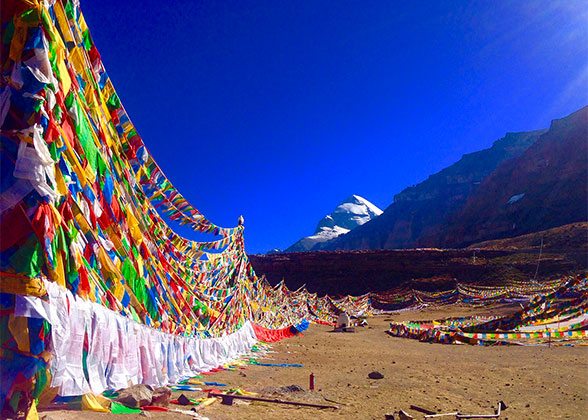

Finishing your sacred pilgrimage that reshapes the trajectory of life, hop in your private car. Your guide and the driver will escort you to Purang County. Rest in the car while enjoying the stunning scenery along the way. Following the ring road around the lakes, you can not only view the Lake Manasarovar on one side but also the Lake Rakshastal on the other side. A local legend goes that the two lakes were once a loving couple: Lake Manasarovar was a beautiful and gentle goddess, while Lake Rakshastal was a devoted and brave warrior. However, due to a misunderstanding, the warrior was sealed away, and the lovers were forever separated by a dike, gazing at each other from eternity. When you stand on the road between the two lakes, you'll witness the most magical scene: the waves of Lake Rakshastal, in an unchanging obsession, continuously surge towards Lake Manasarovar, while every ripple of Lake Manasarovar gently ripples towards Lake Rakshastal. Continue the drive, and you’ll also observe Mt. Kailash and Mt. Namnani to the south in the distance. After arrival in Purang, check in at a local hotel.
► Warm Tip: From Tarchen to Purang, with an altitude drop of 800 meters (2,625 ft.), it may cause oxygen intoxication symptoms such as dizziness, drowsiness, and fatigue. We’ll stop and rest frequently during the journey to allow your body to gradually adapt to the environmental changes.
Meals: Lunch, Dinner
Accommodation: Himalaya Pulan Hotel
View Sacred Mt. Kailash from a Distance
A Yak by the Lake Manasarovar
Day 11 Purang - Saga
Drive from Purang to Saga, passing by Lakes Manasarovar & Rakshastal, Gongzhucuo Lake, and Payang Desert. (B+L+D)
Today, your private guide will accompany you to embark on your return journey to Saga, with a private car ride of 8 to 10 hours. Shortly after departure, we’ll drop by Lakes Manasarovar & Rakshastal again. Feel free to ask the driver to stop if you want to capture the reflection of the magnificent Mt. Kailash. After passing by the glittering Gongzhucuo Lake, it warms up as the sun climbs higher, and we’ll drive through the Payang Desert. It’s unlike the normal golden desert, while the sand dunes stained by minerals display layers of red, brown, and grey. Approaching Saga County, you’ll spot birds like black-necked cranes and brown-headed gulls in the sprawling alpine wetlands. After arrival, check in at your comfortable hotel in Saga.
Meals: Breakfast, Lunch, Dinner
Accommodation: Schery Hotel Saga
Meals: Breakfast, Lunch, Dinner
Accommodation: Schery Hotel Saga
Day 12 Saga - Lhatse - Shigatse
Transfer from Saga to Shigatse, passing by Sangsang Grassland, and Lhatse County. (B+L)
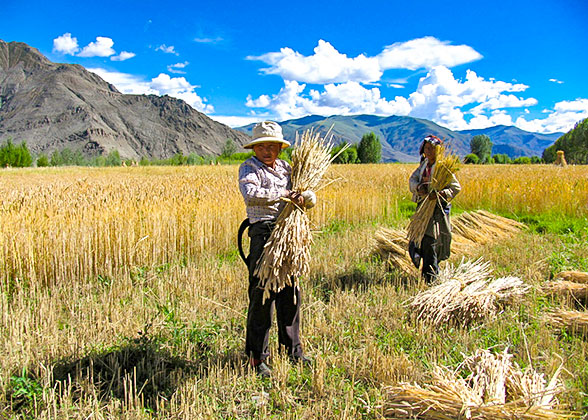
Wave goodbye to Saga! After breakfast, your guide and the driver will escort you back to Shigatse. Driving past the barren plateau, we’ll occasionally encounter herds of yaks scattered around the low hills. The landscape gradually mellows into a wider grassland as we approach Ngamring County. This is the Sangsang Grassland, a combination of alpine meadows, seasonal marshes, and glacial meltwater streams that nurture habitats for black-necked cranes, ruddy shelducks, and Tibetan gazelles. After that, traveling along the G318 highway through a tributary valley of the Yarlung Tsangpo River, the scenery shifts to barley fields and shrubs. You’ll then pass by Lhatse, which means "Summit of the Sacred Mountain" in Tibetan and was historically known as the "Granary of Tibet". Past Lhatse, the valley narrows into the western section of the Yarlung Tsangpo Grand Canyon, where the earthen hills on both sides are exposed to wind erosion. When more and more Tibetan-style dwellings appear on the horizon, we’ll arrive in Shigatse. Stayover night in your Shigatse hotel for a good rest!
Meals: Breakfast, Lunch
Accommodation: Gesar Hotel Shigatse - VIP Building (4 stars)
Meals: Breakfast, Lunch
Accommodation: Gesar Hotel Shigatse - VIP Building (4 stars)
Tibetan People during Harvest Season
Tashilunpo Monastery, Shigatse
Day 13 Shigatse - Lhasa
Visit Tashilunpo Monastery, and drive back to Lhasa. (B+L)
After a hearty breakfast, your guide will accompany you to explore the Tashilunpo Monastery standing against the mountainside, one of the six great monasteries of the Gelug Sect. Even at a remote distance, you can view its red walls and golden roofs gleaming under the morning sun. The 15th-century temple founded by the first Dalai Lama is home to successive Panchen Lamas and is also the religious and cultural center of the Tsang region. Strolling around the temple, marvel at the giant 26.2-meter (86-foot) high Maitreya Buddha statue that uses 3,700 kg of gold, and pay respect to the funeral stupas of several Panchen Lamas.
Finish the visit, and we’ll drive back to Lhasa. Capture the last chance to immerse yourself in the wild nature, taking in the towering snow peaks, turquoise emerald alpine lakes, and vast grassland. Arriving in Lhasa in the late afternoon, your guide will escort you to check in at your hotel.
Meals: Western buffet breakfast, Lunch
Accommodation: Tangka Hotel (4 stars)
Finish the visit, and we’ll drive back to Lhasa. Capture the last chance to immerse yourself in the wild nature, taking in the towering snow peaks, turquoise emerald alpine lakes, and vast grassland. Arriving in Lhasa in the late afternoon, your guide will escort you to check in at your hotel.
Meals: Western buffet breakfast, Lunch
Accommodation: Tangka Hotel (4 stars)
Day 14 Departure from Lhasa, Airport See-off
Private car transfer from your hotel to the airport. Wish you a nice journey! (B)
Today, your guide and the driver will escort you to the airport at the appointed time. Wish you a nice journey home!
Meals: Western buffet breakfast
Meals: Western buffet breakfast
B - Breakfast L - Lunch D - Dinner
Expand All
Collapse All
This trip can be customized to meet your individual needs!
Itineraries you may also like: