3 Days Private Dunhuang Trip
Code: DH01

- Itinerary
- Prices
- Reviews
Trip Highlights
- Probe into stories behind the well-preserved murals at the Mogao Caves with the guide’s detailed explanation.
- Climb the Echoing-Sand Mountain to unveil singing secrets and visit the miracle of Crescent Lake amid the arid desert.
- Witness the enduring strength of the 2,000-year-old fortifications of the Great Wall and Jade Gate Pass.
- Feel the Silk Road spirit through the camel riding experience and the bustling atmosphere of Shazhou Night Market.
This trip can be customized to meet your individual needs!
Expand All
Collapse All
Day 1 Dunhuang Pick-up; Echoing-Sand Mountain, Crescent Lake with Camel Ride, Shazhou Night Market
Welcome to Dunhuang! Upon your arrival, your guide and the driver will pick you up at the airport or railway station and then escort you in a comfortable air-conditioned car to the first stop - the Echoing-Sand Mountain. As the name suggests, the sand here can sing during wind blows or treads, whose deep hum echoes like a cello warming up for a grand performance. To be qualified ‘singers’, sand particles need to have uniform sizes, smooth surfaces, and quartz-rich ‘bones’, which can help them reduce friction, maintain synchronized vibrations, and better transmit the sound. Meanwhile, the dry climate and steady sand bed amplify this chorus. Why not check this magic sound by yourself?
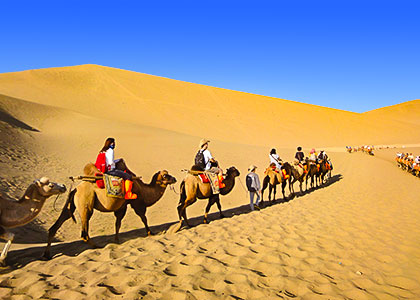
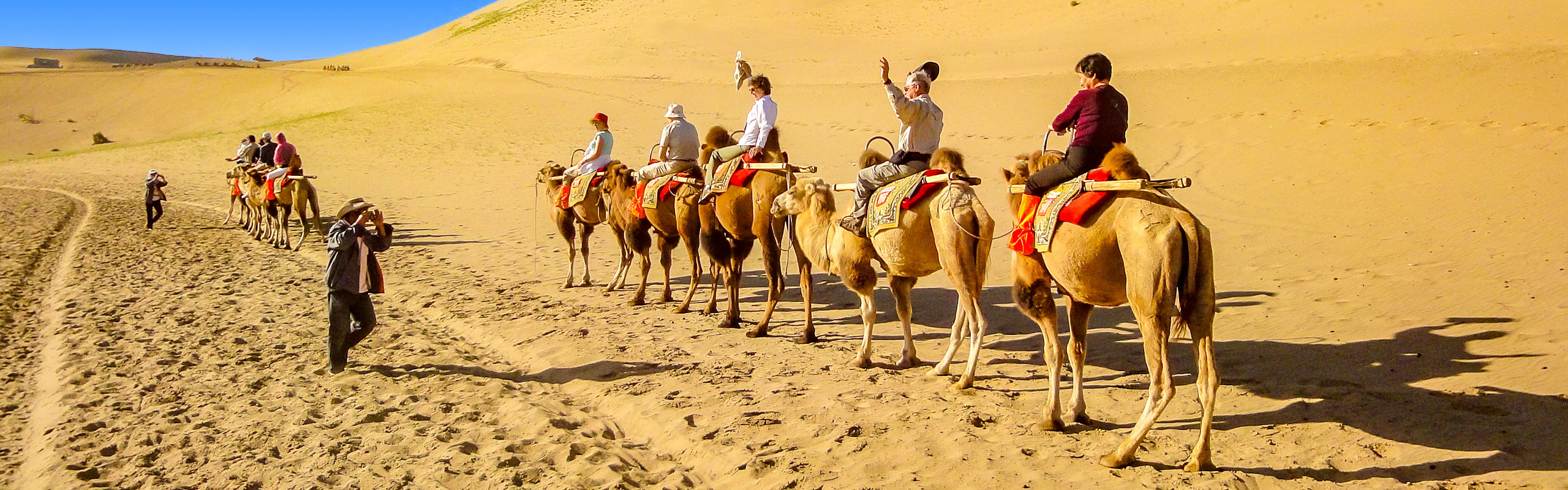
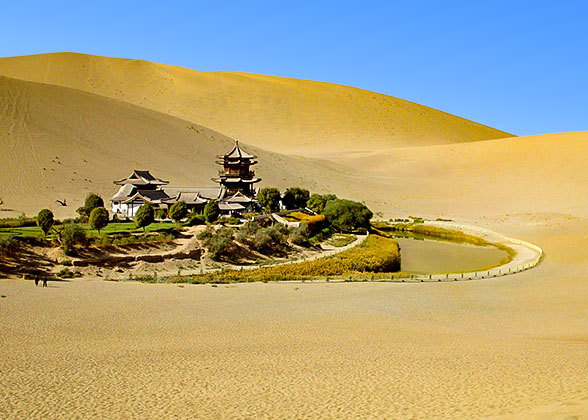
Gazing upon the rolling dunes, you’ll quickly think of camels that once traversed the ancient Silk Road, and we can’t let you miss the riding experience! Stagger on a Bactrian camel’s back to feel the hardship of ancient caravans while observing the sand in yellow, gold, and white hues when the light changes. Then, the Crescent Lake will crush into your eyes, a spiritual pillar in the arid desert. Formed by water seeping underground at two alluvial fans, the spring spills to create a harmonious coexistence of desert and spring, never being buried due to the low-lying terrain and whirling air currents. Once nearly suffering from drought, the spring gained its rebirth with clever engineering that prolongs the time for river water to seep into the ground.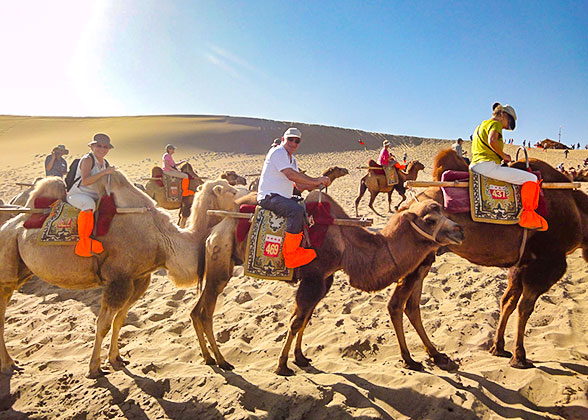
 Warm Reminders:
1. To tackle shifting sands, it is advisable to rent high-top shoe covers at the entrance and wear smooth-textured trousers, the latter of which can also keep your legs from rough saddlery on camels.
2. The area has no shade, so please slather on SPF 50 sunscreen, wear sunglasses, a sunhat, and a mask for all-around protection.
Next, your guide will show you around Shazhou Night Market after settling into a well-selected hotel nearby. Here, Dunhuang’s energy pulses with local delights, trendy bars, and delicate Silk Road artworks. After treating yourself to sun-kissed juicy fruits, crispy goldball onion beef pancakes, or a refreshing apricot juice, you can hang around cultural stalls to admire delicate felt camel dolls and intricate silk scarves. As the day wraps up, your guide and the driver will convoy you back to your hotel.
Accommodation: Tianrun Yibo Hotel (4 stars)
Gazing upon the rolling dunes, you’ll quickly think of camels that once traversed the ancient Silk Road, and we can’t let you miss the riding experience! Stagger on a Bactrian camel’s back to feel the hardship of ancient caravans while observing the sand in yellow, gold, and white hues when the light changes. Then, the Crescent Lake will crush into your eyes, a spiritual pillar in the arid desert. Formed by water seeping underground at two alluvial fans, the spring spills to create a harmonious coexistence of desert and spring, never being buried due to the low-lying terrain and whirling air currents. Once nearly suffering from drought, the spring gained its rebirth with clever engineering that prolongs the time for river water to seep into the ground.
Camel Riding at Echoing-Sand Mountain
Crescent Lake
Warm Reminders:1. To tackle shifting sands, it is advisable to rent high-top shoe covers at the entrance and wear smooth-textured trousers, the latter of which can also keep your legs from rough saddlery on camels.
2. The area has no shade, so please slather on SPF 50 sunscreen, wear sunglasses, a sunhat, and a mask for all-around protection.
Next, your guide will show you around Shazhou Night Market after settling into a well-selected hotel nearby. Here, Dunhuang’s energy pulses with local delights, trendy bars, and delicate Silk Road artworks. After treating yourself to sun-kissed juicy fruits, crispy goldball onion beef pancakes, or a refreshing apricot juice, you can hang around cultural stalls to admire delicate felt camel dolls and intricate silk scarves. As the day wraps up, your guide and the driver will convoy you back to your hotel.
Accommodation: Tianrun Yibo Hotel (4 stars)
Day 2 Jade Gate Pass - Great Wall of Han Dynasty - Yardang National Geopark
Meet Monks at the Mogao Caves
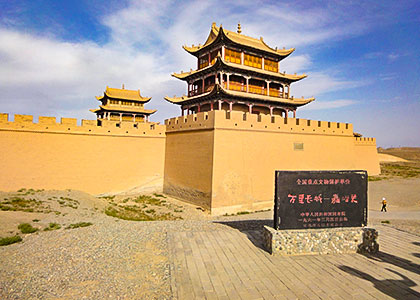
Then, let’s glimpse the Great Wall of Han Dynasty (206 BC - 220AD). Because Dunhuang lacks loess suitable for rammed earth, in contrast to the well-known Ming Dynasty (1368 - 1644 AD) Great Wall in Beijing built by bricks and stones, ancient craftsmen initially created a framework using local tamarisk and reeds, and then filled the interior with layers of gravel. To enhance stability, they placed reeds and soil as padding between each layer. The highly saline groundwater would solidify the gravel and make the structure incredibly strong. In addition to safeguarding the national territory, the Great Wall was extended beyond its borders, parallel to the Silk Road’s north route, to protect merchants and travelers from the potential threats of nomadic tribes.
After that, our trip will continue to Yardang National Geopark. Yardang landform is mainly caused by wind erosion, which has carved out layers of wrinkles on the mudstone strata, making the small hills appear in the shapes of walls, towers, columns, and ridges. Taking the scenic area’s sightseeing bus, you’ll watch the reclining lion, the proud peacock, the Sphinx, and the imposing fleet, all of which will run your imagination wild! Finally, enjoy a private transfer back to your hotel in Dunhuang.
Meal: Breakfast
Accommodation: Tianrun Yibo Hotel (4 stars)
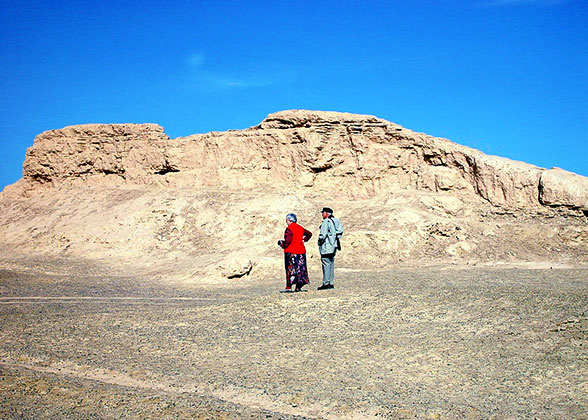
Great Wall of the Han Dynasty
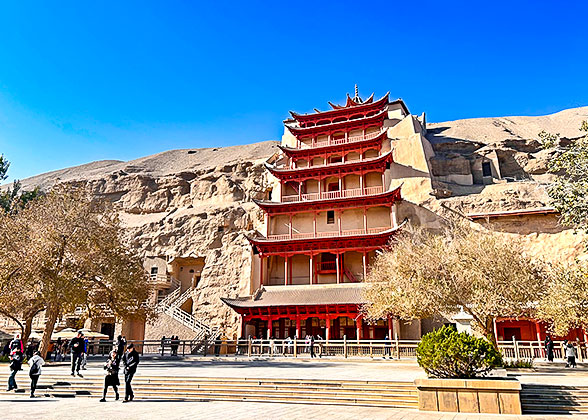
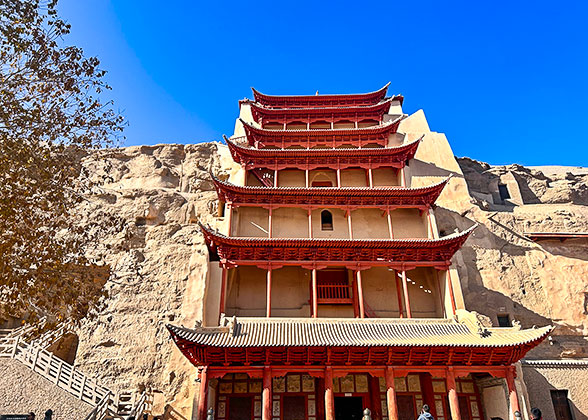
Mogao Grottoes
Day 3 Mogao Caves, Dunhuang Museum; Airport or Railway Station See-off
★ Mogao Caves: Eternal Buddhist Art
After the hotel pick-up in the morning, let’s visit the Mogao Caves. Nestled at a pivotal nexus of the Silk Road, Dunhuang was once a hub for ancient caravans traveling from Xi’an to Central Asia and Europe. Before traversing the unpredictable world’s second-largest desert, many merchants pool their resources to excavate caves and adorn them with vibrant murals here, seeking Buddha’s blessing for safe travels. Finally, 735 caves complete China’s largest Buddhist art trove. Our sightseeing begins with two 3D films that retell the rich history and detailed explanations about some caves, and then your guide will accompany you to 8 classic caves.► What Awaits You in the Caves?
1. Flying Apsaras. These ethereal celestial beings dance across the murals in continuous patterns, celebrating the Buddha’s sermons with instruments, flowers, and treasures.
2. Buddhist Stories. Sakyamuni’s past lives and lifetime, as well as stories about karma and retribution, are all depicted in stunning murals.
3. Sutra Transformation Paintings. They explain the core Buddhist teachings by images, used to deepen the audience’s understanding when monks propagated Buddhism.
4. Coffered Ceilings. Many of them still retain vibrant colors, with frequent patterns like lotus blossoms and honeysuckle, along with designs of grape and three rabbits sharing one ear that were introduced from Central Asia.
For Your Information: 1. Tickets for the Mogao Caves can be booked up to one month in advance, so please book this itinerary at least 30 days early due to its popularity.
2. Please note that taking photos is prohibited inside all caves to shorten visit time that may affect their colors due to carbon dioxide.
Our next stop will be the Dunhuang Museum, where the meticulously replicated Mogao Cave No.45 will compensate for your no-shooting pity. The various deities’ statues in dynamic poses decorate the dome, while two Bodhisattvas flanking the Sakyamuni Buddha showcase graceful curves. You can squat to capture them with a wide-angle lens, which can amplify the visual effect and sacred atmosphere.
Finally, your guide and the driver will escort you to the airport or railway station for your onward journey. Hope you enjoyed a pleasant time with us!
Meal: Breakfast
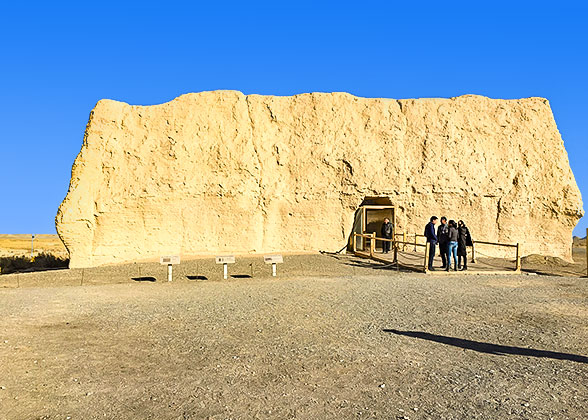
Jade Gate Pass
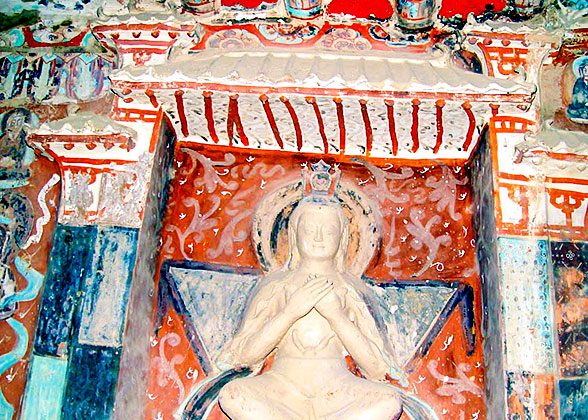
The Vivid Statue of Mogao Caves
Expand All
Collapse All
This trip can be customized to meet your individual needs!
Tour Prices 2026 & 2027
| 2-3 travelers | 4-5 travelers |
|---|---|
USD809 | USD579 |
- Prices are per person on twin sharing.
- If you are a group of 6 people or more, we will offer a more favorable price by your group size.
Price Includes
- Hotel accommodation with breakfasts
- Private English-speaking guide
- Private driver & air-conditioned vehicle
- Entrance fees to tourist sites
Price Excludes
- Airfares & train fares
- Entry visa fees
- Tips or gratuities for guide and driver
Itineraries you may also like: