Jinan Weather
What is Jinan Weather Like?
Temperature
 The Hottest Month in Jinan
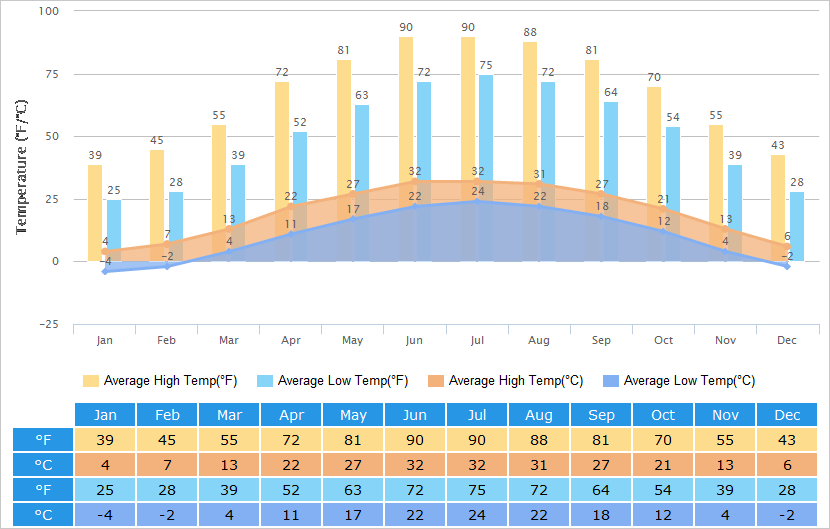
July with no doubt is the hottest month in Jinan with blistering and sweltering climate. When it’s sunny, without wind, it’s as hot as oven. Temperatures over 40°C are commonplace, while the perceived temperature is often 2 - 5°C (36 - 41℉) higher because of the burning sun. Even late at night or very early in the morning with the least heat waves, the temperature remains around 30°C (86℉). People cannot survive without air-conditioners.
The Coldest Month in JinanJanuary, defeats December with its extremely low temperatures. The lows may plummet to -10°C (14℉) or even lower and even the highs are below freezing. What’s more, Jinan experiences frequent northerly winds in winter, which howl and penetrate clothing, making the perceived temperature even lower. Stepping outside feels like entering a freezer and your frosty breath may ice up your scarves.
In stark contrast to the gelid weather, the hot spring water, which maintains a temperature of 18°C (64℉) year-round, never freezes and steams in the cold air of winter, showing a unique winter spectacle.
Precipitation & Humidity
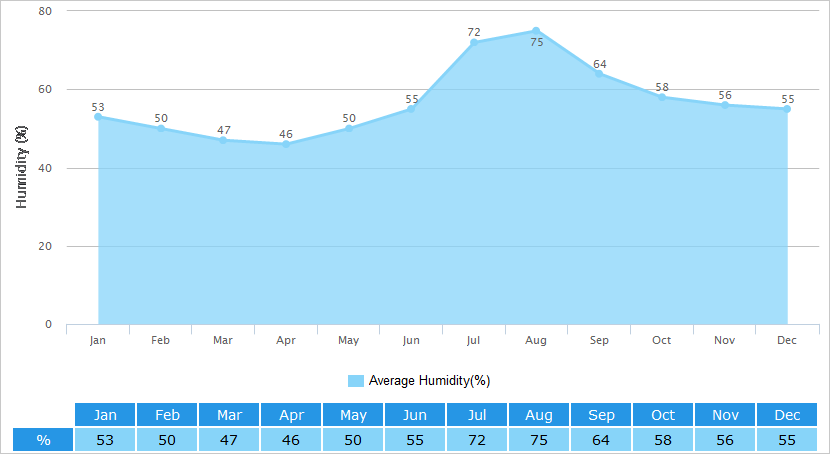
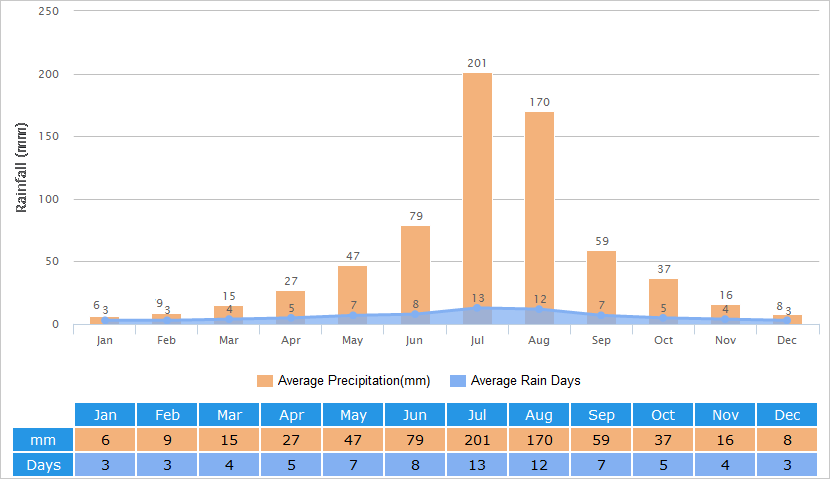
Consequently, humidity is also the highest in summer, often surpassing 80% on rainy days. However, unlike in southern cities in China, it won’t cause muggy weather and you may even feel dry on sunny days. Winter is the driest season, especially in indoor places with central heating. The dry air may cause nose-bleeding, a sore throat and even flaky skin and clothes develop a static easily. A humidifier only helps a little.
Does it Snow in Jinan?Yes, 2 - 3 snowfalls are expected from late November to February. One or two heavy snowfalls are anticipated and the snow melts after 3-5 days.
Abundant Sunshine All Year Round
The sun is never mean to Jinan. On average, Jinan enjoys an average of 7 to 8 hours of sunshine per day, around 2,500 hours annually. While summer receives frequent rainfall, the rain is short-lived and the sun shows up quickly. Winter does have several gloomy or foggy days, but mostly it’s sunny with clear skies. On most days, you hardly even see clouds.
Two periods: late March to May in spring and September to early November in autumn, based both on the weather and sceneries.
In terms of weather, both periods are neither too old nor too hot and the rainfall does not cause too many inconveniences to your trip. In summer from June to August, it’s so exhausting to beat the heat in summer that you could be in no mood to explore the city. In winter from December to February, the bitter wind blows into your clothes in extremely low temperatures and the city is not packed with things to do in this a little boring season. If you are eager to snow views, keep an eye on the weather forecast and try your luck.
In spring, flowers bloom in profusion and trees sprout at the time of hope, and the entire city comes alive. Cherry blossoms adorn the clear hot springs, creating a scene as beautiful as a cartoon. A boat trip on the moat is the best way to explore Jinan at this time.
In autumn, after the abundant rains in summer, the groundwater level reaches its peak, and famous springs such as Baotu Spring and Black Tiger Spring gush forth with their most powerful flow. Late October to early November is time for autumn foliage. The maple leaves in places like Red Leaf Valley and Thousand Buddha Mountain are ablaze, and the golden ginkgo leaves at Lingyan Temple and Baotu Spring Park swirl in the wind - this is the golden time for photography and sightseeing.
7-Day Jinan Weather Forecast
Jinan Weather by Month
Recommended Tours


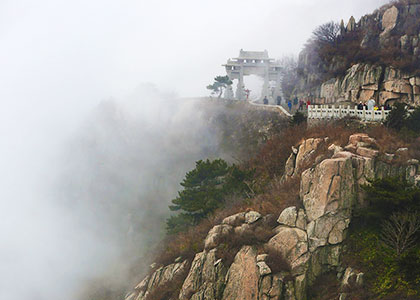
Jinan Weather - Seasons, Travel Advice, and Clothing Tips
Spring (Late March - May)
Jinan weather in Spring is mainly sunny with ample sunshine, but a little dry. Precipitation is low and rainy days are sparse, with seasonal rainfall accounting for about 100mm.
What to Pack to Visit Jinan in Spring
Clothes: a thick coat with a light sweater and insulating pants for March, a light jacket with shirts and jeans for April, shirts and sweatpants for May Shoes: comfortable sneakers or casual shoes Others: masks and antihistamines for allergy sufferers since flying catkins may trigger allergies.What to See in Spring in Jinan
Summer (June - August)
Rainfall is mostly in the form of torrential rain and thunderstorms, rapid and heavy, easily causing flooding on city streets. Fortunately, it usually doesn’t last long. Mid-July to mid-August is the rainiest period.
What to Pack
Clothes: your coolest summer clothes Shoes: sandals and slippers Others: sunhat, sunglasses and sun creamTravel Recommendation
Drink the spring water at Black Tiger Spring Park or on Quancheng Road to quench your thirst, and play water in Baotu Spring Park and Wulongtan Park to get some coolness. A vast area of lotus flowers at Daming Lake bloom in June. In the evening, enjoying a cup of tea brewed with spring water on Qushuiting Street is a unique Jinan chill time. Autumn (September - Early November)
The weather is predominantly sunny with high visibility, dry air, and light breezes. Rainfall is below average, mostly consisting of short-lived showers or scattered light rain, and becomes even scarcer after November.
What to Wear to Visit Jinan in Autumn
Shoes: lightweight sneakers, and hiking boots if you plan to climb mountains for admiring autumn leaves
Travel Recommendations
Autumn FoliageThe vegetation on Thousand Buddha Mountain and Fohui Mountain is ablaze with orange-red and golden hues. Golden ginkgo leaves in Lingyan Temple attract viewers and worshippers yearly.
Gushing SpringsDaming Lake ripples with golden waves in the gloam and the springs, free from the summer rains, appear even clearer. Baotu Spring, Pearl Spring, and Mo Spring, among others, reach their peak flow in October and November, gushing forth like boiling water. Autumn is one of the best seasons to visit Jinan.
Winter (Mid-November - February)
Precipitation is extremely scarce, accounting for only 30-70mm, primarily in the form of light to moderate snow, and dense fog occasionally appears in the early morning due to temperature inversions.
Travel Recommendation in Winter in Jinan
The springs like Baotu Spring, Black Tiger Spring and Pearl Spring never ice up and steam in the cold air and the groundwater are always been squeezed out to rich the spring pools. If you have extra days after visiting the iconic spring parks and Daming Lake, it can be a good choice to pay a visit to Jiuru Mountain. Icefalls and ice pillars cascade down like curtains. Among the icefalls, there are small houses encased in translucent ice crystals, like the dwellings of fairies in a snowy world. The fluffy vegetation is covered with snowflakes and you may also see soft rime on trees and branches. Frigid winter invites several snowfalls with sugar powder snow flakes. If you are lucky enough to come across a snowy day, the ancient buildings at Daming Lake and Mingshui Ancient Town wrapped with snow won’t disappoint you.What to Wear
Shoes: snow boots;
Others: a hat, a scarf and a pair of gloves; moisturizing face cream, lip balm and body lotion.
Averages for Jinan Weather
High/Low Temperatures of Jinan
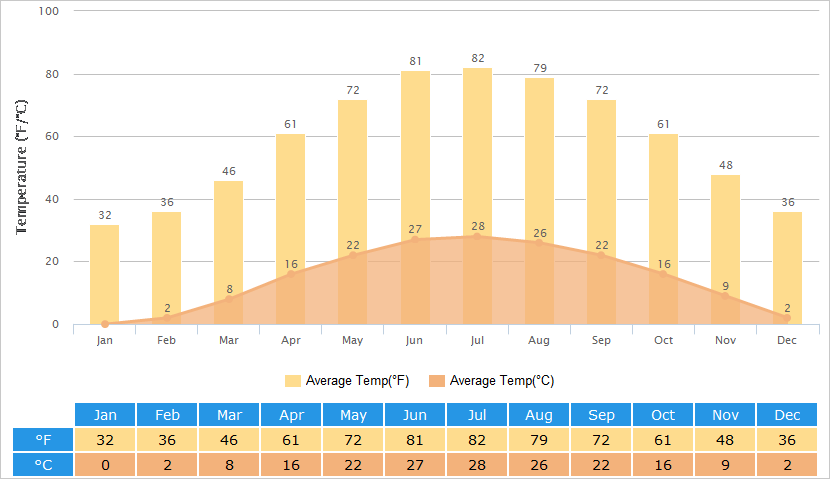
Average Temperatures of Jinan
Humidity Graph of Jinan
Average Rainfall of Jinan
Air Quality of Jinan
- Last updated on Jan. 23, 2026 by Gabby Li -