Xinjiang Travel Guide
Xinjiang Facts
Abbreviation: 新 (Xin)
Administration Type: Autonomous Region
Capital: Urumqi
Location: 34°25' to 48°10' N, 73°40' to 96°18' E
Climate: temperate continental arid/ semiarid climate
Average Annual Rainfall: 165.6 millimeter
Area: 1,664,900 km² (about 642,821 mi²)
Population (2019): 25,232,200
Major Ethnic Group: Uygur
 Area Code & Zip Code Weather
  Xinjiang Pictures Maps
Cities in Xinjiang
Recommended Xinjiang Itineraries
- Gobi Desert Adventure: 7 Days Private Tour of Urumqi - Turpan - Kumtag Desert - Urumqi - Kashgar
- South Xinjiang in Focus: 12 Days Private Visit of Urumqi - Turpan - Korla - Kuqa - Aral - Hotan - Kashgar
Famous Attractions
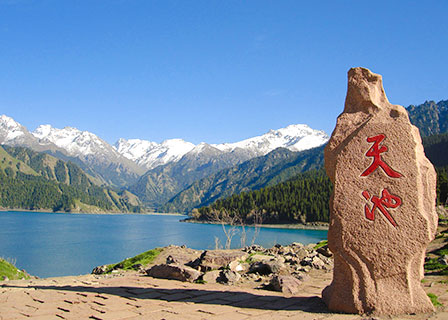
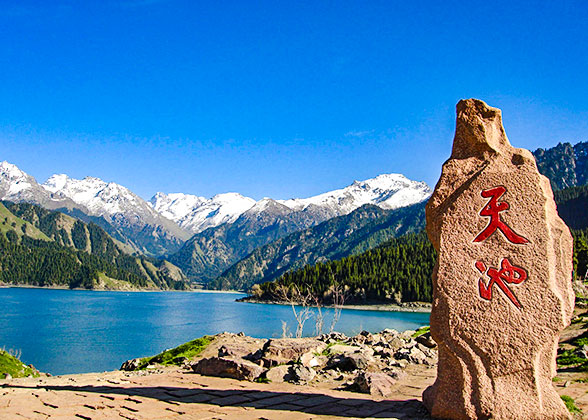 Heavenly Lake
 Silk Road
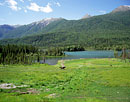 Kanas Reserve
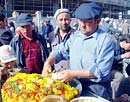 Kashgar Bazzar
 Grape Valley
 Xinjiang
 Ancient City
 Bayanbulak
 Kizil Thousand-
 Takla Makan Top 10 Things to Do in Xinjiang
Xinjiang Introduction
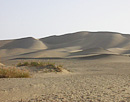
Xinjiang Uygur Autonomous Region is located in the central part of the Eurasian Continent, on the northwest border of China. It covers about one-sixth of the country's total territory, 1,664,900 square kilometers (about 642,821 square miles), making it the largest administrative division with also the longest land frontier and most neighboring countries in the country. However, only about 4.3% of its territory is habitable. The rest is mostly desert such as Gobi, snow-capped mountains and glaciers. China's largest desert, Takla Makan Desert, is in this region. But in these unpopulated areas are scattered some special landscapes and unique natural scenery like Flaming Mountains and Yadan Spectacle. Attractions
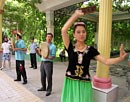
The region has a unique landscape which is called 'three mountains surrounding two basins'. These features are, from north to south, Altai Mountains, Dzungarian Basin, Tianshan Mountains, Tarim Basin and Kunlun Mountains. The Tianshan Mountains, in the middle, divides this Autonomous Region into two totally different parts - the north part and the south part. If the north part means mountains and grasslands like the Kanas Nature Reserve and Narat Grassland, the south part means desert and Gobi such as the Takla Makan Desert; if north part means a pasture-based culture, the south part means an agricultural society; if north part means fine horses and the sounds of singing, the south part means dances such as Mukamu (the most popular local dance). The capital city, Urumqi, is located in the north part. The city has many gorgeous landscape features such as Red Hill and Southern Pasture, as well as featured cultural relics like Tartar Mosque and Qinghai Mosque. Urumqi is also an important city along the world-famous Silk Road, an historically important international trade route between China and the Mediterranean, which extended as far as present-day Rome. Some other important cities in the Autonomous Region along the Silk Road include Kashgar and Turpan, which boast places of interest like the Id Kah Mosque, Karakuri Lake and Karez System. Xinjiang Weather & Best Time to Visit
Situated far from the sea and encircled by high mountains, Xinjiang has a typical continental climate with a low annual rainfall, long sunshine duration and a large diurnal temperature variation. These weather conditions are favorable for sugar accumulation in fruit, so the area is richly cultivated with fruit including melons. It is famous as a 'hometown of fruit and melons'. The most well-known fruit are grapes and honeydew melon. In general, winters are very cold, springs are often windy, and summers are extremely hot here. The best time to visit is early autumn, when the days are long, the sky is clear, and the temperature is more bearable. Another excellent reason to visit at that time is the abundance of delicious melons and fruits, which are available then.
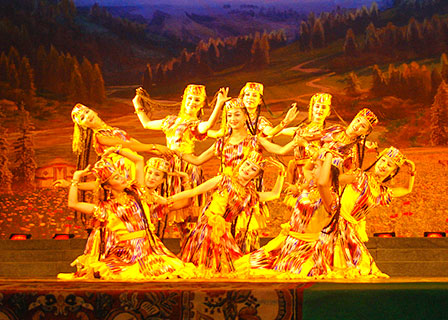
People & LifeXinjiang is hometown to 47 ethnic minorities, which together account for 60% of its total population. Of the 47 ethnic minorities, 13 are native, including the Uygur, the major ethnic group living here. The Uygur have their own language and religious belief, Islam. Their traditional clothes are long gowns called 'Qiapan'. As well, they wear small, beautifully embroidered hats called 'Duopa'. The main foods of the Uygur are Nang (a kind of crusty pancake) and hand-drawn noodles. Hand pilaf and roast meat are usually offered during festivals or to guests. Their roast mutton chop is famous all over the country and can be found in almost every city in the country. The Uygur residence is flat-topped with a skylight. Inside the residence, there are usually a fireplace and recess, the one used for cooking and keeping warm, while the other used for storing daily articles. Both the inside and outside of the residence are decorated with colorful ornamentation. The most famous traditional festivals of the Uygur are Rozah and Corban Festival. Rozah is the fast-breaking festival of the Islam, while the Corban Festival is the New Year's Day of the Islamic calendar. Last, but not least, the Uygur are very good at dancing and singing. Sainaimu is one of the most popular dances and their '12 Mukamu' is renowned as the 'treasure of eastern music'.