Nine-Dragon Cypress, Temple of Heaven
Planted in 1420, the 600-year-old Nine-Dragon Cypress stands as a living fossil among the ancient trees of the Temple of Heaven. In 2018, it was named one of Beijing’s “Top Ten Most Beautiful Tree Kings.”
Its name comes first and foremost from its striking appearance. Deep, vertical grooves run along its trunk, which are not carved by human hands, but formed naturally over centuries. These grooves divide the trunk into nine sinuous, twisting columns that coil upward like nine mythical dragons ascending together. This rare, lifelike texture is the result of centuries of uneven cell growth, transforming a simple evergreen into a dynamic work of natural artistry.
The name also carries profound cultural meaning. In imperial China, the dragon was the ultimate symbol of the emperor, the "Son of Heaven." The sight of nine "dragons" coiling toward the sky reinforced the monarch's supreme authority. In traditional Chinese numerology, nine is the highest single-digit number, representing totality, longevity, and supremacy. So, the “nine dragons” reinforce the sacredness, inviolability, and enduring stability of imperial rule.
The tree is also known as the “Nine Dragons Welcoming the Emperor”, a title said to have been bestowed by imperial decree.
The legend dates back over 200 years to a biting winter morning. Emperor Qianlong (1711-1799) had arrived at the Temple of Heaven for the Winter Solstice rites, which coincided with his 60th birthday. Even small animals were hibernating, yet just before the ritual began, nine snakes suddenly emerged from the ground at his feet. Though a fearless ruler, the emperor harbored a deep dread of serpents and ordered his guards to relocate them immediately.
After the ceremony, the guards reported something extraordinary: the snakes had leapt over a high wall, climbed to the base of an old cypress tree, and vanished. When Qianlong went to investigate, he found no burrow or opening, but nine deep, clear grooves had appeared on the trunk, mirroring the shapes of the snakes.
A quick-witted minister noticed the emperor’s unease and offered a graceful interpretation: “Your Majesty, these were no ordinary serpents. Today marks both the Heaven Worship Ceremony and your 60th birthday—the most auspicious of occasions. These are ‘young dragons’ sent by the ancient tree itself, emerging to welcome the Son of Heaven and share in your divine blessing.”
Relieved and deeply pleased, Qianlong officially named the tree the “Nine Dragons Welcoming the Emperor.”
To this day, many believe the tree still holds that quiet, enduring energy. Locals often say: if you press your palm flat against its trunk, you’ll feel a faint, cool breeze. This gentle and soothing "living breath" could draw all your stress and misfortune away. That’s why you’ll see many visitors standing in silent meditation before the tree, eyes closed and palms outstretched, seeking a moment of connection with history and nature.
You can visit the tree during the park's daily opening hours, without any separate tickets needed:
April–October: 6:00–22:00
November–March: 6:30–22:00
For the clearest views and fewest crowds, aim for early morning before 9:00 or late afternoon after 16:00.
Enter through the South Gate, then walk north along the Red Stairway Bridge. Pass the Echo Wall, and continue toward the Circular Mound Altar. You’ll reach the Nine-Dragon Cypress in about 15–20 minutes on foot. This route lets you experience key landmarks along the way while leading naturally to the tree.
|
|
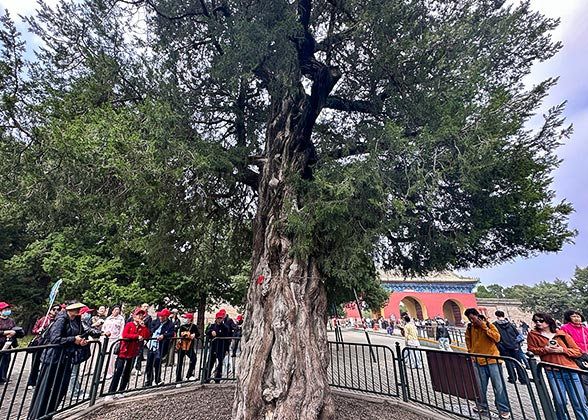
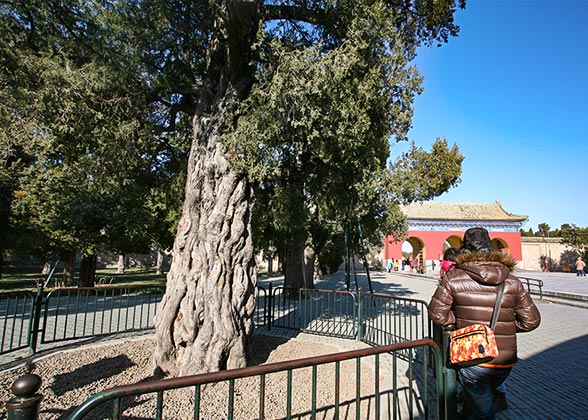
Its name comes first and foremost from its striking appearance. Deep, vertical grooves run along its trunk, which are not carved by human hands, but formed naturally over centuries. These grooves divide the trunk into nine sinuous, twisting columns that coil upward like nine mythical dragons ascending together. This rare, lifelike texture is the result of centuries of uneven cell growth, transforming a simple evergreen into a dynamic work of natural artistry.
The name also carries profound cultural meaning. In imperial China, the dragon was the ultimate symbol of the emperor, the "Son of Heaven." The sight of nine "dragons" coiling toward the sky reinforced the monarch's supreme authority. In traditional Chinese numerology, nine is the highest single-digit number, representing totality, longevity, and supremacy. So, the “nine dragons” reinforce the sacredness, inviolability, and enduring stability of imperial rule.
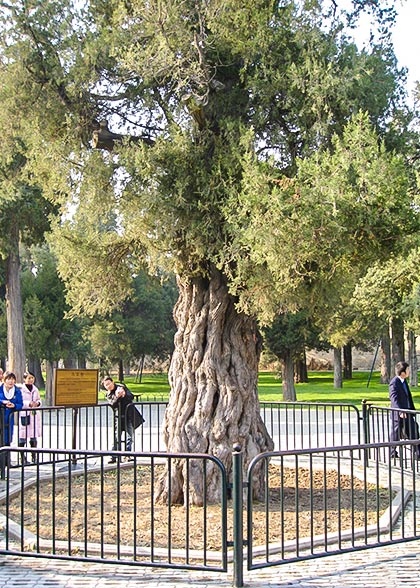 |
| Nine-Dragon Cypress |
The tree is also known as the “Nine Dragons Welcoming the Emperor”, a title said to have been bestowed by imperial decree.
The legend dates back over 200 years to a biting winter morning. Emperor Qianlong (1711-1799) had arrived at the Temple of Heaven for the Winter Solstice rites, which coincided with his 60th birthday. Even small animals were hibernating, yet just before the ritual began, nine snakes suddenly emerged from the ground at his feet. Though a fearless ruler, the emperor harbored a deep dread of serpents and ordered his guards to relocate them immediately.
After the ceremony, the guards reported something extraordinary: the snakes had leapt over a high wall, climbed to the base of an old cypress tree, and vanished. When Qianlong went to investigate, he found no burrow or opening, but nine deep, clear grooves had appeared on the trunk, mirroring the shapes of the snakes.
A quick-witted minister noticed the emperor’s unease and offered a graceful interpretation: “Your Majesty, these were no ordinary serpents. Today marks both the Heaven Worship Ceremony and your 60th birthday—the most auspicious of occasions. These are ‘young dragons’ sent by the ancient tree itself, emerging to welcome the Son of Heaven and share in your divine blessing.”
Relieved and deeply pleased, Qianlong officially named the tree the “Nine Dragons Welcoming the Emperor.”
To this day, many believe the tree still holds that quiet, enduring energy. Locals often say: if you press your palm flat against its trunk, you’ll feel a faint, cool breeze. This gentle and soothing "living breath" could draw all your stress and misfortune away. That’s why you’ll see many visitors standing in silent meditation before the tree, eyes closed and palms outstretched, seeking a moment of connection with history and nature.
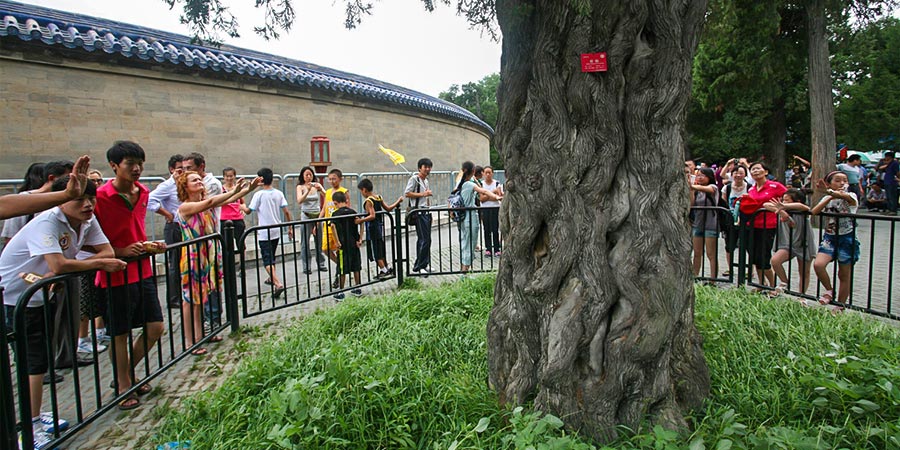 |
| Visitors putting palms closer to the tree. |
Best Time to Visit
April–October: 6:00–22:00
November–March: 6:30–22:00
For the clearest views and fewest crowds, aim for early morning before 9:00 or late afternoon after 16:00.
How to Get There
Recommended Tours


- Last updated on Jul. 15, 2026 by Jally Zhang -