Kind Reminder: Starting from the 15 November, 2026, individuals will not be allowed to possess or carry drones within Beijing area. For your smooth trip, we recommend that you do not bring drones when visiting Beijing.
Beijing, a city dating back to over 3,000 years ago, has a history of being the capital for more than 800 years. This results in a great number of ancient architectures here, and actually, it is the city with the largest number of World Heritage Sites. The Forbidden City where 24 emperors lived, the Great Wall that guarded the border for 2,000 years, the Summer Palace where the royal family spent leisure time, the Temple of Heaven where emperors prayed, and the hutong alleys filled with ordinary people... These sites vividly present the ancient world before global tourists.
As China's modern capital, the highlights of Beijing go beyond these ancient sites. The diverse Beijing cuisine, museums that house Chinese historical and cultural essence, world-famous universities, high-rise commercial buildings, various themed amusement parks, large science and technology exhibitions about AI products and robots... will definitely bring you much more experiences.
In addition, Beijing largely represents the "Impression of China" in tourists' minds. When talking about iconic symbols like "Chinese Red" or "Chinese Dragon", it is always the first place that comes to mind. On another note, it also boasts the country's most developed transportation network and excellent services. With all these unparalleled advantages, Beijing has been selected by most tourists as their first stop to explore China's charm.
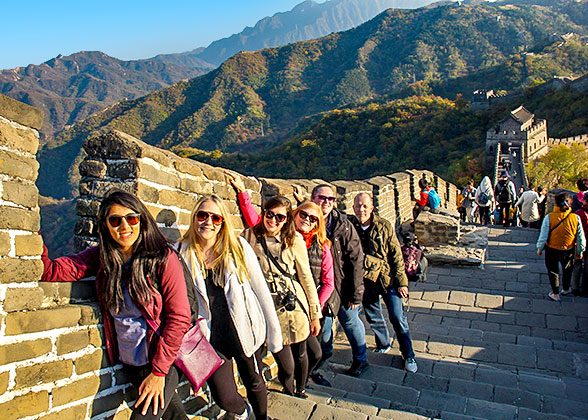
A classic Beijing tour would not be complete without three iconic attractions: the Forbidden City, Tiananmen Square, and the Great Wall. Forbidden City, an imposing "city-within-city", is consisted of more than 70 scarlet red palaces roofed with glorious yellow tiles. Once strictly "forbidden" for 600 years for imperial use, it now welcomes everyone to walk into the mysterious royal world. Tiananmen Square, the very place that held China's grand Founding Ceremony, displays the country's most important political buildings such as the Great Hall of the People. The Great Wall of China, a "slate gray dragon" winding for thousands of miles along the ridges to guard the country, is the world's greatest artificial defensive structure. If only with one day in Beijing, the three places are surely your best choices to visit.
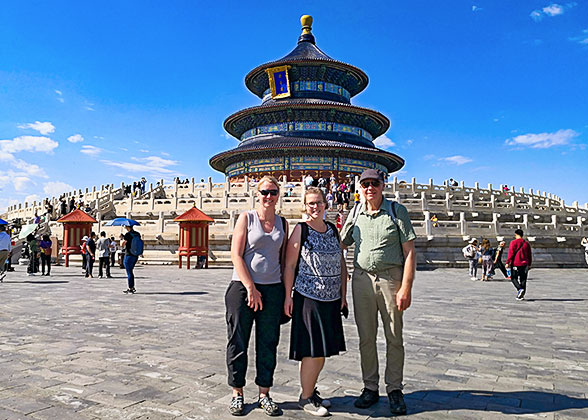
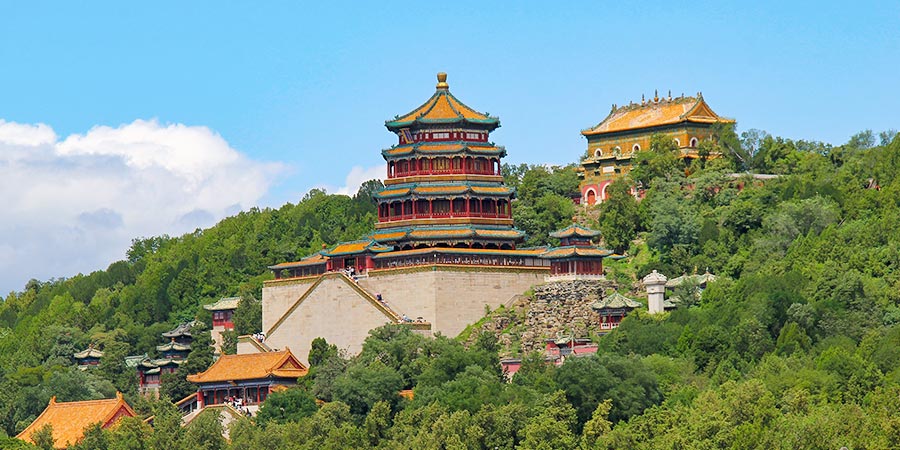
Many other places in Beijing are also worth to visit, and many of which used to be exclusively for the royals. Summer Palace, royals' favorite resort, provides vantage points to enjoy sceneries, no matter by taking a boat on the expansive cyan Kunming Lake, strolling along the intricately painted Long Corridor, or staying at the grand Buddhist Incense Tower on the emerald Longevity Hill. Temple of Heaven, the royal sacrificial altar, is famous for the main structure Hall of Prayer for Good Harvests with layered blue roof, standing elegantly and proudly like a giant umbrella towards the sky.
Buddhist Incense Tower, Summer Palace
While the ancient royal era is already past, Beijing's authentic daily life continues in the alleys of hutongs. The Beijing hutongs were formed since the 13th century, lined with quadrangle courtyards enclosed by gray walls. Walking in a hutong, you can see the most genuine scenes of local people going home from work, doing laundry, cooking, and chatting in the shade.
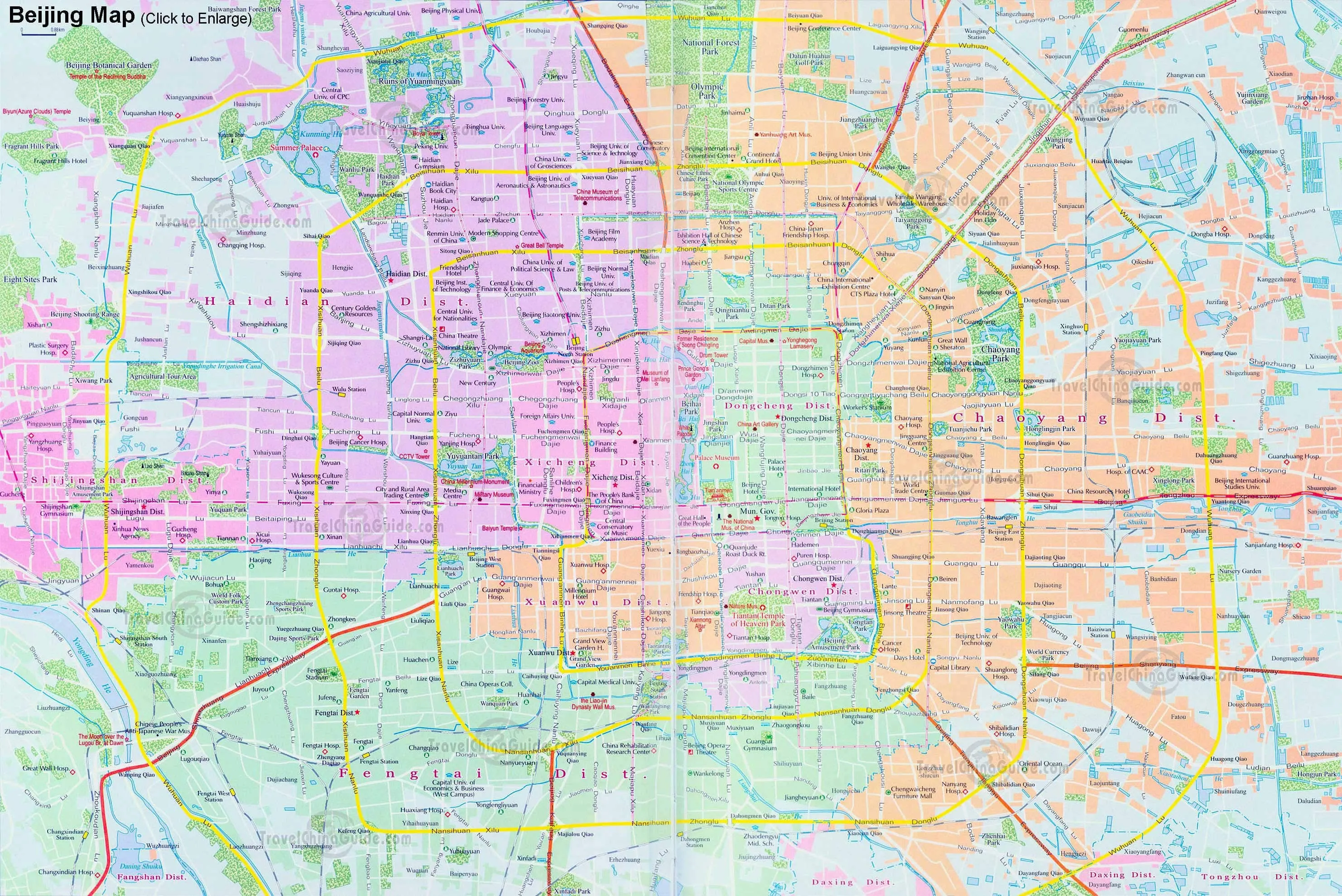
If you prefer a fast-paced travel or have limited time, spend at least three to four days in Beijing, and visiting two attractions a day and only observing the key attractions' highlights are recommended. The main reason is that Beijing is a large city with a wide distance between attractions, and each attraction is quite large in size. For instance, it takes at least one hour by subway from the Forbidden City to the Summer Palace. Even if you only visit the central axis of the Forbidden City or only observe the core Buddhist complex of the Summer Palace, it still takes at least three hours.
If you find the fast-paced journey a little exhausting and want more time to explore more details and immerse deeply, it is more suitable to stay in Beijing for five or six days.
Where to Stay in Beijing?
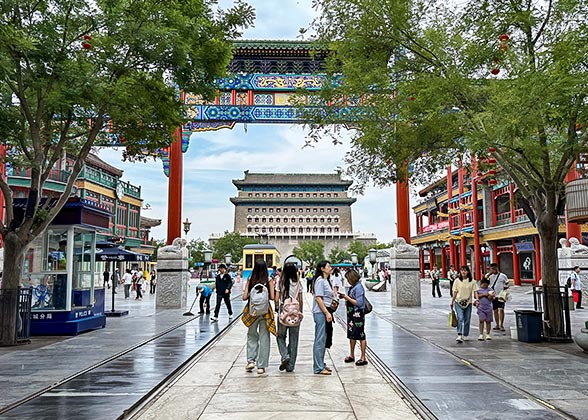
For first timers, it's best to stay near the Qianmen or Zhushikou subway stations. They are close to Tiananmen and the Forbidden City, and you can take subway lines 2, 7, and 8, saving both energy and ride time. There are also food streets near the subway stations, but the hotels might be a bit old. If with sufficient budget, consider staying near Wangfujing Street. There are various shopping malls, and it's only two subway stops away from Tiananmen and the Forbidden City, both convenient for sightseeing and shopping.
Qianmen Area, Beijing
Wangfujing Shopping Street
If you're not visiting the first time for the most popular attractions like the Forbidden City and Tiananmen, but instead for places like Universal Studios which are farther from the city center with limited transportation, it is recommended to stay just near the specific attractions you visit.
Beijing has an efficient and modern transportation network with foreigner-friendly services. Coupled with convenient mobile payment technology, traveling around is very easy.
How to Get to Beijing?
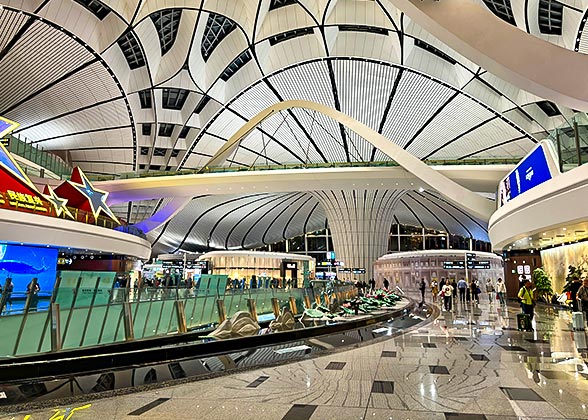
Most international travelers arrive in Beijing by plane. Beijing has two international airports. The international routes of Capital Airport mainly cover countries in Europe, America, Japan and South Korea. Passengers can fly directly from cities like New York, London, Tokyo and Seoul to Beijing. The international routes of Daxing Airport mainly cover countries in South America, Southeast Asia and East Asia. Tourists from places like Sydney, Melbourne, Singapore and Bangkok will land here when flying to Beijing. In terms of distance, Capital Airport is close to downtown, and it takes about 50 - 70 minutes by taxi to reach attractions like the Forbidden City in the city center.
Beijing Daxing International Airport
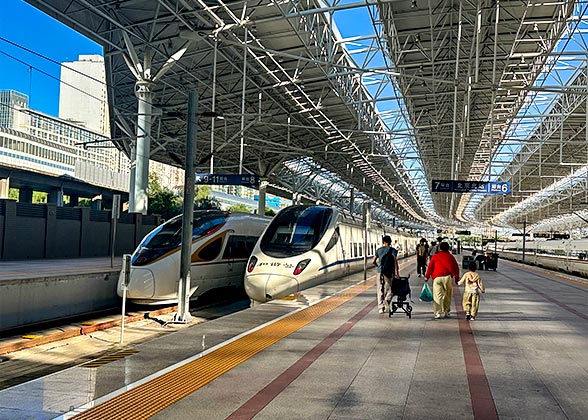
Beijing North Railway Station
If coming to Beijing from other cities in China, the high-speed rail is the best option. Taking high-speed rail from surrounding provinces like Tianjin to Beijing takes just 30 minutes to 1 hour, from Shanghai to Beijing it takes about 4 hours, and from Guangzhou and Chengdu to Beijing it takes about 7.5 hours. Additionally, the overnight sleeper train running between Beijing and Xi'an departs in the evening and arrives in the morning the next day, maximizing the time for sightseeing during the day.
How to Get Around Beijing?
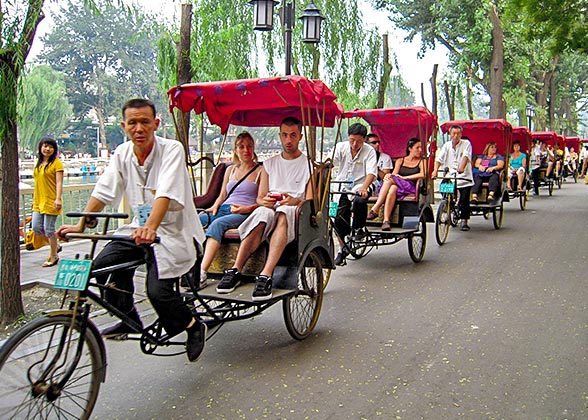
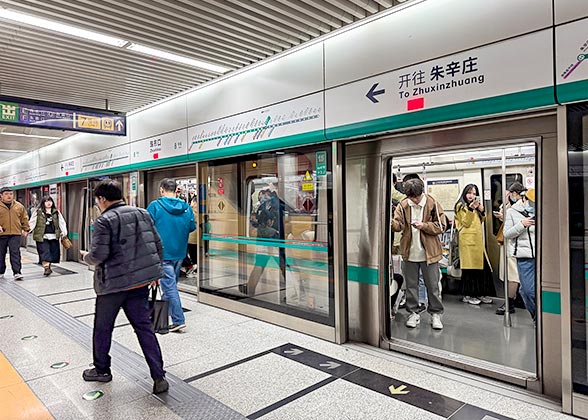
The Beijing subway network covers most tourist attractions. The fare starts at CNY 3. With no need to worry about traffic jams, it is the best choice for traveling the city. It is generally not recommended to take a taxi unless you are carrying large luggage or traveling at night, as it is very likely to get stuck in traffic in Beijing. When exploring hutongs, apart from walking, you can also ride the convenient shared bikes. For a more interesting experience, you can try the rickshaw. It can be a bit expensive, but has a distinct old Beijing style. For must-see attractions outside the city center, such as the Great Wall, you can choose public transportation like the tourist special lines.
Beijing has a temperate monsoon climate with distinct four seasons. The hottest month is July, with the highest temperature reaching above 35℃ (95℉). The coldest month is January, with an average temperature ranging from -9 to 2℃ (16 to 36℉). July and August are the months with the most rainfall, with almost two-thirds of the days being rainy.
Therefore, the best time for visiting Beijing is September to October and April to May, when the temperature is mild and there are more sunny days. Note that from early April to late May, there are usually a lot of willow and poplar pollen in Beijing. It is recommended to wear facial mask when going out to block the pollen and prevent allergies.
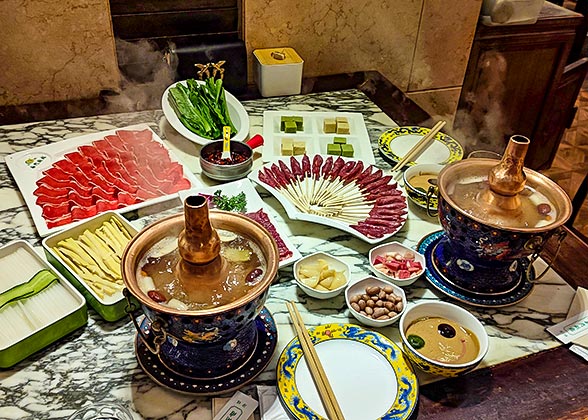
Beijing cuisine is mainly characterized by a savory and slightly sweet taste. The most famous dish is Beijing Duck. The duck is roasted until its skin is crispy and its meat is tender, while smoked with a faint aroma of fruitwood. Take a thin pancake, spread it with duck meat slices, add scallions and cucumber strips, and coat it with a secret sweet sauce. The taste is rich but not greasy. Beijing Copper Hot Pot is also renowned. Thin and fresh lamb is quickly cooked in the hot pot with boiled clear water, then taken out and dip in sesame sauce, which will instantly satisfy your taste buds with only one bite. The Fried Sauce Noodles, an essential staple food for Beijingers, have an intense paste sauce flavor, paired with vegetables like cucumber to add a refreshing taste.
Beijing Roast Duck
Beijing Copper Hot Pot
The imperial pastries in Beijing, such as Pea Flour Cake, kidney bean rolls, and Glutinous Rice Rolls with Sweet Bean Flour, are also not to be missed. They have a soft and delicate texture, moderate sweetness, and are not greasy. Additionally, you can try Beijing-style Fermented Mung Bean Drink, or Douzhir. Its peculiar taste will surely bring you a "surprise".
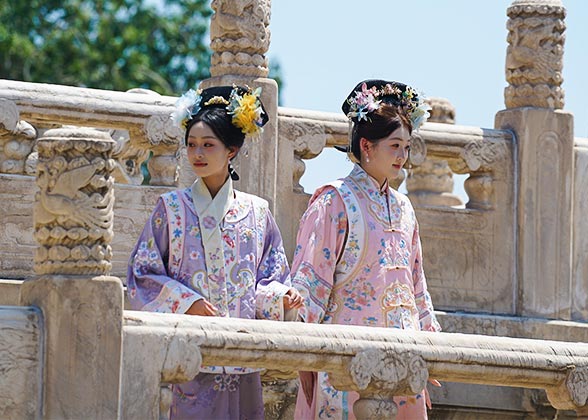
Getting glammed up in Qing-style traditional costumes has become a "must-do" activity for Beijing visitors. You'll see "Chinese ancients" of all skin colors almost everywhere when wandering in Beijing. Dress up as any character you like, no matter it is the "emperor", "empress" or "princess". This "cosplay" not only changes your appearance, but brings you back to the faded empire, especially when visiting the Forbidden City or Summer Palace. If you seek more fun, attend an "imperial banquet", a popular dining experience which recreates the scene that the emperor and empress celebrate a festival. You will be "treated" with exquisite imperial cuisine following a royal ritual, and watch the court dance at the meantime.


 Kind Reminder:




 Shopping in Beijing