Lingjing Hutong
Located southwest to the city center, Lingjing Hutong is a residential area known for its broad main street. To many first-time visitors, it might simply look like an urban avenue, where old courtyards, plain apartment blocks, and modern hotels stand side by side, creating a mix that feels more like a somewhat haphazard street than a quaint old Beijing lane. In fact, this "messiness" is preserved deliberately to show Beijing's change honestly. If you believe a city's soul lies not only in its polished attractions, but also in the real, lived-in corners of its everyday streets, then welcome to Lingjing Hutong.
To understand Lingjing Hutong, start with its historical role. Situated between the imperial Forbidden City and the vibrant markets during the Ming and Qing dynasties (1368-1911), it uniquely functioned as a zone serving both the royal court and the city's residents.
In the Ming Dynasty (1368-1644), the lane was named Miraculous Salvation Taoist Temple, Lingji Gong in Chinese. Its origin story is straight out of a legend. In 1417, Emperor Yongle (1360-1424) fell gravely ill. In a dream, two Taoist immortals offered him a prescription. Upon waking, he took the medicine and recovered. Grateful, the emperor ordered the construction of a magnificent Taoist temple on this site, naming it "Miraculous Salvation."
The temple flourished, attracting streams of officials and nobility. On the first and fifteenth days of the lunar month and during solar terms, imperial ministers would come to offer incense. High-ranking officials even held lectures here. For a time, it was a prestigious center of both spirituality and power.
However, in 1642, a minister petitioned Emperor Chongzhen (1611-1644), claiming the temple's deities were sons of a traitor and shouldn't be worshipped. The emperor agreed, ordering the statues veiled and ceremonies stopped. The temple's golden age came to an end.
As the temple declined, the area transitioned into a prestigious residential neighborhood, favored by those connected to the imperial court. One of its famous residents is Chen Baochen, the tutor of China's last feudal emperor, Puyi (1906-1967). Residing at what is now No. 33, Chen would walk to the Forbidden City daily in his long robe, fan in hand, to give the young emperor his lessons. Puyi revered him deeply, calling him his "true soul."
After the Qing Dynasty fell in 1911, the hutong's name evolved from "Lingji" to the similar-sounding "Lingjing," and it welcomed more commoners to reside in. By the 1950s, it was also home to notable figures like General Chen Geng, a founding hero of modern China. Old-timers fondly recall the general as a friendly neighbor who would chat with locals on summer evenings, his warmth leaving a lasting impression.
By the late 20th century, Beijing was transforming into a modern metropolis, and its streets had to keep up. Straddling the zone between the city center and the booming Xidan commercial district, Lingjing Hutong was a crucial link. To ease traffic, the once-narrow lane was widened, earning its nickname "Beijing's Widest Hutong."
When a centuries-old hutong is widened into a two-way street, does it lose its soul and become just another road with a quaint name?
The answer is "No". In fact, the city has taken great care in recent years to preserve its historical character. Instead of erasing the past, Lingjing Hutong openly displays it. Here, architecture from different eras stands side-by-side like chapters in a history book, telling the story of Beijing's evolution from an imperial capital to a modern metropolis.
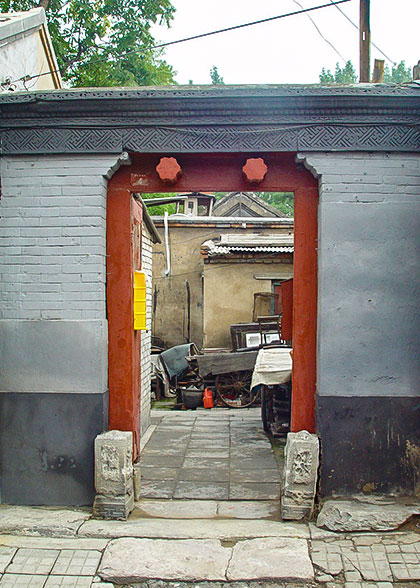
Tucked away behind walls or hiding in narrow side lanes, you'll spot traditional courtyard housess that once home to wealthy or well-connected ones. Look for their sloping gray-tiled roofs, subtle carved doorframes, and sometimes, a painted screen wall inside the entrance. They whisper a time when this neighborhood was filled with officials, scholars, and those who served the Forbidden City just to the east.
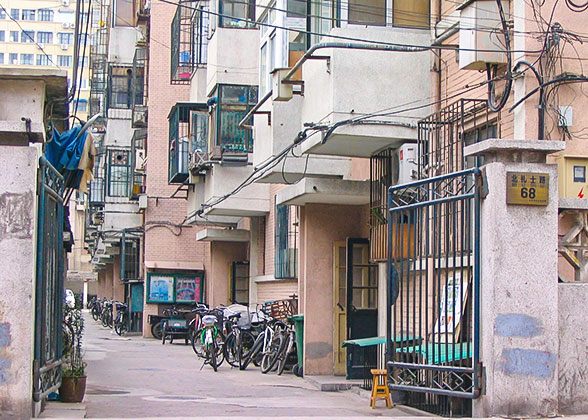
After China's reform and opening-up, Beijing needed more housing. Therefore, more and more simple, practical brick apartment blocks were built here. These unassuming buildings, often with small balconies draped with laundry or plants, represent Beijing's transformation into modernization. They're home to generations of Beijingers. Many residents have lived here since these buildings went up. This is still very much a lived-in neighborhood.
Look up towards the southern end, near the Xidan commercial district, and you'll see the glass-and-steel facades of modern hotels and shopping malls. These structures reflect Beijing's explosive economic growth and its embrace of global architecture, a reminder of the city's dynamic present.
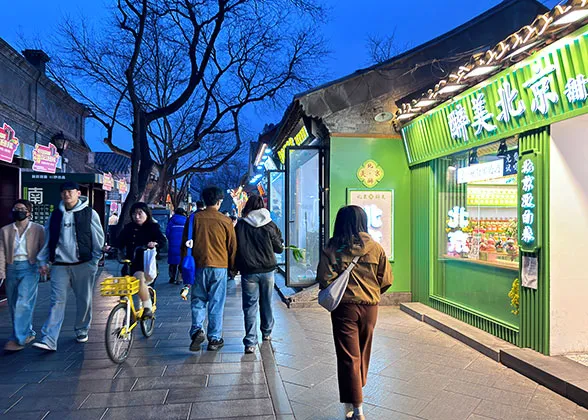
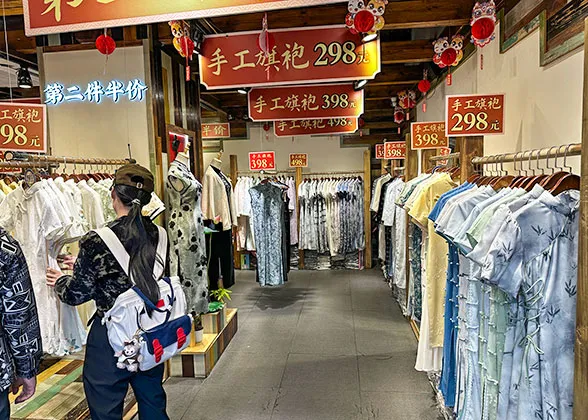
While the buildings tell the history, its daily life is also captivated. In the morning, the wide main road awakens with the steady flow of cars, electric scooters, and buses. Step into the quieter side lanes, and you'll see parents cycling with kids on the back seat headed to school, and small shop fronts open, displaying fruits, local fried snacks, and daily goods. Young people hurry towards the Lingjing Hutong subway station to start their commute.
As evening falls, the traffic quiets, and under the glow of soft street lamps, Lingjing Hutong settles into a peaceful calm. Warm light spills from the windows of those old courtyard houses. The fast pace of the modern city gives way, and for a moment, with the silhouettes of grey brick and tile against the night sky, the lane feels timeless as it might have on a quiet evening a century ago. This seamless blend of daily hustle and historic tranquility is the authentic, living pulse you're here to find.
If you're staying nearby, this is the ideal spot for a morning or evening stroll around the neighborhood and soak in the local life. In addition, its broad, flat main street and surrounding area are ideal to explore by bicycle at your own pace. And if your trip includes Xidan Commercial Street, just a 10-minute walk north will bring you here to feel the contrast between the bustling markets and serene living quarters.
Click the links to know more Beijing Hutong, Famous Hutongs, Hutong Pictures
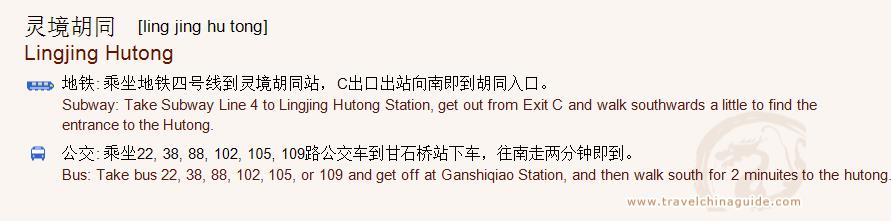
Line 4: Exit at Lingjing Hutong Station (Exit C) for direct access to the eastern section.
Line 19: Exit at Taipingqiao Station (Exit A) and walk approximately 10min to the western entrance.
Take Bus 38/46/68 to Bicai Hutong East Entrance or Bus 68 to Lingjing Hutong Stop.
|
|
Lingjing Hutong History: From Royal Temple to "Widest Hutong"
To understand Lingjing Hutong, start with its historical role. Situated between the imperial Forbidden City and the vibrant markets during the Ming and Qing dynasties (1368-1911), it uniquely functioned as a zone serving both the royal court and the city's residents.
In the Ming Dynasty (1368-1644), the lane was named Miraculous Salvation Taoist Temple, Lingji Gong in Chinese. Its origin story is straight out of a legend. In 1417, Emperor Yongle (1360-1424) fell gravely ill. In a dream, two Taoist immortals offered him a prescription. Upon waking, he took the medicine and recovered. Grateful, the emperor ordered the construction of a magnificent Taoist temple on this site, naming it "Miraculous Salvation."
The temple flourished, attracting streams of officials and nobility. On the first and fifteenth days of the lunar month and during solar terms, imperial ministers would come to offer incense. High-ranking officials even held lectures here. For a time, it was a prestigious center of both spirituality and power.
However, in 1642, a minister petitioned Emperor Chongzhen (1611-1644), claiming the temple's deities were sons of a traitor and shouldn't be worshipped. The emperor agreed, ordering the statues veiled and ceremonies stopped. The temple's golden age came to an end.
 |
| Traditional Courtyard Home |
As the temple declined, the area transitioned into a prestigious residential neighborhood, favored by those connected to the imperial court. One of its famous residents is Chen Baochen, the tutor of China's last feudal emperor, Puyi (1906-1967). Residing at what is now No. 33, Chen would walk to the Forbidden City daily in his long robe, fan in hand, to give the young emperor his lessons. Puyi revered him deeply, calling him his "true soul."
After the Qing Dynasty fell in 1911, the hutong's name evolved from "Lingji" to the similar-sounding "Lingjing," and it welcomed more commoners to reside in. By the 1950s, it was also home to notable figures like General Chen Geng, a founding hero of modern China. Old-timers fondly recall the general as a friendly neighbor who would chat with locals on summer evenings, his warmth leaving a lasting impression.
By the late 20th century, Beijing was transforming into a modern metropolis, and its streets had to keep up. Straddling the zone between the city center and the booming Xidan commercial district, Lingjing Hutong was a crucial link. To ease traffic, the once-narrow lane was widened, earning its nickname "Beijing's Widest Hutong."
Lingjing Hutong Today: Still Worth a Visit?
When a centuries-old hutong is widened into a two-way street, does it lose its soul and become just another road with a quaint name?
The answer is "No". In fact, the city has taken great care in recent years to preserve its historical character. Instead of erasing the past, Lingjing Hutong openly displays it. Here, architecture from different eras stands side-by-side like chapters in a history book, telling the story of Beijing's evolution from an imperial capital to a modern metropolis.
What to See at Lingjing Hutong: A Walk Through Beijing's Timeline
Old Quadrangle Courtyards – Glimpses of Imperial Beijing
Tucked away behind walls or hiding in narrow side lanes, you'll spot traditional courtyard housess that once home to wealthy or well-connected ones. Look for their sloping gray-tiled roofs, subtle carved doorframes, and sometimes, a painted screen wall inside the entrance. They whisper a time when this neighborhood was filled with officials, scholars, and those who served the Forbidden City just to the east.
6-Story Walk-ups – 1980s' Communal Home
 |
| Apartment Blocks |
After China's reform and opening-up, Beijing needed more housing. Therefore, more and more simple, practical brick apartment blocks were built here. These unassuming buildings, often with small balconies draped with laundry or plants, represent Beijing's transformation into modernization. They're home to generations of Beijingers. Many residents have lived here since these buildings went up. This is still very much a lived-in neighborhood.
Malls & Hotels – 2000 s' Commercial Boom
Look up towards the southern end, near the Xidan commercial district, and you'll see the glass-and-steel facades of modern hotels and shopping malls. These structures reflect Beijing's explosive economic growth and its embrace of global architecture, a reminder of the city's dynamic present.
What to Feel at Lingjing Hutong: Rhythm of Everyday Life
While the buildings tell the history, its daily life is also captivated. In the morning, the wide main road awakens with the steady flow of cars, electric scooters, and buses. Step into the quieter side lanes, and you'll see parents cycling with kids on the back seat headed to school, and small shop fronts open, displaying fruits, local fried snacks, and daily goods. Young people hurry towards the Lingjing Hutong subway station to start their commute.
As evening falls, the traffic quiets, and under the glow of soft street lamps, Lingjing Hutong settles into a peaceful calm. Warm light spills from the windows of those old courtyard houses. The fast pace of the modern city gives way, and for a moment, with the silhouettes of grey brick and tile against the night sky, the lane feels timeless as it might have on a quiet evening a century ago. This seamless blend of daily hustle and historic tranquility is the authentic, living pulse you're here to find.
If you're staying nearby, this is the ideal spot for a morning or evening stroll around the neighborhood and soak in the local life. In addition, its broad, flat main street and surrounding area are ideal to explore by bicycle at your own pace. And if your trip includes Xidan Commercial Street, just a 10-minute walk north will bring you here to feel the contrast between the bustling markets and serene living quarters.
Click the links to know more Beijing Hutong, Famous Hutongs, Hutong Pictures
How to Get There
Subway
Line 4: Exit at Lingjing Hutong Station (Exit C) for direct access to the eastern section.
Line 19: Exit at Taipingqiao Station (Exit A) and walk approximately 10min to the western entrance.
Bus
Take Bus 38/46/68 to Bicai Hutong East Entrance or Bus 68 to Lingjing Hutong Stop.
- Last updated on Apr. 30, 2026 by Jally Zhang -