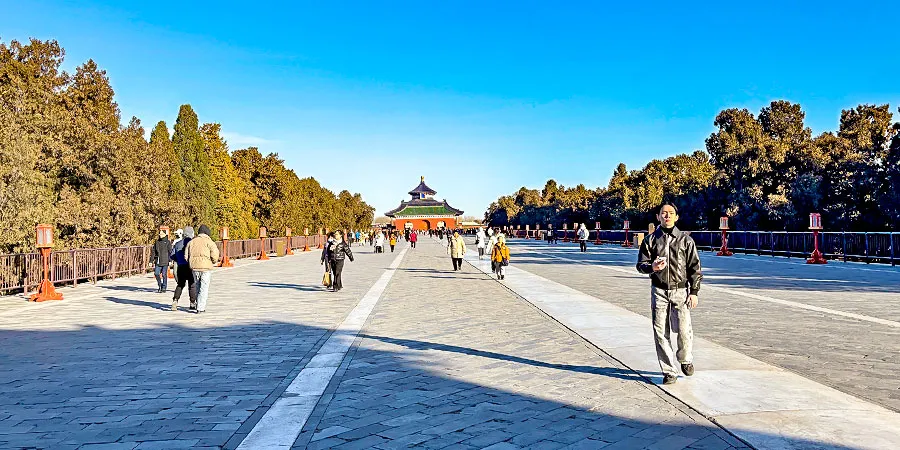
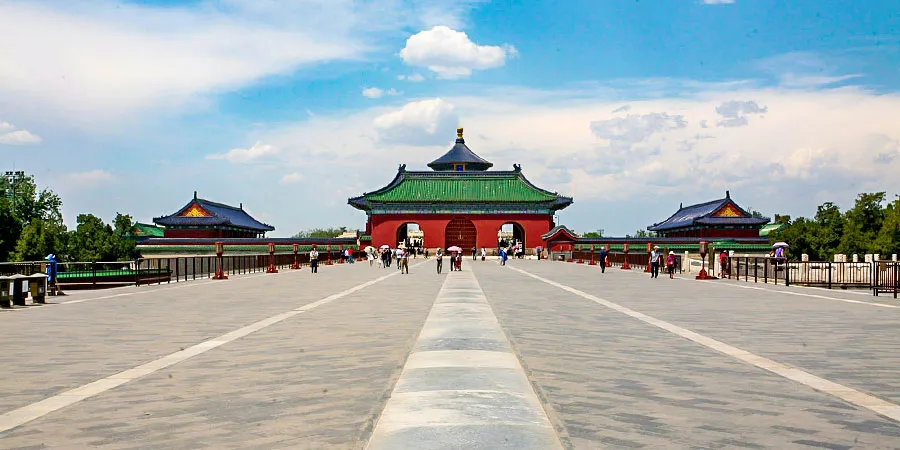
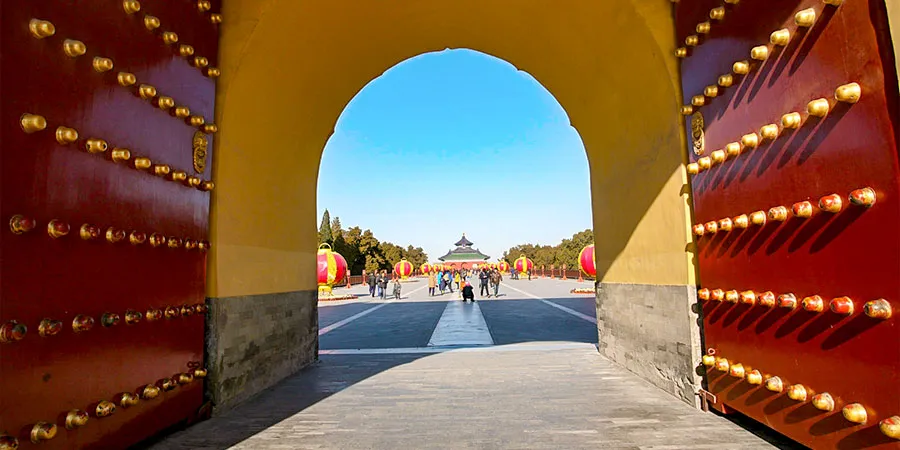
The Red Stairway Bridge is a 360-meter-long (394 yards) and 29-meter-wide (32 yards) grand avenue on the central axis of the Temple of Heaven, serving as the main path for ancient emperors during worship rituals.
Red Stairway Bridge
When & Why Built – Red Stairway Bridge History
The Bridge was constructed in 1420 to facilitate the passage of the emperor and the imperial procession during sacrificial ceremonies. This broad, white brick-and-stone avenue is named "Red Stairway" because, according to ancient Chinese palace protocols (1000-200 BC), the steps before the emperor’s palace were painted with red cinnabar. The "red stairway" thus symbolized the emperor’s supreme authority, a fitting name for a bridge built exclusively for imperial use.
Originally, the bridge spanned over 420 meters (459 yards). In 1538, during the expansion of the Imperial Vault of Heaven, the bridge was shortened to its present length.
Architectural Highlights of Red Stairway Bridge
A Sloping Design for "Ascending to Heaven"
Traveling north from the bridge's southern end, you’ll experience a gradual ascent. This is because the bridge was intentionally designed with its northern end 4.5 meters (15 inches) higher than the southern end. Ancient thought held that dignitaries and deities faced south while those of lower status faced north. As the emperor was considered lower than the Heavenly Deity, he had to walk from south to north to show respect.
See the Bridge's Slope from South
Three Paths for a Hierarchical Order
The bridge deck is divided into three distinct paths of varying materials and elevations. The central path, the Deity Way, is paved with raised white stone, forming a gentle arc. Slightly higher and wider than the others, this was the exclusive route for the divine palanquin during ceremonies. To its east lies the Imperial Way, reserved solely for the emperor. The western path, the Royal Way, was for princes and high-ranking court officials.
The Underpass: A Precursor to the Chinese Overpass
Beneath the Red Stairway Bridge runs a tunnel, reminiscent of modern overpasses, leading some to call it China’s earliest overpass. However, this tunnel has a grim nickname, "Gate of Ghosts". Livestock like cattle, sheep, and pigs were bound with yellow flannel and fish were carried in wooden basins, all passing through the passage before being sacrificed, a journey from which none returned, hence the ghostly name.
Red Stairway Bridge
Auxiliary Structures: Dressing Terrace & Gate of Sixty
To the east of the bridge stands a square brick platform enclosed by carved stone railings on three sides. This is the Dressing Terrace, where the emperor would change into ceremonial attire. During the prayer ceremony, a circular tent, draped in yellow silk and known as the "Little Golden Palace", would be erected here. It was fully equipped with a throne and table, with charcoal braziers and heated beds added for warmth during the cold months. During the Ming Dynasty (1368-1644), the emperor would remove his shoes and walk on the brown carpeted Red Stairway Bridge, to ensure no dust was carried onto the sacred altar.
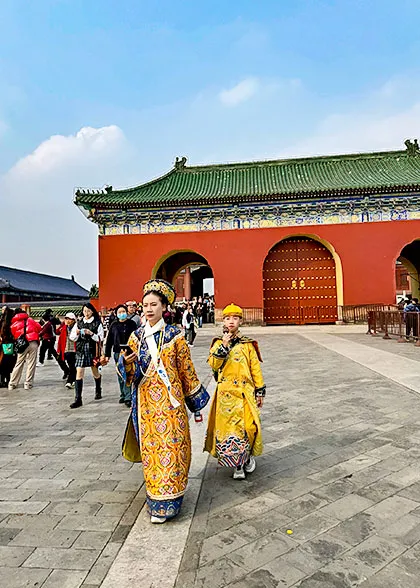
At the bridge's northwest end, you'll see the Gate of Sixty, adorned with colorful glazed paintings. In 1772, at the age of 62, Emperor Qianlong (1711-1799) found the long walk across the Bridge physically taxing. To reduce his fatigue during ceremonies, this gate was constructed, allowing him direct access to the Hall of Prayer for Good Harvests without traversing the entire bridge, hence its name "Gate of Sixty".
Questions You May Ask about the Red Stairway Bridge
Can I visit the Red Stairway Bridge?
Vistors Walking on the Bridge
Today, the Red Stairway Bridge is a public walkway open to all. Visitors can stroll along it at their leisure. The Gate of Sixty on the northwest side is also open for tourist access. The Dressing Terrace can be viewed from behind a railing, while the tunnel beneath the bridge is sealed and not open to the public.
Where is the Bridge? How can I get there?
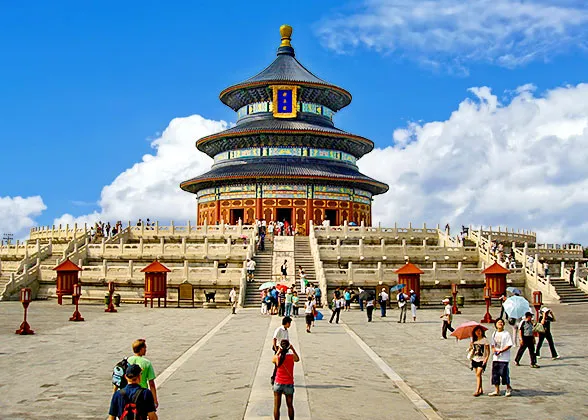
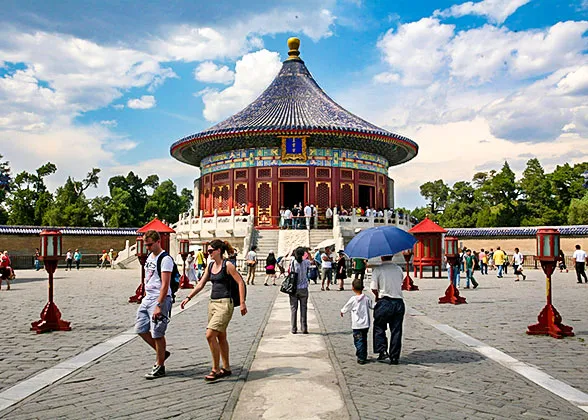
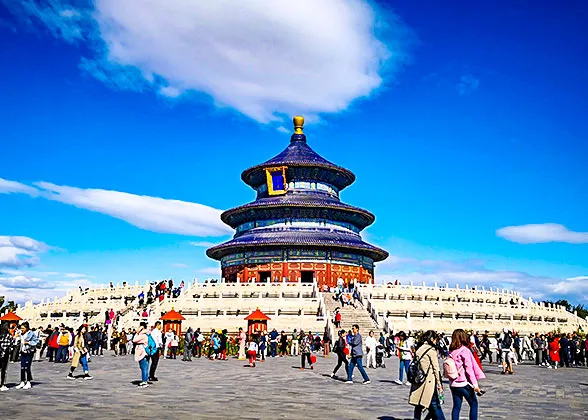
The Red Stairway Bridge is situated between the Hall of Prayer for Good Harvests and the Imperial Vault of Heaven. It is closest to the East Gate, from which it is approximately a 14-minute straight walk to reach the Bridge.
Do I need to buy a ticket for the Bridge?
Visiting the Red Stairway Bridge requires only the general admission ticket to the Temple of Heaven Park. The fee is CNY 15 from April to October and CNY 10 from November to March.