Beacon towers were elevated platform structures erected along the Great Wall’s defensive perimeter to transmit military communications. As a critical component of the Great Wall’s defense system, they served as the earliest form of telegraph in ancient China. In the event of an enemy incursion, smoke signals were sent during daylight and fire signals ignited after dark, enabling soldiers hundreds of miles away to receive up-to-date battlefield intelligence immediately. In ancient times, smoke rising from a beacon tower meant imminent war; local feudal lords would respond swiftly, mobilize their troops, and march to the defense. The largest existing beacon tower is
Zhenbeitai in Yulin, Shaanxi Province.
The Construction and Location of Beacon Towers
Beacon towers across different regions and terraces vary in shape, including circular, square, trapezoidal, and conical forms, though most are square or circular. Building materials and techniques also differ by locality: some are hollow, others solid. Construction typically relied on local resources: in the northwest, they were mostly rammed earth; in mountainous areas, stone blocks were commonly used. From the
Ming Dynasty (1368 - 1644) onward, more beacon towers were built with brick and stone.
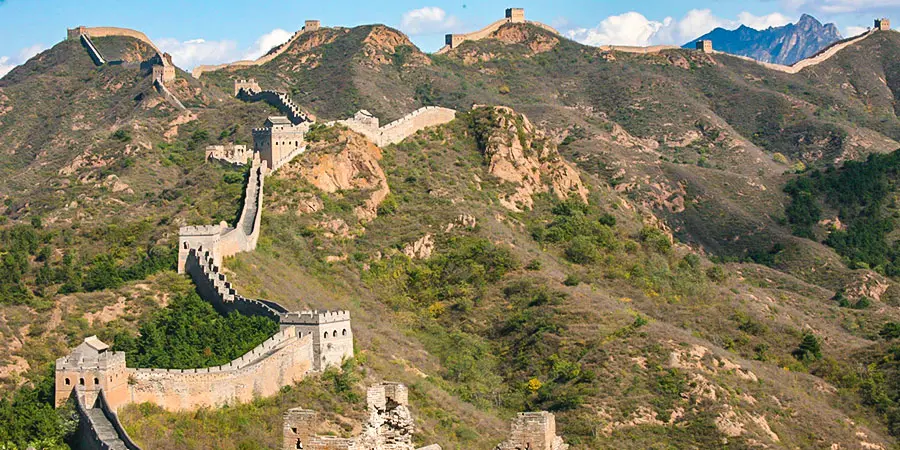
Beacon towers were generally distributed horizontally along the outer side of the Great Wall and vertically inland toward garrisons and the capital. They were placed roughly every 10 kilometers (6 miles), preferably on high ground in mountainous terrain. If the terrain was not high enough, there would be more beacon towers, and their distribution would be denser. To ensure rapid transmission, towers had to be positioned within unobstructed line of sight. Particularly in border zones, additional fortifications were built near beacon towers to secure reliable communication.
How Did Beacon Towers Help Deliver Military Messages?
The signaling codes for beacon fires differed across dynasties. Let's take the
Han Dynasty (202 BC - 220 AD), when the beacon fire code system was mature, as an example. In the Han Dynasty, there were generally six types of beacon fire signals, some for the daytime, some for the night, and some for both. Moreover, there were strict regulations for the transmission of beacon fire signals. If the wrong signal was sent, it would result in the loss of troops and horses.
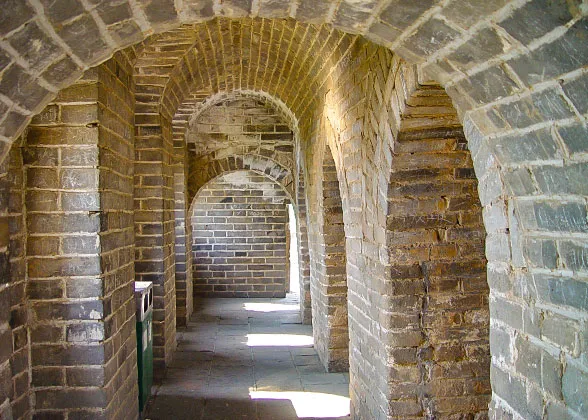 | | Great Wall Beacon Tower | | 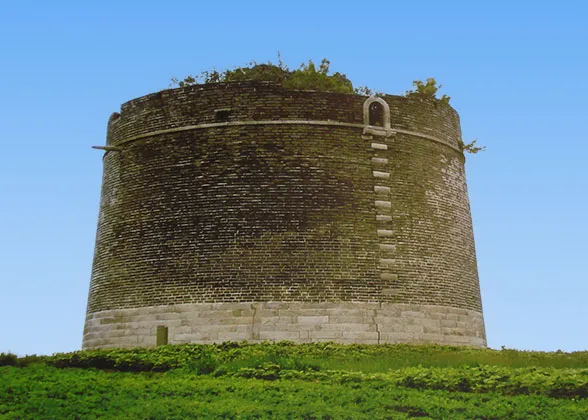 | | Circular beacon tower | |
Six transmission methods:
►Signal Cage: A cage-like structure made of grass or wooden frames. By day, it was draped in white or red cloth according to enemy activity; by night, burning grass torches would be placed inside the cage.
►Flag: Flags made of cloth of different colors, each color representing a different signal, most commonly used to signal safety.
►Drum: Drums were used for alerts and communication during cloudy or rainy conditions.
►Smoke: Fire was lit in the smoke stove below the beacon tower, and the smoke column rising through the chimney was used for alarm.
►Signal Torch: Burning torches, primarily used for signaling at night.
►Grass Stack: Large stacks of grass positioned opposite the tower, ignited during enemy attacks. Their placement and size were tightly regulated.
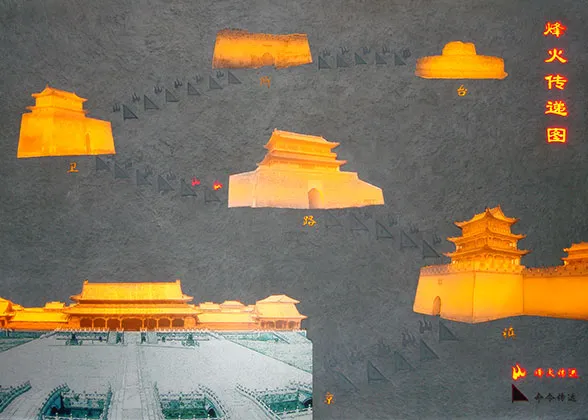 | | Transmitting beacon fires | | 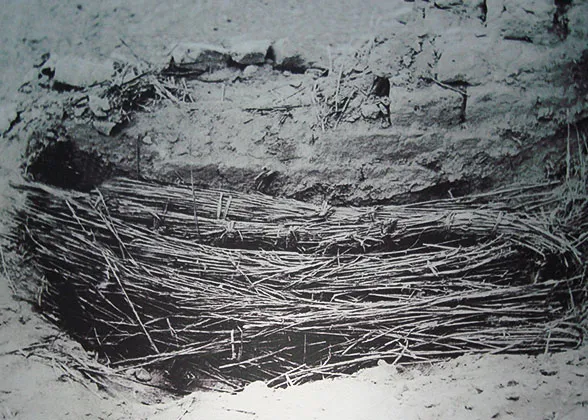 | | Straw torches for burning | |
| Number of Enemies | Number of Firewood Stacks | Daytime Signal (Smoke) | Evening Signal (Fire) |
| 1 - 10 | 1 stack | 2 puffs of smoke | 2 torches |
| 10 - 500 | 1 stack | 2 puffs of smoke, with waving | 2 torches, with waving |
| 500 - 1000 | 1 stack | 3 puffs of smoke | 3 torches |
| Under Siege | No stack | Signal with smoke above the beacon tower | Several torches, sometimes spaced, sometimes grouped |
Misconceptions About Beacon Towers
The fuel of beacon towers was not wolf dung.
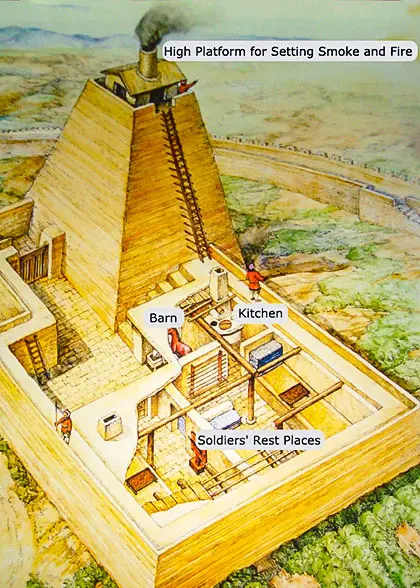 |
| Internal Structure of Beacon Tower |
In ancient times, the smoke from beacon towers was called “wolf smoke”, leading many to believe it came from burning wolf dung. In reality, this was logistically unfeasible. First, sourcing wolf dung in sufficient quantities was extremely difficult: the Beijing region alone had 165 beacon towers. Supplying just 2 kilograms (4.5 pounds) of dry wolf dung per tower would require over 330 kilograms (730 pounds). Wolves inhabited remote grasslands, making dung collection labor-intensive and dangerous. In addition, wolves are fierce and aggressive animals, and people usually fear wolves and avoid them. How could they dare to go to the places where wolves live to collect wolf dung? The term “wolf smoke” was symbolic: invading nomadic groups were compared to fierce wolves, so the smoke signaled “the wolves are coming.”
Beacon towers and watchtowers are different.
Because both beacon towers and watchtowers are high-rise structures, many people confuse them and mistake watchtowers for beacon towers. In fact, watchtowers and beacon towers are two completely different types of Great Wall buildings. Watchtowers are usually built on the Great Wall, while beacon towers exist independently from the Great Wall. The function of watchtowers is to house soldiers, store weapons and provisions, and they have observation holes for watching and shooting. The function of beacon towers is to transmit signals, and they usually do not have observation holes.
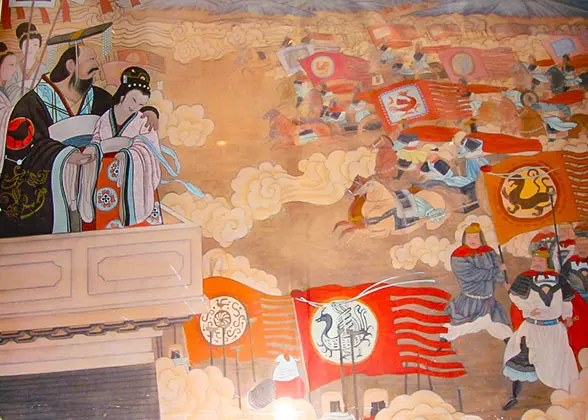 |
| Tricking the Marquess with Beacon Fires |
During the Western Zhou Dynasty (1046 BC - 771 BC), King You favored his concubine Bao Si, who never smiled after entering the palace. Desperate to amuse her, the king offered a thousand taels of gold for a plan to make her laugh. His minister Guo Shifu proposed using the beacon towers. King You agreed and lit the beacons while with Bao Si. The signal was taken as a genuine enemy attack, so regional lords quickly assembled their armies and rushed to the capital. Upon arrival, they realized they had been deceived and there was no real danger. When enemies truly invaded later, King You lit the beacons again, but the lords no longer trusted him and refused to respond. King You was killed, and the Western Zhou Dynasty collapsed.
You may like:
- Last updated on Mar. 27, 2026 by Sherry Xia -
 More Beacon Tower Pictures