Xishuangbanna Weather
Xishuangbanna has a tropical monsoon climate - warm year-round with no distinct seasonal features; but obvious rainy season and dry season, from May to October and November to April respectively. The dry season is the best time to appreciate the city's charm, with the most pleasant climate, beautiful natural scenes, vibrant wildlife and ecosystem, and various travel activities.
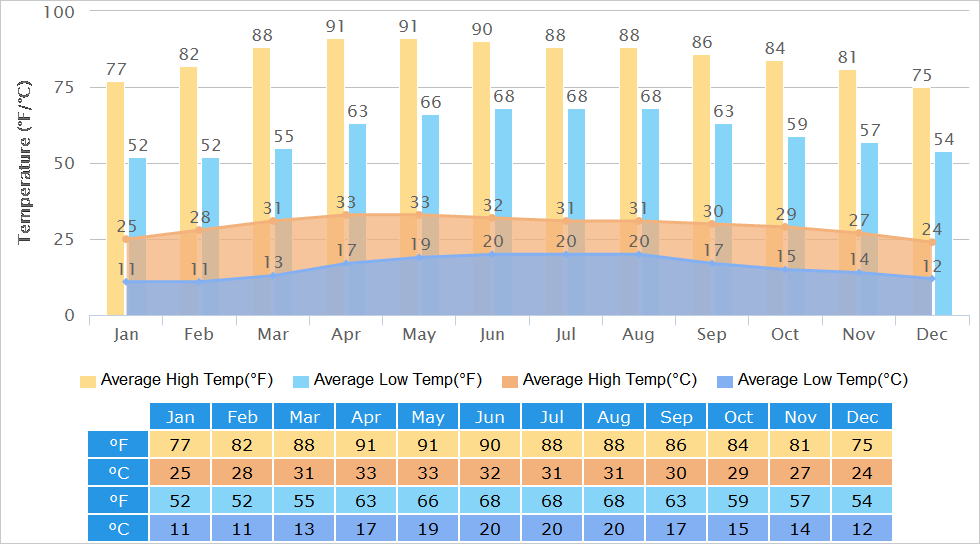
1. Warm all year round: As Xishuangbanna sits in a low latitude, it has a high temperature throughout the year. Even the yearly lowest temperature remains above 10 degrees Celsius (50 degrees Fahrenheit). Therefore, summer clothing is the norm year-round.
2. Big daily but small yearly temperature difference: The yearly temperature difference is actually small, only around 10°C (18°F). However, the temperature gap between day and night can be quite significant, especially from September to May, reaching over 15°C (27°F). Mornings and evenings usually feel cool and comfortable, making a light jacket necessary, while daytime hours can be dry and hot, and a T-shirt suits very well.
3. Different temperatures in different altitudes: Because of altitude differences, temperatures vary across the region. Highland areas, over 1,500 meters (4,900 feet), experience temperatures 2-5 degrees Celsius lower than lowland areas, like Jinghong, below 800 meters (2,600 feet).
January is the coolest month. But it is not cold at all and there’s no obvious winter here. Daytime hours feel pretty warm, with highs ranging from 17 to 25°C (63-77°F). But temperatures drop greatly after sunset, with nighttime lows of 10-14°C (50-57°F).
Actually, November through February is the cool season here, also the local most comfortable period.
May and June are usually the hottest months. At this time, the rainy season has not reached its peak, so there are still many sunny hours. Moreover, from May to June, the sun becomes stronger, daylight hours grow longer, and temperatures rise quickly. The extremely high temperature can even reach nearly 40 degrees Celsius (104 degrees Fahrenheit). Walking outside after around 10:00 on a sunny day can feel like standing inside an oven. Luckily, it’s a bit cooler under the tree's shade.
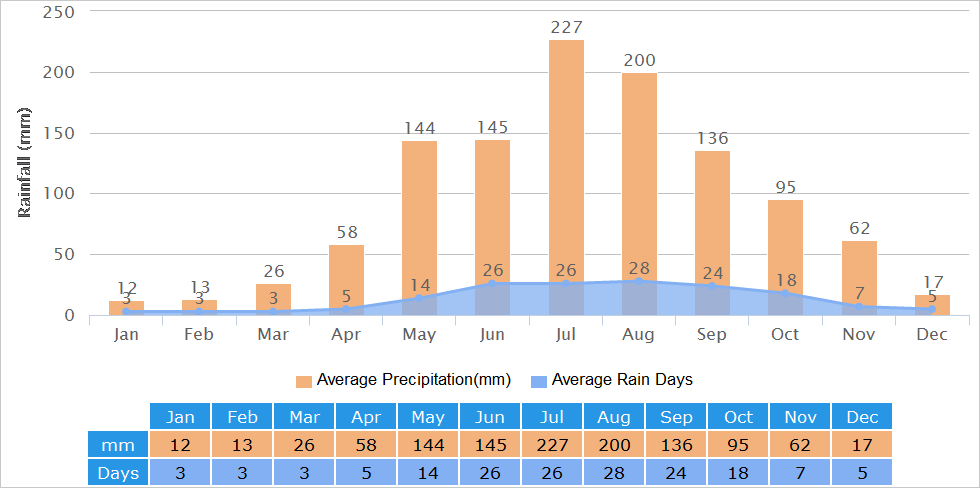
Xishuangbanna receives abundant rainfall, with an annual total of 1,200-1,500 mm (47-59 inches). 80% of the total precipitation falls in the rainy season from late May to October, when the southwest monsoon brings a large amount of warm and humid air from the Indian Ocean. The rain usually falls in the form of brief but intense downpours, and the sky turns blue quickly. Even in the rainiest months from July to September, when it might rain every day, the showers usually don’t last for over one hour. Therefore, visitors can still continue their outdoor travel plans after a short rest. Plus, rainfall keeps the forest in a lusher condition.
Although the city does not directly face the center of a typhoon, they still have a significant impact, bringing heavy downpours, lightning, and strong winds, especially from July to October. For example, in September 2024, extreme downpours occurred across Xishuangbanna, with cumulative rainfall of 368 mm over three days. This can easily cause flash floods, landslides and other natural disasters. Thus, it’s best to check the forecast in advance and avoid visiting Xishuangbanna during typhoon-influential days.
In the rest of the months, Xishuangbanna’s weather are sunny with numerous clear days and high-quality air, perfect for outdoor explorations.
Overall, Xishuangbanna’s climate is humid throughout the year, with the humidity generally over 80%. In the rainy season, humidity stays at an even higher level, leading to higher perceived temperatures. The hot and humid climate is prone to the breeding of mosquitoes and other insects, meaning insect repellent is necessary.
You might wonder why the dry season still feels a little humid. This is because there are many foggy days during this period, especially in the early morning when the temperature is quite low, and there’s lots of moisture in the air, which is far more than in London, the famous Foggy City.
Xishuangbanna enjoys abundant sunlight year-round, with annual sunshine hours of 1,800 to 2,200. During the dry season, precipitation is low and cloud cover is minimal, resulting in better sunlight conditions than during the rainy season, with an average of over 7 hours of sunshine per day. But sunshine hours during the rainy season are also considerable, as rainy hours are brief.
UV intensity ranges from 7 to 12 throughout the year. During the dry season, when the sun is at its strongest around noon, UV levels can reach as high as 12. If you are exposed to the sun for 15-30 minutes, your skin might become red or even sunburned. Especially when you visit areas with open water, the UV rays reflected off the water’s surface will be even more intense. This doesn’t mean UV radiation during the rainy season can be overlooked, as after a rain shower, the water vapor also reflects UV rays, possibly causing the UV index to exceed 11. Therefore, sun protection is necessary year-round.
Taking into account tourist flow and spending, November to December and March are better windows: hotels and flight tickets are at reasonable prices, and famous attractions are much less crowded than in January to February, the winter holiday in China, as well as in April, when tourists come for the Water Splashing Festival.
1. It’s always a clever move to check the weather forecast in advance, particularly if you want to explore the Tropical Botanical Garden at night. The event can be canceled due to the severe weather. Plus, some outdoor hiking trails may be closed due to heavy downpours.
2. There are a lot of mosquitoes in the forest due to its humid climate, so make sure to pack insect repellent.
Temperature Features
2. Big daily but small yearly temperature difference: The yearly temperature difference is actually small, only around 10°C (18°F). However, the temperature gap between day and night can be quite significant, especially from September to May, reaching over 15°C (27°F). Mornings and evenings usually feel cool and comfortable, making a light jacket necessary, while daytime hours can be dry and hot, and a T-shirt suits very well.
3. Different temperatures in different altitudes: Because of altitude differences, temperatures vary across the region. Highland areas, over 1,500 meters (4,900 feet), experience temperatures 2-5 degrees Celsius lower than lowland areas, like Jinghong, below 800 meters (2,600 feet).
 |
The Coolest Month
Actually, November through February is the cool season here, also the local most comfortable period.
The Hottest Month
|
|

Rainfall Patterns
Although the city does not directly face the center of a typhoon, they still have a significant impact, bringing heavy downpours, lightning, and strong winds, especially from July to October. For example, in September 2024, extreme downpours occurred across Xishuangbanna, with cumulative rainfall of 368 mm over three days. This can easily cause flash floods, landslides and other natural disasters. Thus, it’s best to check the forecast in advance and avoid visiting Xishuangbanna during typhoon-influential days.
In the rest of the months, Xishuangbanna’s weather are sunny with numerous clear days and high-quality air, perfect for outdoor explorations.
 |
Humidity
You might wonder why the dry season still feels a little humid. This is because there are many foggy days during this period, especially in the early morning when the temperature is quite low, and there’s lots of moisture in the air, which is far more than in London, the famous Foggy City.
Sunshine Hours and UV Rays
 |
| Intense Sunshine During Sunny Periods |
UV intensity ranges from 7 to 12 throughout the year. During the dry season, when the sun is at its strongest around noon, UV levels can reach as high as 12. If you are exposed to the sun for 15-30 minutes, your skin might become red or even sunburned. Especially when you visit areas with open water, the UV rays reflected off the water’s surface will be even more intense. This doesn’t mean UV radiation during the rainy season can be overlooked, as after a rain shower, the water vapor also reflects UV rays, possibly causing the UV index to exceed 11. Therefore, sun protection is necessary year-round.
7-Day Xishuangbanna Weather Forecast
In terms of weather, November to April is the most comfortable period in Xishuangbanna: temperatures are not very high, precipitation is moderate and the air feels fresh, suitable for various outdoor activities, such as spotting wild elephants, enjoying various blossoms, and participating in the Water Splashing Festival in April.
Taking into account tourist flow and spending, November to December and March are better windows: hotels and flight tickets are at reasonable prices, and famous attractions are much less crowded than in January to February, the winter holiday in China, as well as in April, when tourists come for the Water Splashing Festival.
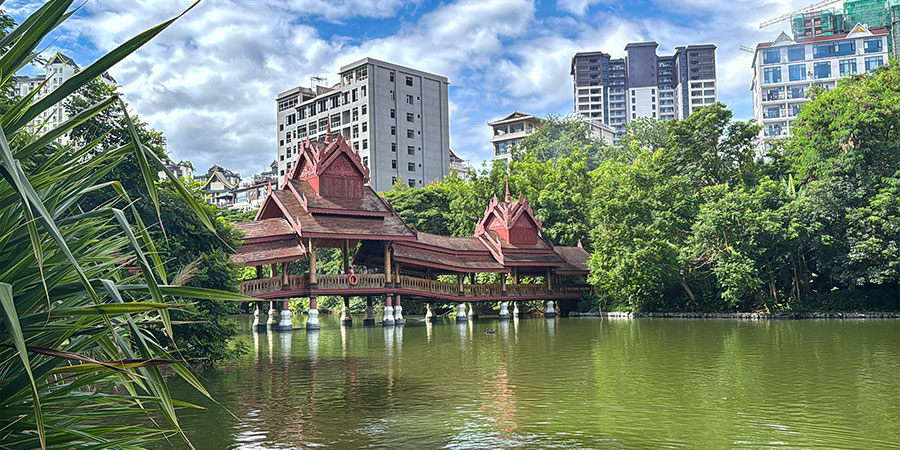 |
| Wonderful Scene in Xishuangbanna |
Travel Tips
2. There are a lot of mosquitoes in the forest due to its humid climate, so make sure to pack insect repellent.
Xishuangbanna Weather by Month:
You May Like



- Last updated on Jun. 24, 2026 by Rachel Hou -