Tiananmen Tower (Gate of Heavenly Peace)
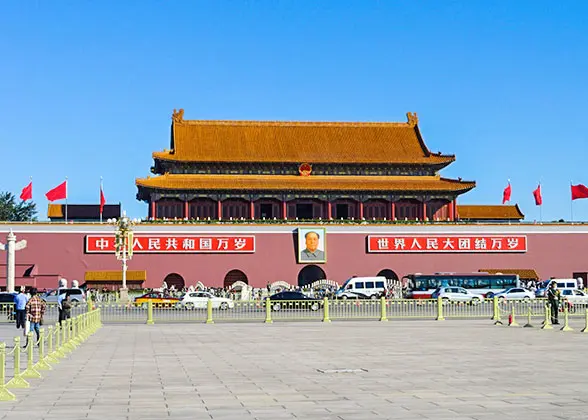
Standing at the juncture where the central axis of Beijing and Chang'an Avenue meet, on the northern edge of Tiananmen Square, Tiananmen Tower (Gate of Heavenly Peace) is the symbol of modern China and featured on the emblem of the People's Republic of China. It served as the gatehouse of the Ming and Qing Dynasties (1368-1911).
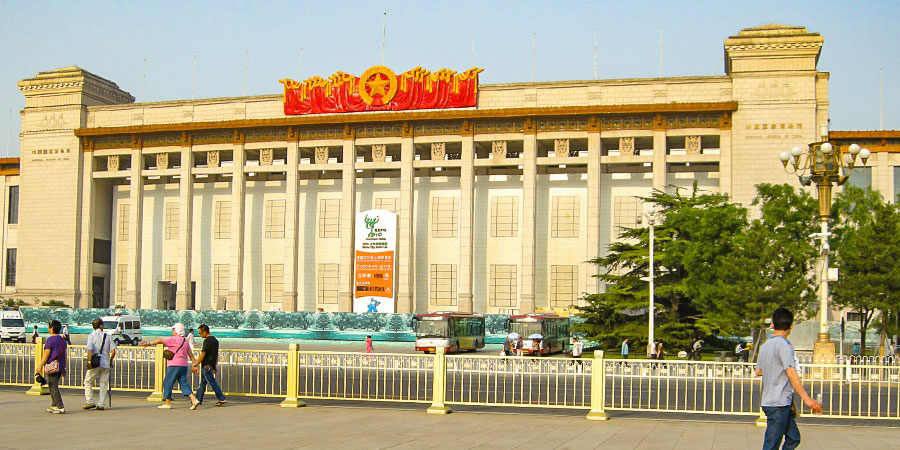
The second level houses a grand hall upheld by 60 red pillars, crowned with golden glazed tiles and upturned eaves that give the massive roof visual lightness. 36 lattice doors decorate the hall’s north and south sides. From the front corridor, you can overlook symmetrically arranged landmarks like the National Museum and Great Hall of the People.
Inside, a folding screen depicting the Great Wall divides the space into three sections with red floral carpets and intricately carved rosewood furniture. Seventeen glass palace lanterns, covered with milky white shades, illuminate the hall.
Dragons, representing imperial authority as well, are the main decorative motifs on the ceiling and beams, depicted in various poses like ascending, descending, seated, and playing with pearls, surrounded by clouds and flames to enhance the sacred and majestic ambiance.
Built in 1420, the original Tiananmen Tower was a small wooden archway with yellow tiles and vermilion doors, initially named "Gate of Heavenly Succession", symbolizing the emperor's divine mandate to rule.
As the primary gateway of the imperial city, Tiananmen Tower at that time served as the venue for grand ceremonies and significant events including military expeditions. Additionally, it functioned as the official site for issuing imperial edicts. When emperors promulgated crucial decrees, imperial heralds would announce them from the gate tower. The edicts were then placed in the mouth of a golden wood phoenix, suspended by decorative ropes to glide downward gracefully. Officials from the Ministry of Rites would receive the edict and subsequently proclaim it nationwide.
In 1651, it was rebuilt and renamed "Tiananmen" (Gate of Heavenly Peace). Subsequent renovations and expansions gradually shaped it into its current form. A major reconstruction occurred from December 1969 to April 1970 due to severe structural damage from an earthquake in 1966. The old tower was demolished and rebuilt on the same site with new materials while maintaining its original size and design.
Today, the Tiananmen Tower serves as an iconic landmark and popular tourist attraction. Visitors can ascend the tower to enjoy a panoramic view of Tiananmen Square and Beijing's central axis. Located just south of the Forbidden City, it is also a crucial pathway from Tiananmen Square to the entrance of the imperial complex Forbidden City.
Excluding Mondays and special closures during major events, you can visit the Tiananmen Tower for the most of the year.
April 1 to October 31: 8:30–17:00, last entry 16:30, clearance by 17:00.
November 1 to March 31: 8:30–16:30, last entry 16:00, clearance by 16:30.
Closed every Monday except for public holidays.
To visit, you need to book the tickets in advance. Tickets cost CNY 15, with free admission for those under 18 or over 60. Ticket sales start at 17:00 daily, which can be reserved up to 7 days in advance; and same-day tickets cannot be booked. Due to high demand, it's advisable to book as early as possible.
You can purchase tickets by logging onto the official website or using the WeChat mini-program, entering your passport information, and selecting a suitable date and time slot. But please note that both are currently only available in Chinese language.
A Chinese mobile number is required to receive verification SMS; foreign numbers are not supported. For a hassle-free experience, consider using Travel China Guide's ticketing service for the Tiananmen Tower.
 Tiananmen Square Tickets Booking
Transportation to the Tiananmen Tower involves first entering the Tiananmen Square, where there are five entrances. After passing the security check at the entrance, you can walk to the Tiananmen Tower. Among these five entrances, the following three are the closest to the Tower, and can be reached within a 10-minute walk:
Tiananmen West Red Wall Security Checkpoint 01: Accessible from Exit B/A of Tiananmen West Station on Subway Line 1, or by bus lines 1 or Sightseeing Line 2 to Tiananmen West Station.
Tiananmen East Red Wall Security Checkpoint 02: Accessible from Exit B of Tiananmen East Station on Subway Line 1, or by bus lines 1, 52, or 82 to Tiananmen East Station.
East Square North Road Security Checkpoint 03: Accessible from Exit C of Tiananmen East Station on Subway Line 1, with the same bus lines as Checkpoint 02.
The other two checkpoints 04 and 07, about 20-minute walk, are accessible from Qianmen Subway Station via subway Lines 2 and 8.
Bags are not allowed inside the Tiananmen Tower. You may only carry essential items like your passport, phone, and camera. Free luggage storage is available on the northwest side of the tower. After storing your items, join the security line to enter. Remember to collect your items immediately after visiting the tower. If you pass through the Upright Gate without retrieving your belongings, you'll need to go back through security again, which wastes a lot of time.
Allocate at least 1 hour for your visit, including time for security checks, luggage storage, ticket inspection, and sightseeing.
You can contact staff to use the elevator located to the left of the tower entrance if needed.
What does the Tiananmen Tower look like inside and out?
The tower has two levels. The first level features a vermilion platform with five arched gateways, supported by a robust, 1.6-meter-high white marble carved base. Above the central gateway hangs a portrait of Mao Zedong (1893-1976), the first chairman of the People's Republic of China.
|
|
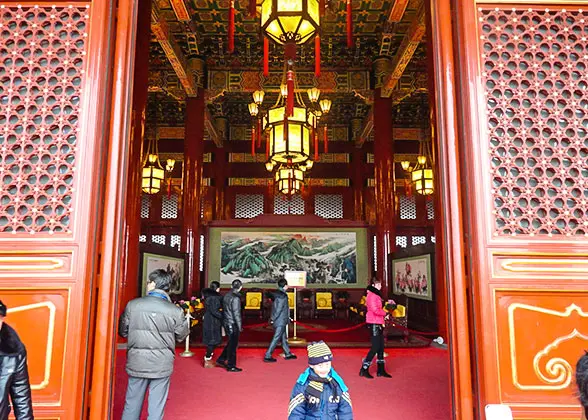
Inside, a folding screen depicting the Great Wall divides the space into three sections with red floral carpets and intricately carved rosewood furniture. Seventeen glass palace lanterns, covered with milky white shades, illuminate the hall.
Dragons, representing imperial authority as well, are the main decorative motifs on the ceiling and beams, depicted in various poses like ascending, descending, seated, and playing with pearls, surrounded by clouds and flames to enhance the sacred and majestic ambiance.
Tiananmen Tower History – When & Why Built
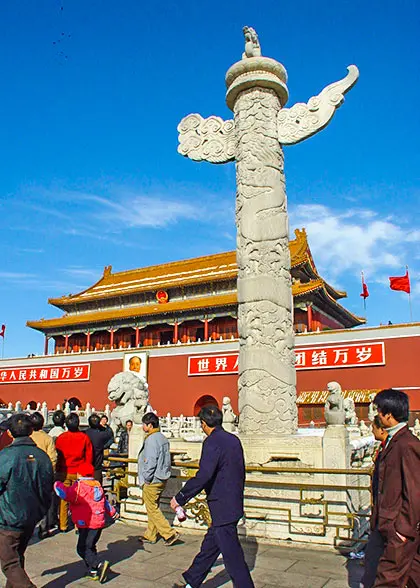 |
| Marble Pillar in Front of the Tower |
Built in 1420, the original Tiananmen Tower was a small wooden archway with yellow tiles and vermilion doors, initially named "Gate of Heavenly Succession", symbolizing the emperor's divine mandate to rule.
As the primary gateway of the imperial city, Tiananmen Tower at that time served as the venue for grand ceremonies and significant events including military expeditions. Additionally, it functioned as the official site for issuing imperial edicts. When emperors promulgated crucial decrees, imperial heralds would announce them from the gate tower. The edicts were then placed in the mouth of a golden wood phoenix, suspended by decorative ropes to glide downward gracefully. Officials from the Ministry of Rites would receive the edict and subsequently proclaim it nationwide.
In 1651, it was rebuilt and renamed "Tiananmen" (Gate of Heavenly Peace). Subsequent renovations and expansions gradually shaped it into its current form. A major reconstruction occurred from December 1969 to April 1970 due to severe structural damage from an earthquake in 1966. The old tower was demolished and rebuilt on the same site with new materials while maintaining its original size and design.
What is the Tiananmen Tower's function today?
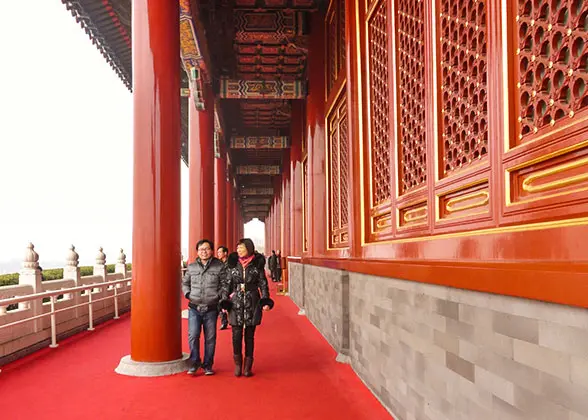 |
| Stroll Along Tiananmen Tower's Corridor |
Today, the Tiananmen Tower serves as an iconic landmark and popular tourist attraction. Visitors can ascend the tower to enjoy a panoramic view of Tiananmen Square and Beijing's central axis. Located just south of the Forbidden City, it is also a crucial pathway from Tiananmen Square to the entrance of the imperial complex Forbidden City.
Can I visit the Tiananmen Tower?
Excluding Mondays and special closures during major events, you can visit the Tiananmen Tower for the most of the year.
Practical Tips for Visiting the Tiananmen Tower
Opening Hours
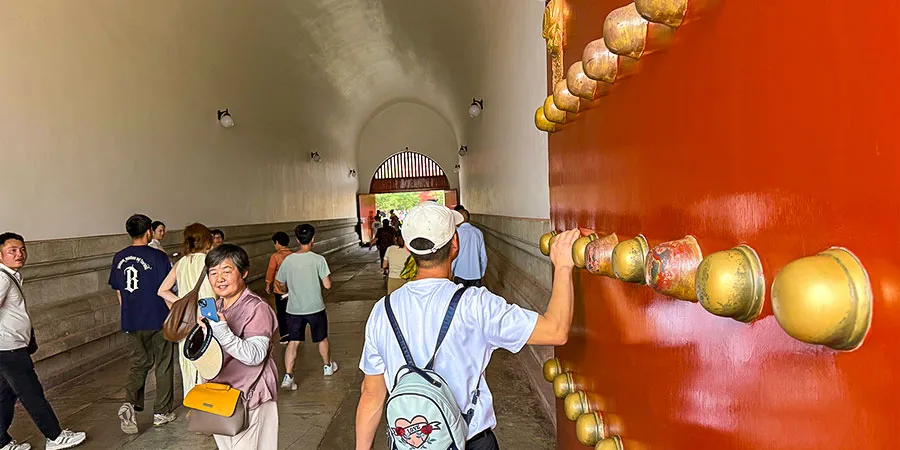 |
| Doornails of Tianamen Tower |
April 1 to October 31: 8:30–17:00, last entry 16:30, clearance by 17:00.
November 1 to March 31: 8:30–16:30, last entry 16:00, clearance by 16:30.
Closed every Monday except for public holidays.
Tickets Booking
To visit, you need to book the tickets in advance. Tickets cost CNY 15, with free admission for those under 18 or over 60. Ticket sales start at 17:00 daily, which can be reserved up to 7 days in advance; and same-day tickets cannot be booked. Due to high demand, it's advisable to book as early as possible.
You can purchase tickets by logging onto the official website or using the WeChat mini-program, entering your passport information, and selecting a suitable date and time slot. But please note that both are currently only available in Chinese language.
A Chinese mobile number is required to receive verification SMS; foreign numbers are not supported. For a hassle-free experience, consider using Travel China Guide's ticketing service for the Tiananmen Tower.
Tiananmen Square Tickets Booking 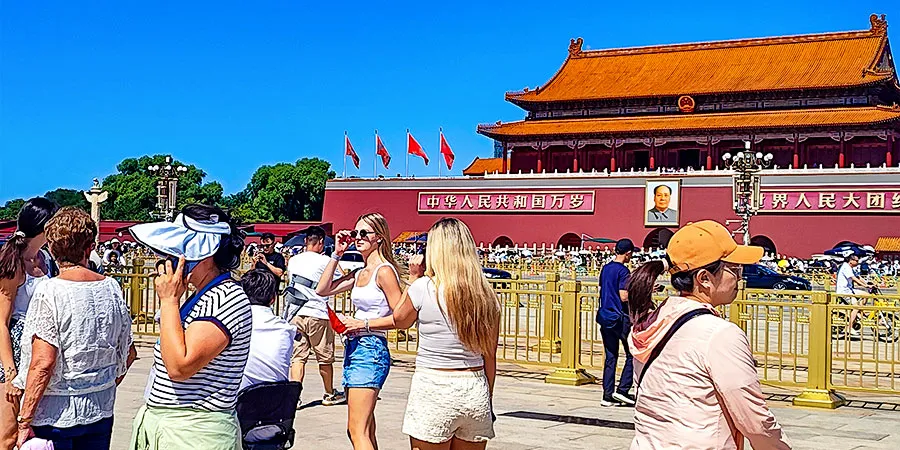 |
| Visitors in Front of the Tower |
How to Get to the Tiananmen Tower
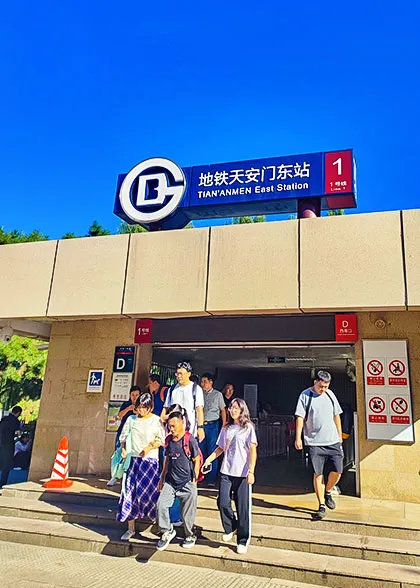 |
| Tiananmen East Subway Station |
Transportation to the Tiananmen Tower involves first entering the Tiananmen Square, where there are five entrances. After passing the security check at the entrance, you can walk to the Tiananmen Tower. Among these five entrances, the following three are the closest to the Tower, and can be reached within a 10-minute walk:
Tiananmen West Red Wall Security Checkpoint 01: Accessible from Exit B/A of Tiananmen West Station on Subway Line 1, or by bus lines 1 or Sightseeing Line 2 to Tiananmen West Station. Tiananmen East Red Wall Security Checkpoint 02: Accessible from Exit B of Tiananmen East Station on Subway Line 1, or by bus lines 1, 52, or 82 to Tiananmen East Station. East Square North Road Security Checkpoint 03: Accessible from Exit C of Tiananmen East Station on Subway Line 1, with the same bus lines as Checkpoint 02.The other two checkpoints 04 and 07, about 20-minute walk, are accessible from Qianmen Subway Station via subway Lines 2 and 8.
Luggage Storage
Bags are not allowed inside the Tiananmen Tower. You may only carry essential items like your passport, phone, and camera. Free luggage storage is available on the northwest side of the tower. After storing your items, join the security line to enter. Remember to collect your items immediately after visiting the tower. If you pass through the Upright Gate without retrieving your belongings, you'll need to go back through security again, which wastes a lot of time.
Time Planning
Allocate at least 1 hour for your visit, including time for security checks, luggage storage, ticket inspection, and sightseeing.
Wheelchair Accessible Passage
You can contact staff to use the elevator located to the left of the tower entrance if needed.
Other Attractions around Tiananmen Square
- Last updated on Apr. 03, 2026 by Gabby Li -