Located to the southwest of the
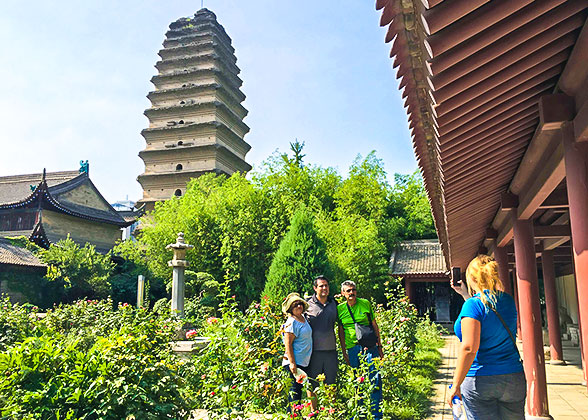
Jianfu Temple where the
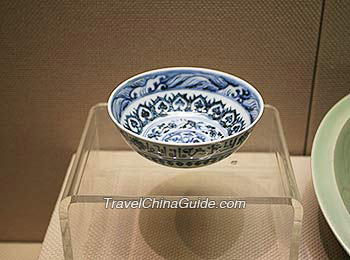
Small Wild Goose Pagoda is in, Xi'an Museum displays as many as 2,000 fine cultural relics chronologically for more than 2,000 years. Most of them were unearthed in or around Xi’an, the one-time capital of 13 dynasties for more than 1,300 years, including the
Zhou Dynasty (1046BC-221BC), the
Qin Dynasty (221BC-207BC), the
Han Dynasty (202BC-220AD), and the
Tang Dynasty (618-907).
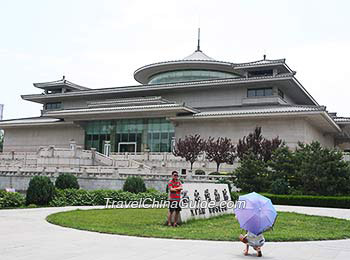
The architectural design of the museum follows the traditional Chinese concept of the universe - a round heaven and a square earth. It has been recognized as one of the ten landmark buildings of Xi’an and offers excellent facilities for the display of precious cultural relics thereby ensuring their full appreciation.
It is a three-storied building, with an underground floor unseen from the outside.
Underground Floor - Ancient and Precious Cultural Relics
The underground exhibition hall features many relics showing the splendid history of Xi'an. On this floor, you will find cultural relics of various kinds: (1) weapons; (2) relics of ancient city walls and imperial palaces; (3) daily-use articles such as coins, potteries, bronze wares, and iron wares; (4) decorations like tri-color pottery figurines... All of these present economic and social development of time-honored Xi’an, and also its cultural exchange and trade with foreign countries.
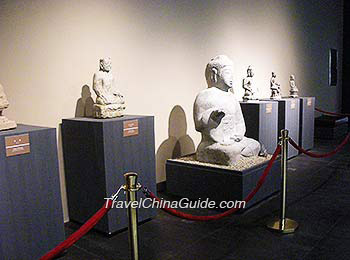
First Floor - Solemn Buddhist Statues
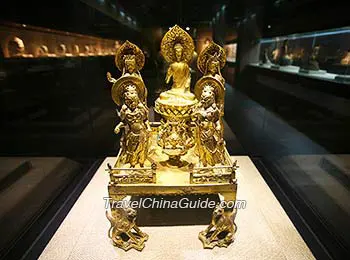
The exhibition hall on the first floor has a display of Buddhist statues and other precious historical relics. Most of the statues are carved with stone while some fine gilded statues are made of copper and bronze. They display the pomp of the Buddhism in Chang'an, name of Xi'an in ancient times meaning perpetual peace.
Second Floor - Exquisite Jades & Calligraphic and Painting Works
The display includes delicate jades used in ceremonies and daily life. There are some famous seals in the display, such as the clay seal of the Qin Dynasty, and also more than 200 official seals excavated in the square of
Bell Tower and
Drum Tower in the city. The museum has many paintings and calligraphies, including works by Zheng Banqiao, a very famous painter during the
Qing Dynasty (1644-1911).
 | | Jade Pendant Set | |  | | Bird-shaped Jade | |
Must-see Treasures in Xi’an Museum
As a representative bronze vessel in China’s history, Yongyu records how the land is granted by the emperor to Yong, a nobility member, with 123 traditional Chinese characters on its inner wall. This vessel can be used to store food, and its outer wall is decorated with beautiful patterns and also two bronze elephant heads with long and curly noses.
2. Jade Cup with Interlocking Cloud Patterns from Qin Dynasty
This jade cup is famous for its long history of more than 2,200 years and also impressive appearance. Looking from its top to bottom, you will be amazed by its multiple tiers of decorative interlocking patterns, which are similar to drifting clouds and persimmon calyxes and bear people’s wishes for happiness and good luck. The jade cup was unearthed in
the site of the Epang Palace, whose construction was ordered by Emperor
Qin Shi Huang. Maybe the first emperor of China owns this cup. It’s further said that ancient people use jape cups to collect dew, and they drink the dew to pursue immortality.
 | | Yongyu in Xi'an Museum | |  | | Ancient Jade Cup | |
 |
| Sheep-shaped Lamp Holder |
This cute gold-colored ware shows ancient people’s artistic creativity, because it’s a decoration during the daytime and a lamp holder at night. Its secret lies on its back which can still be flexibly opened and closed even after more than 2,000 years since it was made. When night falls, the back cover is opened to contain lamp oil for illumination, and after that, the cover is turned back to its original position, waiting for the next “shining period”.
4. Tricolor-glazed Galloping-horse-shaped Pottery from Tang Dynasty
With a length of about 52 centimeters (20 inches) and a width of about 38 centimeters (15 inches), this vivid pottery features a western person in a blue robe riding a galloping horse. Its blue color makes it priceless because the blue glaze was quite difficult to make in ancient times and those potteries with glue glaze hold greater value. This tricolor-glazed pottery is so precious and likable that you can find an enlarged black replica to the north of the museum. Many people take pictures with it.
 | | Tricolor-glazed Galloping-horse-shaped Pottery | |  | | Sculpture of the Pottery | |
5. Gilded Bronze Alcohol-storing Vessel from Western Han Dynasty
 |
| Gilded Bronze Alcohol-storing Vessel |
Alcohol-storing vessels are quite common, but one with a gilded bird on its top is rare, and one with a gilded bird holding a pearl on its top is even rarer. What is even more astonishing is that this vessel was still fully sealed when unearthed, thus people finding 26 kilograms of emerald green alcohol in it, which was considered to be the most ancient alcohol in China.
How to Get to Jianfu Temple

By Metro:
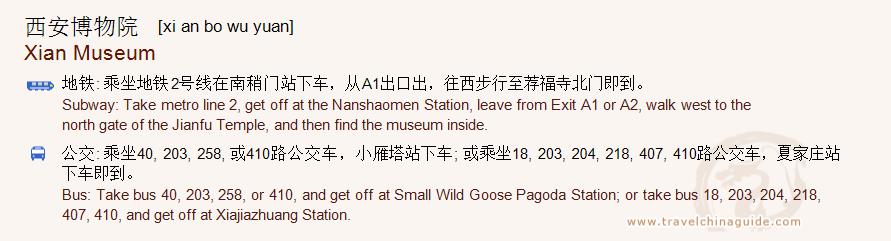
You can take Metro
Line 2 or
Line 5, get off at Nanshaomen Station, leave from Exit F, walk to west for about 6 minutes, and find the North Gate of the attraction.

By Bus:
(1) To North Gate: Take Bus No. 21, 40, 46, 203, 224, 258, 521, 410, 700, or Tourist Line 7, and get off at Xiaoyanta / Small Wild Goose Pagoda.
(2) To West Gate: Take Bus No. 18, 203, 204, 218, 229, 258, 407, 410, or Tourist Line 7, get off at Xiajiazhuang, and walk northward for about 4 minutes
| Ticket Price | Free, but an online reservation is needed at most 5 days in advance. You can also reserve the ticket on site at the entrance to the attraction 5 days earlier, but in view of the great number of tourists visiting the museum, early booking is suggested. |
| Opening Hours | 8:30-18:00, and last admissions are allowed at 17:00.
Notes: The attraction opens every day from May to October, and is closed on China’s New Year Eve and every Tuesday from November to April, except for China’s Public Holidays. Besides, opening hours of the attraction may accordingly be extended in July and August during China’s summer vacation. |
- Last updated on Jul. 22, 2026 by Sherry Xia -
 Xi'an Museum Photos