Inner Mongolia Weather
The four seasons are quite clear in Inner Mongolia. The temperature in spring from April to May rises sharply, and there are a lot of windy days and low precipitation. Summer is short, not very hot and sees the most rainfall. In autumn from September to October, the temperature drops suddenly and the frost always come early. Winter is rather long for 5 months with very cold snap.
Temperature
Large temperature difference is another obvious feature of Inner Mongolia climate, which is not only embodied in the yearly gap but also between day and night as well as among regions.
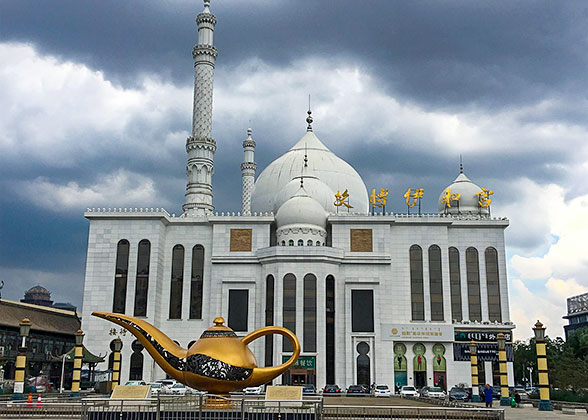 |
| Street Views in Hohhot |
Normally, the day-night temperature difference is in the range of 10 - 17°C (50 - 63°F); on occasions, it could go beyond 20°C (68°F). Therefore, the night is a little cool even in hot summer. As for yearly temperature difference, take its capital Hohhot as an example, the daytime high temperature in the hottest July usually hovers between 25 and 33°C (77 - 91°F) and that in coldest January ranges from -10 to 3°C (14 - 37°F). During transitional periods like spring and autumn, the weather of Inner Mongolia might be changeable with drastic temperature fluctuations that visitors may feel like experience four seasons in several days.
The temperature also shows a progressive downward trend from western to eastern Inner Mongolia as well as from the south to north. In the same April, it is quite common to feel warm like spring in the southwest but cold like early winter in the northeast. For instance, Baotou in April sees daily highs lying between 17 and 25°C (63 - 77°F), while Genhe, the coldest city of Inner Mongolia and even the whole China, has the max degrees fluctuating between 3 and 11°C (37 - 52°F). A regional difference over 10°C (50°F) could be seen.
Precipitation
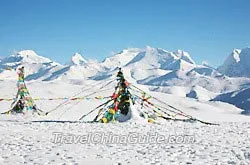 |
| Rainy Season of Inner Mongolia |
Chronologically, July - August has the yearly highest rainfall around 100 mm (3.94 in) every month, known as the peak rainy season of Inner Mongolia. But thanks to the high evaporation capacity, you won’t feel muggy. Also, it mostly falls as brief shower and downpour that stop soon. The lowest precipitation happens in December as snow drizzles. In transitional seasons, the low monthly precipitation ranging from 45 to 60 mm (1.77 - 2.36 in) is in multiple forms including rain, sleet, snow even hailstone. Therefore, the climate of Inner Mongolia is pretty dry in most time.
Geographically, as the precipitation decreases gradually from eastern to western Inner Mongolia, humid zone transits to semi-humid, then semi-arid and arid zone. Similarly, the south tends to receive more precipitation than the north.
Daytime / Sunlight
 |
| Bright Sunshine in Inner Mongolia |
June sees the longest daylight and sunlight duration of 15 and 10 hours per day respectively; December has the shortest with only 9 daylight and 6 sunlight hours. Meanwhile, due to the relatively high altitude, the sunshine is mostly strong and you need to take sunscreen measure almost the whole year. With UV index of 10, July is the most scorching month.
Occasional Terrible Weather
However, gusts of winds with force 7 - 9 occur sometimes especially during spring and autumn. Together with low precipitation, they lead to dusty days, of which heavy one forms into sandstorm. Across the region, the annual average number of sandstorm days is about 5 - 20; the northeastern part with mountains and forests usually sees less. Spring with little plant cover is the peak sandstorm period.
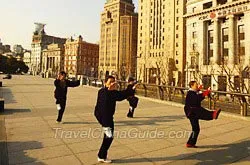 |
| Nadam Fair in July |
In general, the best time to visit Inner Mongolia is from June to September when the weather is relatively stable and favorable with moderate temperatures and humidity. During this time, you can admire gorgeous natural scenery including both vibrantly green grasslands and colorful autumn views. But considering the wide range of the region, the best travel time is slightly different for each part. For the southwest grasslands like Gegentala Grassland, this best visit time might last to mid-October. Besides, Naadam Fair is usually held in July and August, which provides visitors diverse interesting activities such as wrestling and dancing performances.
Annual Weather Facts of Major Cities
- High Temp: 26~29℃ (78.8~84.2℉)
- Low Temp: -5~0℃ (23~33.8℉)
- Humidity: 54%
- Rainfall: 409 mm (16 in)
- Details of Hohhot Weather
- High Temp: 27~30℃ (80.6~96℉)
- Low Temp: -4~0℃ (24.8~33.8℉)
- Humidity: 50%
- Rainfall: 296 mm (11 in)
Inner Mongolia Climate – Seasons & Travel Guide
Spring (Apr. - May)
Weather
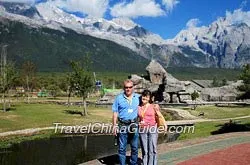 |
| Barren Land in Spring |
What to wear
What to note
Summer (Jun. - Aug.)
Weather
Summer is the warmest and rainiest period of the year; consequently, it also enjoys the most luxuriant natural views throughout the region. For example, grasslands like Xilingol Grassland and Hulunbuir Prairie, forests like Arxan National Forest Park and Ergun Wetlands as well as water areas like Hulun Lake and Moergele River are all in their prime.
However, even in warmest July, the highest temperatures mostly hover around 30°C (86°F) so that visitors rarely sweat except after long-time trudging at sunny middays. The rainfall is not high in June and then doubles in the following two months, making July and August the peak rainy season of Inner Mongolia. Good news is that your journey won’t be largely interrupted since it usually rains briefly.
 |
| Vibrant Grassland in Summer |
What to wear
T-shirts, sunscreen coats, jackets; thin sweatpants, loose jeans, dress, shorts; breathable sport shoes, sandals; sunhats, sunglasses …
What to note
July to August is the peak travel season of Inner Mongolia, so you had better book hotels and air flights as early as possible in case that the interested ones become unavailable or in unacceptably high prices.
Autumn (Sep. - Oct.)
Weather
A large and sudden decrease in temperature and precipitation happens in autumn when Inner Mongolia weather becomes increasingly cold and dry. In addition, there exist fluctuating temperatures and enlarged temperature differences between day and night. Multiple layers of clothes should be prepared to deal with the changeable climate. Light rainfall dominates autumn and snow drizzles is also highly possible in the northeast.
Meanwhile, the grass and trees also start to turn yellow, then wither gradually, which presents visitors a colorful autumn. In early September, the landscape is partly yellow and partly green; then, it turns completely yellow since the middle month. For most natural attractions, golden autumn scenery could last to early October, but for westmost Populus Euphratica Forest in Ejina, the golden time might begin and ends a week later.
 |
| Colorful Autumn in Inner Mongolia |
What to wear
long-sleeved T-shirts, hoodies, sweaters, trench coats, woolen coats, 3-in-1 windbreakers; long johns, jeans, fleece-lined sweatpants; thick sneakers, walking boots; hats, scarves, masks …
What to note
The specific time for golden autumn of Inner Mongolia varies in different years and certain destinations. You should check the real-time situation further before heading for.
Winter (Nov. - Mar.)
Weather
Winter in Inner Mongolia features long duration, severe coldness and extreme dryness. Though the snowfall is quite scarce and seldomly exceed 10mm (0.39 in) per month, snow view is widely available since the snow hardly melts and keeps accumulated due to the low temperatures mostly below freezing. During this period, snowstorm together with strong winds also hits occasionally.
Of the five months, January is the coldest month when winter Naadam Fair is normally held. It’s not until March that obvious temperature rises are perceived when thick ice and snow in most areas melt progressively.
 |
| Vast Snow Views in Winter |
What to wear
thermal underwear, padded shirts, heavy sweaters, 3-in-1 windbreakers, down jackets, long down coats; thick long johns, padded jeans, windproof jacket pants; fleece-lined walking boots, high-top snow boots; woolen hats, scarves, gloves, earmuffs …
What to note
1. With efficient heating system, the indoor temperature usually hovers around 25°C (77°F) in Inner Mongolia and thin pajamas are advised. Mind the large temperature differences between indoors and outdoors.
2. Some less famous attractions are closed or many tourist activities are not available during winter. Be sure to confirm the opening situation in case of going for nothing.