What is Guangzhou famous for?
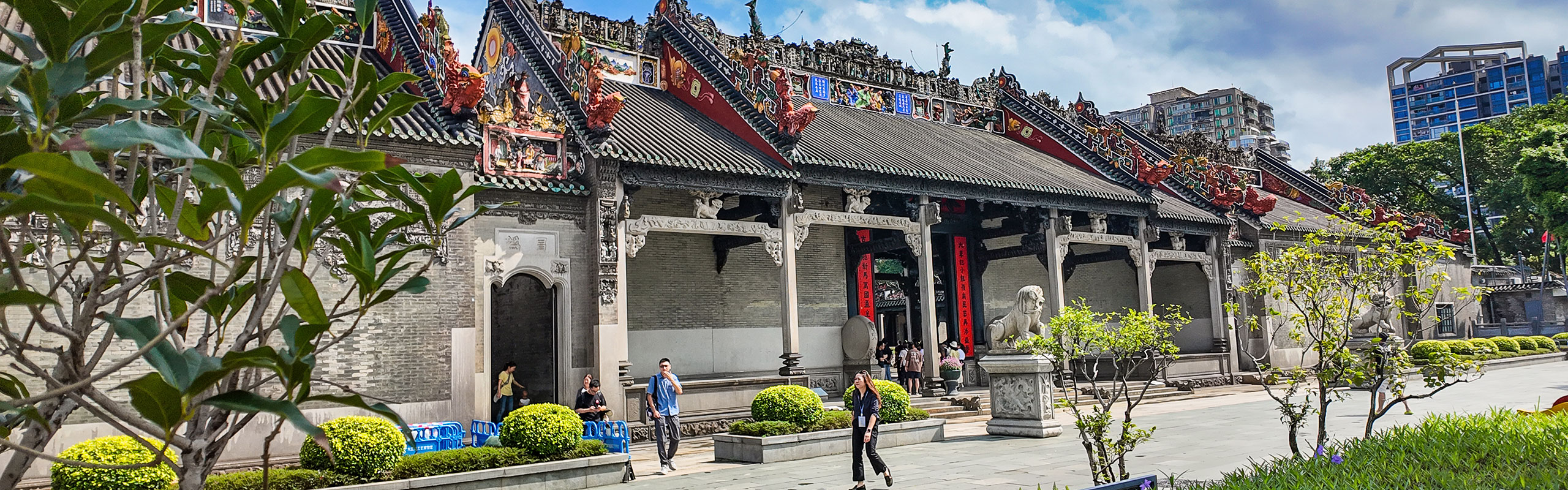
Guangzhou is famed for its rich cultural and historical attractions, time-honored trading heritage, and unique Cantonese cuisine. Wander through the exquisitely carved Chen Clan Ancestral Hall, the colonial-era streets of Shamian Island, and the venerable Buddhist-style Temple of the Six Banyan Trees to trace the city’s centuries-old history. Soak up its modern vitality at the futuristic Canton Tower and the picturesque Pearl River. As a long-established trading port on the Maritime Silk Road, it is also home to the Canton Fair, the foremost barometer of China’s foreign trade. The local treats will delight you with their light flavors and seasonal ingredients that retain natural freshness. Dim sum, in particular, is exquisitely prepared in small portions, making it ideal for sampling a variety of snacks all at once.
How many days is enough for Guangzhou?
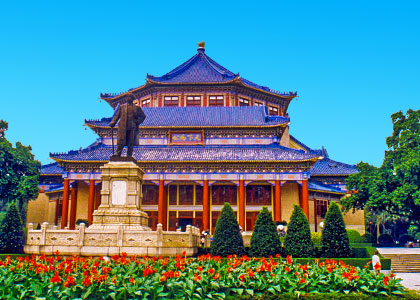
2 to 3 days is overall enough to cover the main highlights, including Yuexiu Park, Shamian Island, Canton Tower, Sun Yat-sen Memorial Hall, Temple of the Six Banyan Trees, Chen Clan Ancestral Hall, and Mausoleum of the Nanyue King. If you have 4 to 5 days, consider venturing out to nearby, lesser-known gems: Foshan, the birthplace of Bruce Lee; Kaiping, renowned for its exotic fortress-like dwellings; Shunde with classical Chinese gardens; or Chimelong for world-class entertainment resorts. Welcome to contact our English-speaking travel experts for a custom-made Guangzhou tour package just for you.
What to see in Guangzhou for 3 days?
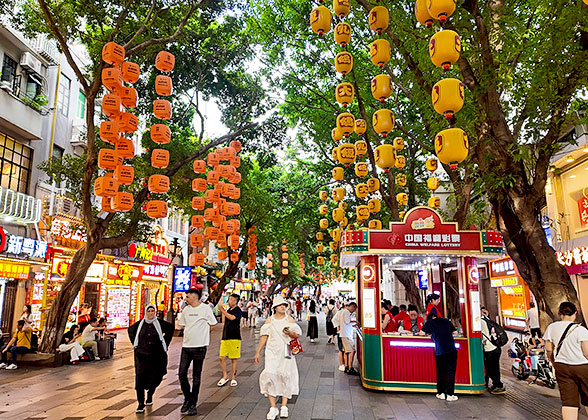
In one day, start your Guangzhou itinerary in Yuexiu Park with six-century-old city walls, the iconic Five-Ram Sculpture, and authentic local life; then, admire Shamian Island’s European architecture and feel the bustling nightlife on Beijing Road. Set aside another day to appreciate exquisite carvings at Chen Clan Ancestral Hall and trace 2,000 years of royal history at the Mausoleum of the Nanyue King, before a night cruise down the Pearl River to view the neon-lit Canton Tower. On the last day, soak in Buddhist tranquility at the Temple of the Six Banyan Trees and take an evening food tour to taste classic local snacks in Tongfu East Road.
Which month is best to visit Guangzhou?
March to May and October to December are the best times for your Guangzhou tour. Pleasant temperatures and vibrant natural scenery are perfect for outdoor sightseeing and landscape photography. During these months, lightweight hoodies or long-sleeve tops, jeans, and well-fitted walking shoes are highly recommended.
June to August is both the hottest and rainiest season, with July often reaching highs of 35℃ (95℉) or above. If you travel during this period, please pack breathable clothes and shoes, sun-protective essentials, and rain gear. Though there is no harsh winter, the average temperature in January, the coldest month, stays around 10℃ (50℉), so you’d better prepare a cardigan or windbreaker as an outer layer. As the typhoon season normally lasts from July to September, please check the local weather forecast well in advance before your arrival.
Note: Avoid the National Day Golden Week from October 1st to 7th, one of the busiest domestic travel periods, when attractions are overcrowded, hotel prices skyrocket and rooms become hard to find, and traffic becomes heavily congested, which will likely leave you with an unpleasant travel experience.
What is the best area to stay in Guangzhou?
It really depends on your travel needs. The central Yuexiu District is a top choice for newcomers, owing to its convenient transportation, rich historic sites, and authentic local delicacies. If you’re a business traveler or a shopping enthusiast, Tianhe District is ideal. For those preferring to explore Cantonese dim sum culture and secluded arcaded streets, Liwan District is the place to be. Haizhu District ranks best for evening strolls along the Pearl River and visiting exhibitions. If your Guangzhou trip includes an amusement park or a zoo, it’s advisable to stay in the Panyu District.
How to get to Guangzhou?
As a key international aviation hub in China, Guangzhou Baiyun International Airport (CAN) offers 146 international direct routes to 105 popular destinations worldwide, such as Los Angeles, Sydney, Melbourne, Vancouver, Osaka, Singapore, Kuala Lumpur, Incheon, Bangkok, and Phnom Penh. Domestically, the city is also well connected to major cities, including Shanghai, Beijing, Xi’an, Hong Kong, Chengdu, and Hangzhou, via frequent flights and high-speed trains.
How far is Guangzhou from Hong Kong?
Separated by 170 kilometers (106 miles), Guangzhou and Hong Kong connect seamlessly by bullet train, cross-border direct bus, ferry, and chartered car. The bullet train is the most popular and convenient option, with 60 daily services running from 7:20 to 22:43, taking 1-1.5 hours for one way. First-class tickets cost USD 44-51, and second-class USD 27-32. Budget-conscious travelers can take the direct bus, with over 30 daily departures from 7:00 to 21:15. It makes multiple stops along the way, with a 3-to-3.5-hour drive priced at USD 15-32 per person. If travelling by ferry, you can depart from Hong Kong’s China Ferry Terminal at 7:45, 13:00, and 17:00 daily. Each one-way voyage lasts 1.5-2 hours and costs USD 28-41 per head. For visitors who prefer more freedom and travel with their families, consider chartering a private car. It takes 1.5-2 hours and costs around USD 300. Traveling by taxi is pretty troublesome. Taxis cannot cross the border, so you have to take separate rides on either side, and carry your baggage through customs personally, with total fares starting from USD 80.
Thanks to well-developed transportation links, a day trip from Hong Kong to Guangzhou has become an easy and trendy getaway. The classic route goes: travel to Guangzhou by bullet train, savor Cantonese dim sum, visit Chen Clan Ancestral Hall, then choose between the Mausoleum of the Nanyue King and Shamian Island, and end with a scenic Pearl River night cruise. Fancy a hassle-free trip? Take our day tours between the two cities, with seamless transfers and intimate service.
What is the most famous food in Guangzhou?
Dim sum is Guangzhou’s signature food, including chewy shrimp dumplings, paper-thin rice noodle rolls, velvety wonton noodles, and savory sampan congee. Cantonese roasted and cured meats, as well as white cut chicken, are also well worth trying. For desserts, don’t miss classic double-skin milk pudding, crowned with sweet red beans and mango chunks. To beat the heat and refresh your taste buds, drink up a chilled mung bean smoothie.
What should I buy in Guangzhou?
Guangzhou has abundant supplier factories for light industrial and tech products, offering a great variety and competitive prices. Thus, many large malls and wholesale markets are worth a visit, where you can always discover cost-effective souvenirs and goods, from tea, tea sets, silk textiles, clothing, electronics, and accessories, to dried seafood, Cantonese pastries, and traditional handicrafts.
Is Guangzhou a walkable city?
Yes, it’s walkable overall, particularly when you look at its most popular tourist districts. Highlights such as Beijing Road, Shangxiajiu Pedestrian Street, Shamian Island, and Flower City Square are designed to be pedestrian-friendly, with stores, cafes, and sights all within easy walking distance, allowing you to explore at a leisurely pace for a truly fantastic experience.
What to do in Guangzhou at night?
Beyond the iconic Pearl River night cruise, you can ascend the Canton Tower for 360-degree dazzling nightscapes of the city from over 400 meters (1,312 feet) high. If you wish to capture the nostalgic allure of old streets, Yongqingfang Street’s unique arcades and the glimmering reflections off Moon Bridge offer perfect photo ops. Alternatively, dive into the local late-night food scene - get lost in Zhicun Night Market or along Xihua Road to savor authentic Cantonese bites and lively street-side flavors.
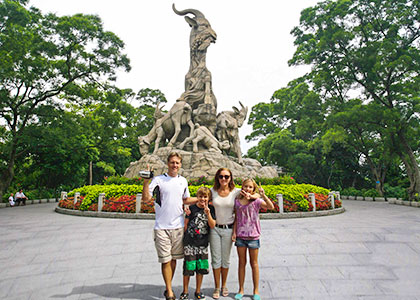 3 Days Best Guangzhou City Tours from USD339
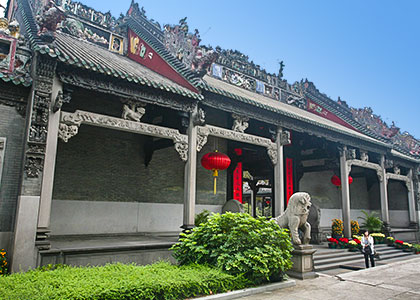 2 Days Private Guangzhou Trip with All Highlights from USD299
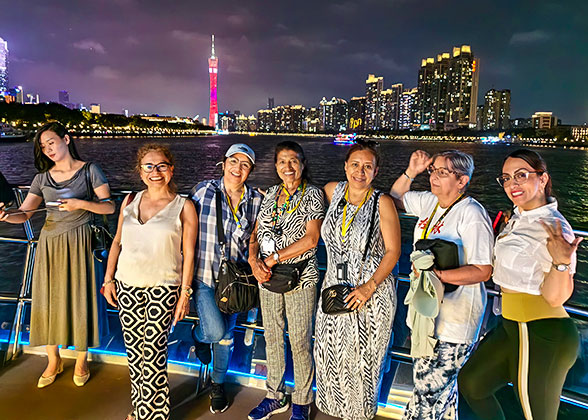 Guangzhou Night Walking with Local Foodie Guide from USD79
 Guangzhou Day Trip to Chikan Ancient Town & Kaiping Diaolou from USD179
 1 Day Shunde Tour from Guangzhou to Qinghui Garden, Bijiang Golden House & Baolin Temple from USD139
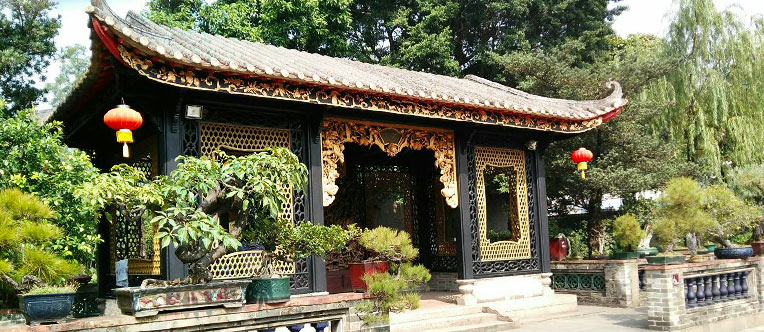 One Day Foshan Trip from Guangzhou to Liang’s Garden, Ancestral Temple & Ancient Nanfeng Kiln from USD139