How many days in Hong Kong is enough?
For first-timers, 3 to 4 days is usually sufficient to truly experience the local essence. Cover the highlights, including Victoria Peak, Repulse Bay, Stanley Market, Aberdeen, Man Mo Temple, Pottinger Street, Central Market, Hollywood Road, Avenue of the Stars, and Lan Kwai Fong, in just 2 days. On the 3rd day, venture out to nearby Lantau Island to explore Ngong Ping 360 Cable Car, Big Buddha, Po Lin Monastery, and Tai O Fishing Village. If you have an extra day and travel with kids, Disneyland is highly recommended. For longer holidays, consider taking China tours from Hong Kong to other popular cities such as Macau, Shanghai, Xi’an, and Guangzhou, all easily accessible thanks to the well-developed transport network.
When is the best time to visit Hong Kong?
September to November is the prime time for a Hong Kong tour, as clear skies and low humidity create perfect conditions for outdoor activities. The average temperature hovers around 23℃ (73℉), calling for short- or long-sleeve shirts, a lightweight windbreaker, jeans, and casual sneakers. March to May is the second-best travel window. Despite higher humidity and persistent fog, it delights visitors with beautiful blooms and scenic greenery. December to February marks the coldest months, yet conditions remain mild. Plus, shopping malls roll out substantial holiday-season discounts at this time.
It’s better to avoid June to August, given sultry weather and frequent typhoons. If your travel plans fall within this period, be sure to bring adequate sun protection, prioritize indoor activities and nightlife, and check the local weather forecast before departure.
Do I need a visa to visit Hong Kong?
Citizens from 170 visa-free countries, such as the United Kingdom, the United States, Australia, Canada, Japan, South Korea, and most European Union nations, can enter without a visa for periods ranging from 7 to 180 days. Check the list of
Hong Kong Visa Exemptions for Foreign Countries. If you plan to stay longer than permitted, or come for work, residency, or further study, please apply for a visa in advance.
How do I get to Hong Kong?
If you’re traveling internationally, the most common way is to fly into Hong Kong International Airport (HKG), which offers direct flights from nearly 100 global hotspots, including New York, Los Angeles, Sydney, Paris, London, Osaka, Singapore, Bangkok, and Seoul. For visitors already in Mainland China, Hong Kong provides excellent connectivity via air and high-speed rail to major cities such as Beijing, Shanghai, Xi’an, Hangzhou, and Chengdu. Additionally, it is accessible by ferry from Macau, and by high-speed rail, direct cross-border coaches, or ferry from Shenzhen, Guangzhou, or other coastal cities.
Is English widely spoken in Hong Kong?
Yes, English is widely used as an official language alongside Chinese. In major tourist areas, large shopping malls, hotels, and on traffic signs, bilingual information is common. Moreover, most service staff can also communicate in English.
What currency is used in Hong Kong? Where can I exchange money?
The Hong Kong Dollar (HKD) is the official currency. Currency exchange services are readily available at banks, star-rated hotels, shopping malls, and dedicated exchange counters, though exchange rates and service fees may vary. Major international credit cards such as Visa, Mastercard, and American Express are widely accepted for payments and ATM withdrawals.
It is advisable to exchange some HK dollars at the airport upon your arrival to cover your city-bound travel fees. Once you reach downtown, exchange money at local banks for better rates.
How to get around Hong Kong?
1. MTR (Mass Transit Railway) - Most Efficient
With frequent services, it covers the entire city, including the Airport Express. It runs daily from 6:00 to 1:00. One-way fares: roughly USD 0.5 to 8.
2. Buses - Ideal for City Sightseeing
Double-deckers are preferable to minibuses, as they offer English signs and great upper-deck views, serve non-MTR areas like Stanley and parts of Lantau Island, and have fares similar to MTR tickets.
3. Ding Ding Trams - Cheap and Leisurely
Unique to Hong Kong Island, only USD 0.4 per ride.
4. Star Ferry - For Harbor Lovers Without Seasickness
It offers a scenic ride across Victoria Harbor, with regular routes running between Central or Wan Chai and Tsim Sha Tsui for USD 0.5 per trip.
5. Taxis - Expensive but Convenient
They are categorized by color: red for downtown areas, green for New Territories, and blue for Lantau Island. The red one is the most expensive, with a fare of USD 3-4 for the first 2 km (1.2 mi). Tunnel and luggage charges apply additionally.
► Useful Advice: For those who stay over two days or take public transport frequently, an Octopus card is the most cost-effective pick. If you seek a hassle-free journey, our Hong Kong private tour packages offer popular itineraries and seamless transfers.
What to eat and drink in Hong Kong?
Fusing Chinese and Western flavors, local cuisine features a mild and tender taste with a lingering sweetness. Its signature staples include wonton noodles, roast goose, and stir-fried beef with rice noodles, while street snacks like curry fish balls and egg puffs are worth a bite. Satisfy your sweet tooth with egg tarts, pineapple buns, and double-skin milk pudding, matched with iced local milk tea or lemon tea.
How to travel from Hong Kong to Macau?
You can choose from four common ways to reach Macau. The most popular is a 1-hour high-speed ferry offering stunning seascapes, with tickets at USD 26-58 per passenger. Another convenient option is the 24-hour cross-border bus via the Hong Kong-Zhuhai-Macau Bridge. With frequent schedules, it takes 40 minutes and costs roughly USD 9 per person. Direct coaches suit families who want fewer transfers within the city, with a 2-hour journey priced at USD 20-24. If you desire utmost comfort without separate customs checks, consider booking a chartered car, which completes the trip in 1.5 hours at USD 29-44 per head.
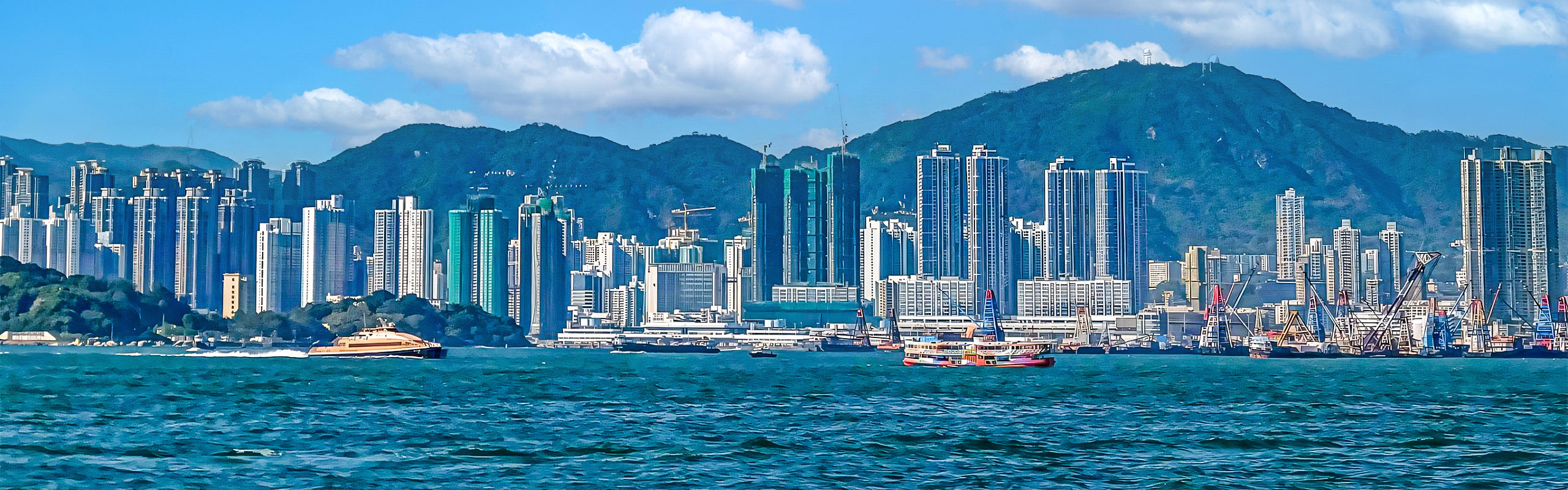
 3 Days Hong Kong Private Tour from USD549
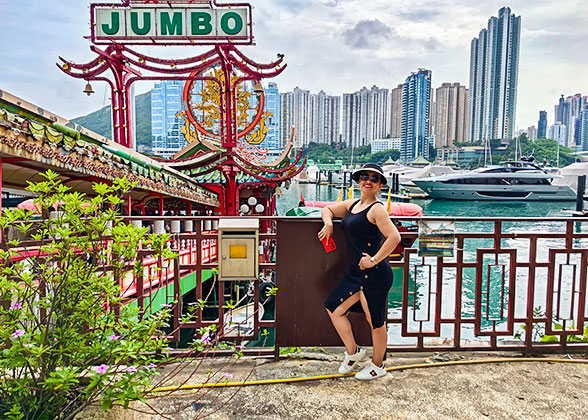 Half Day Hong Kong to Victoria Peak, Repulse Bay or Stanley Market, & Aberdeen with Sampan Trip USD269
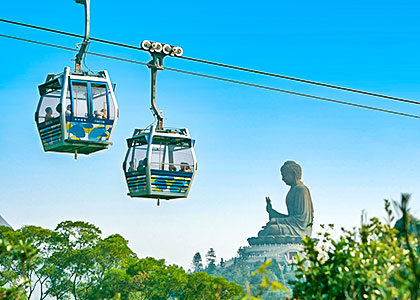 1 Day Hong Kong to Lantau Island & Big Buddha USD399
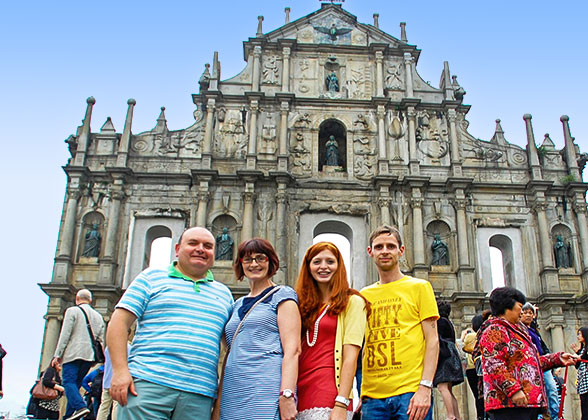 Full Day Seat-in-Coach Macau Trip from Hong Kong to Ruins of St. Paul’s, Macau Tower, A-Ma Temple, & Casino USD179
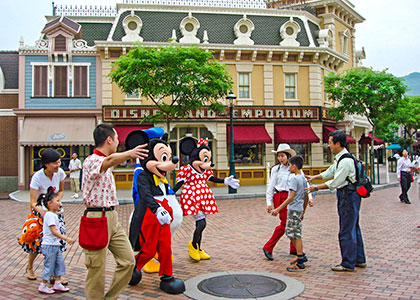 4 Days Hong Kong Family Tour to Disneyland, Victoria Peak, & Aberdeen Harbour with Sampan Ride USD1129
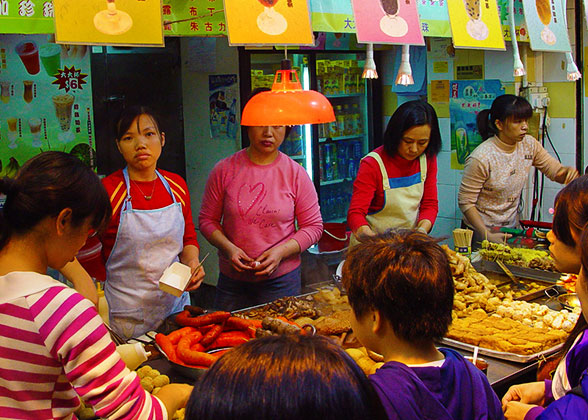 Hong Kong Walking Tour with Local Foodie Guide from USD249