Qianling Mausoleum (Qian Ling)
 |
 Qianling Mausoleum Pictures Qianling Mausoleum Pictures |
The Tang Dynasty is a truly fascinating period of Chinese history, not only for its high culture but also the personalities that left their mark on the epoch. It is not surprising that they should have had impressive burials and that in view of her powerful and dominating character that the Empress should have shared her late husband's tomb. This is the only instance of a mausoleum shared in this way and of course, Wu Zetian was the only woman to have ruled China.
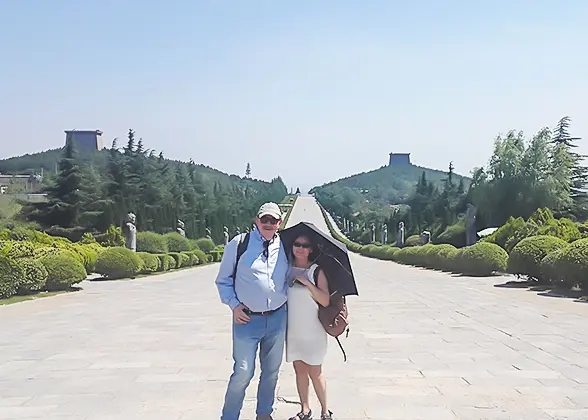
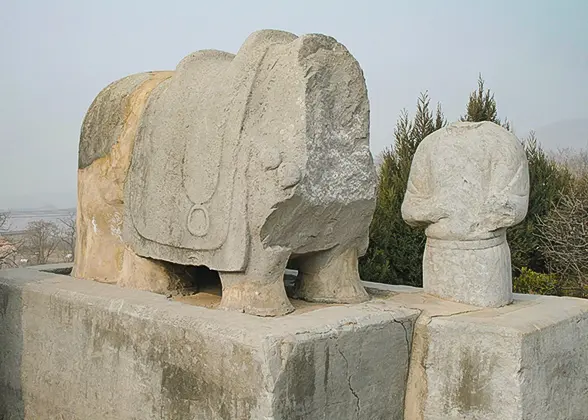
The design of Qianling replicates the city of Chang'an and in accordance with tradition is on a north-south axis. The southern approach is set between two smaller hills and the way to the Emperor's tomb is lined with stone animals as well as human figures. These include horses and ostriches, winged horses and a pair of stone lions. In all there are 124 stone sculptures and these are reminders of the fact that the Tang was very much involved with trade and diplomatic exchange with the world far beyond China's borders as there are distinct Western Asian and Greek influences in these sculptures.
The tomb is of a very strong and secure construction and is notable as the only mausoleum to escape the unwelcome attention of tomb robbers.
What to View in Qianling Mausoleum?
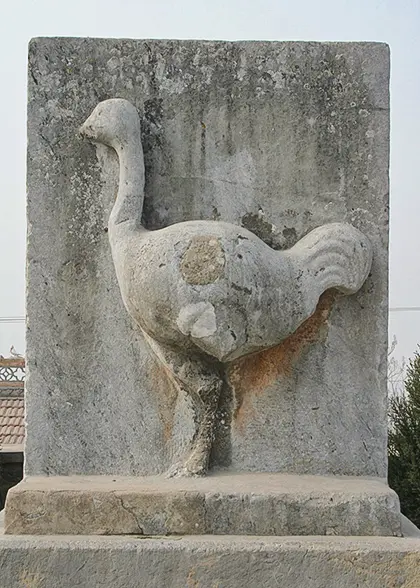 |
| Stone Ostrich in Qian Mausoleum |
Two ornamented octagonal columns mark the south entrance and the mythical winged horses are the first of the sculptures. The pair of ostriches was a gift from Afghanistan; of the five pairs of horses that are next along the route only three still have their attendant grooms. Ten pairs of military figures bearing swords stand guard along the path.
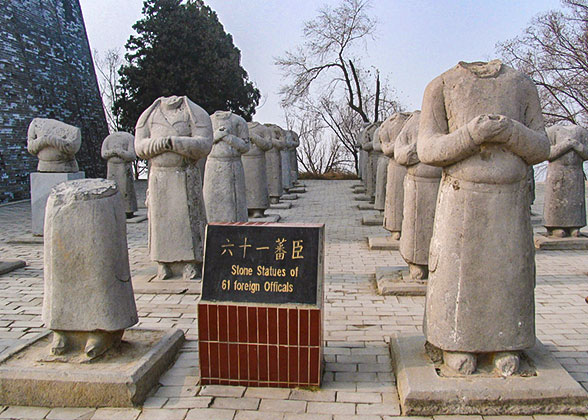
61 Headless Sculptures of Foreign Officials
During the Emperor Gaozong’s reign, the Tang Dynasty regime was quite strong and had made diplomatic ties with more than 100 countries. It’s said that after the emperor died, more than 60 ones had sent emissaries to express condolences. To record this grand scene and show Tang’s great strength, the Empress Wu ordered painters to draw it and also commanded the construction of stone sculptures representing these emissaries.
These sculptures clasped their hands to show respect and worship. In terms of their dressing, it’s different from that of Tang people. Each figure is depicted in a long robe with a wide belt and wearing boots. Besides, the name and country of each emissary were inscribed on the back of the sculpture, which are hard to see clearly now.
Why are all these sculptures decapitated? There are so many stories, and one of the most popular versions goes like this: About 400 years ago, an emissary coming to Qianling Mausoleum for a visit, saw the sculpture of his ancestor actually paying respectful homage to the emperor here, and felt extremely ashamed. He burned crops of local villagers that sustained their livelihoods, and spread a rumor that these sculptures performed the bad deed. That enrages local farmers, and they broke off all the heads of sculptures.
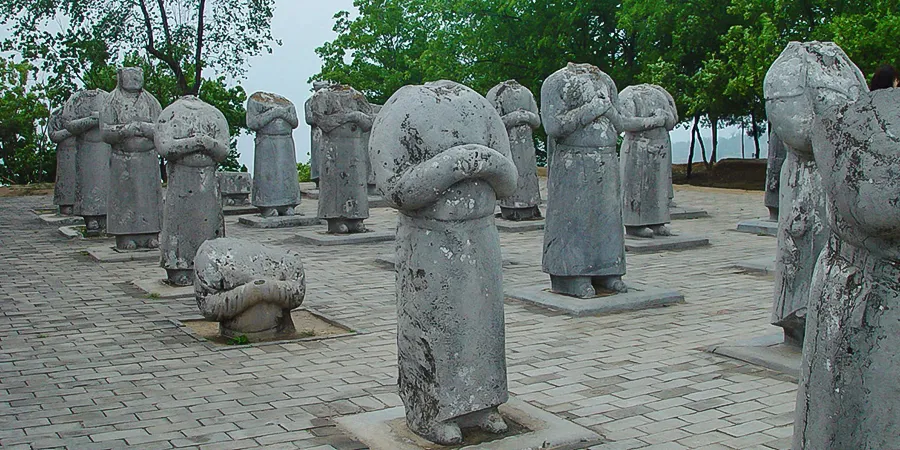 |
| Sculptures of 61 Headless Foreign Officials |
Two Must-see Tablets in Qianling Mausoleum
An unusual feature is the Blank Tablet that has carved dragons and oysters upon it but no inscription, there is nothing like this at any other royal tomb site. It is thought that this tablet was erected upon the orders of the Empress and that it would eventually bear a description of her achievements, to be recorded by some future generation. Maybe she thought that in this way only her good deeds would be remembered and recorded for posterity!
|
|
How to Get to Qianling Mausoleum
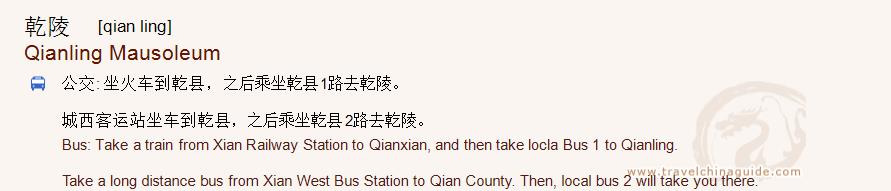
2. Take a long-distance bus from Xi'an West Intercity Bus Station to Qianxian County, and the bus ride takes about 1 hour and costs about USD 4. Upon arrival, you can either spend about USD 2 on a taxi ride for about 10 minutes or less than USD 1 on taking Bus Line 2 for about 30 minutes to get to the attraction.
 Xi'an Bus / Metro Search
Entrance Fee and Opening Hours of Qianling Mausoleum
| Entrance Fee | March to November: CNY 100 December to February: CNY 80 Free for children under 1.2 meter (3 feet 11 inches) and seniors over 65 years old. Note: The ticket fare includes admissions to the main mausoleum, the Tomb of Prince Yide, the Tomb of Princess Yongtai, Qianling Museum, and the Tomb of Crown Prince Zhanghuai, which are all in the Qianling Mausoleum attraction. |
|---|---|
| Sightseeing Vehicle | CNY 20 Note: Since the imperial mausoleum and the tombs are more than 5 kilometers (3 miles) apart, to gain a comfortable and convenient travel experience, it’s highly recommended to take the sightseeing vehicle during your tour. |
| Opening Hours | March to November: 8:00-18:00 December to February: 8:30-17:30 |
| Suggested Visit Duration | Half a day. |
Qianling Mausoleum Tickets Booking Qianling Mausoleum
Recommended Tours
- Last updated on Mar. 27, 2026 by Alex Jin -