Jingdezhen Handicraft Porcelain Industry Sites Inscribed as China’s 61st UNESCO World Heritage Property

Published: 07/28/2026
On July 25, 2026, at the 48th session of the UNESCO World Heritage Committee held in Busan, South Korea, the Jingdezhen Handicraft Porcelain Industry Heritage of China was successfully inscribed on the World Heritage List. With this addition, China now has a total of 61 World Heritage sites.
So, what exactly is the Jingdezhen Handicraft Porcelain Industry Heritage, and what merits its inclusion on the prestigious World Heritage List?
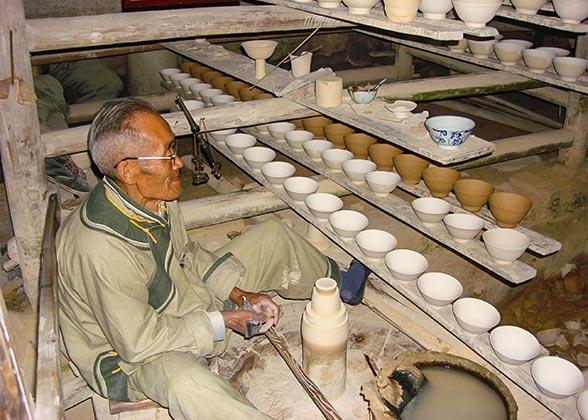
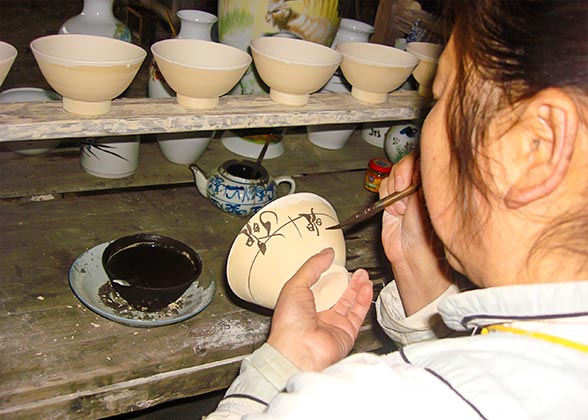
Nestled in northeastern Jiangxi Province, Eastern China, the Jingdezhen Handicraft Porcelain Industry Heritage comprises five core components: the central porcelain production zone, the ancient Hutian Kiln Site, the Gaoling Kaolin Mine Site, the Changling Porcelain Stone Mine Site, and the Jiaotan Firewood Production Area. Encompassing 15 groups of heritage elements and 45 individual heritage sites in total, it covers the full industrial chain of traditional handmade porcelain craftsmanship, including raw material sourcing, fuel supply, centralized porcelain manufacturing, and waterway transportation systems. Spanning a total area of 1,979 hectares (4,890 acres), the heritage zone is equivalent to more than 2,400 standard football fields.
You may like: Jingdezhen Travel Guide
Criterion 2: The site bears exceptional witness to the innovative integration of ceramic technology and artistic aesthetics in Jingdezhen spanning from the 10th to the 19th centuries. While celadon embodies the quintessence of traditional Chinese ceramic craftsmanship, blue and white porcelain, enamel-colored porcelain and polychrome porcelain represent a perfect fusion of indigenous Chinese techniques and cross-cultural elements, incorporating Middle Eastern cobalt pigments and European colorants. Widely disseminated across the globe, the artistic styles of Jingdezhen’s blue and white and polychrome porcelain have been studied and replicated worldwide.
Criterion 3: Jingdezhen preserves uninterrupted relics of ceramic production from the 10th through the 19th centuries, including complete production facilities, industrial layouts, technical systems, as well as traces of ancient production modes and social organizational structures. Collectively, the five constituent components serve as a comprehensive and authentic testament to China’s traditional handmade porcelain industry.
Criterion 4: Groundbreaking innovations in ceramic decoration techniques - including the dual-ingredient formula that mix plateau clay and porcelain stone, blue and white porcelain and polychrome porcelain craftsmanship - alongside progressive kiln technologies such as gourd-shaped kilns and egg-shaped kilns, have fueled the diversified evolution of ceramic shapes and decorative styles. Furthermore, Jingdezhen’s professionalized and standardized handicraft production model enabled high-quality, high-efficiency and large-scale porcelain manufacturing in the pre-industrial era. It stands as an exemplary global benchmark for innovations in ceramic technology, artistry and industrial organization.
Criterion 6: As a pivotal commodity in global trade throughout the 17th and 18th centuries, Jingdezhen porcelain laid a solid foundation for Europe’s prevailing Chinoiserie aesthetic trend. Its distinctive Eastern cultural motifs profoundly influenced European decorative arts, reshaping local patterns, paintings, furniture designs and architectural ornamentation across the continent.
8 Days Beijing - Xi'an - Shanghai
11 Days Beijing - Xi'an - Guilin - Yangshuo - Guilin - Shanghai
14 Days Shanghai - Zhangjiajie - Guilin - Xian – Beijing
21 Days Private Tour of Beijing - Xi'an - Chengdu - Lijiang - Dali - Kunming - Guilin - Yangshuo - Guilin - Zhangjiajie - Shanghai - Suzhou – Shanghai
So, what exactly is the Jingdezhen Handicraft Porcelain Industry Heritage, and what merits its inclusion on the prestigious World Heritage List?
Nestled in northeastern Jiangxi Province, Eastern China, the Jingdezhen Handicraft Porcelain Industry Heritage comprises five core components: the central porcelain production zone, the ancient Hutian Kiln Site, the Gaoling Kaolin Mine Site, the Changling Porcelain Stone Mine Site, and the Jiaotan Firewood Production Area. Encompassing 15 groups of heritage elements and 45 individual heritage sites in total, it covers the full industrial chain of traditional handmade porcelain craftsmanship, including raw material sourcing, fuel supply, centralized porcelain manufacturing, and waterway transportation systems. Spanning a total area of 1,979 hectares (4,890 acres), the heritage zone is equivalent to more than 2,400 standard football fields.
|
|
You may like: Jingdezhen Travel Guide
The World Heritage Committee has confirmed that the Jingdezhen Handicraft Porcelain Industry Heritage satisfies four World Heritage inscription criteria:
Criterion 2: The site bears exceptional witness to the innovative integration of ceramic technology and artistic aesthetics in Jingdezhen spanning from the 10th to the 19th centuries. While celadon embodies the quintessence of traditional Chinese ceramic craftsmanship, blue and white porcelain, enamel-colored porcelain and polychrome porcelain represent a perfect fusion of indigenous Chinese techniques and cross-cultural elements, incorporating Middle Eastern cobalt pigments and European colorants. Widely disseminated across the globe, the artistic styles of Jingdezhen’s blue and white and polychrome porcelain have been studied and replicated worldwide.
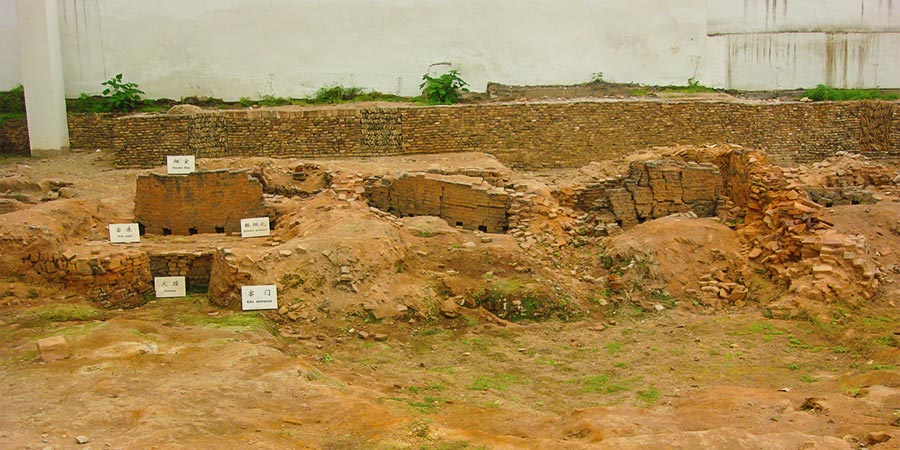 |
| Hutian Kiln Site |
Criterion 3: Jingdezhen preserves uninterrupted relics of ceramic production from the 10th through the 19th centuries, including complete production facilities, industrial layouts, technical systems, as well as traces of ancient production modes and social organizational structures. Collectively, the five constituent components serve as a comprehensive and authentic testament to China’s traditional handmade porcelain industry.
Criterion 4: Groundbreaking innovations in ceramic decoration techniques - including the dual-ingredient formula that mix plateau clay and porcelain stone, blue and white porcelain and polychrome porcelain craftsmanship - alongside progressive kiln technologies such as gourd-shaped kilns and egg-shaped kilns, have fueled the diversified evolution of ceramic shapes and decorative styles. Furthermore, Jingdezhen’s professionalized and standardized handicraft production model enabled high-quality, high-efficiency and large-scale porcelain manufacturing in the pre-industrial era. It stands as an exemplary global benchmark for innovations in ceramic technology, artistry and industrial organization.
|
|
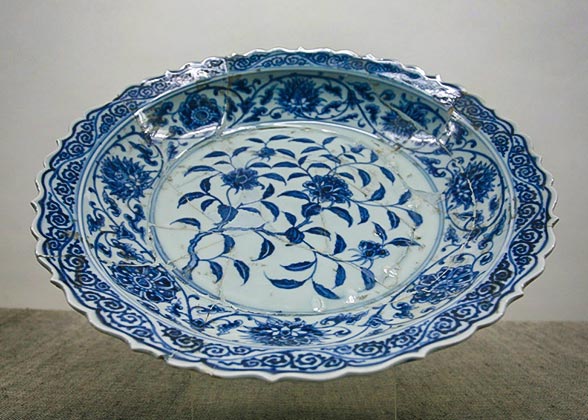
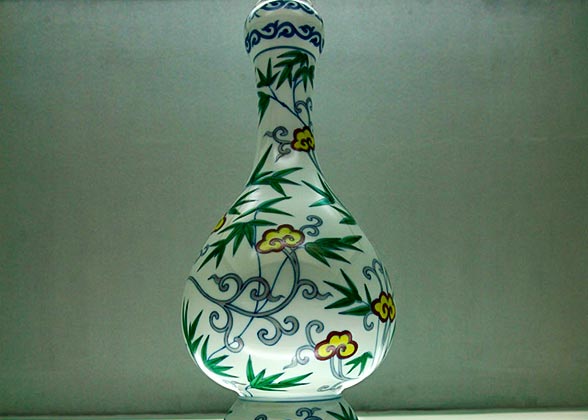
Criterion 6: As a pivotal commodity in global trade throughout the 17th and 18th centuries, Jingdezhen porcelain laid a solid foundation for Europe’s prevailing Chinoiserie aesthetic trend. Its distinctive Eastern cultural motifs profoundly influenced European decorative arts, reshaping local patterns, paintings, furniture designs and architectural ornamentation across the continent.
Other Notable World Heritage Sites in China:
- Great Wall of China
- Forbidden City, Beijing
- Terracotta Army, Xi'an
- Mogao Caves, Gansu
- Potala Palace, Lhasa
- The Classical Gardens of Suzhou
- Summer Palace, Beijing
- Temple of Heaven, Beijing
- West Lake, Hangzhou
- Silk Road
Best China Tours:
11 Days Beijing - Xi'an - Guilin - Yangshuo - Guilin - Shanghai
14 Days Shanghai - Zhangjiajie - Guilin - Xian – Beijing
21 Days Private Tour of Beijing - Xi'an - Chengdu - Lijiang - Dali - Kunming - Guilin - Yangshuo - Guilin - Zhangjiajie - Shanghai - Suzhou – Shanghai