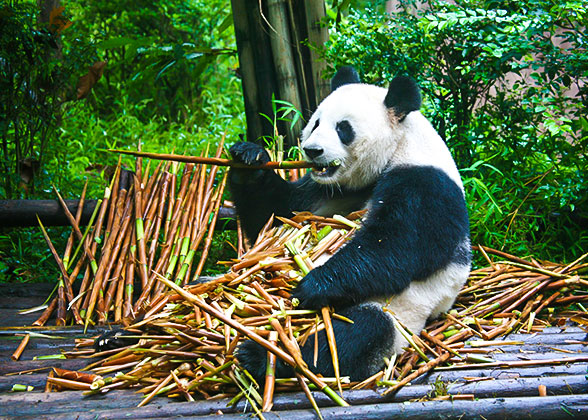
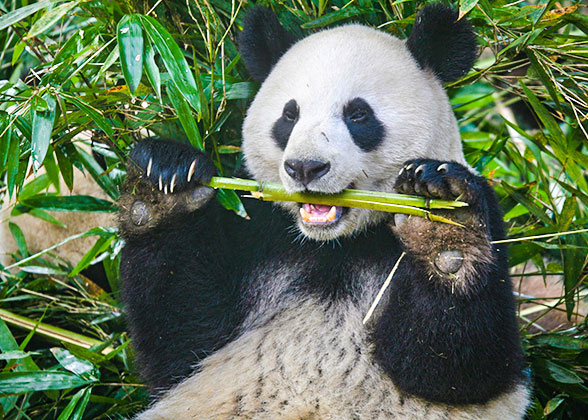
Everybody loves the giant panda! With its black-white coat, the adorable fluffy animal is one of the most precious animals in the world. It is native to China, proudly called the 'national treasure'. Apart from
The Great Wall,
Terra-Cotta Warriors, and
Forbidden City, it has also become an important temptation to world-wide tourists.
As the most well-known celebrity of China, it appears in the logo of the World Wildlife Fund for Nature (WWF), preeminently endorses the Olympics and many other international games held in China as a mascot, shows up as a versatile actor on the big screen, such as the Kung Fu Panda.
Any animative movements of the giant panda will draw wide attention and generate happiness. They are cute and cuddly with cool eye patches and dopey gestures. There are many reasons why people love them and the most important one is that they are rare and endangered. It has been absolutely a perfect reason to embark on a panda adventure.
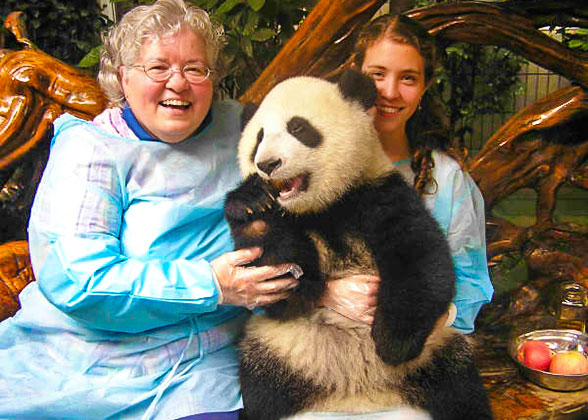 | | Our Guests in Wolong Panda Reserve | | 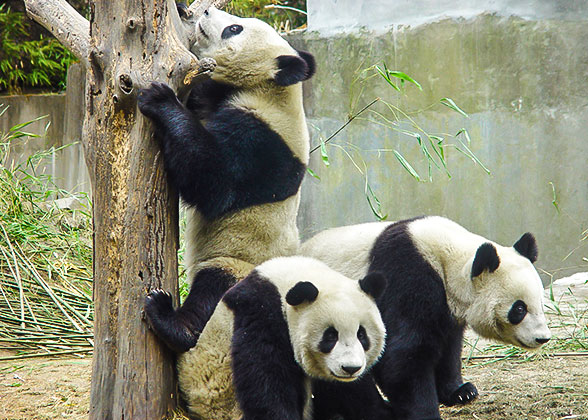 | | Lovely Pandas | |
Where to See Pandas?
Chengdu is the best place! The main captive breeding centers were built around this area.
Some city zoos also have captive giant pandas, such as:
The name of 'Panda' now refers to the giant panda but also referred to the lesser panda at the very beginning. There are two subspecies, one living in Sichuan and the other in Qinling Mountain (in Shaanxi). The files here is ready to introduce every fact of this lovely creature, its appearance, length, weight, living habit, food, natural habitat …
Click FAQs to see more.
Conservation
The giant panda now only lives in a few mountain ranges in central western and south western China, mainly in Sichuan Province, and also available in Shaanxi and Gansu provinces. It is classified to be an endangered species by the International Union for Conservation of Nature (IUCN). According to the official report based on 1999-2000 census, There are 1,590 that live in the wild in their natural habitats. The number was pessimistically estimated as 1,000 several years ago. A new round of census has begun since the middle of 2011, and the number is expected to be updated very soon.
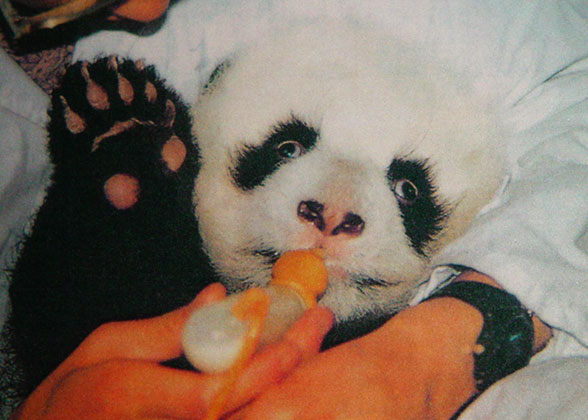 | | Three-month Old Baby Panda | | 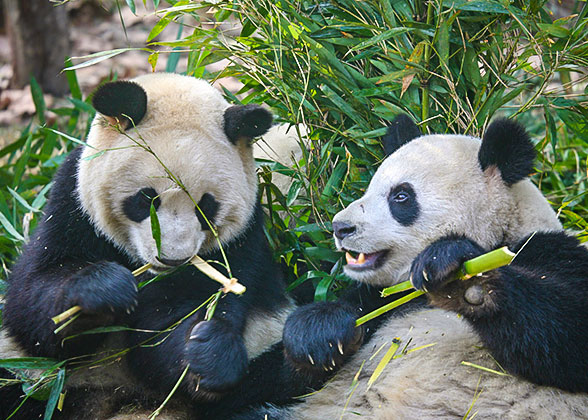 | | Pandas in Chengdu | |
Reproduction
The Giant Pandas' mating season is only 2-4 days during March to May. If missed, they will wait till the next year. One female panda will usually breed only one baby, and it is not easy for wild pandas to have twins anyway. The lowered fertility generated the research on captive breeding. The China Conservation and Research Centre for the Giant Panda was established in 1983, jointly by Wolong National Reserve and WWF whose inspired from a panda named Chi Chi who was transferred from the Beijing Zoo to the London Zoo in 1958. The number of captive giant pandas reached 328 by the end of 2011. This is a great accomplishment.
It was a French missionary, Armand David, who let the whole world know of this unique creature. He called it white-black bear. In 1963, an American fashion designer brought the first live giant panda to the western world.
The giant panda is China's national treasure and was regarded as the symbol of valiancy and peace. Its diplomatic career is sparkling. In Japanese history records, the court of the Tang Dynasty (618 - 907) sent two bears and seventy pieces of fur as national gift to Japan. The 'two bears' were testified to be giant pandas. American President Nixon's visit to PRC in1972 brought huge fame to the giant panda.
FAQ
Why is this creature so precious?
It is an endangered species. These factors increase the rarity: reduction of natural habitats due to deforestation, mining and pollution; occasional illegal poaching and fur smuggling; small chance of having offspring and a minimal survival rate; bamboo flowering.
When did the giant panda appear in the earth?
Their ancestor is Ailuaractos lufengensis, also called primal panda that lived several million years ago. The main species evolved in central and southern China, then into further areas. The zenith of the giant panda falls between 500-700 thousand years ago.
What do they eat?
Pandas mainly eat bamboo, especially cold-hardy bamboo, Thorny Bamboo, bisset bamboo (Phyllostachys bissetii) and umbrella bamboo (Fargesia robusta). Besides bamboo, captive giant pandas' food also includes milk, eggs, vitamins, apples and maize bread. If you feed them meat, they will still eat it. However, they will not leap to hunt.
Are they forced to eat bamboo?
This saying makes sense to some extent. The scientists believe that are growing population and activity of human beings forced them to move to highlands. They used to be carnivores a long time ago and later choose to eat bamboo to avoid hunting competition with black bears.
Why do they look so lazy?
Although they will eat on average of 20 kg of bamboos every day, they cannot gain much nourishment. They can only digest about 17% of the food even with the special bacteria unique to them. They wander slowly to conserve strength.
Yes, they can swim and it is an important skill for him to escape from their enemies.
Are there any volunteer programs for visitors to take care of them?
Yes, Bifeng Gorge Panda Base and Chengdu Research Base of Giant Panda Breeding have volunteer programs. For the latest news, check the official notices of these two organizations.
What are the best hours to see captive giant pandas?
They are lazy outside morning hours, especially in summer. It is best to see them in early morning. They are most active around 9 a.m.., so it's better to go there before 9:30 a.m..
- Last updated on Jun. 17, 2026 by Rachel Hou -