Guozijian Street, recognized as a National Historical and Cultural Street, is the soul of Beijing's scholarly tradition. Unlike the bustling crowds of South Gong and Drum Lane, a stroll here is a peaceful immersion in the fragrance of ancient scholar trees, where sunlight filters through the leaves to dance upon crimson walls and golden roof tiles.
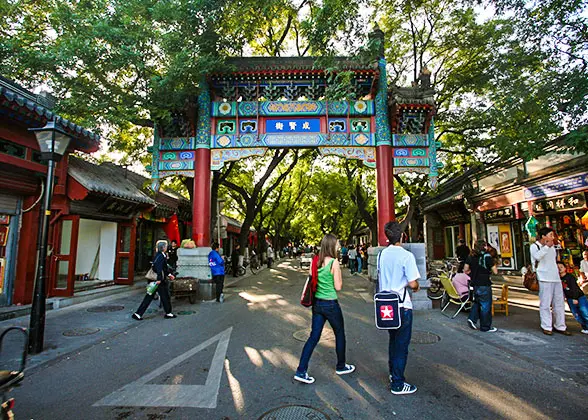 | | Glazed Archway of Guozijian | | 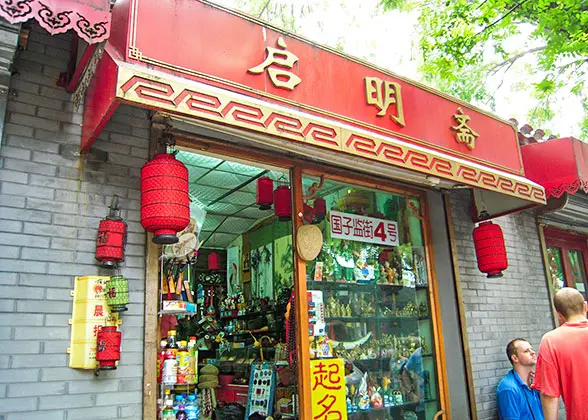 | | Shop on the Street | |
The Heart of Ancient Education
The serene atmosphere of Guozijian Street stems from its history as the "Ivy League" of ancient China. Established over 700 years ago during the
Yuan Dynasty (1271-1368), the street follows a traditional layout: "The temple on the left, and the school on the right." To the east lies the
Confucius Temple, built to honor
Confucius, China's greatest philosopher. To the west stands the
Imperial College, the highest national academy. In an era when education was the only path to success, this street was the ultimate destination for the empire's brightest students, who traveled from thousands of miles away to study here and take the grueling imperial examinations.
The Pursuit of "Sainthood"
During the
Qing Dynasty (1644-1911), the street was named the "Achieving Sainthood Street." To ancient scholars, education was more than just finding a job; it was a spiritual journey to refine one's character and become a "sage"—a person of perfect virtue. Today, you can still see the elegant characters for "Achieving Sainthood Street" inscribed on the majestic wooden archways that span the street.
Archways - The Gateway to Wisdom
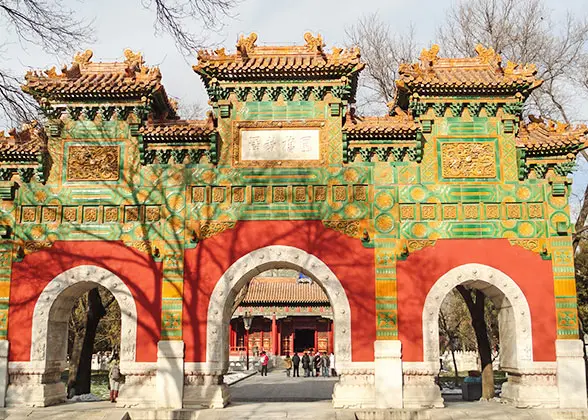 |
| Glazed Archway of Guozijian |
As you enter, you are greeted by four magnificent ancient archways. These brightly painted structures are the only original archway cluster remaining on a street. They serve as a "grand entrance," reminding every passerby that they are stepping into a sacred zone of knowledge.
Imperial College - The Highest Institute of Learning
Inside the Imperial College, look for the glazed archway, a masterpiece of colorful ceramic art built specifically to honor education. In the main hall, you can see the imperial throne where the emperor himself would deliver lectures.
Notice the Ao (a mythical sea turtle) carved into the stone steps. The Chinese idiom "standing alone on the Ao's head" refers to ranking first in the imperial exams. Follow the local tradition and rub the carving—it's believed to bring academic and career luck to you and your family.
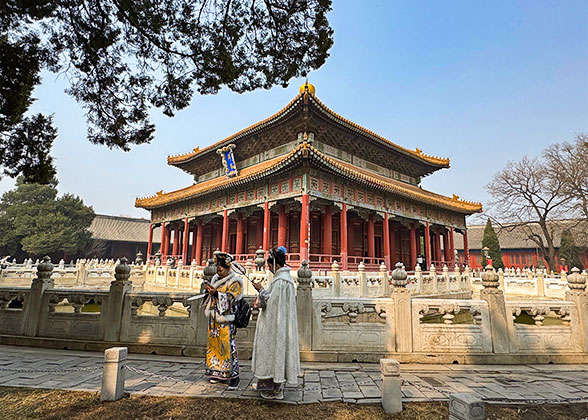 | | Imperial College, Guozijain Street | | 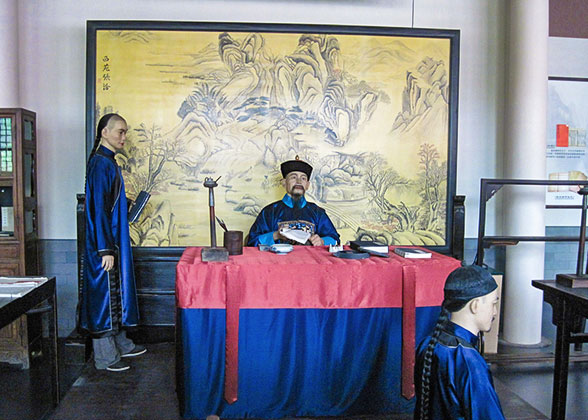 | | Restored Ancient Teaching Scene, Guozijian Street | |
Temple of Confucius - A Hall of Fame for Scholars
Next door at the Confucius Temple, you will find 198 stone steles engraved with over 50,000 names. This is an ancient "Academic Hall of Fame." Every name belongs to a top scholar who passed the highest level of the national exams over the last several centuries. For a student in ancient China, having your name carved here was the ultimate lifelong dream.
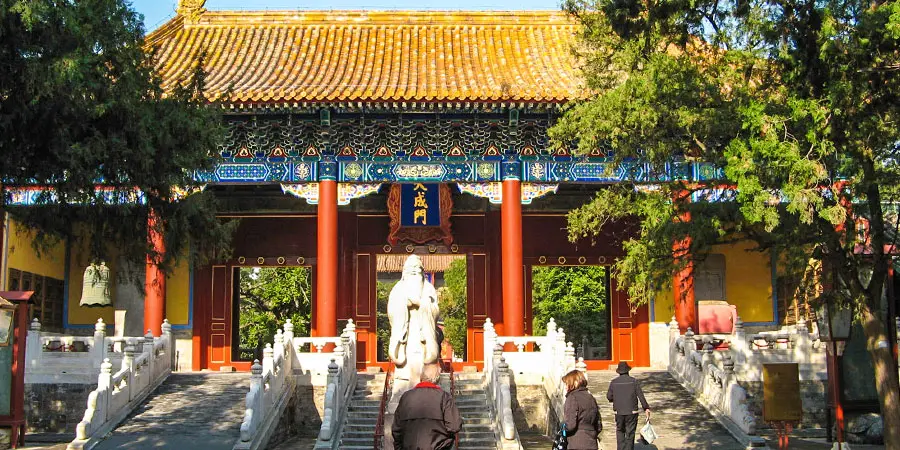 |
| Temple of Confucius |
Little Temples – Hidden Touch of Worldly Life
Amidst the grand imperial architecture, Guozijian Street also hosts several small red temples, such as the Fire God Temple and the Kitchen God Temple, tucked between homes and stores. Ancient Beijingers believed that gods resided in all things, and these small temples were places where they prayed for protection from fire and for the safety of their homes. They add a touch of worldly, human warmth to this street steeped in scholarly air.
Scholar Trees - Living Fossils and Elderly Guardians
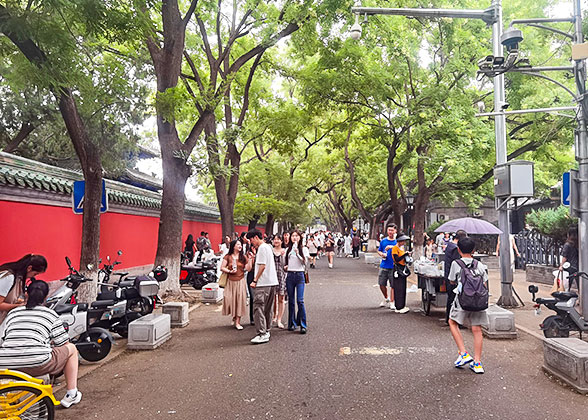 |
| Scholar Trees, Guozijain Street |
Beyond buildings, the street's soul also lies in its canopy of over 200 ancient locust trees. Some are hundreds of years old, their branches forming a natural tunnel that changes with the seasons, from sweet white blossoms in summer to a stark, artistic silhouette in winter. These trees are silent witnesses to centuries of history.
The Street Today – Slow Life Vibe
Stepping out from the grand gate of the Temple of Confucius feels like transitioning from a historical documentary to a gentle, artistic film. Today, Guozijian Street is one of the few places in Beijing where time seems to slow down. While wandering, you will see young people in exquisite traditional Chinese attire shooting photos, and white-haired residents sitting and chatting at their doorways.
The street is dotted with tastefully designed Chinese aesthetic bookstores, art galleries, and wooden-style cafes. These modern spaces are understated, cleverly tucked behind grey-tiled roofs without exaggerated signage. You can step into any of them, order a cup of tea, and listen to the cheerful sound of bicycle bells through the floor-to-ceiling windows, experiencing this cozy vibe where ancient civilization and modern aesthetics coexist in harmony.
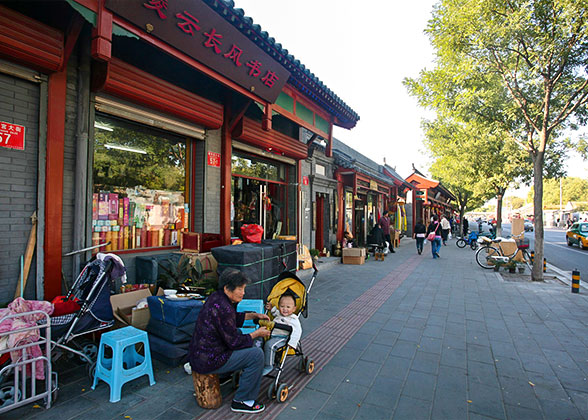 | | Local Life, Guozijian Street | | 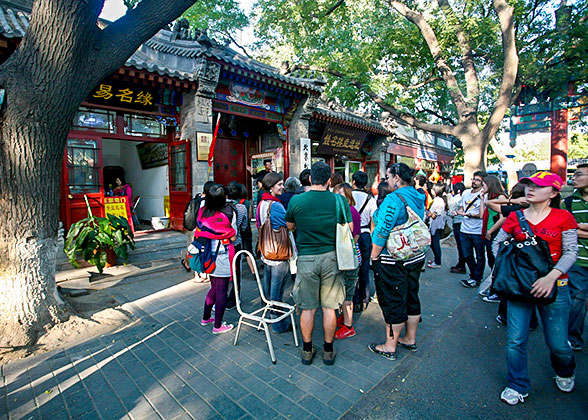 | | Tourists at Guozijian Street | |
Opening Hours
Imperial College Street is open for viewing all day.
Temple of Confucius and Imperial College: 9:00-17:00 (Last entry at 16:30, closed on Mondays except for public holidays).
Best Visit Time
For amazing photos: 15:00 - 17:00, when the sun casts angled light on the red walls and archways, creating a photographer's golden hour.
Seasonal Recommendation: The locust blossom season in May or the ginkgo season in November.
Transportation Guide
Take Subway
Line 2 or
5 to Yonghegong Station. Take Exit F (Southeast Exit) and walk for about 5 minutes to arrive.
- Last updated on Jul. 23, 2026 by Sherry Xia -